








Essential Features for Building a Freight Management System

The global freight and logistics market is on track to hit $18.2 trillion by 2032, fueled by rising eCommerce demand, supply chain disruptions, and the urgent need for automation. Yet, over 60% of logistics companies still struggle with outdated systems, manual processes, and lack of real-time visibility.

As the pressure to deliver faster and operate leaner grows, building a smart, feature-rich freight management system is no longer optional,  it’s a strategic priority.

In this blog, we’ll break down the essential features that define high-performing freight systems, how they solve today’s logistics challenges, and what you need to consider to stay ahead of the curve.

Streamline Your Freight Operations Today

Looking to build a powerful freight management system? Talk to our experts and get started.


Planning to build a robust freight management system? Dive in to learn the essentials!

Key Takeaways

  • A freight management system streamlines logistics with features like AI-powered route optimization, automated quotes, and real-time notifications, reducing operational inefficiencies.

  • Tools such as digital compliance dashboards, billing systems, and analytics reports help businesses maintain transparency, compliance, and better decision-making.

  • With multi-modal transport support and mobile app access, companies can stay flexible and responsive to shifting market demands.

  • Prioritizing security and data protection ensures long-term trust and regulatory compliance in freight operations.

Essential Features of a Modern Freight Management System

A successful FMS goes beyond basic shipment tracking. To compete in today’s logistics market, you need build a an app like Uber Freight, equipped with automation, AI, and real-time visibility.

Here are the must-have features for 2025:

essential features of a freight management system

1. Carrier & Shipper Integration Dashboard

A centralized logistics dashboard allows seamless collaboration between shippers, carriers, brokers, and logistics managers.

  • One-click access to onboarding, load assignments, documentation, and payment workflows ensures everyone stays aligned.
  • Built-in carrier compliance verification tools help screen carriers for insurance, safety ratings, and licensing, reducing operational risk.

Pro Tip: Use API-based integrations to connect with major load boards and third-party freight providers in real time.

2. Real-Time Shipment Tracking & Notifications

Customers and dispatchers expect accurate location data and delivery updates. Real-time shipment tracking using GPS and IoT sensors enables visibility at every stage of the journey.

  • Geofencing alerts trigger automated notifications on arrivals, delays, or route deviations.
  • ETA forecasting improves customer satisfaction and planning accuracy.

Companies that implement real-time tracking report up to 30% improvement in on-time delivery rates.

3. Automated Rate & Quote Management

Manually calculating freight quotes is slow and error-prone. Your system should include:

  • Dynamic pricing engines that factor in distance, load type, delivery time, fuel prices, and capacity.
  • Fuel surcharge calculators to ensure pricing reflects current market conditions.

This automation not only reduces time spent quoting but also improves win rates with more accurate pricing.

4. AI-Powered Route Optimization

Inefficient routing leads to higher fuel costs and late deliveries. AI in logistics for route optimization helps select the fastest, most fuel-efficient path based on real-time traffic, weather, and load constraints.

  • Use scenario-based routing logic to simulate different outcomes and make data-driven dispatch decisions.
  • Combine this with real-time data for rerouting when disruptions occur.

Shippers using AI-driven routing have reported up to 15% cost savings in fuel and labor.

5. Document Digitization & Compliance Tools

Paperwork slows down freight. A modern logistics freight management software should eliminate manual processes with:

  • Automated Bill of Lading (BOL) generation, customs forms, and shipping labels.
  • E-signature support and regulatory workflow engines for compliance with FMCSA, DOT, and international trade laws.

Going digital can reduce documentation errors by up to 80% while improving audit readiness.

6. Freight Billing & Invoicing System

Billing inaccuracies can cost you money and trust. An integrated freight billing system should:

  • Automatically match rates, loads, and delivery status before generating invoices.
  • Offer plug-and-play integrations with accounting tools like QuickBooks, SAP, or NetSuite for streamlined financial reporting.

This not only improves cash flow but also helps reduce disputes and payment delays.

7. Analytics & Reporting Dashboards

To optimize your operations, you need data. Advanced reporting dashboards allow you to track:

  • Carrier performance, on-time delivery rates, and exception trends
  • Cost per mile, shipment delays, and route efficiency

Use data visualization to make quick, informed decisions that lower costs and improve service quality.

8. Multi-modal Transport Support (Air, Road, Sea, Rail)

Today’s supply chains are multi-modal. Your freight management system should support:

  • Load planning and scheduling across air, ocean, truckload (TL), less-than-truckload (LTL), and rail shipments.
  • Consolidation and deconsolidation workflows for intermodal logistics.

This flexibility is crucial for global freight operations and complex supply chains.

9. Mobile App Access for On-the-Go Control

Mobility is a must. You can always choose between iOS and android mobile app development – based on your target audience. A companion mobile app ensures drivers, dispatchers, and managers can:

  • Upload proof of delivery (POD), documents, and images on the go
  • Update load status or report issues instantly

Mobile-enabled logistics teams are 25% more responsive to disruptions and delays.

10. Security & Data Protection Protocols

With sensitive shipment, carrier, and payment data flowing through your platform, security is non-negotiable.

  • Implement role-based access control (RBAC) to manage user permissions
  • Use end-to-end encryption and secure APIs to protect data in transit and at rest
  • Ensure GDPR and CCPA compliance if operating in those regions

A secure freight management system not only protects your business but also builds trust with partners. Investing into custom logistics software allows you to integrate features and functionalities of your choice into the freight management system – ensuring they align with your business needs and user expectations.

Want to Build a Freight System That Delivers All This?

Get in touch with our team of development experts today to start your freight system project the right way.


Advanced Features for Competitive Freight Systems

To stay ahead in the fast-evolving logistics industry, your freight management system needs more than just the basics. Integrating advanced technologies can significantly enhance visibility, accuracy, and scalability—giving you a real competitive edge.

1. AI & Predictive Analytics for Demand Forecasting

Modern freight management solutions are increasingly powered by AI and machine learning. These tools analyze historical shipment data, seasonal trends, and external factors (like fuel prices or weather) to forecast:

  • Future demand spikes
  • Optimal inventory levels
  • Potential delivery delays

Companies using predictive analytics in logistics have reported up to 35% reduction in delays and better resource planning.

2. Blockchain for Document Transparency & Trust

In global freight logistics, document fraud and compliance risks are major concerns. Blockchain technology adds a layer of transparency and security by:

  • Creating immutable digital records of Bills of Lading, customs forms, and contracts
  • Enabling real-time visibility for all parties involved
  • Reducing disputes and manual audits

A blockchain-powered freight system helps build trust across your supply chain—especially in high-value or cross-border shipments.

3. API Integrations with ERPs and TMS

A freight management system must function as part of a broader digital ecosystem. API integrations with:

  • ERP platforms like SAP, Oracle, and Microsoft Dynamics
  • Transportation Management Systems (TMS)
  • WMS, CRM, and eCommerce platforms

These enable seamless data exchange and reduce manual handoffs between systems. This leads to faster operations, fewer errors, and more informed decision-making.

Unified integrations also help businesses gain end-to-end visibility across procurement, warehousing, and transportation.

Looking to Future-Proof Your Logistics Operations?

AppVerticals can help you build an advanced system equipped with AI, blockchain, and full system integrations.


How to Choose the Right Features Based on Your Business Needs

Not all freight management systems are built the same—nor should they be. The right feature set depends heavily on your business model, operational scale, complexity and the logistics software development cost. Here’s how to align FMS capabilities with your needs.

1. Small Carrier vs. Enterprise-Level 3PL

Small to Mid-Size Carriers
Smaller operators should focus on core features like real-time freight tracking, automated billing, mobile app access, and basic route optimization. These tools improve operational efficiency without overwhelming teams with unnecessary complexity. Look for affordable, easy-to-implement systems that scale as your business grows.

Enterprise 3PLs and Freight Brokers
Larger logistics providers need a robust, integrated solution that offers multi-user access, advanced analytics, compliance automation, and seamless integrations with TMS, WMS, and ERP platforms.

Features like AI forecasting, multi-modal management, and blockchain-backed documentation become essential at scale.

2. Domestic vs. Global Freight Operations

Domestic Freight Providers
If you’re operating within a single country, you’ll likely need strong route optimization, fuel management, and carrier onboarding tools, along with integrations to regional load boards.

Global Freight Managers
Cross-border logistics adds complexity. Prioritize systems that support:

  • Customs documentation automation
  • Multi-currency invoicing
  • Multi-modal logistics
  • Compliance with international trade laws

Global freight demands higher visibility, tighter security, and dynamic workflows that adjust to regional regulations.

3. Modular vs. All-in-One Freight Systems

Modular Freight Solutions
Ideal for businesses that want to start small and expand over time. You can add capabilities like invoicing, analytics, or route optimization as your needs evolve.

Best for growing carriers who want to control costs while future-proofing operations.

All-in-One Freight Platforms
These are full-featured systems designed to handle every aspect of logistics freight management from a single dashboard. They’re perfect for enterprises that require centralized control and real-time coordination across departments.

Reduces reliance on multiple vendors and simplifies IT management.

Top Challenges in Freight and How FMS Solves Them

Modern supply chains face a wide range of freight logistics challenges—from lack of visibility to inefficient routing and paperwork overload. A well-designed freight management system (FMS) directly addresses these pain points, enabling logistics teams to run leaner, smarter, and faster operations.

1. Lack of Shipment Visibility → Real-Time Freight Tracking

One of the biggest complaints in logistics is the lack of real-time shipment visibility. Without accurate location data, businesses face missed delivery windows, unhappy customers, and increased costs.

How FMS Solves It:

  • An advanced FMS integrates freight tracking technology like GPS and IoT sensors to offer real-time visibility across every leg of the journey. It delivers proactive alerts, geo-fencing updates, and accurate ETAs—empowering teams to make informed decisions and reduce delays.
  • This level of visibility helps reduce delivery uncertainty and strengthens customer trust.

2. Paperwork Overload → Automated Documentation

From Bills of Lading to customs declarations, freight logistics is buried under mountains of paperwork. Manual handling leads to frequent errors, delays, and compliance risks.

How FMS Solves It:

  • A freight management system automates document generation, sharing, and storage. Features like e-signatures, digital BOLs, and workflow-based approvals eliminate the need for physical files and reduce human error.
  • According to industry benchmarks, automation can cut document processing time by up to 80%.

3. Route Inefficiency → AI-Powered Route Optimization

Poor route planning increases fuel consumption, delays, and driver fatigue—hurting both efficiency and profitability.

How FMS Solves It:

  • By leveraging AI-powered route optimization, freight systems can calculate the most cost-effective and timely routes based on traffic, weather, delivery windows, and load types. This reduces idle time and improves delivery accuracy.
  • Shippers using AI-based routing report up to 15% savings in transportation costs and better delivery performance.

These examples show that a freight management system is more than a tracking tool—it’s a strategic solution to some of the most pressing freight logistics challenges.

Final Thoughts

As logistics becomes more digitized and demand for real-time visibility and speed intensifies, investing in a future-ready freight management system is no longer optional—it’s essential.

Whether you’re a regional carrier or a global 3PL, the right FMS should prioritize:

  • Scalability – Grow without needing a complete tech overhaul
  • Compliance – Stay ahead of evolving regulations and documentation standards
  • User Experience – Ensure fast onboarding and minimal training with intuitive interfaces

At AppVerticals, we specialize in logistics software development, building systems that integrate seamlessly into your supply chain. We develop systems specific to your business needs and requirements, helping your ROI grow to the next level.

Ready to Digitize Your Freight Operations?

Contact our logistics app development team today and let’s bring your vision to life.

 

How to Build a Real Estate App in 2026? Process, Features, Cost & Key Decisions

To build a real estate app in 2026, make three decisions before design starts: what type of app you are building, where your listing data comes from, and what your MVP needs to prove. Get those wrong and the architecture that follows becomes expensive to fix. 

In a real build discussion, a serious real estate app development company would not start with “which screens do you need?” It would start with the constraint that usually decides cost: can the app surface the right property from reliable inventory, fast enough to create a qualified lead? 

NAR’s buyer profile says 52% of buyers found the home they purchased online, while 56% said finding the right property was the hardest step, which makes search quality, listing freshness, and lead routing product-critical, not optional.

This guide breaks down the technical process, core features, cost drivers, MLS/IDX or API decisions, and architecture choices that shape launch and scale.

How to Build a Real Estate App in 2026 (Quick Overview)

Key Area What It Means
First decisions Decide the app model, listing data source, and MVP workflow before design or development starts.
Core requirement A real estate app needs more than listings. It needs reliable data, fast search, map accuracy, lead capture, admin controls, user roles, and scalable backend logic.
MVP focus Start with accurate property listings, search filters, map-based discovery, listing detail pages, saved properties, inquiry or application flow, admin control, analytics, and monitoring.
Listing data options Use MLS/IDX, RESO Web API, third-party property APIs, or manual listings depending on your market, inventory ownership, and data access.
Recommended MVP stack Flutter or React Native, Node.js or Laravel, PostgreSQL, Google Maps or Mapbox, cloud storage/CDN, and basic monitoring.
What to avoid Do not launch with too many advanced features before validating search, listings, lead flow, and admin operations.
Main goal Validate the right workflow with accurate data, usable search, clean lead flow, and an architecture that can scale.

What Does It Take to Build a Real Estate App?

To build a real estate app properly, you usually need several connected systems working together

Product Layer What It Actually Controls
Listing data Where properties come from, how fields are normalized, how prices and statuses update
Search How users filter by location, price, type, beds, baths, amenities, status, and relevance
Maps How addresses become coordinates, how radius search works, how nearby context is shown
Media How images, floor plans, videos, and virtual tours load without slowing the app
Lead capture How inquiries, tour requests, and contact forms reach the right person
Admin operations How listings are approved, edited, removed, merged, audited, and reported

This is why real estate app development is closer to building a data-driven marketplace than a simple mobile app. Rent.com.au, for example, uses Google Geocoding API to pin property locations and support radius filters. 

The same applies to lead flow. Zillow’s Premier Agent product does not treat inquiries as a basic form submission. Its lead routing rules can assign leads by location, price, lead type, MLS number, and day or time availability. 

Who Uses a Real Estate App?

A real estate app has multiple user groups, and each one needs a different workflow. If these roles are not defined early, the MVP scope, permission model, lead flow, and admin dashboard will need rework later. 

User Type Workflow They Need Product Impact
Buyers/renters Search, save, inquire, apply Search, listing detail, inquiry/application flow
Agents Manage listings and leads Agent dashboard, lead ownership
Brokers Manage teams and performance Role-based access, reporting
Property managers Handle tenants, payments, maintenance Tenant portal, requests, documents
Admins Control users, listings, approvals Admin panel, permissions, moderation

The same “property listing” may be viewed by a buyer, edited by an agent, approved by an admin, and reported on by a broker. 

Those permissions and workflows should be planned before development starts.

What Makes Real Estate App Development Different?

Real estate app development depends on three production layers: listing data, location search, and lead operations

If any one of these is weak, the app may still look complete, but it will not support serious users or business workflows.

1. MLS Access Can Change the Build Plan

MLS data is not something developers can simply pull from RESO. RESO creates data standards, but it does not provide MLS data, API access, property records, or credentials. Access comes from the MLS or data provider after data-use and licensing approval. 

That affects architecture, timeline, allowed fields, refresh rules, and display permissions before development starts.

2. Listing Data Needs Cleanup Before It Becomes Useful

Real estate apps are only as good as the data users search through. Homesearch is a clear example. Google Cloud reports that Homesearch carries data on 28.8 million UK properties, but the platform had to deal with duplicates, misspellings, inconsistencies, and missing data before that information became usable in a map-led product.

Build Implication: Plan data validation, duplicate control, field normalization, and update rules early.

3. Map Search Is an Engineering Layer, Not a UI Element

Map search depends on address quality, coordinates, radius logic, clustering, and location context. For apps where users search by area, commute, nearby places, or distance, the map is part of the core search system, not a visual add-on.

4. Lead Routing Must Be Configurable

A real estate inquiry needs ownership. If you are building an app like Zillow, the lead flow must define who receives each inquiry and why. For example, Zillow’s lead routing allows teams to route leads by location, price, lead type, MLS number, and day/time availability. 

That shows how mature real estate platforms handle inquiries as operational workflows, not basic email notifications.

Turn your real estate idea into a revenue-driving product.

From strategy to launch, we build apps, websites, and software that scale.

What Type of Real Estate App Should You Build First?

The first product decision is not “mobile app or web app.” It is which real estate workflow you want to own first. A property listing marketplace, rental app, brokerage app, and property management app may all show properties, but they need different data models, user roles, integrations, and admin workflows.

A good rule: choose the app type based on the inventory source, the primary user action, and the business outcome you need to prove.

App Type Build This First When Core Workflow to Validate
Property listing marketplace You need buyers or renters to search large inventory Search → compare → save → inquire
Rental property app You manage or aggregate rentals Search → apply → screen → lease/contact
Agent or brokerage app You need to generate and manage agent-led leads Listing → inquiry → lead routing → follow-up
Property management app You manage tenants, units, rent, maintenance, and documents Tenant request → operational task → resolution

1. Property Listing Marketplace

Best when: users need to search large property inventory.

MVP must prove: users can search, compare, save, and inquire from reliable listings.

Example: Realtor.com supports Map Draw, map layers, listing alerts, 3D tours, and photo sorting by room type. These features support property discovery and faster shortlisting, which is the core value of a marketplace-style real estate app.

2. Rental Property App

Best when: the product needs to manage rental discovery, applications, and renter qualification.

MVP must prove: renters can find a property, apply, submit required information, and move through the rental process.

Example: Apartments.com Rental Manager supports tenant screening with credit, criminal, eviction, and document review options. Its broader rental manager product also supports filling vacancies, screening tenants, collecting rent, and managing maintenance requests.

3. Agent or Brokerage App

Best when: the business needs to capture, route, and manage real estate leads.

MVP must prove: every inquiry has an owner, a source, a status, and a follow-up path.

Example: Follow Up Boss pulls leads from over 200 sources into one place for lead distribution, and its reporting tracks performance across agents, teams, and lead sources.

4. Property Management App

Best when: the product manages units, residents, owners, rent, maintenance, vendors, or documents.

MVP must prove: tenants or property teams can submit, assign, track, and resolve operational requests.

Example: AppFolio’s resident portal supports online payments, payment history, and maintenance requests. Its maintenance product supports work orders, unit turn boards, inspections, common area maintenance, and mobile tracking.

How Do You Build a Real Estate App Step by Step?

The real estate app development process should follow a fixed order: define the product model, confirm the listing source, scope the MVP, design the workflows, build the system, test the critical paths, and launch with monitoring. 

Most cost issues appear when teams start UI design before confirming the data model, integrations, and user roles.

Step 1: Define the Business Model and Target Users

Use the selected app type to define the users, revenue model, permissions, and primary workflow. The output of this step should be a product requirements document covering 

Decision What It Defines
App model Marketplace, rental, brokerage, or property management
Target users Buyers, renters, agents, brokers, landlords, property managers, admins
Revenue model Lead fees, subscriptions, commissions, listings, payments, or SaaS
Primary workflow Search, inquire, apply, schedule, pay, or manage requests
User permissions Who can view, edit, approve, assign, publish, or manage data

Output: product requirements document.

Step 2: Prioritize the MVP Scope

The MVP should validate one workflow end to end, not compress every planned feature into a smaller release. 

App Type MVP Should Prove
Marketplace app Users can search, compare, save, and inquire
Rental app Users can find, apply, and submit required information
Brokerage app Leads can be captured, assigned, and followed up
Property management app Tenants or managers can submit, track, and resolve requests

This keeps the first release focused. Advanced features like AI recommendations, valuation tools, virtual tours, CRM automation, and deep reporting should come later unless they are required for the first workflow to work.

Output: MVP scope with launch features and later roadmap features separated.

Step 3: Plan Data Sources and Integrations

Before development starts, confirm where the app’s data will come from and how it will move through the system.

The integration plan should define:

Area What to Confirm
Listing source MLS/IDX, RESO Web API, broker uploads, third-party APIs, or manual entry
Data access Credentials, licensing, allowed fields, and display rules
Sync logic Refresh frequency, failed updates, duplicate records, and status changes
Maps Geocoding, coordinates, radius search, and location filtering
CRM Lead assignment, source tracking, follow-up status, and reporting
Payments Rent, deposits, subscriptions, application fees, or listing upgrades
Analytics Searches, listing views, saves, inquiries, applications, and conversions

Output: integration plan and data flow map.

Step 4: Design User Flows, Admin Flows, and Data Model

Design should not start with isolated screens. It should start with workflows.

Map the flows that matter:

  • Search → listing detail → inquiry
  • Saved property → alert or follow-up
  • Listing upload → admin approval → published listing
  • Inquiry → lead assignment → follow-up
  • Tenant request → work order → resolution

The data model should support these flows before the interface is finalized.

Output: user flow map, admin flow map, and approved data model.

Step 5: Build the Backend, App, Admin Panel, and Integrations

Development should be split into four workstreams:

Workstream What It Includes
Backend Users, roles, listings, search, permissions, APIs, notifications
Web/mobile frontend Search, listing pages, saved properties, inquiries, user accounts
Admin panel Listings, approvals, users, roles, leads, reports
Integrations MLS/IDX/API, maps, CRM, payments, analytics, notifications

A polished interface without backend, admin, and integration depth will create operational issues after launch. 

Output: working application with connected backend, frontend, admin, and integrations.

Step 6: Test the Workflows That Affect Trust

Testing should focus on the parts that affect trust, conversion, and operations.

Test Area What to Check
Listing data Missing fields, wrong status, duplicate listings, stale prices
Search Filter accuracy, response speed, relevance, empty states
Maps Pin accuracy, radius logic, clustering, mobile performance
Lead flow Inquiry capture, assignment, notification, CRM sync
Permissions Buyer, renter, agent, broker, landlord, admin access
Security Authentication, authorization, API access, role abuse, sensitive data handling
Media Uploads, compression, loading speed, CDN delivery

Output: stable release build.

Step 7: Launch With Monitoring and Post-Launch Optimization

Launch is not only publishing the app. The team needs monitoring, analytics, admin ownership, and a process for improving the product after real users start using it.

Before launch, confirm:

  • Privacy policy and terms
  • App store assets
  • Support contact
  • Crash monitoring
  • Analytics events
  • Admin training
  • Listing update process
  • Bug response plan
  • Post-launch roadmap

After launch, review search gaps, inquiry quality, listing performance, conversion paths, and user drop-off points.

Output: launched product with analytics, monitoring, and optimization plan.

How Much Does It Cost to Build a Real Estate App in 2026?

A production-grade real estate app can range from roughly $50,000 to $300,000+, depending on scope, platforms, data source, integrations, search complexity, and admin workflows. 

Scope Estimated Cost
Basic MVP $50,000–$90,000
Standard app $90,000–$170,000
Advanced platform $170,000–$300,000+

The biggest cost drivers are IDX/MLS integration, map-based search, CRM sync, payments, admin controls, AI recommendations, valuation tools, and virtual tours. MLS/IDX integration alone can add around $15,000–$40,000, depending on feed complexity and market requirements.

What Real Estate App Development Features Should You Include?

The right real estate app development features depend on what the first version needs to prove. A marketplace must prove property discovery. A rental app must prove application flow. A brokerage app must prove lead capture and follow-up. A property management app must prove operational control.

Feature Area MVP Acceptance Criteria Add Later
Search and filters Users can narrow listings by location, price, property type, beds, baths, and availability AI ranking, saved searches, advanced personalization
Listing detail page Users can evaluate price, media, property facts, status, location, and contact option 3D tours, video tours, valuation data, market insights
Inquiry or application flow The app captures user details, listing ID, source, inquiry type, and owner CRM automation, lead scoring, pipeline reporting
Saved properties Users can return to shortlisted listings without repeating the search Behavioral recommendations, personalized alerts
Agent or broker tools Agents can view assigned leads, listings, and lead status Team dashboards, response SLAs, performance reporting
Admin panel Internal teams can manage listings, users, approvals, roles, and leads Audit logs, duplicate detection, branch-level permissions
Rental or property management workflows Users can submit applications, requests, documents, or payments Screening, work orders, inspections, vendor workflows

The first version should focus on features that make the product usable, measurable, and manageable. Search, listing pages, inquiries, saved properties, agent visibility, admin controls, and analytics are usually enough to validate the core workflow.

Advanced features should be tied to usage evidence. AI recommendations need enough search and saved-property data. 

Virtual tours make sense when media quality affects inquiry quality. Mortgage calculators help when affordability is part of the buying journey. CRM automation is useful when manual follow-up starts slowing conversion.

Feature Prioritization Rule

Before adding any real estate app development feature, ask:

Does this feature help the user make a property decision, improve lead quality, or reduce operational work?

If yes, it belongs in the roadmap.

If no, it is probably noise for the first release.

How Do Real Estate Apps Get Property Listings and Data?

Real estate apps get property data through MLS/IDX feeds, RESO Web API, third-party property APIs, or manual listing management. The right source depends on your market, app type, listing ownership, and how often the data needs to update.

Data Source Best For Main Concern
MLS/IDX Public listing apps and brokerage platforms Access, display rules, refresh limits
RESO Web API Standardized MLS data exchange Field mapping and sync logic
Third-party APIs Valuations, tax data, schools, market insights Coverage and licensing
Manual listings Developers, private inventory, niche marketplaces Admin control and data quality

MLS, IDX, and RESO Web API

MLS is usually the listing source. IDX allows approved listings to be displayed on a website or app. RESO Web API is a standard for moving real estate data between systems.

RESO does not provide MLS data or credentials. Access comes from the MLS or data provider. So before development starts, confirm approved fields, refresh frequency, attribution rules, listing status rules, and display permissions.

Third-Party Property Data APIs

Third-party APIs add context beyond active listings. They can provide property records, valuation data, tax history, school data, neighborhood insights, boundaries, and market trends.

Use them when the app needs more decision support, such as investor analysis, buyer research, valuation tools, or neighborhood comparison.

Manual Listing Management

Manual listing management works when you control the inventory, such as developer projects, brokerage exclusives, rental units, or private marketplaces.

It avoids MLS dependency, but it needs a strong admin panel for listing upload, approval, status changes, duplicate checks, role permissions, and audit history.

What Tech Stack Is Best for Real Estate App Development?

The best tech stack for real estate app development depends on the app type, listing volume, search complexity, and integrations. A simple brokerage or rental MVP can use a lighter stack. 

A marketplace with MLS/IDX data, map search, saved searches, media-heavy listings, and lead routing needs stronger backend, search, and monitoring infrastructure.

Layer Best Options Use Case
Mobile app Flutter, React Native, Swift, Kotlin iOS and Android apps
Backend Node.js, Python, Laravel, .NET APIs, users, listings, leads, integrations
Database PostgreSQL, MongoDB Listing data, users, saved properties
Search Elasticsearch, OpenSearch, PostgreSQL search Fast filters, geospatial search, ranking
Maps Google Maps, Mapbox Geocoding, pins, radius search
Media Cloud storage, CDN, compression Images, videos, floor plans, virtual tours
Security OAuth/JWT, RBAC, rate limits Login, permissions, API protection

For most MVPs, use Flutter or React Native, Node.js or Laravel, PostgreSQL, Google Maps or Mapbox, cloud storage/CDN, and basic monitoring. Add advanced search, AI, or multi-region infrastructure only when scale justifies it.

Real Estate App Development Checklist Before You Start

Use this checklist before development starts. It helps confirm whether the app is ready to move from idea to technical planning. It also helps avoid common real estate app development mistakes around unclear scope, weak data planning, missing admin controls, and untested workflows. 

Business Checklist

  • Define the app type: marketplace, rental, brokerage, or property management.
  • Identify the primary users and roles.
  • Confirm the launch market and listing coverage.
  • Define the monetization model.
  • Decide what the MVP must prove.

Product Checklist

  • Finalize MVP features.
  • Map the main workflow: search, inquiry, application, payment, or request.
  • Define required search filters and listing fields.
  • Plan agent, broker, landlord, or property manager workflows.
  • Define admin panel requirements.
  • Set key analytics events: searches, views, saves, inquiries, applications, and conversions.

Technical Checklist

  • Confirm listing source: MLS/IDX, RESO Web API, third-party API, broker upload, or manual entry.
  • Confirm API access, credentials, allowed fields, and refresh rules.
  • Plan database structure for users, listings, leads, roles, and activity.
  • Define map, geocoding, media, and hosting requirements.
  • Plan authentication, role-based access, API security, backups, and monitoring.
  • Prepare QA plan for listings, search, maps, leads, permissions, and performance.

Launch Checklist

  • Test the MVP with real users or internal teams.
  • Validate listing accuracy and search results.
  • Test inquiry, application, or request workflows.
  • Confirm the admin team can manage listings and users without developer help.
  • Set up analytics, crash reporting, and performance monitoring.
  • Prepare app store assets or web deployment checklist.
  • Add privacy policy, terms, support contact, and data handling disclosures.
  • Prioritize the post-launch roadmap based on usage data.

Spruce Case Study: How AppVerticals Built a Property Operations Platform at Scale

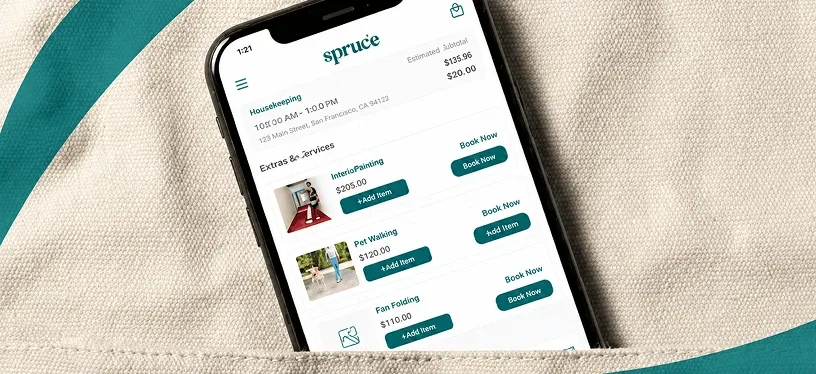
AppVerticals helped rebuild Spruce, a U.S.-based home and property services platform for multifamily communities and short-term rentals. Unlike a listing marketplace, Spruce focuses on the operational side of real estate: connecting residents, service pros, property managers, and admins in one role-aware system.

The results show AppVerticals’ experience in building real estate-adjacent systems at scale: 685K+ customers onboarded, 6,477+ properties managed, and 7,581+ property management companies supported. 

The platform was built with React Native, Node.js, PostgreSQL, AWS, Firebase, Braze, Braintree, and Slack, which makes it a strong example of AppVerticals’ expertise in mobile app development, backend engineering, workflow automation, dashboard development, payment integration, and property operations software.

Wrapping it Up

To build a real estate app in 2026, the real work starts before development. You need to define the app model, confirm the listing data source, scope the MVP, plan integrations, and build the right backend, search, map, lead, and admin workflows from the start.

The strongest real estate apps are the ones with accurate listings, fast discovery, reliable data sync, clean inquiry flow, and operational control after launch. 

Your users expect speed, security, and seamless experiences.

We develop real estate platforms that deliver on all three.

Build an App like Uber Freight in 2025: Development Guide, Cost, and Features

Ever waited hours for a truck to arrive, only to find out the shipment was delayed, rerouted, or worse, lost in paperwork? Frustrating, isn’t it? That’s exactly the kind of headache shippers, carriers, and logistics managers deal with every single day.

Now imagine an app that connects shippers with carriers instantly, much like how Uber connects drivers with passengers. That’s the promise of Uber Freight, a platform that has redefined how freight moves by bringing transparency, speed, and automation into an industry notorious for inefficiency.

But here’s the real question: What if you could build your own version of Uber Freight? What would it take? How much would it cost? And more importantly, how can it give your business a competitive edge in 2025’s fast-moving logistics landscape?

The timing couldn’t be better. With the global freight matching market projected to reach past $766 billion by 2034, and over 60% of logistics companies still struggling with manual processes, the opportunity is huge. Businesses that embrace custom freight apps now won’t just keep up—they’ll lead.

In this guide, we’ll break down how to build an app like Uber Freight, essential features you’ll need, the development costs in 2025, and the benefits that make it worth the investment.

Build Your Own Uber-Style Freight App with AppVerticals

Our team specializes in building custom logistics apps designed for scalability, automation, and real-time visibility.


Key Takeaways

  • The global freight matching market is projected to surpass $766B by 2034, making now the best time to invest in digital freight platforms.
  • Building an app similar to Uber Freight requires three core pillars: a feature-rich Shipper App, a seamless Driver App, and a data-driven Admin Dashboard.
  • Costs range from $60K for an MVP to $250K+ for enterprise-grade solutions, depending on features, tech stack, and scalability needs.
  • Must-have features in 2025 include real-time GPS tracking, AI-powered load matching, digital proof of delivery, and integrated payments.
  • Choosing the right technology stack (React Native/Flutter, Node.js/Python, PostgreSQL/MongoDB, AWS/GCP/Azure) directly impacts performance and long-term growth.
  • A custom logistics app delivers lower costs, faster payments, improved visibility, and stronger shipper–carrier relationships, giving businesses a clear competitive edge.

The 3 Core Pillars of Uber Freight–Style App Development

In today’s logistics landscape, digital freight platforms are doing what Uber did for mobility, bringing speed, visibility, and simplicity to an industry long reliant on phone calls and paper-based processes. To build a successful app like Uber freight, businesses must focus on three essential pillars: the Shipper App, the Driver App, and the Admin Dashboard. Together, they form the foundation of a scalable and user-friendly freight ecosystem.

Shipper App

The Shipper App is the central interface for businesses that need to move goods, ensuring they can connect with carriers quickly and transparently.

Key Features:

  • Simple Onboarding & Profiles: Allow shippers to create accounts, manage business details, and save payment preferences for faster bookings.
  • Load Posting & Bidding: Publish freight details instantly, set requirements, and receive real-time bids from nearby carriers.
  • Real-Time Tracking: Use GPS-enabled tracking to monitor shipments live, from pickup to delivery.
  • Secure Payments: Enable shippers to complete transactions through integrated gateways with full transparency.
  • Ratings & Feedback: Promote trust by letting shippers review carrier performance after each delivery.

UI/UX Tips:

  • Keep onboarding simple with auto-fill for business details and progress indicators.
  • Use clean dashboards with tabs for “My Loads,” “Payments,” and “Tracking” to avoid clutter.
  • Highlight active shipments with color codes (e.g., in-progress = blue, completed = green).
  • Provide interactive maps so shippers can zoom in/out and track deliveries in real-time.

Driver App

The Driver App acts as the control hub for carriers, empowering them to find jobs faster, manage deliveries efficiently, and stay connected on the go.

Key Features:

  • Quick Registration & Verification: Fast onboarding with digital document uploads and identity checks.
  • Instant Job Alerts: Push notifications for available loads nearby, with filters for distance, weight, or deadlines.
  • Navigation & Route Optimization: Built-in maps and AI-powered route suggestions for fuel efficiency and reduced delivery time.
  • Earnings Dashboard: Transparent visibility into completed jobs, payments, and bonuses.
  • Digital Proof of Delivery (ePOD): Drivers can upload delivery confirmations directly from the app, cutting paperwork.

UI/UX Tips:

  • Use large, high-contrast buttons for on-the-go use.
  • Display earnings and next job status on the home screen for quick visibility.
  • Add voice-enabled navigation and notifications to reduce distractions.
  • Keep menus minimalist, showing only key actions: “Available Loads,” “Current Job,” and “Earnings.”

Admin Dashboard

The Admin Dashboard is the backbone of the entire platform, giving businesses and operators the tools to monitor, optimize, and scale logistics operations.

Key Features:

  • User & Fleet Management: Oversee shippers, carriers, and fleets while ensuring compliance and verification.
  • Advanced Analytics: Real-time insights into delivery success rates, average trip costs, and operational bottlenecks.
  • Pricing & Commission Control: Dynamic rate management to balance market demand with carrier availability.
  • Risk & Safety Management: Tools for fraud detection, load authenticity checks, and emergency support.
  • System Maintenance & Scalability: Ensure smooth updates, integration readiness, and high uptime.

UI/UX Tips:

  • Use visual dashboards with charts, KPIs, and heatmaps to simplify decision-making.
  • Offer role-based access so admins, dispatchers, and managers see only what they need.
  • Integrate search and filter options for quick access to user or load data.
  • Make sure the interface is responsive for both desktop and tablet use.

By focusing on these three pillars, and pairing them with thoughtful UI/UX design—entrepreneurs can create a freight app that balances usability, efficiency, and trust, setting the stage to compete with, and even outperform, Uber Freight.

How to Build an App like Uber Freight – Step-by-Step Guide

Developing a freight app like Uber Freight requires more than just writing code. It takes strategy, market knowledge, and the right technology partner. Here’s a step-by-step breakdown for businesses and entrepreneurs looking to enter the digital freight space.

how to build an app like uber freight

Step 1: Define Your Logistics Niche (FTL, LTL, Courier, Last-Mile)

Before development, clarify the segment you’ll target—full truckload (FTL), less-than-truckload (LTL), courier, or last-mile delivery.

Why it matters for business: Your choice impacts not only the app’s design and features but also its monetization model and long-term scalability.

Example: A last-mile delivery app needs route optimization and driver tracking, while an FTL-focused platform needs advanced bidding and load-matching features.

You can learn more about that in our detailed guide around the essential features of a freight management system.

Step 2: Partner with a Logistics App Development Company

Your development partner can make or break your project. Choose a trusted logistics software development company that specializes in freight and supply chain technology.

What to look for in a partner:

  • Experience in building freight management apps.
  • Proven expertise in real-time tracking, AI-based automation, and scalable infrastructure.
  • End-to-end services: ideation, UX/UI, development, launch, and post-launch support.

This ensures your app isn’t just functional, but reliable, secure, and built for high user load.

Step 3: Validate the Idea with Market Research

Don’t build blindly. Validate your concept before investing heavily:

  • Conduct competitor analysis of apps like Uber Freight, Convoy, and Transfix.
  • Interview shippers, carriers, and dispatchers to understand real-world pain points.
  • Use surveys and pilot programs to refine your app’s core feature set.

ROI insight: The earlier you validate, the fewer pivots you’ll need—reducing wasted development costs.

Step 4: Build and Launch the MVP

Start lean with a Minimum Viable Product (MVP). Include core features like:

  • Load posting & bidding.
  • Shipper–carrier matching.
  • Live GPS tracking.
  • In-app chat & notifications.

Keep your initial logistics app development cost in check while collecting real-world feedback from early adopters.

Step 5: Analyze, Iterate, and Scale Smart

After launch, gather data on:

  • Booking trends.
  • Driver performance.
  • Shipper engagement.

Enhance your app by adding AI-based load recommendations, predictive ETA algorithms, or integrations with TMS/ERP systems. This continuous improvement model ensures your platform scales effectively and outpaces traditional freight management systems.

How Much Does It Cost to Build an App like Uber Freight

One of the biggest questions businesses ask is: “How much does it cost to build an app like Uber Freight?” The answer depends on your feature set, technology stack, and development partner, but here’s a clear breakdown to guide you.

1. Basic MVP Freight App – $60,000 to $90,000

Includes core features like:

  • User registration & authentication
  • Shipper–carrier matching
  • Load posting & bidding
  • GPS-based tracking
  • Push notifications

Best for startups testing the waters with a simple, functional freight app.

2. Mid-Range Logistics App – $90,000 to $150,000

Adds advanced features such as:

  • AI-based load recommendations
  • Dynamic route optimization
  • Integrated payment gateways
  • Analytics dashboard for shippers and carriers

Suitable for growing businesses that need automation and visibility to compete in the digital freight market.

3. Enterprise-Grade Freight Platform – $150,000 to $250,000+

Includes high-scale, enterprise-level features like:

  • Multi-role access (shippers, carriers, dispatchers, admins)
  • API & ERP/TMS integrations
  • Advanced compliance & reporting
  • Machine learning–based demand forecasting
  • Scalable cloud infrastructure (AWS, Azure, or GCP)

Designed for logistics enterprises aiming to replace legacy systems with a fully digital freight ecosystem.

Key Factors That Affect Cost

  • Feature complexity: AI, predictive analytics, and integrations increase costs.
  • Platform choice: iOS, Android, or cross-platform.
  • Design & UX: Custom dashboards and user-friendly workflows.
  • Post-launch support: Maintenance, updates, and feature expansion.

Get a Custom Freight App Cost Estimate

Get a tailored cost breakdown for your Uber Freight–style app.

Essential Features for an Uber Like App Solution

Building a successful freight app isn’t just about connecting shippers and carriers, it’s about solving real logistics challenges. Below are the must-have features for your app in 2025.

1. Real-Time GPS Tracking

  • Keep every shipment visible from pickup to delivery.
  • Enables shippers and carriers to monitor load movement.
  • Reduces delays by providing accurate ETAs.
  • Improves trust and visibility in the supply chain.

Learn more about visibility in our thorough guide about Logistics Dashboards.

2. Smart Load Matching & Bidding

Ensure the right load goes to the right carrier at the best price.

  • AI-powered algorithms match loads with the right carriers.
  • Shippers get competitive pricing, while carriers maximize utilization.
  • Cuts down empty miles and boosts operational efficiency.

3. Integrated Payment Solutions

Simplify transactions and keep payments flowing seamlessly.

  • Supports multiple payment methods (ACH, cards, digital wallets).
  • Automates invoicing and reduces disputes.
  • Speeds up cash flow for carriers.

4. In-App Messaging & Notifications

Keep shippers, drivers, and dispatchers connected in real time.

  • Push notifications for load acceptance, delivery updates, and payment confirmations.
  • Reduces reliance on phone calls and emails.
  • Improves coordination and reduces delays.

5. Document Upload & Digital Proof of Delivery (ePOD)

Go paperless while keeping compliance in check.

  • Upload bills of lading, invoices, and compliance documents.
  • Capture signatures and delivery proof digitally.
  • Reduces paperwork and compliance risks.

6. Analytics Dashboard

Turn freight data into actionable business insights.

  • Provides insights into shipment history, performance metrics, and costs.
  • Helps shippers optimize spending and carriers improve efficiency.
  • Creates transparency that drives long-term adoption.

Advanced Features to Stay Competitive in 2025

If you want to outpace competitors like Uber Freight and Convoy, consider adding:

unique feature addons to outperform uber freight

  • AI-powered demand forecasting for better capacity planning.
  • Dynamic route optimization to reduce fuel and time costs.
  • Blockchain-based contracts for transparent and tamper-proof agreements.
  • Integration with IoT devices (temperature sensors, RFID, etc.) for specialized freight.

Technology Stack for Building Freight Apps

Choosing the right technology stack for logistics apps is one of the most critical steps in creating a scalable, high-performance freight platform like Uber Freight. The right tools ensure faster development, seamless integrations, and long-term adaptability as your business grows. Here is a breakdown of the key technologies most commonly used in freight app development:

Frontend: React Native vs Flutter

Framework Key Strengths Best Use Case in Freight Apps
React Native Cross-platform with native-like performance, reusable components, strong ecosystem. Ideal when you want faster time-to-market and reusable code for both iOS & Android.
Flutter Rich pre-designed widgets, smooth UI, near-native speed, backed by Google. Best for building visually rich, highly interactive freight apps with consistent UI across devices.

Backend: Node.js vs Python (Django) vs Express.js

Backend Option Key Strengths Best Use Case in Freight Apps
Node.js Handles asynchronous events efficiently, lightweight, scalable. Great for real-time tracking, notifications, and instant updates.
Python (Django) Robust, secure, enterprise-grade, perfect for large data sets. Best for complex freight platforms needing heavy data processing and compliance.
Express.js Minimalistic Node.js framework, easy to build APIs fast. Ideal for quick MVP development or lightweight API layers.

Database: PostgreSQL vs MongoDB

Database Key Strengths Best Use Case in Freight Apps
PostgreSQL ACID-compliant, highly reliable, strong for transactions. Best for transaction-heavy freight operations (payments, contracts).
MongoDB NoSQL, scalable, flexible for unstructured data. Best for document storage (ePOD, invoices, Bills of Lading).

APIs & Integrations

Service Purpose Why It Matters for Freight Apps
Twilio Real-time messaging & notifications. Keeps shippers & drivers updated instantly.
Google Maps API GPS tracking, optimized routing. Enables accurate location services & ETAs.
Stripe Secure payment gateway. Ensures safe transactions between shippers & carriers.
AWS S3 Cloud document storage. Stores ePOD, invoices, BOLs securely.
SendGrid Transactional emails. Delivers status updates & confirmations reliably.

Cloud Hosting: AWS vs GCP vs Azure

Cloud Provider Key Strengths Best Use Case in Freight Apps
AWS Industry leader, wide service range, reliable. Best for large-scale freight apps needing high uptime & global reach.
GCP Advanced AI/ML tools, Kubernetes support. Ideal for real-time analytics & predictive logistics.
Azure Enterprise-grade, seamless with Microsoft tools. Best for enterprise logistics companies using Microsoft ecosystem.

Your freight app technology stack directly impacts scalability, speed, and cost-efficiency. Choosing the right combination of tools ensures your platform can adapt to industry changes, integrate AI-driven features, and deliver the reliability that shippers and carriers expect from Uber Freight–style solutions.

Key Benefits of Building a Logistics App like Uber Freight

Investing in a custom freight app isn’t just about going digital—it’s about unlocking scalability, efficiency, and profitability. Here’s how businesses benefit from Uber Freight–style solutions in 2025.

1. Reduced Operational Costs

Automation lowers expenses and eliminates inefficiencies.

  • AI-powered load matching reduces empty miles.
  • Digital documentation cuts admin costs.
  • Route optimization saves fuel and driver hours.

2. Improved Supply Chain Visibility

Real-time insights build trust and speed up decision-making.

  • GPS tracking provides shippers with live updates.
  • Analytics dashboards highlight cost leaks and performance trends.
  • Transparent operations improve customer retention.

3. Faster Payments and Better Cash Flow

Integrated payments remove financial bottlenecks.

  • Automated invoicing shortens billing cycles.
  • Carriers receive quicker payouts.
  • Reduced disputes mean smoother relationships.

4. Enhanced Shipper–Carrier Relationships

Better collaboration strengthens long-term partnerships.

  • In-app messaging streamlines communication.
  • Digital proof of delivery reduces trust issues.
  • Reliability encourages repeat business.

5. Scalability and Competitive Edge

Future-ready platforms grow with your business.

  • Easily add features like AI forecasting or IoT integrations.
  • Scale from MVP to enterprise-grade without starting over.
  • Stay ahead of competitors relying on outdated systems.

Transform Your Freight Business with Digital Innovation

Let’s help you design a scalable, Uber Freight–style solution built for growth.


Is It Worth Building an Uber Freight–Style App?

The freight industry is rapidly shifting toward digitization and automation. With platforms like Uber Freight proving the value of on-demand logistics, businesses that adopt similar models are seeing:

  • Lower operational costs.
  • Stronger shipper–carrier relationships.
  • Greater efficiency and real-time supply chain visibility.

Whether you’re a startup exploring MVP development or an enterprise looking to replace outdated systems, investing in a custom logistics app development company can future-proof your business and give you a lasting competitive advantage.

Ready to Build Your Uber Freight–Style App?

Let’s turn your idea into a high-performing freight platform.


7 Best Duolingo Alternatives (& How to Build a Hit App)

Looking for the best Duolingo alternatives to take your language learning further? While Duolingo is popular for its gamified lessons, many users want more — real-world speaking practice, deeper cultural insights, and advanced personalization.

In this guide, we’ve gathered the top apps like Duolingo that deliver engaging lessons and meaningful progress. Each platform on this list has been reviewed for features, user experience, and teaching methods to help you choose the right fit for your goals.

Whether you’re learning a new language for travel, work, or personal growth, these best Duolingo alternatives offer smarter, more immersive ways to learn. Explore the list and discover tools that can take your language skills beyond the basics.

The Psychology Behind Language Learning Apps Like Duolingo

Duolingo didn’t become a household name by accident. Its success lies in how it blends cognitive science, game design, and mobile-first UX into a seamless experience. The app doesn’t just teach Spanish or French—it teaches users to return every day.

Here’s how apps like Duolingo tap into the psychology of habit-building and motivation: 

1. Gamification: Making Progress Feel Like Play

Duolingo transformed language learning into a game. With its XP points, streak counters, league rankings, and daily quests, the app doesn’t just reward learning—it rewards logging in.

Stanford’s Behavioral Model shows that small wins and variable rewards increase user retention. Duolingo’s system of instant feedback, leveling up, and reward sounds taps directly into this.

But here’s the catch: while gamification hooks users initially, it doesn’t always drive deep learning or long-term mastery. This is where alternatives to Duolingo aim to differentiate.

2. Microlearning & Cognitive Load Theory

Duolingo’s lessons are short—typically 5 minutes or less. That’s no accident. It aligns with cognitive load theory, which suggests learners retain information better when it’s broken into small, digestible chunks.

This “snackable” learning experience keeps dropout rates low, especially among mobile-first users. The app’s pace also fits busy professionals and Gen Z learners accustomed to short-form content.

However, microlearning’s effectiveness depends on contextual reinforcement, which many free language apps struggle to implement well.

3. Repetition & the Spacing Effect

Duolingo uses spaced repetition algorithms to reinforce vocabulary over time. This is rooted in learning science, where repetition across spaced intervals leads to better long-term recall.

Apps like Memrise (free Duolingo alternatives) use similar algorithms—sometimes more effectively—by integrating native speaker voices, example sentences, or AI-generated practice.

4. The “Streak Effect” and Loss Aversion

The infamous Duolingo streak is more than a vanity stat—it’s psychological gold. According to behavioral economics, humans are more motivated by the fear of losing progress than by the desire to gain more.

But there’s a downside: if the habit becomes about protecting the streak instead of real learning, engagement becomes superficial. 

Want to build a language learning app like Duolingo?

Work with experts who create scalable, engaging, and user-friendly learning platforms.

Top Duolingo Alternatives: What Users Love (and What They Don’t)

Duolingo’s viral success is undeniable — but it’s not for everyone. Learners looking for more structure, advanced grammar, immersive practice, or real-life conversations often find themselves exploring Duolingo competitors that offer deeper or differently styled learning experiences.

Below are 7 top alternatives to Duolingo, thoroughly reviewed to help learners and EdTech founders understand what works, what doesn’t, and where innovation opportunities still exist.

1. Babbel – Best for Structured Grammar & Conversations

Babbel is often considered the most academic Duolingo alternative, with a curriculum designed by linguistic experts. It follows CEFR (Common European Framework of Reference) levels and focuses on real-life dialogues, making it ideal for adult learners aiming for fluency.

Key Features:

  • CEFR-aligned course paths for 14 languages.
  • Grammar tips integrated into lessons.
  • Dialogues and roleplay for practical speaking.
  • Personalized review system using spaced repetition.
  • Speech recognition (limited compared to others).

Key Stats:

  • Over 10 million active users worldwide.
  • Rated 4.7⭐ on the App Store (230K+ reviews).

What users love:

  • Professional lesson structure (like a private tutor).
  • Real-world speaking focus over passive memorization.
  • Fewer distractions than gamified platforms.

What they don’t:

  • Free content is very limited.
  • Less engaging for younger or gamification-driven users.
  • Lacks niche/non-European language support.

“Babbel helped me have a real conversation in German in just 3 months. Way more useful than Duolingo’s parroting.”

Verified User (Trustpilot)

2. Mondly – Best for Immersive Speech Practice

Mondly’s strength lies in speech-first learning and its use of AR/VR to simulate real conversations. With support for 40+ languages, it caters to visual and auditory learners looking to quickly build conversational confidence.

Key Features:

  • Voice-based chatbot with real-time conversation practice.
  • Augmented Reality (AR) lessons with 3D characters.
  • Virtual Reality (VR) lessons (via Mondly VR app).
  • Daily lessons with instant feedback.
  • Personalized progress tracking.

Key Stats:

  • Over 120 million downloads globally.
  • Covers 41 languages — one of the largest ranges.

What users love:

  • Innovative AR/VR interface that feels “alive”.
  • Great for speaking practice and pronunciation.
  • Broad language selection, including lesser-known options.

What they don’t:

  • Grammar instruction is basic.
  • Can feel repetitive without variation.
  • Premium unlock required for most features.

“Speaking to an AR character in Italian helped me overcome my anxiety faster than any app I’ve used.”

App Store Review

3. Busuu – Best for Human Interaction & Feedback

Busuu bridges the gap between apps and human interaction by allowing users to submit writing/speaking exercises to native speakers for feedback. It’s like having a global language exchange partner built into your app.

Key Features:

  • Peer feedback from native speakers.
  • CEFR-aligned courses with grammar and vocabulary.
  • AI-based review and personalized learning paths.
  • Certificates of completion for each level.
  • Offline learning (premium only).

Key Stats:

  • Over 120 million users.
  • 22 languages with CEFR certification.

What users love:

  • Real-world writing and speaking correction.
  • Great for accountability and social learning.
  • More structured than Duolingo.

What they don’t:

  • Native speaker feedback requires premium plan.
  • Gamification is minimal.
  • UI feels less polished than competitors.

“Busuu taught me more about writing naturally in Spanish than 6 months of Duolingo.”

Trustpilot User

4. Memrise – Best for Real-Life Vocabulary in Context

Memrise excels in vocabulary acquisition through native speaker videos and mnemonic devices. It’s built around real-life language and spaced repetition, making it a strong tool for listening and word retention.

Key Features:

  • Authentic video clips from native speakers.
  • “Learn with Locals” feature for accents and culture.
  • Gamified quizzes with memory aids.
  • SRS (Spaced Repetition System) for long-term retention.
  • Offline access with premium.

Key Stats:

  • Over 65 million users.
  • “Learn with Locals” includes 30,000+ native speaker videos.

What users love:

  • Feels more “real” than cartoonish apps.
  • Excellent for picking up accents and intonation.
  • Effective vocab building with fast recall.

What they don’t:

  • Weak in grammar and sentence building.
  • UI can feel cluttered.
  • User-generated courses vary in quality.

“Memrise made ‘without’ in Spanish actually stick because I saw it in real conversations.”

Reddit User

5. Pimsleur – Best for Audio-First Learners & Daily Practice

Pimsleur’s audio-only method is tailored for learners who want to speak and understand without screen time. It’s ideal for commuters or multitaskers who benefit from hands-free, spoken repetition.

Key Features:

  • 30-minute audio lessons with prompt repetition.
  • Focus on pronunciation and conversational fluency.
  • Smart voice recognition with feedback.
  • Compatible with Alexa, Apple Watch, and car play.
  • No reading/writing—pure audio immersion.

Key Stats:

  • Over 10 million users.
  • Offers 51 languages, including endangered ones (e.g., Ojibwe, Haitian Creole).

What users love:

  • Real-world dialogue from day one.
  • Effective passive learning (great while commuting).
  • Clear progression and retention.

What they don’t:

  • Not ideal for visual learners.
  • No grammar instruction.
  • Subscription required—no robust free tier.

“Pimsleur is what taught me to speak. I use Duolingo for review, but Pimsleur for mastery.”

ProductHunt Review

6. Drops – Best for Visual Vocabulary & Time-Limited Learners

Drops turns language learning into a visual game, focusing on vocabulary through sleek animations and a 5-minute daily format. It’s ideal for people who want bite-sized, engaging vocab sessions.

Key Features:

  • 5-minute lesson limit to build habit.
  • Visual-first UI with illustrations for every word.
  • 45+ languages including rare ones (Ainu, Samoan).
  • Zero grammar—pure vocab focus.
  • Offline access and streak tracking.

Key Stats:

  • Over 35 million downloads.
  • Features 45+ languages, including rare ones like Ainu and Maori.

What users love:

  • Beautiful, distraction-free interface.
  • Encourages consistency with short sessions.
  • Great for building foundational vocab.

What they don’t:

  • No grammar, conjugation, or syntax.
  • Not a complete language learning solution.
  • Limited speaking or listening features.

“I use Drops to warm up, then go deeper with Busuu or Mondly. It’s perfect for vocab sprints.”

Google Play User

7. LingoDeer – Best for Asian Languages & Deep Grammar

Designed by language teachers, LingoDeer excels in Asian languages (Japanese, Korean, Chinese) where grammar and writing systems require more detailed explanations. It’s structured, rich in context, and highly respected among serious learners.

Key Features:

  • Clear grammar explanations after each lesson.
  • Reading, writing, listening, and speaking integration.
  • Script practice for kana, hanzi, hangul.
  • Review quiz modes, cultural insights.
  • Offline access.

Key Stats: 

  • Over 20 million users, especially strong in Japan, Korea, China.
  • Rated 4.8 on Google Play (500K+ reviews).

What users love:

  • Comprehensive lessons for complex languages.
  • Better grammar explanations than Duolingo.
  • Cultural relevance included in lessons.

What they don’t:

  • Not ideal for casual learners or kids.
  • UI is less intuitive than Drops or Duolingo.
  • Limited advanced content in some languages.

“Duolingo gave me phrases, LingoDeer taught me how to form sentences.”

Quora Review

Duolingo vs. the Rest – Feature Snapshot

App Grammar Depth Speaking Focus Vocabulary Strength User Interaction Best For
Duolingo Basic Moderate Gamified None Beginners, casual learners
Babbel Deep Real-world Moderate Limited Adult learners, structured path
Mondly Basic Strong Rich Minimal Speech-focused, immersive users
Busuu Structured Peer-reviewed Moderate Human-based Social learners, feedback-driven
Memrise Minimal Authentic Real-world Limited Visual learners, vocab builders
Pimsleur None Audio-first Practical None Commuters, audio learners
Drops None None Gamified None Visual learners, busy professionals
LingoDeer Deep Basic Strong Limited Learners of Asian languages

Have an idea to improve on Duolingo’s model?

We design custom education apps with real-time practice, gamification, and AI-powered features.

What It Takes to Build an App Like Duolingo

Creating an app like Duolingo isn’t just about pretty screens and daily streaks. It’s about combining instructional design, data science, UX psychology, and AI-powered features into one seamless learner journey.

But here’s the good news: you don’t need to reinvent the wheel—you need to make it smarter.

Below is a full-stack breakdown of what it takes to build a world-class language learning app, and where most founders either fall short—or break through.

1. Pedagogical Foundation: Learning Science First

Every successful EdTech product starts with this question:

“How do humans learn best in this context?”

Without a strong instructional backbone, you’ll end up with a “shiny toy” that no one retains anything from. Duolingo simplified this into gamified micro-lessons—but that model has limitations.

Build for:

  • CEFR or ACTFL-aligned curriculum.
  • Grammar progression with spaced repetition.
  • Mixed modality instruction (reading, writing, speaking, listening).
  • Feedback loops for reinforcement.
  • Personalized adaptive learning paths.
Bonus Tip:
Partner with linguists or educators during MVP development. It sets your UX apart instantly.

2. Core Features to Consider (Beyond the Basics)

To match or beat Duolingo, your app needs to go beyond “drag and drop words” and “tap to translate.”

Here’s a must-have feature checklist:

Feature Why It Matters
Speech Recognition Enables pronunciation training & conversational fluency
AI Chatbot or Tutor Simulates real-life scenarios and social practice
Gamification Engine Keeps learners engaged without diluting learning outcomes
Spaced Repetition System (SRS) Reinforces vocabulary & grammar over time
Voice Feedback + Intonation Scoring Helps improve accent & fluency
Progress Tracker + Learning Goals Keeps users accountable and builds trust
Multilingual Interface Supports diverse user bases globally
Offline Mode Critical for learners with limited internet access
Localization & Cultural Modules Makes learning relevant beyond grammar
Push Notifications (Behaviorally Tuned) Boosts engagement through personalization

3. Tech Stack: What Powers These Features?

You’ll need a modular, scalable, and secure infrastructure. We recommend:

  • Frontend: Flutter or React Native for cross-platform support
  • Backend: Node.js or Django with RESTful API
  • Database: PostgreSQL + Firebase (for real-time sync)
  • Speech & NLP: Google Cloud Speech-to-Text, Whisper by OpenAI, or Amazon Lex
  • Gamification Engine: Custom logic with Unity integrations or BadgeOS-style frameworks
  • AI/ML Layer: Personalization via TensorFlow Lite or Scikit-Learn models
Pro Tip
Want to beat Duolingo? Build for voice-first mobile interaction, not just touch.

4. Monetization: Freemium, Subscription, or Hybrid?

Duolingo popularized the freemium model—but new players are experimenting with premium-only or B2B licensing models.

Options you can explore:

  • Freemium with upsell to pronunciation AI, offline mode, or cultural packs.
  • Monthly/yearly subscriptions (Babbel-style).
  • Lifetime access with tiered pricing.
  • White-labeled versions for schools or HR training.
  • Ad-free UX as a premium value add.
Think Big
Combine B2C and B2B licensing to diversify income streams.

Why Do You Need a Specialized Educational Software Development Partner?

You don’t just need a dev team. You need EdTech-native engineers and UX strategists who:

  • Understand pedagogy & learning theory
  • Can design gamification with purpose
  • Know how to integrate APIs for speech, AI, and user behavior modeling
  • Prioritize accessibility and localization
  • Build systems that scale with user feedback and analytics

And that’s where we come in.

How AppVerticals Help You Build Your Duolingo Alternative!


As a dedicated EdTech software development company, AppVerticals offers:

  • Custom Learning Experience Design (based on your learners & goals)
  • Cross-platform Mobile App Development (iOS, Android, Web)
  • AI Integration for Personalization & Speech Feedback
  • Gamification Architecture that retains and converts
  • Analytics Dashboards for Learner Insights
  • Educational Strategy + UX/UI Copywriting

Whether you’re building an app for school-age learners, corporate upskilling, or immersive travel language prep—we tailor everything around the learning journey that gets results.

The Future of Language Learning Apps: What’s Next?

As user expectations evolve, the question isn’t just “What’s the best Duolingo alternative today?”—it’s “What will tomorrow’s learners demand?”

In 2025 and beyond, language learning is being transformed by AI, voice-first interfaces, personalization engines, and contextual immersion. Forward-thinking founders aren’t just building apps—they’re building ecosystems for lifelong learning.

Here’s what’s on the horizon—and what you should be planning for now.

1. AI Tutors That Understand Context, Not Just Grammar

AI has moved far beyond multiple choice questions. Using models like GPT-4 and Whisper, it’s now possible to:

  • Simulate full voice conversations with contextual responses
  • Offer real-time pronunciation + grammar correction
  • Personalize lessons based on how users speak or write
  • Generate adaptive practice scenarios based on progress

Soon, your app won’t just teach—it’ll talk back, guide, and coach.

Imagine this: A Spanish learner says, “Without in Spanish Duolingo never made sense to me.”

Your AI tutor replies: “Let me show you 3 uses of ‘sin’ in daily life—and quiz you after breakfast tomorrow.”

That’s not just smart. That’s sticky.

2. Voice-First Learning: The Rise of Ear-First UX

As smart assistants, wearables, and AirPods proliferate, users want to learn on the go—without screens. Think:

  • Micro-podcasts for language drills during commutes
  • Wake-word activated lessons (“Hey app, start my French quiz”)
  • Real-time shadowing practice while walking or cooking
  • Whispered corrections during live conversations (via hearables)

Apps like Mondly are early adopters here. But there’s still massive room for innovation in voice-first EdTech.

3. Hyper-Personalization Through Learning Analytics

Your app should know when, where, and how your users learn best—and adapt.

Think:

  • Daily lesson timing based on user behavior
  • AI-generated recap summaries based on errors
  • Smart flashcard decks tailored to memory retention patterns
  • Integration with calendars to adjust lessons to routines

The more you let data drive content, the more engagement you’ll drive—especially among Gen Z and Gen Alpha learners.

4. Culture-First Learning for Global Citizens

As remote work and digital nomadism boom, users don’t just want to speak the language—they want to fit in.

That means:

  • Lessons on body language, idioms, and local customs
  • Real-life interaction scenarios like haggling, networking, dating
  • Cultural immersion packs (festivals, food, social norms)

This is where your app becomes not just a tool—but a passport to deeper connection.

5. Community-Powered Learning Experiences

EdTech apps are moving toward social-first design:

  • Peer feedback, like Busuu’s native-speaker corrections
  • Language exchange matchmaking (video/audio chats)
  • Leaderboards, group challenges, team goals
  • User-generated content (flashcards, memes, real-world clips)

Why? Because learning is more motivating when it feels like you’re doing it with others, not alone.

Bottom Line!

Duolingo may have led the wave, but the next generation of language apps will be defined by:

  • Smarter AI
  • More human UX
  • Faster fluency paths
  • Better pedagogy backed by tech

Whether you’re an EdTech founder, a startup studio, or an educational institute ready to digitize your language programs—the time to build is now.

Ready to launch your own language learning platform?

Partner with a team that builds high-performing, learner-focused solutions.

How Much Does Logistics Software Development Cost in 2025

The first question logistics startup founders and business owners planning to build a software solution cone around is: ‘how much does logistics software development cost in 2025?’

Let’s break it to you straight – custom logistics software pricing can range anywhere in between $30,000 to $300,000, depending on your region, scope, and features.

Whether you’re building a warehouse management application, a fleet tracking software or a full-circle logistics marketplace – the costs can vary significantly. Studies suggest that an estimated 70% logistics companies are planning to invest in software development by 2026, making it an ideal time for you to grab that competitive edge and stay ahead of the curve.

If you’re curious to know the details, this guide highlights every aspect of the logistics software development cost in 2025– breaking down it to you in depth so you can make informed yet empowered investment decisions.

Dive in: from exact cost of development and region-specific differences to the feature-centered expenses and the perfect tech-stack, it has everything covered for your ease.

Looking to estimate your logistics software development cost?

Get a detailed cost breakdown tailored to your business needs.

How Much Does Logistics Software Development Cost?

The cost of logistics software development typically ranges from $30,000 to $300,000, driven by multiple factors. A few top among them includes:

  • Features selected
  • Team location
  • App complexity
  • Tech stack and
  • Type of logistics service you offer.

Here’s a straight-forward description of the logistics software development cost, based on these factors:

Type of Software Estimated Cost Range
MVP (Basic Version) $30,000 – $60,000
Mid-Level Software $60,000 – $150,000
Full-Scale Enterprise $150,000 – $300,000+

While this only includes the cost of development, businesses must incur around 15-20% of the total cost as post-launch maintenance expense when accumulating. If you’re wondering what can the return of this hefty investment, check out our detailed guide on logistics software ROI to understand.

MVP/Simple Logistics Software

An MVP/simple logistics software is usually built with basic features such as, order tracking, inventory management, and basic reporting. It ranges in between $30,000 to $60,000, depending on the platform you choose i.e. Android or IOS.

Medium-Complex Logistics Software

A mid-level logistics software carries slightly complexed features such as, barcode recognition. Real-time alerting, and third-party API integration. It can cost somewhere in between $60,000 and $150,000.

Advance Logistics Software

If you want an advanced logistics software with complex features such as, analytics dashboard, IoT integration, etc. – it would cost heavier, often in between $150,000 and $300,000 or even more.

Which Factors Impact the Cost of Logistics Software Development

There are multiple drivers that shape the cost of logistics software development in 2025, a few prominent among them can be described as follows –

Software Complexity

The more roles and modules such as, tracking, billing, dispatching, and integrations you wish to add, the higher will be the cost of development. Simple logistics software solutions such as a delivery software would involve less roles and modules leading to a lower cost while enterprise-grade solutions such as warehouse management software can have multiple modules and user roles.

Platform Type

Building a web-only? Or choosing cross-platform i.e. web + mobile n development? Well, this preference can also add up to the cost of development, with web-only software solutions being more cost-efficient than the other.

UI/UX Design

Enterprise software solutions that come with analytics, dashboard, role-based interfaces, and multilingual support demands solid designing, making almost 10-15% of the overall logistics software development cost. The more personalized designs you require, the higher will be the cost. However, you must know that intuitive, smart UI/UX designs are key towards customer engagement and retention.

Third-Party Integrations

Advance-level logistics software development require third-party API integrations which certainly comes at a cost. The usual integrations such as, telematics, GPS,ERP, payment gateways, etc. cost an additional $5,000 – $20,000, which can accumulated into the total logistics software development cost.

Infrastructure

Secure cloud environments (Azure, AWS), databases (PostgreSQL, MongoDB), microservices, and CI/CD can take almost 20-25% of the total cost of software development. If you need adequate infrastructure that is secure as well as compatible with your business idea, you can expect higher costs but the investment will be worth the seamless experience.

Compliance & Security

An estimated 10-15% of the total cost of development is taken by the compliance and security efforts. It is important that your software solutions comply with industry regulations such as, GDPR, RBAC, transport regulations (FMCSA), and encryption laws, etc.

Team Location

The hourly logistics software development cost varies from region to region. Therefore, the logistics software development team you partner with and their location will also contribute to the total development cost.

The hourly rates of developers in some major regions can be listed as –

  • US/Canada: $100 – $200/hour
  • Eastern Europe: $80 – $150/hour
  • Western Europe: $40 – $70/hour
  • South Asia: $25 -$50/hour

Region-Based Breakdown of Logistics Software Development Cost

If you’re curious about what it might cost to get a full-fledged logistics software developed in different regions, here’s an estimated breakdown for your ease –

Region Hourly Rate ($) Estimated Software Cost
North America $100 – $200 $100,000 – $300,000
Western Europe $80 – $150 $80,000 – $250,000
Eastern Europe $40 – $70 $40,000 – $120,000
South Asia $25 – $50 $30,000 – $100,000
Southeast Asia $20 – $40 $25,000 – $80,000

Key Logistics Software Modules & Their Development Cost

A logistics software comprises of multiple modules – each of them built to fulfil the specific business requirements and user roles such as administrators, dispatchers, drivers, and clients. Here’s a very detailed breakdown of the logistics development cost against each different module put together so you can strategize and budget without hassle.

Admin/Management Panel

It is the core of the overall logistics system meant to be used by the internal teams managing operations, vehicles, users, business intelligence and billing.

Features Cost Functionality
Fleet & Vehicle Management $6,000 – $10,000 Tracks fuel consumption, vehicle location, availability, maintenance schedules, and telematics integration.
User Roles & Permissions $3,000 – $6,000 Manage access control on the basis of roles like admin, dispatcher, driver, etc.
Reports & Analytics $5,000 – $9,000 Visualize and offer data-driven insights on delivery times, fleet usage, driver performance, and revenue.
Billing, Invoicing & Finance $4,000 – $7,000 Automate payment reminders, client invoicing, and financial records along with integration of accounting tools.

Dispatcher Panel  

This panel is focused at the dispatchers and logistics coordinators, facilitating the seamless flow of deliveries, real-time decision-making and route assignments.

Features Cost Functionality
Job Assignment Dashboard $4,000 – $7,000 Automated job assignment on the basis of driver availability, proximity, and job priority along with drag-and-drop interfaces.
Route Optimization $5,000 – $9,000 Integrates smart algorithms for reduced fuel consumption and delivery times, often integrated with HERE API, Mapbox, or Google Maps.
Notifications & Alerts $2,000 – $4,000 Automated SMS, push, and email notifications for job status updates, delays, and urgency alerts for drivers or customers.

Client Portal (B2B/B2C)

This module is meant to empower your clients. Whether your logistics software is B2B or B2C, a rightfully built client panel can let customers have control over their orders and deliveries – offering a feeling of satisfaction even before they receive the orders.

Features Cost Functionality
Order Management $3,000 – $6,000 Manages existing orders, submits new order requests, and keeps track of the delivery lifecycle from pickup to drop-off.
Real-Time Tracking $3,000 – $10,000 ETA updates and interactive live maps that offer dynamic tracking links, ensuring 100% customer transparency.
Digital Proof of Delivery $3,000 – $5,000 E-signatures, photo capture, timestamp logging, and QR scanning to ensure verified deliveries.
Self-Serve Reports $2,000 – $4,000 On-screen and downloadable reports showcasing expenses, delivery success rates, usage history, and service metrics.

Logistics App Development Cost – Key Overview

If you’re opting for a logistics app instead of a software, AppVerticals is a leading logistics software development company offering cost-effective yet robust solutions. Whether your target audience uses Android or IOS, we offer the best Android and iOS app development services – ensuring you receive an incredible outcome. Though the app development cost varies on the basis of multiple factors, here’s a specific cost breakdown for logistics applications so you can make an informed investment decision:

App Type Estimated Cost (USD) Development Time Key Features Included
MVP / Simple App $10,000 – $25,000 2-3 months
  • User login
  • Shipment tracking
  • Manual order entry
  • Admin panel
  • Basic notifications
Medium Complexity App $25,000 – $50,000 3-5 months
  • Route optimization
  • Real-time tracking
  • API integration
  • In-app messaging
  • Reporting & analysis
Complex / Advanced App $50,000 – $120,000 6-9+ months
  • AI/ML-driven predictions
  • Advanced analytics & dashboard
  • Blockchain & IoT integration
  • Multi-language & currency support
  • Fleet and warehouse management modules

While the above table only reflects logistics app development cost, you should also include an estimated 15-20% of the total cost as a post-launch and maintenance expense when accumulating the total budget.

Plan smarter with accurate development timelines and budgets.

Our team builds scalable logistics solutions that fit your goals.

How to Choose the Right Type of Logistics Software to Build

The one-size-fits-it-all formula usually doesn’t work with logistics software. The solution you build majorly depends on the business model, needs and scale up to which you aim to expand. Thus, we’ve put together some of the most built custom logistics software along with their costing breakdown just so you can make strategic decisions.

Transport Management System

Purpose: to optimize operations such as planning, execution and delivery.

A TMS solution is solely built to optimize and streamline every stem involved in the movement of goods – from carrier selection and route planning to freight auditing and performance analytics. It helps 3PLs, logistics providers, and even large-scale shippers in reducing costs and enhancing efficiency.

Core Features –

  • Real-time tracking & Route Optimization
  • Load & Shipment Planning
  • Freight Billing & Invoicing
  • Carrier Rate Management & Selection
  • Integration with GPS, ERP, and ELD Systems

Estimated TMS Development Cost: $40,000 – $100,000+

Ideal For: medium to enterprise-level logistics providers, 3PL companies and freight forwarders.

Warehouse Management Systems (WMS)

Purpose: to streamline order fulfillment and enhance inventory accuracy.

WMS software are meant to control and optimize the day-to-day operations within a warehouse, helping manage the levels of stocks, picking, packing and shipping. They are crucial for the businesses that involve storing, sorting and dispatching of goods on a regular basis.

Core Features:

  • Real-time inventory tracking
  • Slotting & bin location management
  • Barcode and RFID support
  • Order picking, packing, and shipping workflows
  • Returns and restocking modules

Estimated Warehouse Management Software Development Cost: $35,000 – $95,000+

Ideal For: Fulfillment centers, e-commerce companies, and retail warehouses.

Fleet Management Platforms

Purpose: to manage and keep track of vehicle fleets handling delivery and transportation operations.

Fleet management platforms are meant to bring together tools that ensure each of your vehicle is performing efficiency, mining downtime, and staying compliant. Businesses that operate delivery and transport of their goods on their own can majorly benefit from a well-developed fleet management platform.

Core Features:

  • Telematics & Diagnostics monitoring
  • GPS-based vehicle tracking
  • Maintenance scheduling & alerts
  • Route history & mileage tracking
  • Fuel consumption & driver behavior analytics

Estimated Fleet Management Software Development Cost: $30,000 – $80,000+

Ideal For: ride-sharing fleets, last-mile delivery companies, and courier businesses

Freight Marketplaces

Purpose: to digitally connect carriers with shoppers via listing or bidding platforms.

Freight management systems or marketplaces s are often meant to digitize the booking and transportation freight by working as a central hub where brokers, providers, and truckers can negotiate and finalize shipments. Hiring experts from AppVerticals, you can build an app like Uber Freight and become a market leader in no time.

Core Features:

  • Load posting and bidding system
  • Carrier and shipper profiles with ratings
  • Integrated payment and invoicing system
  • Automated machine algorithms
  • Real-time freight tracking

Estimated Freight Marketplaces Software Development Cost: $50,000 – $120,000+

Ideal For: digital logistics startups, freights brokers, and freight forwarders.

Custom vs. Off-the-Shelf Logistics Software Solutions: Which One Is Better for Business Growth

While there are many off-the-shelf solutions available for logistics companies, choosing to build a custom software can always bring more value to your business. It can allow you to integrate features and functionality that aligns with your specific business needs, ensure industrial compliance and more – making it a worthy investment in the longer run.

Emerging Technologies Reshaping How Logistics Software Work

Logistics software is changing. It is evolving way beyond the basic tracking tools – becoming a smart ecosystem empowered by automation, real-time data, and predictive insights. The use of emerging tech such as AI in logistics is reshaping how the sector operate.

AI & Machine Learning – Intelligent Automation & Predictive Insights

AI and ML have become the foundation of logistics software – enabling faster yet smart decision-making.

  • Predictive analytics help with forecasting inventory shortages, delivery delays, and seasonal demand shifts.
  • AI-driven route optimization enhances delivery efficiency by optimizing fuel consumption, analyzing traffic and reducing delivery time windows.
  • Machine learning algorithms help determine patterns in the supply chain data to enhance strategic planning, improve reliability and reduce costs.

Internet of Things (IoT) – Real-Time Asset Monitoring

IoT integration help logistics software manage and monitor their assets, fleets and facilities in real-time.

  • Sensor and GPS tracking offer real-time updates around shipment conditions such as location, temperature, and tampering.
  • Telematics enhance fleet maintenance by keeping close track of fuel usage, vehicle health and driver behavior.
  • IoT-enabled warehouses allows automated inventory tracking, smart shelving, and restocking in real-time.

Blockchain – Transparent & Secure Supply Chain Networks

Blockchain is making logistics trusted amongst users by enhancing traceability and transparency within logistics software solutions.

  • Distributed ledgers make sure every shipment, transaction and change in custody is recorded immutably.
  • Smart contracts help automating custom clearances, compliances, and payment processing.
  • End-to-end visibility helps with verifying provenance, reducing fraud, and ensuring regulatory compliance.

AR/VR – Enhanced Training & Virtual Oversight

AR and VR are changing how logistics teams used to interact with environments and systems by making experiences immersive and super engaging.

  • AR interfaces assist warehouse personnel in picking, packing and restocking via visual instructions.
  • VR Simulations offer safe yet scalable training for supply chain management and warehouse equipment operation.
  • Remote facility inspections can easily be conducted via VR environments integrated into logistics platforms.

Big Data – From Raw Data to Strategic Action

The integration of big data capabilities into logistics software allow them unlocking powerful insights that help optimizing supply chains at best.

  • Operational dashboards assist logistics managers in keeping a track of KPIs, bottlenecks and delivery performance in real-time.
  • Demand forecasting models allow planning for capacity optimization and stock replenishment.
  • Customer behavior insights help with optimizing and personalizing delivery preferences along with enhancing satisfaction.

What is the Ideal Tech Stack for Logistics Software Development

It is crucial to choose the right tech stack in order to ensure that your logistics software is secure, fast, and scalable as well as easy to maintain. Here’s a detailed breakdown of what can be an ideal tech stack for your dream logistics software or maybe the top mobile app development technologies categorized on the basis of development layers.

Frontend (User Interface)

These include technologies the users usually see and interact with – be it an admin dashboard, customer tracking portal or a driver app.

Technology Description
React.js A popular JavaScript library that helps build highly responsive, single-page applications and dynamic user interfaces. Ideal for logistics dashboards.
Flutter A cross-platform UI toolkit by Google that enables building native apps with a single codebase. Perfect for driver or courier apps.
Angular A dynamic front-end framework ideal for enterprise-grade web apps requiring component-based architecture and support for complex workflows.

Backend (Server-side Logic)

These are meant to handle the core logistics operations such as user authentication, database interactions, notifications, and business rules.

Technology Description
Node.js Scalable and lightweight, ideal for real-time operations such as notifications, tracking, and API-heavy logistics systems.
Django (Python) Ideal for rapid development and handling data-heavy systems like Transportation Management Systems (TMS) and ERPs.
Ruby on Rails Known for its convention-over-configuration approach, perfect for quick development cycles and startups building freight management apps, MVPs, and marketplaces.

Databases (Data Storage)

Meant to store and manage key logistics data such as fleet data, shipment records, user information, and inventory.

Database Description
PostgreSQL A powerful open-source database, best for handling structured logistics data and queries such as invoices, routing, and reporting.
MongoDB A NoSQL database ideal for storing semi-structured and unstructured data like geolocation feeds, logs, and real-time tracking information.
Firebase A cloud-based NoSQL database by Google, perfect for real-time, lightweight mobile app features such as chat between dispatchers and drivers.

Cloud Services (Hosting and Scalability)

Cloud platforms allows higher availability and scalability, as well as tools for the deployment and traction of your logistics software or application.

Cloud Provider Description
Amazon Web Services (AWS) A widely used cloud provider offering services like S3, EC2, Lambda, and more for scalable and secure applications.
Google Cloud Platform (GCP) Preferred by developers for its powerful analytics tools, Firebase backend support, and advanced AI/ML integrations.
Microsoft Azure Trusted by enterprises for seamless integration with hybrid cloud setups and Microsoft’s suite of business tools.

APIs and Integrations

Third-party APIs can help accelerating development and offer essential features like messaging, payments, maps and user verification.

Integration Description
Google Maps API For route optimization, geolocation, real-time map views, and distance calculation.
Stripe A developer-friendly yet secure payment gateway for handling subscriptions, freight billing, and commissions.
Twilio Simplifies sending SMS alerts, real-time notifications, and driver-customer communication.
SendGrid Best for automated transactional emails like shipment updates, order confirmations, and invoices.

From route optimization to real-time tracking, we’ve built it all.

Let us help you create logistics software that drives growth.

How to Scale Your Logistics Software

Scaling your logistics software sounds like fun, right? Adding new features and enhancing user experience – all that promises a potential business growth? Well, that absolutely does but it does bring around a lot of other aspects such as, refining performance, improving usability, and ensuring you’re all set for an increased demand.

Let’s look at the key tactics you can utilize to scale your logistics software:

  • Refine the user workflows for drivers, warehouse staff, dispatchers and admins. Make your dashboards simpler, minimize friction, and automate routine tasks for a better order processing and enhanced decision-making.
  • Integrate features as of real-time support inside your platform. Whether its AI chatbots for partners and drivers or live chat for business clients, instant help can build trust and minimize operational downtime.
  • Combine your software with powerful CRM platforms to enhance lead management, customer engagement and upselling. Meanwhile, analytics dashboards can help revealing delivery delays, inefficiencies, and performance KPIs.

How to Monetize Your Logistics Software

The monetization model you inculcate can majorly influence your profitability and user experience. Here are some exceptionally well yet proven models you can work with –

  • Freemium Model with In-app Upgrades

Offer core app features for free and charge against advanced tools such as, analytics, real-time tracking, and multi-user access, etc.

  • Subscription Plans for Businesses

Tiered pricing on the basis of number of users, shipment volumes, and access to premium features. It is the best approach for B2B logistics software and tools.

  • Commission-Based Revenue on Transaction

Earn a percentage against each shipment or delivery made through your platform – a common practice in the freight marketplaces.

  • Ad Placements within the App

You can make money without charging the users directly by monetizing the traffic with logistics-related ads from fueling stations, insurance and fleeting services, etc.

  • API Licensing for Third-Party Integrations

If your software solution offers logistics data and functionality (e.g. route optimization), you can license API access to external systems, partners, etc.

Pro-Tip: It is important to decide a revenue model before-hand because it will directly impact the development scope and scalability of your software as well as the logistics software development cost.

What Are the Top Challenges Faced During Logistics Software Development

If building a robust logistics software is your dream; you must also be aware of the hurdles and challenges that comes in between:

  • Staying compliant with the latest regional and industrial regulations such as GDPR, transportation laws and industry-specific standards can be a hassle – especially when your dealing with fleet and user data.
  • Logistics software are mainly dependent on the accurate time-tracking, instant notifications, and status updates, etc. Therefore, it is crucial to build and maintain a very reliable real-time architecture.
  • With multiple logistics software emerging in the market, it has become difficult to bring differentiation. However, enhancing UX, integrations and focusing on a popular niche such as cold chain or last-mile can really make the difference.

Logistics Software Development with AppVerticals

Now that you know how much logistics software development cost in 2025, are you ready to embrace that digital transformation you’ve been wanting to? At AppVerticals, a leading logistics app development company, we build secure, scalable and high-performance logistics software tailored your specific business needs.

Whether you need a TMS, WMS or a custom end-to-end solution, let’s work together to turn your logistics challenges into competitive advantages.

Final Thoughts

Understanding logistics software development cost is a lot more than simple budgeting – it’s about making sure every dollar you invest brings value. By creating a feature-set that aligns with your user needs, making use of an ideal tech stack, and choosing the right monetization path – your software can deliver long-term growth and operational gains. Whether you’re launching a MVP or striving to help scale an enterprise – success only starts with clarity and strategic planning.

Ready to build your logistics platform?

Get a custom strategy and pricing plan from our experienced team.

8 Top Tech Companies in Dubai UAE

Dubai isn’t just keeping up with global tech trends. It’s setting them. With ambitious goals for digital transformation and a thriving tech ecosystem, Dubai has firmly established itself as the go-to tech hub in the UAE. While other cities talk about innovation, Dubai is already building it—at scale and at speed.

In 2024, the UAE’s ICT market was valued at USD 38.21 billion, with projections putting that number at USD 118.49 billion by 2032. A huge leap that speaks volumes about Dubai’s growing role in shaping the future of tech. What makes this growth even more impressive is that in 2024, Dubai’s company registrations jumped by 25%, following the introduction of full foreign ownership reforms.

AppVerticals is one of the leading IT companies in UAE offering mobile app development services in Dubai for startups and enterprises

Looking to partner with a leading tech company in Dubai?

Get expert guidance to build scalable digital solutions for your business.

Here’s Why Dubai Is Winning the Tech Race in the UAE

Let’s break down what makes Dubai a tech powerhouse:

1. A Magnet for Global and Regional Tech Players

Dubai isn’t just home to a few key players. It’s become a central hub for UAE top companies and global brands alike. With access to over 2 billion people in the Middle East, Africa, and Asia, Dubai is the perfect base for companies looking to expand their reach. 

2. Fast-Track Business Ecosystem

You won’t find anything quite like Dubai’s business ecosystem. With zero income tax, 100% foreign ownership, and rapid licensing, the city offers a business-friendly environment that attracts tech investments from around the world. Zones like Dubai Silicon Oasis and Dubai Internet City are providing tech firms with the infrastructure they need to thrive. 

3. Surge in Tech-Driven Growth

In 2024, the UAE’s digital transformation market was projected to reach USD 2.23 billion by 2029, with a 15.09% CAGR. This growth is fueled by cloud computing, AI, and enterprise software solutions. And with Dubai being the focal point of this expansion, it’s clear that the city is positioned for continued growth.

4. Trusted by Major Enterprises

Some of the UAE’s biggest companies rely on Dubai-based tech firms to power their core systems. Solutions span industries like finance, healthcare, logistics, and real estate. This speaks volumes about the level of trust and technical expertise that Dubai tech companies have built over the years.

5. Ideal for Businesses That Mean Business

When it comes to tech, Dubai means business. With access to top-tier talent, abundant capital, and cross-border clients, the city is an ideal place for businesses that need to scale fast.

8 Top Tech Companies in Dubai

Let’s take a look at some of the companies making waves in Dubai’s ever-growing tech scene.

1. AppVerticals

AppVerticals is hands down one of the best tech companies in Dubai. From startups to global enterprises, AppVerticals has been providing high-performance software solutions that deliver real, tangible business value.

Their teams architect systems that scale cleanly, integrate smoothly, and hold up under real operational pressure.

What sets AppVerticals apart is its ability to align engineering decisions with business outcomes. From early-stage architecture to long-term optimization, the company brings clarity, discipline, and senior-level thinking to every engagement.

Key Services

  • Custom software development for healthcare, education, logistics, and real estate, built to handle real operational scale.
  • Mobile app development for iOS, Android, and cross-platform environments with a clear focus on performance and maintainability.
  • AI, machine learning, and automation solutions designed to improve efficiency and decision-making at the enterprise level.

Why Businesses Choose AppVerticals

  • A strong delivery record with leading UAE organizations and international clients.
  • Reliable execution, structured project management, and long-term post-launch support.
  • Practical, senior-level guidance that helps businesses choose and grow with the right technology stack.

2. Hyperlink InfoSystem

Hyperlink InfoSystem has established itself as a top software development company in Dubai, offering agile, full-cycle services in iOS and android app development, custom software, and AI-powered solutions.

Known for their quick turnaround and client-centric approach, they are an ideal partner for businesses seeking fast, scalable solutions.

Core Services

  • Mobile App Development (iOS & Android)
  • Custom Software Development tailored to business needs
  • Web Development focused on scalability
  • AI Solutions to enhance automation
  • Blockchain & Cloud Services for secure, decentralized solutions

Why Hyperlink InfoSystem Is a Go-To Partner

  • Quick development cycles with responsive teams
  • Strong client base including Tata, Emaar, and General Electric
  • Highly rated on Clutch and Google Reviews for excellent service and quality

3. Apptunix

Apptunix is a top mobile app development company in Dubai, UAE, known for building reliable, user-centric, and scalable mobile applications by delivering technology solutions that combine strategic thinking, clean engineering, and real business impact.

The company works closely with startups, fast-growing brands, and enterprises to design mobile applications that are scalable, secure, and built for long-term success.

Rather than following a one-size-fits-all approach, Apptunix focuses on understanding business goals first, then translating them into intuitive mobile experiences across iOS, Android, and cross-platform ecosystems.

What Apptunix Specialises In

  • Custom mobile app development engineered for performance, usability, and future growth.
  • Industry-specific software solutions for healthcare, fintech, eCommerce, logistics, real estate, and on-demand platforms.
  • Smart technology integration, including AI-powered features, automation, cloud infrastructure, and analytics.

Why Businesses Trust Apptunix

  • A strong delivery track record with international clients and UAE-based businesses.
  • Transparent workflows, agile development cycles, and dependable post-launch support.
  • A consultative partnership model, Apptunix supports clients beyond development, helping them scale with the right digital strategy.

4. Suffescom Solutions

Suffescom Solutions is the best mobile app development company in Dubai, UAE, recognized for delivering high-performing, scalable, and business-driven mobile applications that help brands innovate and grow in competitive digital markets.

The company collaborates with startups, SMEs, and enterprises to build secure and future-ready mobile solutions tailored to evolving user expectations and long-term business objectives.

With a strong emphasis on understanding client vision and market dynamics, Suffescom Solutions designs intuitive mobile experiences across iOS, Android, and cross-platform frameworks, ensuring seamless functionality and measurable business outcomes.

What Suffescom Solutions Specialises In

  • Custom mobile app development focused on performance optimization, scalability, and user engagement.
  • End-to-end digital solutions for industries such as healthcare, fintech, eCommerce, logistics, education, and on-demand services.
  • Advanced technology integration including AI & ML capabilities, cloud-based architectures, blockchain solutions, and data-driven analytics.

Why Businesses Trust Suffescom Solutions

  • Revolutionizing Dubai’s mobile app ecosystem by delivering innovative, scalable, and future-ready digital solutions across industries.
  • Deep domain expertise across government, healthcare, banking & fintech, eCommerce, and enterprise-grade platforms.
  • Trusted by 1800+ global clients and big giants of middle east, with a strong reputation for reliable delivery, technical excellence, and measurable business results.

5. Nadcab Labs


Nadcab Labs is a forward-thinking Web3 development company focused on building next-generation blockchain solutions that empower businesses to thrive in a decentralized world. From concept to deployment, the company delivers robust, future-ready digital products tailored to evolving market demands.

With a strong emphasis on innovation and reliability, Nadcab Labs helps brands seamlessly transition into Web3 by developing secure, scalable, and high-performing applications.

Key Offerings

Decentralized Application (dApp) Development
Smart Contract Design, Development & Security
Crypto Token & DeFi Platform Development
Web3 Wallet Integration & API Solutions
Custom Blockchain Development & Consulting

What Makes Nadcab Labs Stand Out

Innovation-driven approach with real-world use cases
Strong focus on secure and scalable architecture
Customized strategies aligned with business goals
Dedicated support from ideation to deployment

6. DataArt

DataArt is a global leader in software engineering, bringing expertise in enterprise software, AI, cloud-native architectures, and data analytics. They partner with UAE top companies to build systems that are future-proof and scalable, allowing businesses to stay competitive in a fast-evolving digital landscape.

Core Offerings

  • Custom software development for financial services, healthcare, and travel. 
  • Cloud-native architecture and infrastructure modernization.
  • Data analytics, AI implementation, and real-time data systems. 
  • UX/UI design and platform integration. 

Why Enterprises Work with DataArt

  • Proven success with long-term software modernization projects.
  • Deep industry knowledge and expertise in highly regulated industries like finance and healthcare.
  • High-speed execution with an emphasis on transparency and quality.

DataArt continues to lead the way for businesses in the UAE looking to innovate with technology solutions that are both flexible and scalable.

7. Intellias

Intellias is quickly establishing itself as a strong contender in the UAE market, offering advanced engineering talent and scalable digital platforms for fast-growing enterprises. Specializing in real-time systems and high-load applications, Intellias provides businesses the flexibility they need to innovate at speed.

Core Strengths

  • End-to-end product development from architecture to deployment.
  • Custom platform engineering for mobility, fintech, and logistics sectors.
  • Data engineering, AI, and DevOps at scale.
  • High-performance cloud solutions for enterprise clients.

Why B2B Clients Trust Intellias

  • UAE top companies and global tech firms trust Intellias for scalable engineering.
  • A culture of clean, efficient, and agile development practices.
  • Proven experience with large-scale real-time systems, helping enterprises stay competitive.

8. Verve Systems

Verve Systems has built a strong reputation in Dubai’s tech ecosystem by offering agile, full-cycle software development services. Known for delivering projects with a quick turnaround and competitive pricing, Verve is particularly well-suited for startups and businesses looking to scale fast.

Core Services

  • Mobile and web application development services with a focus on scalability.
  • SaaS product development for B2B markets.
  • API development, third-party integrations, and system automation.
  • Cross-platform apps and progressive web applications.

Why Verve Systems Is a Go-To Partner

  • Quick development cycles, responsive teams, and iterative delivery models.
  • Competitive pricing without compromising quality.
  • Strong client base across retail, healthcare, logistics, and education.

Verve Systems is a smart choice for companies looking for reliable and budget-friendly partners that can deliver results fast.

Want to create innovative apps and software like Dubai’s top tech brands?

Work with a trusted development team to bring your vision to life.

How Dubai’s Tech Companies Are Fueling Business Growth

Dubai’s top tech companies are driving digital transformation across multiple sectors, leading the way in cloud computing, AI, and custom enterprise software development. These companies are not just offering out-of-the-box solutions; they are solving real business problems in industries like healthcare, finance, logistics, real estate, and education.

Here’s how:

  • Healthcare: AI-driven diagnostic tools, HIPAA-compliant systems, and telemedicine apps are transforming patient care.
  • Finance & Banking: Secure online banking platforms, fraud detection systems, and data-driven financial analytics are becoming the backbone of modern banking.
  • Logistics & Transportation: IoT-enabled solutions for real-time asset tracking, route optimization, and fleet management are reshaping the way goods are moved.
  • Real Estate & PropTech: From smart contracts to interactive property management apps, blockchain and AI are reshaping the real estate industry.
  • Education & eLearning: Virtual classrooms, secure exam portals, and mobile learning apps with gamified experiences are making learning more accessible and effective.

Emerging Tech Trends in Dubai

Dubai’s commitment to becoming a leader in technology and innovation is reflected in the rise of several emerging tech trends:

  • Artificial Intelligence (AI): With the UAE AI market projected to grow from USD 3.47 billion in 2023 to USD 46.33 billion by 2030, AI adoption is accelerating in every sector.
  • Blockchain: From secure transactions in real estate to smart contracts, blockchain is playing a major role in ensuring security and transparency.
  • Internet of Things (IoT): Smart building automation and logistics solutions powered by IoT are driving operational efficiencies.
  • Cloud Computing: The move towards cloud-native systems is accelerating, with businesses in Dubai shifting from legacy infrastructure to SaaS and PaaS models.
  • Cybersecurity: As businesses digitize more of their operations, cybersecurity is becoming a critical priority, particularly in finance, healthcare, and telecom.

Why Working with Dubai-Based Tech Companies Makes Business Sense

Working with Dubai-based tech companies isn’t just about location. It’s a strategic decision for businesses looking for agile delivery, world-class expertise, and scalability in their digital projects. Dubai’s business-friendly policies, access to top-tier talent, and growing ICT market make it the perfect base for businesses to thrive.

  • Enterprise Needs: Dubai-based firms specialize in handling complex, high-impact systems—critical for UAE big companies and multinational enterprises.
  • Clear Business Value: Expect faster time-to-market, competitive pricing, and a focus on ROI without compromising quality.
  • B2B Mindset: Structured communication, measurable milestones, and a focus on client success make Dubai’s tech ecosystem a top choice.
  • Talent & Zone Benefits: Dubai’s free zones, including Dubai Internet City, provide access to a global talent pool and tax advantages, helping businesses scale.

Ready to take your business digital?

We design scalable tech solutions tailored to your industry and growth goals.

Comparison of Top Tech Companies in Dubai 

Company Services Offered Rating Key Focus Areas
AppVerticals Custom software development, mobile app development (iOS, Android, cross-platform), AI, machine learning, automation 4.9/5 Enterprise-grade, scalable systems for healthcare, education, logistics, and real estate with business-aligned engineering.
Hyperlink InfoSystem Mobile app development, custom software, web development, AI solutions, blockchain, cloud services 4.8/5 Fast, scalable digital solutions with quick turnaround for enterprises across healthcare, retail, and logistics.
Apptunix Mobile app development, industry-specific software, AI integration, automation, cloud infrastructure, analytics 4.7/5 User-centric, scalable mobile and digital solutions for startups and enterprises across fintech, healthcare, and eCommerce.
Suffescom Solutions Custom mobile app development, end-to-end digital solutions, AI & ML, blockchain, cloud architectures 4.8/5 High-performing mobile and enterprise platforms for healthcare, fintech, government, and large-scale digital ecosystems.
Xicom Technologies Custom software development, mobile apps, cloud migration, SaaS engineering 4.8/5 Secure, ISO-certified software solutions for government, healthcare, banking, and eCommerce sectors.
DataArt Enterprise software engineering, cloud-native architectures, data analytics, AI integration, UX/UI 4.9/5 Large-scale, high-performance platforms for finance, healthcare, and travel with a focus on modernization.
Intellias Product engineering, custom platform development, AI, data engineering, DevOps, cloud solutions 4.5/5 High-load, real-time systems and scalable engineering for mobility, fintech, and logistics enterprises.
Verve Systems Web and mobile app development, SaaS product development, API integrations, system automation, PWAs 4.6/5 Agile, cost-effective software solutions for startups and growing businesses needing fast delivery.

Why AppVerticals is the Top Choice for Dubai’s Tech Needs!

If you’re looking for a top tech company in Dubai, AppVerticals is the clear leader. Here’s why:

1. Proven Success Across Industries

With a 4.9/5 Clutch rating, AppVerticals has built a solid reputation for delivering custom software development and mobile app solutions that solve real-world business challenges. Whether you’re in healthcare, education, logistics, or real estate, AppVerticals has the expertise to build scalable, high-performance systems tailored to your needs.

2. Client-Centric Approach

What sets AppVerticals apart is its commitment to understanding the unique needs of each client and offering strategic input beyond just development. They don’t just deliver products; they partner with businesses to help them scale with the right tech stack.

3. High-Performance Solutions

In a market where quality and reliability are non-negotiable, AppVerticals stands out for delivering clean, efficient project deliveries. From AI-driven systems to cloud-native applications, they ensure cutting-edge solutions that grow with your business needs.

4. Strong Track Record with UAE Big Companies

AppVerticals has earned the trust of some of the UAE’s biggest companies, including those in healthcare, logistics, and education. Their 4.9/5 Clutch rating speaks volumes about their ability to consistently meet high standards for custom software and app development.

5. Strategic Flexibility

AppVerticals offers flexible engagement models to suit startups, enterprises, and global brands. Whether you need a full-scale digital transformation or a niche app solution, they have the experience and resources to deliver.

6. Future-Proof Tech Solutions

AppVerticals doesn’t just create software for today—they build solutions that will grow with you in the future. Their deep expertise in AI, cloud, and machine learning ensures that your business stays ahead of the curve with the latest technology.

Wrapping it Up!

Dubai is leading the charge in digital transformation across the UAE and the broader region. From custom software development to AI-powered platforms, Dubai-based tech companies are solving the most pressing challenges across industries. Whether you’re a startup or a global enterprise, the city’s tech ecosystem is primed to help you innovate and scale.

If you’re looking for a tech partner that can deliver results, Dubai is where you’ll find them. AppVerticals, rated 4.9/5 on Clutch, is a perfect example of a company that delivers high-quality custom software and app development solutions.

Transform your ideas into powerful digital products.

Partner with a Dubai-based team that delivers results.