About Us
About App VerticalsWe're a future-focused tech partner working with some of the world's top enterprises.

 Health Tech
EdTech
Logistics
Real Estate
Ecommerce
Sports
Fintech
Travel
Restaurant
Automotive
Health Tech
EdTech
Logistics
Real Estate
Ecommerce
Sports
Fintech
Travel
Restaurant
Automotive
HIPAA-compliant digital solutions for hospitals, clinics, and healthtech startups driving better patient outcomes.
What We Do:
Scalable learning platforms for schools, universities, and EdTech startups transforming education delivery.
What We Do: Real-time tracking and automation solutions for freight companies, warehouses, and delivery services.
What We Do: PropTech platforms for brokerages, property managers, and real estate marketplaces are streamlining operations.
What We Do: High-converting commerce platforms for D2C brands, retailers, and online marketplaces are driving revenue growth.
What We Do: Fan engagement platforms for sports teams, leagues, and betting operators are creating immersive experiences.
What We Do: PCI-DSS compliant solutions for digital banks, payment platforms, and InsurTech companies, ensuring security.
What We Do: Booking and hospitality solutions for OTAs, hotels, and tourism platforms, enhancing traveler experiences.
What We Do: Online ordering and operations software for restaurants, cloud kitchens, and food delivery platforms.
What We Do: Connected vehicle platforms for automotive OEMs, dealerships, and mobility providers are accelerating innovation.
What We Do: - Featured In

AppVerticals was featured in Inc. 5000 as America’s Fastest Growing Tech Company
Resources
-
Blogs
-
Podcast
-
App Cost Calculator
App Cost CalculatorSee what it might cost to bring your app idea to life. Our calculator gives you a quick, simple estimate based on what you need.

-





















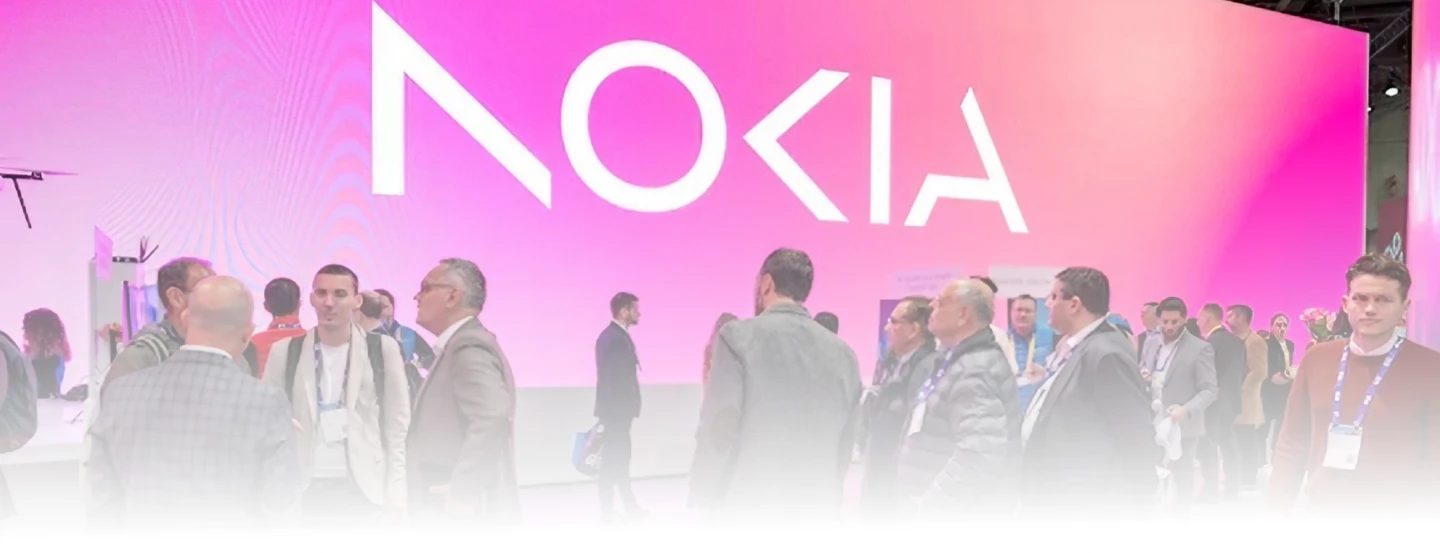
How We Built One Platform to Train 10,000+ Professionals Across Saudi Arabia's Telecom Industry
Nokia Al-Saudia's Digital Training Platform
Nokia Al-Saudia Training Centre is one of Saudi Arabia’s most credible professional development institutions delivering programs across 5G, AI, cybersecurity, and Lean Six Sigma to thousands of corporate and government learners. The credibility was there. The infrastructure to run it at scale was not. Enrollments were tracked in spreadsheets. Certifications were issued manually. Corporate training engagements were coordinated by email. Five accreditation partners were managed separately, with no integrated feed. We built one platform that automated enrollment, certification issuance, corporate intake, and partner content delivery and onboarded 10,000+ learners through it.
The Impact
A Training Centre With the Credibility of Nokia and the Infrastructure of a Spreadsheet
Nokia Al-Saudia Training Centre is the educational division of Nokia Al-Saudia, a joint venture between Nokia Corporation and Saudi shareholders, established in 2000. With more than 1,300 professionals across a national operation and branch offices in Riyadh, Jeddah, Medina, Al Khobar, and Abha, Nokia Al-Saudia occupies a distinctive position in the Kingdom’s technology landscape: it is both an end-to-end telecom service provider and one of the country’s leading talent development institutions.
The Training Centre delivers programs across 5G, IoT, AI, cybersecurity, Lean Six Sigma, management, and health & safety, serving enterprise clients, government entities, university co-op students, and working professionals preparing for the Kingdom’s evolving digital economy under Vision 2030.
When they came to AppVerticals, the Training Centre’s credibility wasn’t the problem. Their ability to deliver that credibility at scale was. They needed a technology partner who understood what a multi-modal, multi-audience training operation actually requires rather than a generic LMS vendor, and not a team that would build them a website with a course list attached.
A Nationally Recognised Programme Running on Tools Built for Something Smaller
Nokia Al-Saudia Training Centre had courses that companies and government agencies trusted. They had accreditation partnerships that gave their certifications real market value. What they didn’t have was a platform that could hold all of it together without the operations team carrying most of the weight manually.
Enrollments were tracked across emails and spreadsheets. A coordinator receiving a corporate booking request for a customized 5G program had to manually match it against trainer availability, assign learners, and follow up on completion — then repeat the process when the certification needed to be issued. For a handful of learners, this is manageable. At a 10,000-learner scale, it was a ceiling.
Administrators had no live visibility into what was happening across the platform. Which sessions were full? Which learners had completed their modules? Which certifications were pending issuance? None of these questions had a clean answer without going into multiple systems or asking someone who had been tracking it manually.
Corporate clients — government entities and enterprises sending cohorts of staff for customised programs — had no structured intake process. Every B2B engagement required bespoke coordination. Trainers couldn’t access structured data on learner engagement or performance, which meant program quality was harder to monitor and harder to improve.
And accreditation partner content — IAIDL, Arcitura, ScrumStudy, VMEdu, Six Sigma Study — had to be managed separately. There was no integrated feed. Course accuracy and currency depended on whoever was responsible for keeping it updated.
None of this was a failure of the team. It was the predictable consequence of a training operation that had grown faster than the infrastructure beneath it.

We Built Around Roles, Not Around Features
The prompt we started with was clear enough: build a digital training platform. What we pushed to understand before writing a single line of code was what each group of people i.e., learners, trainers, admins, corporate clients, actually needed to do, and what was currently in the way.
That question shaped everything. A platform built around a feature list tends to centralise capability in ways that don’t match how people work. A platform built around roles ends up with each person having exactly what they need, where they expect to find it, without navigating around tools that were built for someone else.
We organised the build around four audience tracks (individual learners, corporate clients, trainers, and administrators) and worked through each one with the Nokia Al-Saudia team before sequencing the development work.
Adaptive Training Portal
We built a role-aware portal that responds to who is logged in and how they're taking their course. A self-paced learner sees different controls and progression logic than a virtual session participant or an on-site attendee. The delivery mode is the same platform, not a different tool for each context.
Dynamic Course Catalog and Enrollment Engine
We built a structured catalog covering the full training portfolio — 5G and RAN optimisation, VoLTE, NB-IoT, AI specialist tracks, cybersecurity, Scrum and Agile, Lean Six Sigma, and management programs — with enrollment logic that handles individual and corporate registrations, session scheduling, and cohort management without manual coordination at each step.
Certificate Management and Automated Issuance
We built a certification workflow that tracks course completion against accreditation requirements and generates credentials automatically. Admins no longer need to manage a separate issuance process. Completion triggers the certificate. The accreditation partner's requirements are built into the logic, not maintained manually alongside it.
Corporate and B2B Training Module
We built a structured intake process for enterprise engagements: needs analysis, content customisation inputs, trainer assignment, and follow-up tracking. Corporate clients now have a defined experience from first contact to program completion. The coordination that used to happen by email now happens inside the platform.
Analytics and Admin Dashboard
We built dashboards that give administrators real-time visibility across enrollments, learner progress, certification issuance, and performance metrics by topic and delivery mode. The questions that previously required asking someone who was manually tracking now have a live answer.
Partner Ecosystem Integration
We connected the accreditation partners directly into the platform. Content from IAIDL, Arcitura, VMEdu, ScrumStudy, and Six Sigma Study flows through the catalog without manual updates. Currency of certification content is now a platform property, not a coordination task.
12 Core Modules Across 4 Audience Tracks
The build covered every part of the Training Centre's operation. Each module maps to a specific role and a specific function.
One System for an Operation That Had Never Had One
Before any module went into development, we scoped the data model and user-role structure in full. Nokia Al-Saudia’s training operation spans multiple delivery modes, multiple learner types, multiple accreditation bodies, and a B2B engagement track that operates differently from individual enrollment. Building any of these without a shared data structure underneath would have produced a platform that looked unified and behaved like separate tools.
We started there. The enrollment, certification, and analytics modules all needed to draw from the same learner record, the same session data, and the same completion events. Getting that architecture right before building individual modules meant the connections between them worked correctly from day one and not after a round of integration fixes.
PHP and Laravel were the right choices for this environment. The team at Nokia Al-Saudia needed a platform they could operate and maintain independently. Laravel’s ecosystem gave us a clean, maintainable codebase with the stability this kind of institutional platform requires. Mada integration for payment processing was built to Saudi payment infrastructure standards.
The corporate training module was developed in close collaboration with the Nokia Al-Saudia operations team. The customisation workflow, needs analysis inputs, trainer matching, content configuration, follow-up tracking, was designed around the actual sequence their team follows, not a generic B2B intake pattern. That kind of specificity only comes from having the right people in the room during the design phase, and we made sure they were.
Throughout the build, we ran the accreditation integrations alongside the core platform development. Waiting until the end to connect five partner ecosystems would have created a compressed, risky final phase. Running it in parallel meant each integration was tested against live content before the platform launched.
One Platform. Every Learner. Built for the Kingdom's Next Stage.
The Nokia Al-Saudia Training Centre now operates from a single platform that covers every part of its training delivery: individual enrollment, corporate engagement, live sessions, self-paced learning, certification issuance, and administrative oversight.
10,000+ professionals in telecom, AI, cybersecurity, and health & safety have trained through the platform. Enrollment processing that previously required manual coordination at every step now takes a fraction of the time. This accounts to a 35% reduction in admin overhead that compounds as learner volume grows.
Corporate clients, including government entities and private enterprises sending cohorts for customized programs, move through a structured process from the first intake to the final certification. What used to be coordinated across emails and meetings now happens in one place, with a clear record at every step.
The accreditation integrations mean certification content stays current without the team maintaining it. As Nokia Al-Saudia extends its partner network or adds new program tracks, the platform absorbs that expansion without requiring infrastructure work to keep pace with it. That’s what the architecture was designed to support: not just today’s training operation, but the one Vision 2030 is building toward.
Testimonials
"We needed a platform that could handle the full complexity of our training operation which included multiple delivery modes, enterprise clients, international accreditations, and thousands of learners. AppVerticals understood that from day one. What they built digitized all our manual operations of yesterday and also changed what we're now able to do."

Running a training or certification operation that's still being managed across spreadsheets, inboxes, and disconnected tools?
We've built this before. We know what it takes to get it right.
Start a conversation