














 ChatGPT
 Perplexity
 Claude
 Google AI
To build a medical app, you work through eight stages: define the workflow it replaces, map your data and who owns it, list every user role, choose your build approach, design for clinical use, build a compliant MVP, test against HIPAA and app store requirements, then launch and iterate.
The order matters more than the list. Some of these decisions are cheap to change later and some of them are not.
Adding a feature in month four costs a sprint. Discovering in month four that your app handles Protected Health Information (PHI — any health data that can be traced back to a person) and your cloud provider never signed a Business Associate Agreement costs a rebuild. Connecting to an electronic health record system after your data model is already set is a different project from designing for it on day one.
This guide walks the eight stages in order, and flags which decisions lock.
Key Takeaways
- Building a medical app is a sequence of decisions, and four of them — data ownership, user roles, EHR integration and PHI custody — are expensive or impossible to reverse once development starts.
- The number of distinct user roles drives scope more than the number of features, because every role is a separate interface, permission set and test surface.
- A HIPAA-compliant platform does not make your app HIPAA compliant. The platform covers its own infrastructure; your workflows, access rules and vendor agreements stay yours.
- No government body certifies software as HIPAA compliant, so any vendor claiming certification is using marketing language rather than a legal position.
- Apple and Google apply health-specific review rules, and they are a common cause of launch delay.
- If you cannot name the single workflow your app replaces and the person who performs it today, you are not ready to write a spec.
What Is a Medical App?
A medical app is software that supports the delivery, management or monitoring of healthcare. That covers a patient booking a video consultation, a nurse reviewing vitals from a home monitor, and a billing team clearing a claims queue. The shift in how mobile apps are changing healthcare delivery has been steady rather than sudden, and the telemedicine adoption data bears that out.
The distinction that decides your build is narrower than the category. If your app touches Protected Health Information, it falls under HIPAA and a specific set of obligations follow. If it collects step counts and sleep data with no link to a named patient or a care relationship, it is a wellness app and most of those obligations do not apply.
That line moves more of your budget than your feature list does. A wellness app and a patient app can look identical on screen and cost very different amounts to build, because one of them needs encrypted storage, role-based access, audit logging and signed vendor agreements behind it.
Work out which side of the line you are on before anything else. If you are unsure, assume you are handling PHI and design accordingly, because removing safeguards later is easy and adding them to a live system is not.
Types of Medical Apps You Can Build
Most projects fall into one of five groups. Knowing which one you are in tells you who your users are, which systems you will need to talk to, and how much regulatory weight the build carries.
Patient-facing care apps. Booking, video consultations, secure messaging, prescriptions, results. These carry the heaviest PHI load and the most app store scrutiny, because patients use them directly. Our telemedicine app development guide covers the build specifics, and telemedicine app features sets out what belongs in a first release.
Clinical and provider tools. Anything a clinician uses during or around care: charting, decision support, referral management, imaging review. Clinical users are unforgiving of friction, so the design constraints run tighter than in consumer software. AI-powered medical diagnosis apps sit here and bring extra regulatory questions.
Operations and admin platforms. Scheduling, claims, credentialing, inventory, remote staff coordination. These rarely reach a patient’s phone, which leads people to assume they sit outside HIPAA. Many of them do not, because the data they move is still PHI.
Remote monitoring. Apps that pull readings from wearables or connected devices and route them to a care team. Device integration and data reliability dominate the build.
Wellness and prevention. Fitness, nutrition, sleep, mental wellbeing. Lightest regulatory load, and the group most likely to drift into PHI territory as features are added.
How to Build a Medical App: The 8 Steps
Step 1. Define the workflow you are replacing
Name the task, and name the person who performs it today. “Improve patient engagement” is a goal. “Stop the front desk phoning forty patients a week to confirm appointments” is a workflow, and it can be built.
Step 2. Map your data and who owns it
List every system your data currently lives in, and who controls each one. A practice management system, a lab portal, a spreadsheet on someone’s desktop, a scheduling tool. For each one, find out whether it has an API, who administers it, and whether that vendor will sign a Business Associate Agreement.
Step 3. List every user role
Write down every distinct type of person who will open the app, and what each one may see. This is the step most often skipped, and it costs more than any other omission. There is a section on why below.
Step 4. Choose your build approach and your MVP scope
Native, cross-platform or web, and which features make the first release. The useful test for scope: does this feature serve the one workflow from step 1? If not, it waits.
Step 5. Design for clinical conditions, not demo conditions
Healthcare users are often interrupted, often rushed, and sometimes older or less confident with technology. Design for one-handed use, poor connectivity and accessibility from the start. Retrofitting accessibility after launch is a redesign.
Step 6. Build the MVP with compliance designed in
Encryption of data at rest and in transit, role-based access control, audit logging of who saw and changed what, and multi-factor authentication. These are architectural decisions, not a pre-launch checklist.
Step 7. Test the app and the access rules
Functional and usability testing, plus a pass that tests permissions specifically. Can a user in one role reach data belonging to another? Check your app store requirements before you submit, rather than after rejection.
Step 8. Launch to a small group, then widen
Ship to one clinic, one department or one cohort, and watch what people actually do. Healthcare workflows rarely behave the way they look in a process diagram, and a narrow launch makes that cheap to discover.
These are not equally reversible. Treating them as a flat checklist is the most common reason a scope changes late and expensively. The next section sorts them by what it costs to change your mind.
None of these eight steps is unusual on its own. The order you take them in is what separates a build that lands from one that stalls, and it is the part most healthcare app development services conversations should start with.
What You Need to Decide Before You Write a Spec
Four of the eight steps set constraints that the rest of the build has to live inside. Get them wrong and you are not adjusting a plan, you are starting again.
The first is the workflow itself. Change what the app is for in month three and every screen, every permission rule and every integration built so far was scoped against the wrong thing.
The second is where your data lives and who owns it. This one catches people because the answer feels administrative. It is architectural. If your appointment data sits in a practice management system whose vendor will not open an API or sign a Business Associate Agreement, your app cannot read it, and no amount of engineering fixes that.
The third is whether you connect to an electronic health record system. EHR integration through FHIR (a modern standard for moving health data between systems, pronounced “fire”) or HL7 v2 shapes your entire data model. Designing for it on day one is normal work. Adding it in month five usually means rebuilding the data layer, and the wider healthcare software development trends point the same way.
The fourth is PHI custody: who signs the Business Associate Agreement, and who is accountable for patient data after launch. This has to be settled before a single real patient record enters the system.
| Decision | When it locks | Cost to change later |
|---|---|---|
| Which workflow the app replaces | At spec | Rebuild |
| Where the data lives and who owns it | At architecture | Rebuild |
| Number of distinct user roles | At architecture | High |
| EHR integration, yes or no | At data model | High |
| PHI custody and who signs the BAA | Before first real user | Rebuild |
| Platform: iOS, Android or both | At build start | Medium |
| Feature set inside a defined role | Never fully locks | Low |
| Visual design | Never fully locks | Low |
It is worth saying that integration-first thinking has its critics, and they are worth hearing. Adam Carewe, MD, of General Medicine argues that a tool no longer has to be hardwired into the EHR to deliver value, and warns that healthcare leaders still default to treating deep integration as the top priority. My own view is narrower: the decision itself is what locks, so make it deliberately and early, whichever way you go.
Not sure which decisions you have already locked?
Run your feature list through the cost calculator for a ballpark before you
Estimate your buildHow Many User Roles Your Medical App Needs (and Why It Drives Cost)
Ask someone what their medical app will do and you get a feature list. Ask how many kinds of people will use it and the estimate usually doubles.
Every distinct role is a separate interface, a separate permission set, and a separate pass of testing. Four roles is not one app with four logins. It is closer to four applications sharing a database, each with its own screens, its own rules about what may be seen, and its own way of being wrong.
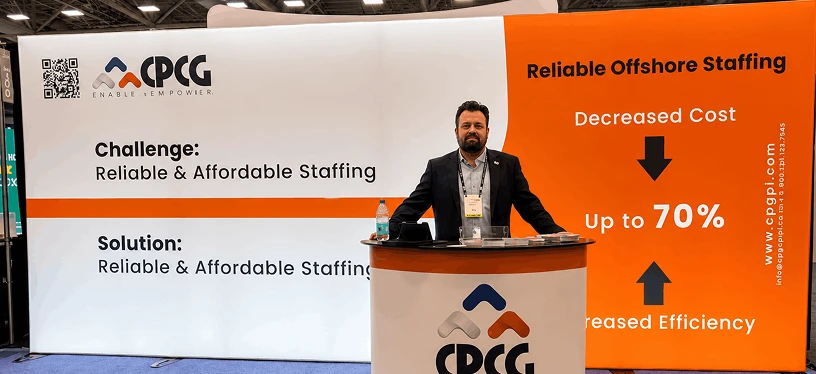
The healthcare build that made this clearest to me was a remote operations platform for Collaborative Patient Care Group, a Washington DC firm that provides administrative and operational support to healthcare providers across the US. They were running kiosk-based patient services in medical supply stores, staffed by remote agents, and holding it together with a patchwork of general-purpose remote access tools.
What they needed looked like one product. What it actually required was four: a desktop application running on the kiosk, a second desktop application for the remote agent, a web portal for the client organisation’s own administrators, and a super-admin portal for CPCG itself.
Each had different rules about what its user could see and do. The agent could operate a kiosk, but only inside scheduled hours. The store manager could see their own kiosks and request more, and nothing beyond that. The super admin could silently join a live session for quality review, which is a permission you design deliberately rather than inherit. The same logic governs healthcare CRM software and any system where clinical and commercial roles share a record.
A buyer scoping that project by counting features would have listed video calling, scheduling and reporting, and produced a number that was wrong by a wide margin. The role count was the real driver.
| User role | What they can see | What they can do | What it adds to the build |
|---|---|---|---|
| End user / kiosk | Their own session only | Start and receive support | A dedicated interface and device-level controls |
| Frontline agent | Assigned work, in schedule hours | Operate the session, request help | A second interface plus time-bound access rules |
| Client administrator | Their organisation’s activity | Manage assignments, raise requests | A web portal and an organisation-scoped data boundary |
| Super administrator | Everything, across clients | Audit, configure, override | A third portal, audit tooling and the strictest permission logic |
Before you brief anyone, write your role list down. If it runs past three, say so in the first conversation, because it changes the shape of the estimate more than any feature you could name. For builds that reach across several systems and role types, this is where healthcare software development work starts rather than ends.
What HIPAA-Ready Means, and What It Does Not Cover
Vendors describe their platforms as HIPAA-ready or HIPAA-compliant, and the claim is usually honest as far as it goes. The gap is what it covers.
A compliant platform handles its own layer: encrypted storage, secure infrastructure, and the willingness to sign a Business Associate Agreement. That agreement is a contract setting out who is responsible for what when a vendor handles patient data on your behalf. It is legally required before you share PHI with any vendor.
What the platform does not do is make your application compliant. Your access rules, your workflows, your staff training, your written policies, your risk assessment and your agreements with every other vendor in the chain remain yours. The scheduling tool, the payment processor, the analytics package and any AI feature that touches patient data each need their own Business Associate Agreement.
There is also no such thing as HIPAA certification. The Department of Health and Human Services does not certify any product or organisation as HIPAA compliant, which means a vendor advertising certification is describing a marketing position rather than a legal one. Compliance is a state you operate in, and it is assessed against how your system actually behaves.
The practical version for a buyer: treat a vendor’s compliance claim as covering their infrastructure and nothing else. Ask which specific services are in scope, get the Business Associate Agreement in writing before any real data moves, and name the person inside your organisation who owns compliance after launch. Our guide to HIPAA compliant app development sets out the full requirement set, and our breakdown of cloud infrastructure for healthcare covers where the platform boundary sits.
How Long It Takes to Build a Medical App
Timelines in healthcare are driven by integration and compliance work far more than by screen count.
| Build type | Typical timeline | What sets the pace |
|---|---|---|
| Single-role internal tool | 2–4 months | One workflow, one user type, no EHR connection |
| Patient or provider MVP | 4–7 months | Two to three roles, compliance designed in from sprint one |
| Multi-role platform | 6–10 months | Separate interfaces per role, permission logic, audit tooling |
| EHR-integrated product | 9–14 months | Integration scoping, vendor timelines and testing sit outside your control |
The variable that surprises people most is the one they cannot schedule. Integration work depends on another organisation’s cooperation, and their timeline is not yours.
Cost tracks the same drivers as timeline, with role count and integration doing most of the work. Our healthcare app development cost breakdown sets out the bands and what sits inside each one, and the telemedicine app development cost guide covers that category specifically.
Getting a Medical App Through App Store and Google Play Review
Both stores apply extra scrutiny to health apps, and this catches teams who budgeted for engineering and not for review.
| Requirement | Applies to | What reviewers check |
|---|---|---|
| Health data handling disclosure | Both stores | That you declare what health data you collect and why, accurately |
| Privacy policy accessible in-app | Both stores | A working link inside the app, not only on your website |
| In-app account deletion | Both stores | That a user can delete their account and data without contacting support |
| Medical claims in store copy | Both stores | That your description does not claim diagnostic or treatment capability you cannot evidence |
| Data safety declaration | Google Play | That the declared data practices match what the app actually does |
| Regulated feature evidence | Both stores | Documentation for anything that behaves like a medical device |
Two of these cause most of the delay. Store copy that promises more than the app can evidence gets rejected, and a data declaration that does not match observed behaviour gets rejected. Both are avoidable, and both need checking before submission.
Read the current App Store Review Guidelines and the Google Play health apps policy at the point you write your store listing, not at the point you submit. The rules change, and they change without much notice.
The Four-Gate Medical App Build Readiness Check
Before you write a spec or take a sales call, four things need to be true. Each one is a yes or a no, and a no is a stop rather than a caution.
Gate 1 — Workflow. Can you name the single workflow this app replaces, and the person who performs it today?
Failure mode: the app gets built to a goal rather than a task, and nobody adopts it.
Gate 2 — Data. Do you know every system your data currently lives in, and who owns each one?
Failure mode: an integration turns out to be impossible after the architecture is set.
Gate 3 — Roles. Can you list every distinct user role and what each is allowed to see?
Failure mode: scope and cost move sharply after kickoff.
Gate 4 — Custody. Do you know who signs the Business Associate Agreement and who owns patient data after launch?
Failure mode: compliance gets retrofitted, which is the most expensive way to do it.
Four yeses means you are ready to scope, and the conversation with a partner will be short and accurate. One no means you have one thing to fix, and it is cheaper to fix now than in month four. Two or more means the useful work this month is closing those gates rather than commissioning a build.
Honest limits: Building is the wrong call more often than the industry admits. If the workflow you want to digitise is still changing month to month, you will build the wrong thing. If a product already does ninety percent of it and you are objecting to the remaining ten, buy the product. And if nobody internally will own the app after launch, it will decay, because a medical app is never finished, operating systems update, regulations move, and clinical workflows change whether you planned for it or not.
Conclusion
Most of the eight stages in this guide can be adjusted while you build. Four of them cannot.
If you know the workflow you are replacing, where your data lives, who your users are and who answers for patient data after launch, the rest is execution, and execution can be planned, priced and scheduled.
If any of those four are still open, the useful next step is closing them. That is a cheaper problem to solve this month than it will be in month four.
Get your medical app scoped by a team that has built one
A senior engineer walks your workflow, your roles and your data map, then returns a scoped estimate with the compliance work priced in.
Explore our healthcare app development services