










Flutter App Development Company in USA
AppVerticals is a Dallas-headquartered product engineering company building cross-platform Flutter applications that reach the App Store and Google Play from one Dart codebase. We write native platform code where a feature needs it, test on physical iOS and Android hardware, and support the product through each Flutter SDK release.
A decade of delivery, measured four ways.
2,000 +
Products shipped
12M +
Active users on our platforms
96 %
First-submission store approval
250 +
Senior engineers and architects
Flutter app development services cover the full build of a cross-platform application:
Discovery and framework selection, UX and UI design, Dart engineering on the Flutter SDK, backend and API work, platform channel code for native device features, QA on physical iOS and Android hardware, submission to both stores, and post-launch support. In the United States a production Flutter app typically costs $50,000 to $120,000 and takes three to five months for both platforms. The two variables that move those numbers most are how many features reach past Flutter into native code, and how wide the device matrix runs.
Flutter App Development Services We Deliver
Two decisions shape every Flutter engagement, and both get made before engineering starts: which features need native platform code, and whether one codebase serves the product better than two native ones. Explore which of these Flutter development services matches your requirements:
Flutter Consulting and Strategy
We test whether Flutter is right for your product before anyone writes Dart. That means reviewing your platform targets, performance requirements, hardware dependencies, existing codebase and internal team skills, then putting the recommendation in writing.
Key Benefits & Outcomes
- A written framework recommendation you keep either way
- Platform channel requirements identified before the estimate
- Native or React Native recommended when either fits better
- Delivery risks named while they are still cheap to solve
Technologies & Process
Discovery starts with your product, not with Flutter. We map your feature list against what the Flutter SDK covers natively, what the pub.dev package ecosystem covers, and what needs platform channel code written per operating system. That third category is where cross-platform projects overrun, so we size it first. The output is a written recommendation covering framework choice, architecture direction, a platform channel inventory and a milestone-based estimate. When native iOS and Android or React Native serves you better, the document says so.
Custom Flutter App Development
Our custom Flutter app development services build around your workflow instead of fitting your workflow to a template. That starts with a written product brief that fixes scope, then an architecture chosen against your integration load and role structure.
Key Benefits & Outcomes
- Source code, design files and IP transfer to you in full
- One codebase reaching both stores, with native code where needed
- A written product brief governs scope before development
- Built to extend, so year-two features do not require a rewrite
Technologies & Process
Dart and the Flutter SDK power the front end, giving one widget tree that renders consistently on both platforms, while the backend is selected to align with your existing stack. We fix the state management approach, folder structure and data layer before feature work opens. Development runs in two-week sprints with a working build on both platforms at the end of each one. Where a feature reaches into cameras, sensors, biometrics, background execution or augmented reality, we write the platform channel code for iOS and Android and bridge it into the shared codebase.
Flutter UI and UX Design
One design system, two platform conventions. We build interfaces on Material 3 and Cupertino widgets so the app reads correctly to an Android user and to an iOS user without maintaining two separate designs.
Key Benefits & Outcomes
- Platform-appropriate behavior from one design system
- Adaptive layouts across phone, tablet and foldable states
- A clickable prototype approved before engineering opens
- A component library your future developers build against
Technologies & Process
Design starts with user journeys rather than screens. We map the flows, then build the interface on Material 3 for Android conventions and Cupertino widgets where iOS users expect native patterns. Adaptive layouts respond to window size classes, so tablets and foldables work without a parallel codebase. On our Coca-Cola trade platform we ran more than 150 prototype iterations across 92 screens before production code began, and the build launched with zero critical bugs.
Native to Flutter Migration
When maintaining separate Swift and Dart codebases costs more than it returns, we migrate to Flutter in stages. Your users keep working through the transition, and their data, sessions and store presence carry across.
Key Benefits & Outcomes
- Staged migration with no cutover weekend
- Feature parity mapped and signed off before work starts
- User data, auth state and store listings preserved
- Two maintenance streams reduced to one
Technologies & Process
We audit both existing codebases first and produce a feature parity map, because the most common migration failure is discovering a feature nobody documented halfway through. Flutter supports incremental adoption through add-to-app, so we run Flutter modules inside your existing native shell and migrate screen groups in sequence. High-traffic and revenue-critical flows migrate last. You receive the parity map, the migration sequence and a rollback plan for each stage before the first screen moves.
Backend and API Integration
A Flutter app is only as good as the systems behind it. We build and connect the backend, then document every integration contract so your team can maintain it without reverse-engineering our decisions.
Key Benefits & Outcomes
- Backend chosen against your stack rather than our default
- REST and GraphQL contracts documented at handover
- Offline-first behavior where field conditions require it
- Enterprise systems connected through tested integration layers
Technologies & Process
We build backends on Node.js, NestJS, Python and .NET, deployed to AWS, Google Cloud or Azure, with PostgreSQL or Firebase depending on the data shape and sync requirement. Integration work covers REST and GraphQL APIs, payment providers, identity providers, notification services, CRMs, ERPs and third-party SDKs. Where the app has to work without connectivity, we design the local data layer and conflict resolution rules in discovery. Heavy processing runs in Dart isolates so the interface thread stays responsive.
Flutter Web App Development
Most Flutter mobile products need an operations console beside them. Our Flutter web app development services build those surfaces against the same backend, and we say plainly when a separate web framework serves the browser better.
Key Benefits & Outcomes
- Admin and operations consoles on the same backend
- Shared business logic between mobile and web where it pays
- An honest recommendation when a web framework fits better
- One team accountable for the whole product surface
Technologies & Process
Flutter compiles to the web, and for internal consoles, dashboards and operations tools that reuse the mobile app’s business logic, that is often the efficient choice. For public marketing surfaces where initial load time and search indexing decide the outcome, a dedicated web framework usually wins, and we say so. Our Dad Crafted Decor build pairs Flutter mobile apps with a web console handling customers, installers and quote generation against a shared NestJS backend.
Flutter Testing and Store Release
Cross-platform code creates a testing trap: passing on one platform reads as passing on both. We test at three levels on physical hardware from both ecosystems, then handle submission to the App Store and Google Play.
Key Benefits & Outcomes
- Widget, integration and physical device testing every sprint
- Device and OS matrix agreed before engineering opens
- Both store submissions handled, including rejection recovery
- 96% of our apps clear store review on first submission
Technologies & Process
Testing runs alongside development rather than after it. Widget tests cover interface behavior, integration tests cover complete user journeys, and manual testing runs on physical iOS and Android hardware across the OS versions your audience uses. Defects get logged in two categories, shared Dart code and platform channel code, because the second kind reproduces on one platform only. A pre-submission audit covering current Apple and Google requirements runs before every release.
Flutter Maintenance and Support
Flutter ships stable releases several times a year and both stores raise their requirements annually. An unmaintained Flutter app degrades whether or not you change a line of it, so support terms are agreed in writing before launch.
Key Benefits & Outcomes
- 30 days of post-launch optimization included as standard
- Flutter SDK and package upgrades handled on a schedule
- Crash triage through Crashlytics with monthly reporting
- Store policy changes tracked ahead of enforcement dates
Technologies & Process
Every engagement includes 30 days of post-launch optimization. Beyond that, retainer-based maintenance covers Flutter SDK version upgrades, Dart package updates from pub.dev, iOS and Android OS compatibility, crash triage through Crashlytics, performance monitoring and store policy compliance. Package drift is the specific risk: a product depending on twenty community packages inherits twenty maintenance schedules. We audit dependency health at handover and review it quarterly.

You Do Not Have to Decide on Flutter Before You Talk to Us
Send the product idea and your feature list. Within 48 hours a US-based solution architect comes back in writing with a framework call, the platform channel work your features will need, and a cost band. If the answer is native or React Native, we will say so, and the recommendation is yours whether or not you hire us.
When Flutter is the right call.
Flutter fits when you need both stores from one team, when the interface is custom and heavily branded rather than following stock platform components, and when your features stay within reach of the SDK and platform channels. It suits products where the experience should feel identical on both platforms, and teams shipping an MVP who want to learn from both audiences at once rather than choosing one to launch with.
When native or React Native is the better call.
For Classic Pool Tile and Stone we recommended native Swift and Dart over a cheaper single codebase, because the augmented reality module was computationally heavy and only native gave it the performance the product needed. React Native fits when your organization runs on JavaScript and TypeScript, as it did for Coca-Cola's trade platform. Read our full Flutter vs React Native comparison for the detail.
How much does Flutter app development cost?
A Flutter app of medium complexity typically costs $50,000 to $120,000 for both platforms. Simple builds start around $28,000. Products with augmented reality, on-device AI, connected hardware or regulated compliance run above $120,000.
What moves the number on Flutter specifically?
Platform channel work is the variable most teams underestimate. A feature list that stays inside the Flutter SDK and maintained pub.dev packages costs one thing. A list needing camera pipelines, background execution, Bluetooth, AR or biometric flows written natively per platform costs another, and the difference is measured in sprints rather than days. After that: role count, offline and sync requirements, legacy systems in scope, and whether HIPAA, PCI DSS or SOC 2 apply.
What the estimate includes.
Discovery and framework selection, UX and UI design, Dart engineering, platform channel code, backend and integrations, QA across the agreed device matrix on both platforms, App Store and Google Play release, and 30 days of post-launch optimization. Cloud hosting, third-party licenses, the $99 annual Apple Developer fee and the $25 Play Console fee are itemized separately.
How Long Does It Take to Build a Flutter App?
A production-ready Flutter MVP ships in 8 to 12 weeks. Parallel design and development tracks cut typical agency timelines by 30 to 50%.

Under 1 hour
First response in US business hours. The first question is which features reach past Flutter into native code, because that answer sets the scope.
Explore Our Development Process
48 hours
You receive a framework recommendation, a platform channel inventory, a device and OS coverage matrix, and an estimate priced against them rather than against a guess.
See How We Plan Projects
1 to 2 weeks
Your Flutter pod is assembled and sprint one opens with defined goals, an agreed device list and a pinned SDK version.
See How We Build AppsThen the build
What actually causes delay on Flutter.
Regulatory sign-off adds four to eight weeks in healthcare and finance. Security audits add two to four. Undocumented legacy systems add however long the archaeology takes. Flutter contributes a fourth the other three do not explain: a plugin audit nobody ran. A feature gets estimated assuming a community package handles it, then the package turns out unmaintained, or works on Android and not iOS, and native code gets written mid-sprint. We audit dependencies in discovery.
Flutter Apps We Build by Industry
Industry changes what the app has to survive rather than what it looks like. A logistics driver app has to work with no signal in a loading bay. A healthcare app has to log every access event before it does anything else. A retail app is judged on one number, which is completed purchases. Find your sector below and explore how our Flutter app development services fit your exact needs.
-
Patient-facing apps, appointment scheduling, remote monitoring and care coordination, reaching iOS and Android patients at once. We build HIPAA-compliant, FDA-aware solutions for hospitals, practices and healthtech startups, and we are ISO 27001 certified. For Collaborative Patient Care Group we replaced five disconnected tools with one compliance-audited platform across four role levels.
-
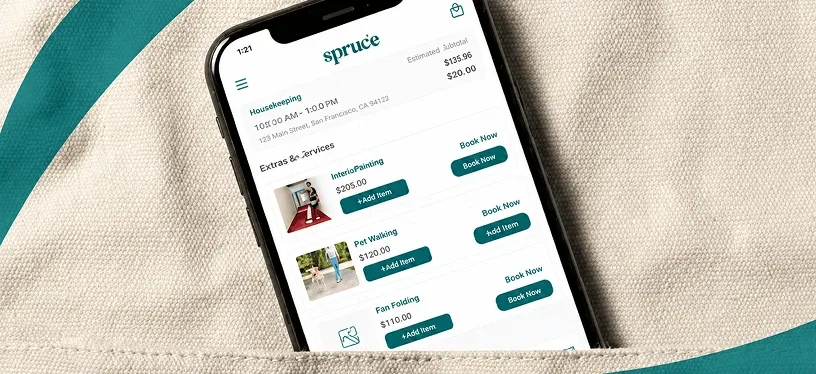
Listing and search apps, virtual tour interfaces, tenant portals and agent tools, with map integration and document workflows. Property products live or die on interface quality across devices, which is where one Flutter codebase pays for itself. Our Spruce platform runs 685,000 customers, 6,477 properties and 7,581 property management companies. Built in React Native.
-
Driver applications, dispatch, load management and tracking, designed around the reality that connectivity fails in loading bays. Offline-first storage with conflict resolution on reconnect is a discovery decision, not a feature added later. Built for Lulo Freight, a Texas logistics company, where we completed the scope a previous vendor left unfinished.
-
Learning apps, assessment delivery, content libraries and LMS integration, reaching students on whatever device they own. Flutter fits education products because the audience device split is wide and unpredictable. For Nokia Al-Saudia’s Training Centre we built a learning and certification platform that onboarded 10,000+ learners and cut admin processing time 35%. Delivered as a web platform.
-
Shopping and B2B commerce apps, live inventory, secure checkout and loyalty, judged on completed purchases rather than visual polish. For Coca-Cola’s UAE trade channel we built a 92-screen ordering and account management platform that launched with 2M+ peak users and 99.98% uptime. Built in React Native.
-
Product visualization, augmented reality configurators, quote automation and installer coordination. Our Dad Crafted Decor platform runs AR on both iOS and Android from a shared Flutter frontend, with a Python AI service and a Gemini language model driving design suggestions.
Secure Flutter Architecture, Compliance, and Full Code Ownership
A Flutter app compiles Dart to native machine code, which leads teams to assume the bundle is opaque. It is not. Every design decision below assumes the app has been pulled apart and the device it runs on is rooted or jailbroken.
Secure Architecture From Day One
Credentials live in platform secure storage backed by iOS Keychain and Android Keystore, never in Dart source or environment files. Sensitive logic stays server-side where a compromised device cannot reach it. Release builds ship obfuscated, with role-based access and controlled permissions from sprint one.
Compliance-Aware Development
AppVerticals is ISO 27001 certified. Healthcare, fintech and commerce builds carry compliance-ready workflows, including HIPAA-aware data handling and PCI DSS-aware payment flows, scoped in discovery rather than retrofitted. Our Coca-Cola platform was built to WCAG AA from the design phase.
Ownership Without Vendor Lock-In
You receive source code, repositories, design files, documentation, deployment notes, architecture decision records, the dependency audit and both store accounts, so you can maintain and scale independently of us.

Secure APIs
Protected endpoints, TLS 1.3 in transit, AES-256 at rest.

Access Control
Role-based permissions, OAuth 2.0 with JWT, biometric auth where the product calls for it.

Hardened Builds
Dart obfuscation, certificate pinning, OWASP MASVS scanning on every release candidate.

Full Handoff
Complete codebase, dependency audit, documentation and both store accounts at launch.
Launch with the product, the codebase and the Play Console account you need to scale without depending on us.
Own the Product, the Codebase and Both Store Accounts
Launch with the product, the codebase and both store accounts you need to scale without depending on us.
Where the Flutter Process Differs
The six-stage delivery lifecycle is the same one described on our mobile app development page, and there is no reason to repeat it here. Three stages work differently on Flutter, and those three account for most of the schedule risk on a cross-platform build.

Discovery produces a channel inventory, not just a brief
Alongside the product brief, discovery ends with a written inventory splitting your feature list three ways: what the Flutter SDK covers, what a maintained pub.dev package covers, and what needs native code written per platform. That third column is the entire cost and schedule risk of a Flutter project, and most estimates never name it. We price against the inventory, and we check the health of every dependency before committing to it. Deliverable: channel and dependency inventory, signed off before sprint one.
QA runs on both platforms, not on one plus an assumption
Shared code creates a blind spot: a feature verified on Android reads as verified everywhere. Platform channel code, permission flows, background execution and rendering behavior all diverge, and iOS is stricter on permissions while Android fragments across OEM battery restrictions. We test on physical hardware from both ecosystems and log defects in two categories, shared Dart and platform-specific. Deliverable: per-platform defect log separating shared-code from platform findings.


Release is scheduled around two stores, not one
One codebase still means two submissions, two review processes and two sets of annual requirement changes. Apple review is the less predictable one, so it goes first in the plan. The Flutter SDK version is pinned at kickoff and upgraded deliberately rather than drifting mid-project, because a minor version change can alter rendering behavior after QA has signed off. Staged rollout on Google Play runs alongside TestFlight. Deliverable: release plan with both store timelines and the pinned SDK version.
Three Ways to Hire Flutter Developers
Flutter capacity is usually the constraint rather than mobile capacity in general. Teams have an iOS engineer and no Dart, or a Flutter developer and no bandwidth before a store deadline. All three models below staff from the same pool of 250+ senior engineers, every one with five or more years of production experience, and a US-based solution architect leads every engagement.
Companies without in-house mobile engineering capabilities who need a turnkey solution.
A complete product squad comprising:
Teams with a Flutter gap or a deadline problem needing immediate specialized talent.
Flutter developers for hire who integrate seamlessly into your existing workflows:
Long-term products with a continuing roadmap and need for deep domain knowledge.
Hire dedicated Flutter developers with a named tech lead, month to month, so nobody re-learns your codebase.
Bring Your Feature List to the First Call
Thirty minutes with a solution architect. If you have a feature list, wireframes or an existing app, bring it, because the fastest route to an accurate estimate is seeing which features reach past Flutter into native code. You leave with a framework call and a cost band. The written product brief follows in three business days, NDA first.
One Flutter build, one React Native, and one where we recommended native. Labeled so you see the reasoning.
Cross-Platform Apps We Shipped
Technology
Two native builds and two cross-platform, so you can see the reasoning rather than take the claim.
Flutter Where Augmented Reality Runs on Both Platforms
A custom cabinetry manufacturer selling finishes customers had to imagine. We built AI-assisted visualization that detects cabinetry in a photo of the customer's kitchen and restyles it in place. Flutter frontend, NestJS backend, Python AI service and Gemini integration, with AR on iOS and Android from one codebase.



Our Flutter Technology Stack
Stack follows the shape of the problem. Each choice below exists for a reason we can state.
Dart is the foundation because sound null safety and ahead-of-time compilation remove entire categories of production crash. Flutter renders its own widgets rather than wrapping platform components, which is why a custom branded interface behaves identically on both platforms.


Clean Architecture with a feature-first structure keeps business logic testable and independent of the interface. BLoC and Riverpod handle predictable state as the app outgrows local state. GetIt manages dependency injection. Isolates keep heavy work off the interface thread.


Backend selection follows your data shape rather than a house default. NestJS and Node.js for API-heavy products, Python where AI is central, PostgreSQL for relational integrity, Firebase where real-time sync matters more. Deployed to AWS, Google Cloud or Azure.



flutter_test and integration_test run in CI/CD on every commit, covering widget behavior and full user journeys. Flutter DevTools profiles frame rendering, memory and cold start against targets agreed in discovery. Release builds ship obfuscated and signed.


Platform channels bridge Flutter to native code where a feature reaches past the SDK, which is how ARKit and ARCore both run behind one Flutter interface in our Dad Crafted Decor build. Beyond AR: on-device ML, computer vision and LLM integration.


Choosing a Flutter App Development Company
Every Flutter app development agency you shortlist will show you a portfolio and a process diagram. Six things actually separate them, and here is where we stand on each.
The engineer on your build has shipped Flutter to both stores. That shows up in state management choices that survive scale, in isolate usage, in platform channel code, and in knowing which pub.dev packages are maintained. All 250+ of our engineers have five or more years of production experience, and a US-based solution architect leads the engagement.
Most Flutter estimates never separate what the SDK covers from what needs native code per platform. That gap is where cross-platform projects overrun. We produce the inventory in discovery, price against it, and quote the difference if scope widens rather than absorbing it into the timeline.
Shared code makes single-platform testing feel sufficient. It is not. Permission flows, background execution and rendering diverge, and our defect log separates shared-code findings from platform-specific ones so single-platform bugs stay visible. 96% of our apps clear store review on first submission.
For Classic Pool Tile and Stone we recommended native over a cheaper shared codebase and said so before the contract. The framework recommendation is written down, includes the trade-off we accepted, and is yours whether or not you hire us.
Source code, repository, design files, documentation, architecture decision records, dependency audit and both store accounts. We can operate store accounts under delegated access while ownership stays with you.
2,000+ products shipped, 1,000+ clients, 12M+ active users, $500M+ in follow-on funding raised by our clients' products. Inc. 5000 listed, ISO 27001 certified, 4.9 on Clutch, named a Top Mobile App Development Company by Clutch. Check any of it.
Frequently Asked Questions
Start Your Flutter Project
A first call covers your goals, the platform decision, rough scope, delivery risks and the approach we recommend. You leave with a framework recommendation whether or not you work with us. NDA first.