











Enterprise Application Development Services
AppVerticals builds enterprise applications engineered for regulatory compliance, audit-ready access control and integration with the systems already running your operation. Every engagement is delivered against a written integration register, released under agreed nonfunctional targets, and supported through an SLA after go-live.
A decade of enterprise delivery, measured four ways.
2000 +
Apps and digital products delivered
1M +
Active users on platforms we built
10 +
Years of engineering expertise
ISO 27001/ SOC 2
Type II certified delivery controls
Enterprise application development services cover the full lifecycle of a business-critical system: capability mapping, solution architecture, custom engineering, integration with your existing ERP, CRM and HRMS platforms, data migration, security and compliance controls, quality validation, cloud deployment and managed support after go-live. An application earns enterprise-grade when it holds up under conditions a departmental tool never meets: thousands of concurrent users, permissions modeled on an org chart, uptime targets with financial consequences, and an audit trail that survives external review. In the United States an enterprise application typically costs $60,000 to $400,000 and takes four to twelve months. The two variables that move those numbers most are the number of systems in the integration landscape and the volume and condition of the data you migrate.
What Our Enterprise App Development Services Include
Most enterprise engagements start somewhere in the middle: a system already running, a process that has outgrown it, and a decision about what to keep. We work across all of it, from enterprise architecture and custom builds through integration, modernization, cloud, data, security, QA and managed support. Explore which of these services matches your business requirements:
Custom Enterprise Application Development
For teams that need access beyond the desktop, our mobile app development services extend enterprise workflows to phones and tablets. Employees can submit field updates, review records, and complete approvals through apps connected to your existing systems, with access based on their roles.
Key Benefits & Outcomes
- Workflows, roles and business rules modeled on your operation
- Modules built to extend, so year-two scope avoids a rewrite
- Source code, repositories, design files and IP transfer in full
- A written capability map governs scope before engineering
Technologies & Process
Discovery maps stakeholders, departments, current workflows and the KPIs the system has to move. We then fix module boundaries, data structures, role hierarchies, business rules and integration points in writing, and select the stack against your existing estate rather than our preference. Delivery runs in two-week increments with working software at each review. Where a packaged platform already covers a capability well, we say so and scope the integration instead of the rebuild, and that recommendation is yours whether or not you hire us.
Enterprise Application Architecture
Architecture decides what the system can absorb three years from now. We assess the current estate, then design enterprise application solutions with the capability map, target architecture, data model, API contracts, nonfunctional requirements and phased roadmap written down. Available as a standalone engagement with no build attached.
Key Benefits & Outcomes
- A target architecture with the tradeoffs written down
- Nonfunctional requirements agreed as numbers, not adjectives
- An integration register naming every system in scope
- Architecture decision records your future teams inherit
Technologies & Process
Current-state assessment covers the application estate, data flows, integration points and operational constraints. We produce a capability map, a target architecture, nonfunctional requirements carrying concrete latency, throughput, availability and recovery targets, and a phased roadmap. Microservices, modular monolith, event-driven and multi-tenant patterns each get selected against your team size, deployment cadence and operational maturity rather than against fashion.
ERP and Business Operations Systems
Finance, procurement, inventory, manufacturing and order management on one operational record instead of five. Our enterprise app development solutions build ERP modules where a packaged platform models your process incorrectly, and extend SAP, Oracle, Microsoft Dynamics or NetSuite where it models it well.
Key Benefits & Outcomes
- Finance, procurement, inventory and manufacturing on one record
- Order management and fulfillment visible to every team
- Operational reporting built into the workflow, not exported from it
- Extension of an existing ERP where replacement has no business case
Technologies & Process
We build and extend systems covering general ledger and financial workflows, procurement and vendor management, inventory and warehouse operations, production planning, order management and operational reporting. Integration into SAP, Oracle, Microsoft Dynamics and NetSuite runs through documented APIs and middleware where those platforms already hold the record. Where the process differs from the market standard in a way producing margin, the custom module wins on both cost and fit.
CRM and Customer Platform Development
Sales, service, marketing, account and partner workflows on shared customer data, with interaction history available wherever the work happens. Enterprise application development fits the CRM to operations a packaged platform prices badly: multi-entity account structures, regulated service processes and B2B relationships running several layers deep.
Key Benefits & Outcomes
- Sales, service, marketing and account workflows on shared data
- Omnichannel interaction history without a separate lookup
- Partner and reseller workflows with their own permission sets
- Extension of Salesforce, Dynamics or HubSpot where the platform fits
Technologies & Process
Custom CRM work suits operations a commercial platform models incorrectly or licenses badly at your seat count. Where the platform is the right base, we build on it and integrate the surrounding estate rather than replacing what already works. Account hierarchies, territory rules, service level tracking and partner permissions get modeled against how your revenue organization is actually structured.
Enterprise System Integration
Enterprise apps development succeeds or fails on the integration layer. We connect SAP, Salesforce, Oracle, Workday, ServiceNow and systems carrying no modern API through documented contracts, middleware, iPaaS and event streaming, so every entity has one authoritative record and data synchronization replaces manual reconciliation.
Key Benefits & Outcomes
- One authoritative record per entity across the estate
- Real-time data movement replacing scheduled exports
- Contracts, versioning and documentation on every integration
- Legacy systems connected without waiting for a modern API
Technologies & Process
REST, GraphQL and gRPC for service contracts. Middleware, enterprise service bus and iPaaS platforms including MuleSoft, Boomi and Azure Integration Services where the estate justifies them. Message brokers and event streaming through Kafka, RabbitMQ and cloud-native queues for asynchronous flows. ETL and change data capture for bulk movement. Legacy connectors, file transfer and database-level integration where a system predates modern interfaces.
Legacy Application Modernization
Modernization without an outage window. Our enterprise development solutions assess each component, then set rehost, replatform, refactor, rearchitect or phased replacement against it with effort estimates attached. Strangler-pattern migration runs the old and new systems in parallel until cutover, so operations continue throughout.
Key Benefits & Outcomes
- A written assessment saying when replacement beats remediation
- Phased migration keeping the system in production throughout
- Business logic preserved and documented, not rediscovered twice
- Decommissioning planned into the work rather than left open
Technologies & Process
Assessment first, covering code quality, dependency risk, data model, integration surface and operational cost. The remediation plan then sets the disposition for each component with effort attached, so the sequence is a budget decision rather than a technical preference. Traffic routes incrementally to the new system with rollback defined at every step, and the legacy platform is decommissioned on a dated plan rather than left running quietly for years.
Cloud-Native Application Development
Cloud application development services built on infrastructure defined in code, containers orchestrated rather than hand-managed, and managed services where they cut operational load. The landing zone, account structure and network topology get set before the first workload lands, and resilience is tested rather than documented.
Key Benefits & Outcomes
- Infrastructure defined in code and reproducible across environments
- Autoscaling against real load rather than provisioned peak
- Backup, failover and recovery tested rather than documented
- Cloud spend visible per service from the first deployment
Technologies & Process
AWS, Microsoft Azure and Google Cloud, with Kubernetes and Docker for container orchestration, Terraform for infrastructure as code, and managed database and messaging services where they reduce the operational surface your team has to carry. Migration from on-premise runs assessment first, then a per-workload decision on rehost, replatform or rebuild rather than a blanket lift of the whole estate.
Workflow Automation and RPA
Approvals, routing, data entry, notifications and exception handling move out of inboxes and into the system. Our business application development services map the process first, then orchestrate it through a workflow engine, with robotic process automation covering legacy applications exposing no API. Every automated decision carries an audit trail.
Key Benefits & Outcomes
- Approval chains, routing and notifications inside the system
- Exception handling defined explicitly, not escalated by email
- Rules-based work automated across applications with no API
- An audit trail attached to every automated decision
Technologies & Process
Process mapping comes first, because automating a broken workflow accelerates the wrong outcome. Business process management engines handle orchestration, approvals, routing and exception paths. Robotic process automation covers the gap where a legacy application exposes no interface and the work is rules-based, repetitive and high volume. We measure the manual hours before and after, so the business case is evidenced rather than assumed.
Enterprise Data and Analytics Solutions
Enterprise application software generates the data, and governance decides whether anyone trusts it. We build pipelines, warehouses and lakehouses, define master data and quality rules with your data owners, and deliver dashboards and operational intelligence at the point the decision gets made rather than in a separate reporting tool.
Key Benefits & Outcomes
- Master data governed, so one customer means one record
- Operational dashboards on live data, not yesterday’s export
- Lineage documented from source system through to report
- Row and column access control where sensitivity requires it
Technologies & Process
Data warehouses and lakehouses on Snowflake, BigQuery, Redshift or Databricks. Pipelines through managed ETL and ELT tooling with orchestration and monitoring. Master data management, data quality rules and governance policies defined with your data owners rather than assumed by us. Business intelligence through Power BI, Tableau or Looker, or embedded directly into the application where the decision happens inside the workflow.
Security and Compliance Engineering
Security controls designed to produce audit evidence as a byproduct of normal operation. Threat modeling in design, identity and access management mapped to your directory and segregation-of-duties rules, encryption at rest and in transit, and a secure SDLC with scanning inside the pipeline. Compliance obligations get scoped in discovery, not retrofitted at launch.
Key Benefits & Outcomes
- Threat model produced in design, not assembled before an audit
- Access control mapped to your directory and duty segregation rules
- Audit evidence generated by normal system operation
- Compliance obligations scoped in discovery, not at launch
Technologies & Process
Threat modeling and OWASP ASVS alignment in design. Static and dynamic application security testing plus dependency scanning inside the pipeline, with a software bill of materials produced per release. Secrets held in a managed vault rather than configuration. AES-256 at rest and TLS 1.3 in transit. We hold ISO 27001 and SOC 2 Type II certification, and we engineer against HIPAA, PCI-DSS, GDPR and SOX where the compliance obligation sits with you as data controller.
Quality Engineering and UAT
Functional, integration, regression, performance, security and accessibility testing, sized against the risk the system carries rather than sold as a standard package. User acceptance runs with the people who operate the system daily, against defined scripts and named approvers. You receive the evidence itself, not a summary of it.
Key Benefits & Outcomes
- Coverage targets agreed in writing before the first test
- Performance validated against your peak load, not an average
- Accessibility tested to WCAG 2.2 AA rather than claimed
- UAT run with the people who operate the system daily
Technologies & Process
Unit and integration tests run in CI on every merge. Regression suites automated through Playwright, Cypress or Selenium. Performance and load testing with k6 or JMeter against modeled peak. Resilience testing covering dependency failure and recovery. Security testing on every release candidate, and an accessibility audit against WCAG 2.2 AA. You receive the test plan, coverage report, defect log and signed approval evidence as deliverables.
Managed Application Services
What happens after launch is an enterprise app development service in its own right. Monitoring and incident response under an agreed SLA, security patching on a published cadence, continuous enhancements running through the same release process as original development, and cloud cost reviewed and optimized quarterly.
Key Benefits & Outcomes
- Monitoring, alerting and incident response under an agreed SLA
- Security patching and dependency upgrades on a published cadence
- Quarterly roadmap reviews in place of reactive change requests
- Cloud cost reviewed and optimized as part of the engagement
Technologies & Process
Application and infrastructure monitoring through Datadog, New Relic, Grafana or the cloud provider’s native stack. Incident management with defined severity levels, response times and escalation paths. Patch and dependency management on a published cadence. Enhancement work runs through the same backlog and release process as original development. Every build includes 30 days of post-launch optimization at no charge before a managed plan begins, and we take on enterprise applications we did not build, starting with a code and infrastructure audit.
AI-Enabled Enterprise Applications
Enterprise systems hold the two things applied AI needs: structured operational data and workflows where a wrong decision carries a measurable cost. Every implementation starts from a validated use case, a success metric, a data readiness review and a named human reviewer. Suitability depends on the use case, the data and the risk, so not every application warrants it.
Key Benefits & Outcomes
- Document processing that removes manual data entry
- Assistants scoped to a role’s existing permissions
- Prediction feeding a decision a person still approves
- Access control, logging and human review inherited from the host system
Technologies & Process
AI extends the application already in place rather than sitting beside it. Access control, audit logging and review workflows carry over from the host system instead of being rebuilt around the model. Where the data is not ready or the value is not measurable, we say so before scoping.

You Do Not Need the Architecture Settled Before You Talk to Us
Send your current system list and the business function in scope. Within three business days a US-based solution architect comes back in writing with a capability assessment, a recommended architecture direction and a cost band. If an existing platform already solves most of the problem, we will say so, and the recommendation is yours whether or not you hire us.
How much does enterprise application development cost?
An enterprise application of medium complexity typically costs $120,000 to $280,000. Departmental builds start around $60,000. Multi-function platforms carrying regulated compliance and extensive legacy integration run above $280,000.
What moves the number on enterprise
Integration count is the variable most teams underestimate. Each system added to the register carries its own authentication, data model, rate limits and an owner whose availability sets part of your schedule. Connecting to four systems is a different engagement from connecting to twelve, and the difference is measured in months rather than weeks. After that: user role count and permission depth, data migration volume and data quality at source, whether the deployment is single-tenant or multi-tenant, and whether HIPAA, PCI-DSS, GDPR or SOX applies.
What does the estimate include
Discovery and capability mapping, architecture and integration design, UX and product design, engineering, integration and data migration, quality engineering and UAT, deployment and adoption support, and 30 days of post-launch optimization. Cloud infrastructure, third-party licenses, external penetration testing and platform subscription costs are itemized separately.
How Long Does Enterprise Application Development Take?
Four to twelve months from kickoff to production release for most builds. What decides where you land is settled before engineering starts.

Under 1 hour
First response in US business hours. The first question is which systems the new application has to connect to, because the integration landscape decides the scope more than the feature list does.
Explore Our Development Process
5 days
You receive a capability map, a written integration register naming every system in scope, and an estimate priced against that register rather than against a guess.
See How We Plan Projects
2 to 3 weeks
Your enterprise pod is assembled and sprint one opens with the target architecture agreed, nonfunctional targets written as numbers, and the integration list already signed off.
See How We Build SystemsThen the Build
What actually causes delay in enterprise app development
Access to source systems is the most common cause by a distance. Waiting on credentials to a platform a third party operates adds weeks no amount of engineering capacity recovers. Security review adds two to six weeks in regulated environments. Stakeholder alignment adds time whenever the approval chain gets discovered mid-project rather than mapped during discovery. Enterprise projects contribute a fourth the others do not explain: an integration register left open. Agree it late and scope has no defined edge, because there is always one more system somebody forgot to mention. We fix the register in discovery and price against it.
Enterprise Application Solutions for Every Business Function
Business function changes what the system has to hold rather than what it looks like. A finance application answers to a close calendar and an auditor. A supply chain system answers to a truck that leaves whether the data is ready or not. Find your function below and explore how our enterprise application development services fit it.
-
General ledger, accounts payable and receivable, procurement, inventory, warehouse operations, production planning and order management on one operational record. We build ERP modules where a packaged platform models your process incorrectly, and extend SAP, Oracle, Dynamics and NetSuite where it models it well. For manufacturers, distributors and multi-entity operators.
-
Sales pipeline, service case management, account hierarchies, contract pricing, self-service ordering, document exchange and approval chains. Our Coca-Cola trade platform carries 10,000+ vendors across regions on a single ordering, tracking and payments system, and cut vendor document turnaround 65%. For distributors, manufacturers and franchise networks.
-
Recruitment, onboarding, time and attendance, payroll integration, performance review, certification and employee self-service. Workforce data carries privacy and retention obligations, so access segregation is designed rather than configured later. Nokia Al-Saudia onboarded 10,000+ learners on the platform we built and cut admin processing time 35%.
-
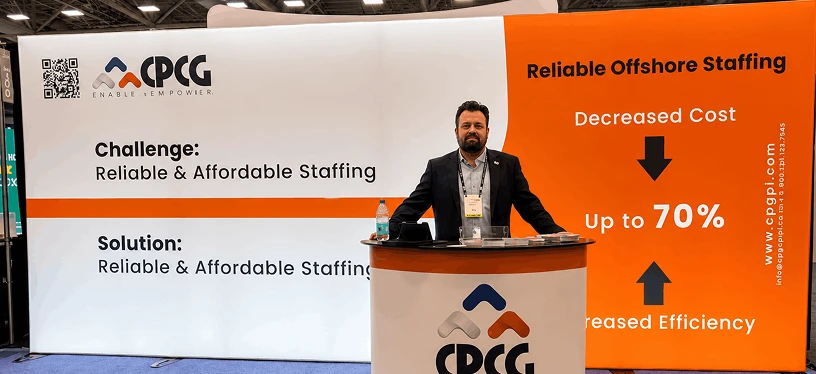
Clinical workflow systems, patient portals, remote monitoring and practice operations, integrated to EHR platforms through HL7 and FHIR. PHI is encrypted at rest and in transit and every access event is logged. Our CPCG build replaced five fragmented tools on go-live day. For hospital groups, private practice networks and healthtech companies.
-
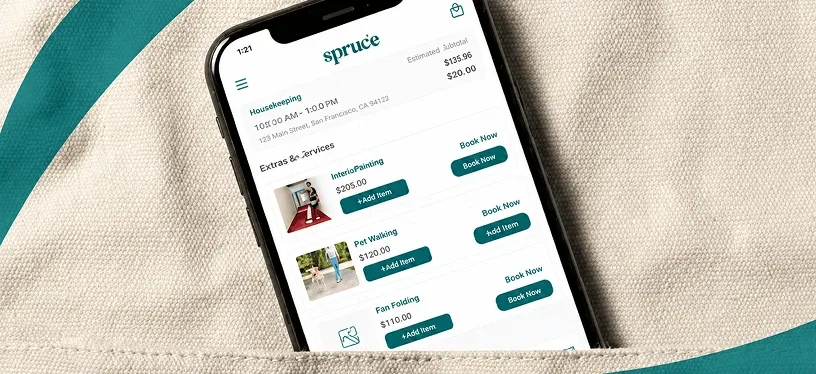
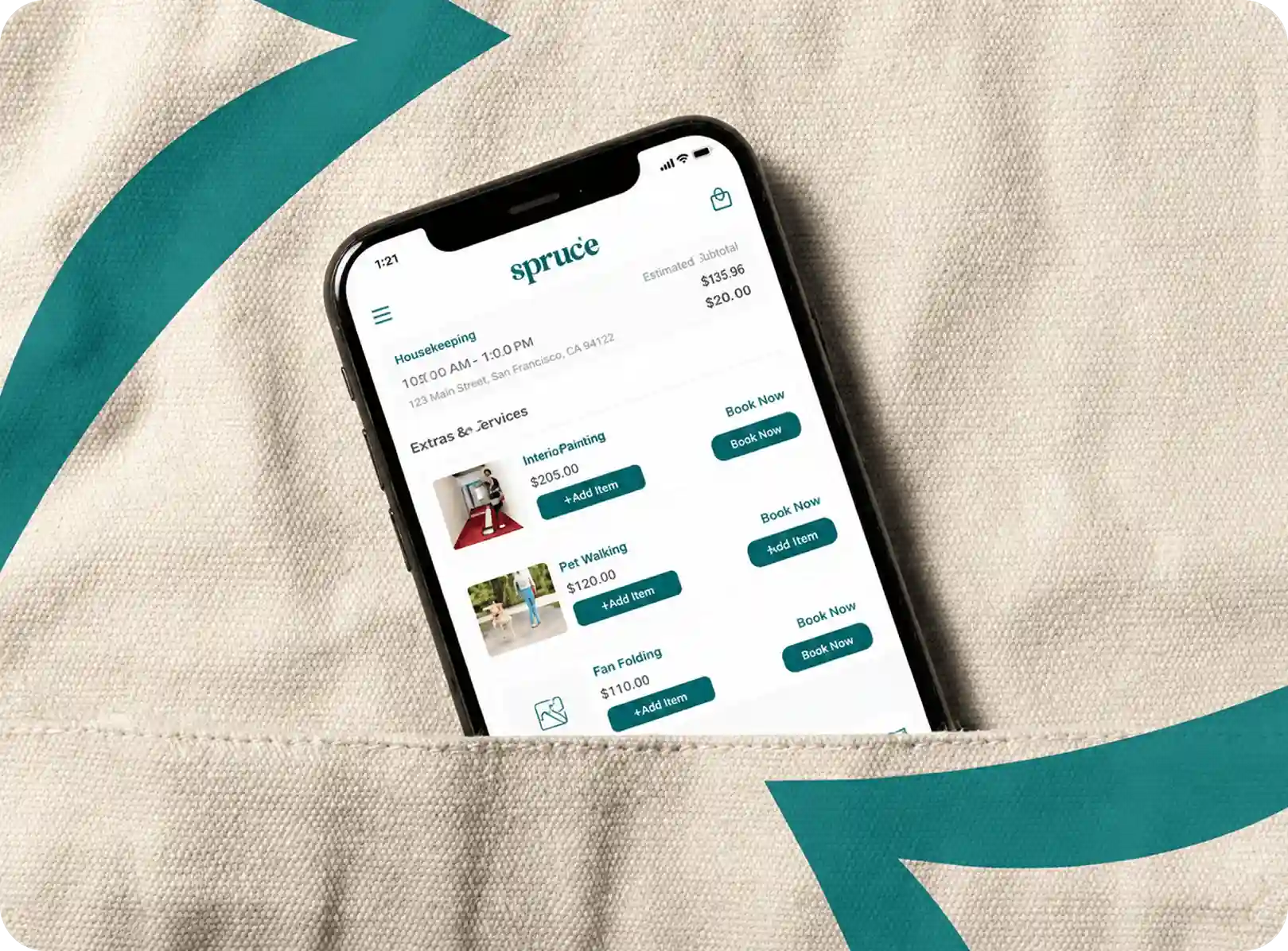
Property and tenant management, owner portals, maintenance operations, work order dispatch, technician scheduling and offline data capture. Offline capability is the default requirement rather than an option. The Spruce platform we rebuilt carries 685,000+ customers and 7,581 property management companies. For brokerages, property managers, 3PLs and service networks.
Architecture, Security and Integration for Enterprise Apps
Enterprise applications are attacked through their integrations and audited through their logs. Every design decision below assumes an external auditor will ask for evidence and an internal user will eventually be over-permissioned.
Architecture Chosen Against Your Operating Model
Microservices suit organizations running multiple teams deploying independently, with the platform engineering capacity to operate them. A modular monolith suits a single delivery team needing clean module boundaries without distributed-system overhead. Event-driven patterns fit workflows where several systems react to the same business event. API-first is the default across all three, because the integration surface outlives the implementation behind it. Concurrent user targets, throughput, data growth and latency budgets get written into the nonfunctional requirements and tested against.
Compliance-Aware Development
Healthcare, finance and commerce builds are designed with compliance-ready workflows, including HIPAA-aware data handling, PCI-aware payment flows and SOX-aware change control, scoped in discovery rather than retrofitted before launch. Threat modeling happens in design, with SAST, DAST and dependency scanning in the pipeline and a software bill of materials produced per release.
Ownership Without Vendor Lock-In
You receive source code, repositories, design files, documentation, deployment notes and the cloud accounts, so you can maintain and scale independently. Recovery time and recovery point objectives are agreed with the business owner and proven through rehearsal rather than documented and left untested.

Integration Layer
REST, GraphQL and gRPC contracts, middleware and iPaaS, message brokers and event streaming.

Identity and Access
SSO, MFA, RBAC and ABAC, SCIM provisioning, OAuth 2.0 with JWT, segregation of duties.

Data Protection
AES-256 at rest, TLS 1.3 in transit, secrets in a managed vault, immutable audit logs.

Observability
Logs, metrics and traces with SLIs, SLOs, error budgets, runbooks and defined RTO and RPO.
Launch with the system, the codebase, the cloud accounts and the documentation your team needs to operate it without depending on us.
Our Enterprise Applications Development Process
The delivery framework stays consistent across projects, but enterprise adds a layer of governance mobile and web builds do not carry. The difference is not in the number of stages, it is in who signs off inside them.

Discovery produces an integration register, not just a brief
Alongside the capability map, discovery ends with a written register naming every system in scope, the data crossing between them, the owner of each, and the authentication method it uses. This is the single most useful artifact on an enterprise project, because it converts “integrate with our systems” into a finite scope. We price the estimate against it. If the register widens later, we quote the difference rather than absorb it silently into the timeline. Technical assessment then produces the target architecture, nonfunctional requirements and architecture decision records, and product and UX design follows with validated flows and acceptance criteria.
Governance runs in parallel with delivery, not after it
Architecture review at each major decision. A RAID log covering risks, assumptions, issues and dependencies, reviewed weekly with your team present. Change control with impact assessment on scope, cost and schedule before anything moves. Secure engineering runs in two-week increments with code review, automated tests and security scanning on every merge, so the security review at the end confirms what was already built rather than discovering what was not.


Migration is rehearsed before the cutover window, not during it
Integration and data migration is where enterprise programs overrun. We profile production data during discovery, then map, cleanse and reconcile against production volumes before the cutover date is committed. Validation and hardening covers UAT with named approvers, performance against modeled peak, resilience, security and accessibility, and produces the approval evidence your change advisory board asks for. Deployment carries training, runbooks and a support transition, and managed evolution picks up with SLA reporting and a quarterly roadmap.
Engagement Models for Business Application Development Services
Enterprise buyers usually hold a procurement position before they hold a technical one. All three models below staff from the same pool of enterprise app developers with five or more years of production work, and carry identical NDA, intellectual property and security review terms. Managed application services run alongside any of them once the system is live.
Companies without in-house enterprise engineering capacity who need a turnkey programme
A complete squad, managed end to end:
Teams with a capability gap or a deadline problem needing immediate specialised talent
Named engineers integrating into your existing workflows:
Long-term systems with a continuing roadmap and a need for retained domain knowledge
A dedicated squad, month to month, so nobody re-learns your estate:
Our Enterprise Technology Stack
Stack follows the shape of the problem and the estate it joins. Each choice below exists for a reason we can state.
Kotlin is the default for new products because null safety and structured concurrency remove entire categories of production crash. Jetpack Compose gives declarative UI that adapts across window size classes without a parallel tablet codebase.



Structure decides whether your future team can maintain the app. Modular so features are worked in parallel and tested in isolation.


Backend follows your existing stack and traffic expectations rather than our habits.







Reproducible builds and automated coverage are what allow a two-week cadence without regression.


Applied where they solve a user problem rather than added as a feature list.


Bring Your System Inventory to the First Call
Thirty minutes with a solution architect. If you have an application inventory or an architecture diagram, bring it, because the integration landscape is the fastest route to an accurate estimate. You leave with an architecture direction and a cost band. The written capability assessment follows in three business days, NDA first.
Enterprise Applications We Have Delivered
Four systems, four different enterprise problems, with the constraints and the results attached.
A B2B Trade Ordering Platform for an Entire Distribution Network
Ordering, real-time tracking, invoice management and payments for thousands of trade buyers across a distribution network. The vendor base spanned a wide range of digital familiarity, which is why the final interaction model arrived after 150+ prototypes rather than after one round of wireframes.



A Proven Enterprise Application Development Company
Every enterprise application development company you shortlist will show you a portfolio and a process diagram. Six things actually separate them, and here is where we stand on each.
A US-based solution architect leads the engagement and stays through go-live. The enterprise app developers on your build have shipped systems carrying role hierarchies, audit obligations and legacy integration, not just applications with a login screen.
Where a packaged platform already solves most of the problem, we scope the integration instead of the replacement. That recommendation goes in writing during discovery and it is yours whether or not you hire us.
You get a written register naming every system in scope before sprint one, and the estimate is priced against it. Vendors quoting an enterprise application without naming the systems are quoting a scope neither party can close.
Source code, repositories, design files, cloud accounts, documentation and intellectual property transfer as work is delivered rather than at the end. If the engagement stops, you keep everything produced to that point.
ISO 27001 and SOC 2 Type II certified. Security review participation, penetration test coordination and compliance evidence form part of delivery rather than an add-on priced later.
2000+ apps and digital products delivered, 1M+ active users, Inc. 5000 listed, Clutch 1000, 4.7 out of 5 on Clutch, and proof of work with Fortune 500 enterprises as well as startups.