Mobile App Development Glossary: 60 Terms for Non-Technical Buyers
The terms that decide your budget are rarely the technical ones.
A mobile app development glossary defines the vocabulary that appears in app proposals, scope documents, and contracts. This one covers 60 terms across platform, design, delivery, technical, and commercial language, and each entry names what the term changes about your cost, your timeline, or what you own at the end.
Most buyers meet these words inside a proposal. I have read enough of those proposals to know the risk sits in the vocabulary. Search the list below, filter it, and collect the questions worth asking before you sign anything.
Written byZohra Jabeen, Technical Project ManagerReviewed byAli Hassan, Product Strategy and Client SuccessLast updated
How to read an entry
Line 1 · DefinitionPlain language. No code required.
Line 2 · What it costs youThe budget, timeline, or ownership consequence sitting behind the word.
Line 3 · Ask your vendorOne question you can use in the same meeting. Tick Add question to collect it.
Key takeaways
Sixty app development terms, grouped by where you meet them: platform, design, delivery, technical, and commercial.
Every entry names the budget, timeline, or ownership consequence behind the term, not only its definition.
Every entry ends with one question you can ask a vendor in the same meeting.
A dedicated 14 term commercial and contract section covers the vocabulary that decides what you actually sign.
Five terms move a budget more than any other word in a proposal. See the scorecard before the FAQ.
A red flag section names what it means when a vendor uses a term loosely, including input from AppVerticals' Product Strategy and Client Success lead.
PMI research puts scope creep in more than half of all projects. Vocabulary gaps are where most of that starts.
A native app is built separately for each operating system, using that platform's own language and tools: Swift or Objective-C for iOS, Kotlin or Java for Android. Each version is its own codebase, compiled for the device it runs on, which gives it the fastest available access to the camera, GPS, biometrics, and offline storage.
Often confused with
A native app differs from a cross-platform app in how many codebases exist. Native means two codebases for two platforms. Cross-platform means one codebase compiled twice.
What it costs you
Two codebases mean two builds and, afterwards, two sets of updates every time Apple or Google changes something. Maintenance runs close to double a single shared codebase, and that cost repeats every year the app stays live.
In practice
Native earns its price when hardware access decides the product. Apps built around continuous camera use, background location, or offline-first data are the ones where a user can see the performance difference.
Ask your vendor
Which features actually require native performance, and which are we paying native prices for out of habit?
Hybrid app
Platform and Architecture Terms
A hybrid app wraps standard web code, meaning HTML, CSS, and JavaScript, inside a native shell so it can be installed from an app store like any other app. The interface renders inside an embedded browser view rather than in native platform components.
Often confused with
Hybrid and cross-platform get used interchangeably and describe different things. Hybrid renders web pages inside a wrapper. Cross-platform compiles to native interface components.
What it costs you
Lower build cost up front, particularly for content-driven apps with light interaction. The wrapper adds a dependency, so when Apple or Google changes an underlying platform SDK, the wrapper has to catch up before your release can ship.
Ask your vendor
What happens to our release schedule when Apple or Google changes something the wrapper depends on?
Cross-platform app
Platform and Architecture Terms
Cross-platform development uses one shared codebase, written in a framework such as React Native or Flutter, that compiles into separate iOS and Android apps. The shared code carries most of the business logic and interface, while platform-specific behavior is written once for each side only where it is needed.
Often confused with
Cross-platform differs from hybrid in how the interface renders. Cross-platform frameworks compile to native components. Hybrid apps display web pages inside a native wrapper.
What it costs you
One codebase to maintain instead of two, which is where the saving sits. Features touching hardware or a platform-specific API still need native code written separately, and those are priced on top of the shared build.
In practice
ParentPass runs on React Native across iOS and Android from a single codebase. It has passed 17,000 users with more than 7,000 local events listed.
Ask your vendor
Which parts of this build will need platform-specific native code on top of the shared codebase?
Progressive Web App (PWA)
Platform and Architecture Terms
A progressive web app is a website built to behave like an installed app. It can be added to a home screen, work offline through cached data, and send push notifications on supported platforms, without going through an app store at all.
Often confused with
A PWA differs from a standard web app in that it installs and works offline. It differs from a native app in that some device features stay out of reach, and support levels differ between iOS and Android.
What it costs you
No app store commission and no review delay, so a release ships the moment it is ready. Device access is narrower than native, and Apple has historically supported fewer PWA capabilities than Google, which constrains some product decisions permanently.
Ask your vendor
Which of our planned features would not work in a PWA today, and does that rule it out?
Web app
Platform and Architecture Terms
A web app is software that runs inside a browser and requires no installation, reached through a URL rather than an app store. Everything renders server-side or in the browser, and the user always needs a live connection.
Often confused with
A web app differs from a PWA in offline behavior. A PWA adds installability and cached offline access on top of the same web foundation.
What it costs you
The cheapest option to build and to update, since one version serves every device and releases bypass app store review. It depends entirely on connectivity and cannot be distributed through an app store.
Ask your vendor
Is a browser-only experience acceptable for how and where our customers will actually use this?
iOS
Platform and Architecture Terms
iOS is Apple's operating system for iPhone and iPad, and it is a separate build target for every native or cross-platform app that includes Apple users. Publishing to it requires an Apple Developer Program membership and passing Apple's review before each release reaches users.
Often confused with
iOS development is narrower than Android in device variety and stricter in review. Fewer device combinations to test, more approval conditions to satisfy.
What it costs you
Membership of the Apple Developer Program is an annual cost, and every release passes through a review step that sits outside your development team's control. A rejection resets that clock.
Ask your vendor
What is our current standing with the Apple Developer Program, and who inside our company owns that account?
Android
Platform and Architecture Terms
Android is Google's operating system, running on phones and tablets from many manufacturers across a wide range of screen sizes, chipsets, and OS versions. That variety is called fragmentation, and it is the main practical difference from iOS.
Often confused with
Android differs from iOS most in testing surface. More device and OS combinations to verify, and a faster, lighter Play Store review.
What it costs you
Fragmentation adds testing time and cost on a complex build, because a layout that works on one flagship can break on a three-year-old mid-range device. The number of combinations tested is a real line item and should be stated.
Ask your vendor
How many device and screen size combinations will actually be tested before release, and which ones?
APK
Platform and Architecture Terms
An APK is the installable package file for an Android app, equivalent to an installer file on a desktop computer. It contains the compiled code, assets, and manifest that Android needs to run the app.
What it costs you
Not a cost driver on its own. It becomes relevant when a build has to be distributed outside the Play Store, which some enterprise and kiosk deployments require and which adds its own distribution work.
Ask your vendor
Will this app ever need to be installed outside the Play Store, and does that change the build?
Framework
Platform and Architecture Terms
A framework is a pre-built structure of code and tools that gives developers a starting foundation instead of writing every common piece from nothing. React Native, Flutter, Laravel, and .NET are all frameworks.
Often confused with
A framework differs from a library in who is in control. Your code calls a library. A framework calls your code, and sets the structure you build inside.
What it costs you
A framework speeds up a build considerably and creates a dependency on that framework's own release cycle and support lifetime. A framework losing active maintenance becomes a migration project you did not plan.
Ask your vendor
Which framework are we standardizing on, how actively is it maintained, and who maintains it?
React Native
Platform and Architecture Terms
React Native is a cross-platform framework built and maintained by Meta that compiles one JavaScript codebase into native iOS and Android apps. It is one of the two dominant cross-platform choices, alongside Flutter.
Often confused with
React Native uses JavaScript and renders through native components. Flutter uses Dart and draws its own interface, which affects both hiring and visual consistency.
What it costs you
JavaScript is the most widely known language in this category, which keeps your future hiring pool deep and your maintenance rates competitive. The right choice depends more on your team's existing skills than on the framework itself.
In practice
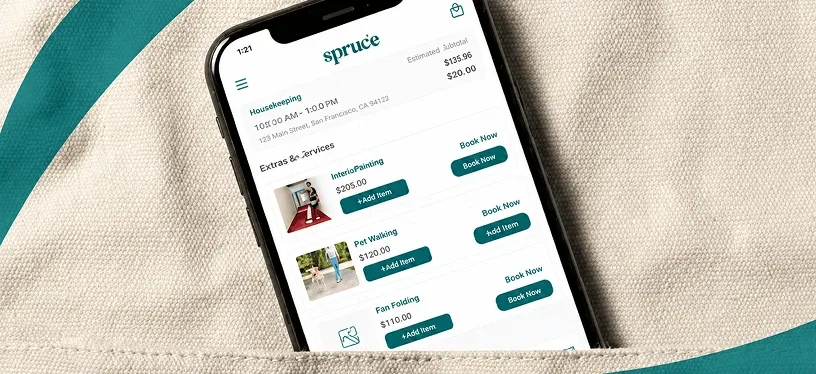
Several of our live builds run on React Native, including ParentPass across iOS and Android and the Spruce service provider apps.
Ask your vendor
Does our team already have JavaScript or React experience that makes this the cheaper long-term choice?
Flutter
Platform and Architecture Terms
Flutter is Google's cross-platform framework, written in a language called Dart, that compiles one codebase into native iOS and Android apps. It draws every interface element itself rather than mapping to platform components.
Often confused with
Flutter renders its own widgets, so a design looks identical on both platforms. React Native maps to native components, so each platform keeps its own conventions.
What it costs you
A strong choice where a highly custom, pixel-identical visual design matters. Dart has a smaller developer pool than JavaScript, which affects who can maintain the app after handover and what they charge.
Ask your vendor
If we ever need to hire in-house, how many developers in our market know this framework?
Backend
Platform and Architecture Terms
Backend development covers everything running on the server rather than on the user's device: the database, the business logic, authentication, integrations, and the APIs the app calls. A user never sees it directly and every meaningful action depends on it.
Often confused with
The frontend is what a user taps. The backend is what decides whether the tap is allowed, what it changes, and what comes back.
What it costs you
Backend complexity is usually the larger share of a serious app's build cost, and it carries the recurring hosting bill after launch. A quote that splits frontend and backend tells you where the real work sits.
Ask your vendor
What percentage of this budget is frontend versus backend, and what drives the backend figure?
10terms
Design and Product Terms
Wireframe
Design and Product Terms
A wireframe is a low-detail layout sketch showing where elements sit on each screen and how screens connect, drawn before any color, typography, or imagery is applied. It exists to settle structure while structure is still cheap to change.
Often confused with
A wireframe shows structure. A mockup shows the finished visual design. A prototype makes that design clickable.
What it costs you
The cheapest and fastest design deliverable, and the one that catches structural problems before expensive visual work begins. Changing layout after visual design is finished means paying for that design twice.
Ask your vendor
Do we sign off the wireframes before visual design starts, or are both happening at the same time?
Mockup
Design and Product Terms
A mockup is a high-fidelity static image of a finished screen, showing real colors, typography, spacing, and content, with no working interaction. It is what the app will look like, frozen.
What it costs you
More expensive than a wireframe and cheaper than a prototype. Revision rounds are where this line item grows, so the number included before extra rounds are billed should be written down.
Ask your vendor
How many rounds of mockup revisions are included before extra rounds are billed separately?
Prototype
Design and Product Terms
A prototype is a clickable, interactive model of the app used to test how people actually move through it, built before production code starts. Screens respond to taps and the flow can be walked end to end, with nothing behind it.
Often confused with
A prototype is a test artifact that gets discarded. An MVP is production software that real customers keep using.
What it costs you
Prototyping adds time before development and reduces the more expensive category of rework, because usability problems surface while changing them still costs design hours rather than engineering hours.
Ask your vendor
Will real users test this prototype, or only our internal team?
UI (User Interface)
Design and Product Terms
UI, or user interface, is the visual and interactive layer of an app: buttons, colors, typography, icons, spacing, and every element a user sees and touches. It covers what things look like and how they respond.
Often confused with
UI is what the screen looks like. UX is whether the sequence of screens gets someone to their goal. A beautiful interface can still produce a failing journey.
What it costs you
UI work is billed separately from UX work in a detailed proposal. A single line item covering both usually means one of the two has been underscoped, and it is rarely the visible one.
Ask your vendor
Is UI design quoted separately from UX design here, and if not, why not?
UX (User Experience)
Design and Product Terms
UX, or user experience, is the underlying logic of how someone moves through an app to complete a task, independent of how anything looks. It covers the sequence of steps, the decisions asked of the user, error handling, and what happens when something goes wrong.
Often confused with
UX decides the path. UI decides how the path is presented. UX problems show up in support tickets and churn; UI problems show up in reviews.
What it costs you
Weak UX surfaces late, as support volume and drop-off after launch, which is the most expensive point to fix it. Research and testing before design costs a fraction of redesigning a live product.
Ask your vendor
What UX research or user testing happened before this design was finalized?
User flow
Design and Product Terms
A user flow is a diagram mapping every step someone takes to complete one specific task, from entry point to completion, including the branches where things go wrong. Checkout, onboarding, and password reset each have their own flow.
What it costs you
A missing user flow is a reliable source of scope creep. Steps nobody mapped get discovered mid-build and priced as new work rather than included in the original estimate.
Ask your vendor
Can we see the user flow for our three most important tasks before development starts?
MVP (Minimum Viable Product)
Budget mover
An MVP, or minimum viable product, is the smallest version of an app that delivers real value and can be put in front of actual customers. It ships with the features needed to prove the core idea works and deliberately excludes everything else until real usage shows what to build next.
Often confused with
An MVP differs from a prototype in one decisive respect: an MVP is production software that real customers use and pay for. A prototype is a model that never leaves the building.
What it costs you
MVP is the most contested word in a scoping conversation. Used precisely it protects your budget by removing scope you have not validated. Used loosely it becomes a label for an underspecified build, where the cuts get decided during development rather than agreed before it.
In practice
The fix is a feature-by-feature walkthrough before the quote is signed: what is in, what is out, and what each excluded item costs to add back after launch.
Ask your vendor
Which features are excluded from this MVP, and what does each one cost to add back later?
Feature
Design and Product Terms
A feature is one discrete, user-facing capability that can be scoped, estimated, and priced on its own, such as login, search, checkout, or push messaging. Features are the units a scope document is built from.
What it costs you
Any feature added after a price is fixed should trigger a change order. A proposal without an itemized feature list makes that impossible to enforce, because there is no baseline to compare a request against.
Ask your vendor
Can I see a full itemized feature list, with each item priced separately?
Roadmap
Design and Product Terms
A roadmap is a prioritized, time-sequenced plan of which features ship now, which ship later, and roughly when. It communicates intent and sequence rather than contractual dates.
What it costs you
A roadmap is a planning tool, and a delivery schedule is a commitment. Treating one as the other is how launch dates slip without anyone formally renegotiating scope.
Ask your vendor
Is this roadmap a commitment with dates, or a sequence that can shift as we learn?
Design system
Design and Product Terms
A design system is a reusable library of interface components, color and type rules, spacing standards, and usage guidance that keeps an app consistent as it grows. Every screen is assembled from the same tested parts.
Often confused with
A style guide documents rules. A design system ships the actual components developers build with, so consistency is enforced rather than requested.
What it costs you
A design system costs more up front and reduces the cost of every screen designed after it. The break-even point arrives quickly on a large app and may never arrive on a small one.
Ask your vendor
Are we paying for a one-off design or a reusable design system, and which does this product actually need?
12terms
Delivery and Process Terms
Agile
Delivery and Process Terms
Agile is a delivery method built on short, repeating cycles of building, testing, and adjusting, rather than one long fixed plan set at the start. Priorities are re-examined every cycle.
Often confused with
Agile expects scope to adjust as the team learns. Waterfall fixes scope first and treats change as an exception requiring formal approval.
What it costs you
Agile engagements usually bill on time and materials rather than fixed price, because the scope is expected to move. That trade buys you responsiveness and removes the certainty a fixed number provides.
Ask your vendor
How do we see and approve changes to priority between sprints?
Sprint
Delivery and Process Terms
A sprint is one fixed work cycle inside an Agile project, typically one to four weeks, ending in a specific demonstrable piece of working software. Every sprint has an agreed goal set before it starts.
What it costs you
Sprint length sets how quickly you see progress and how fast a misunderstanding gets caught. Shorter sprints cost slightly more in coordination overhead and reduce how far a wrong assumption can travel.
Ask your vendor
How long is one sprint, and do we get a working demo at the end of every one?
Backlog
Delivery and Process Terms
A backlog is the full, prioritized list of features, fixes, and technical work waiting to be built, ordered by what happens next. It is the single queue everything on the project passes through.
What it costs you
A backlog you cannot see is a budget you cannot audit. Who holds the authority to reorder it decides what actually gets built with your money.
Ask your vendor
Who has authority to reorder the backlog, us or the development team?
Standup
Delivery and Process Terms
A standup is a short daily team check-in covering what was completed, what is next, and what is currently blocking progress. It runs in minutes rather than as a meeting.
What it costs you
Not a direct cost line. A vendor who cannot describe their standup cadence has weaker delivery visibility than the proposal implies, and you will find that out later than you would like.
Ask your vendor
Are we invited to standups, or do we only get a weekly written summary?
Scope
Budget mover
Scope is the written, explicit list of what a project includes and, equally importantly, what it excludes. It is the document your price is calculated from and the reference point for deciding whether a later request is covered or is new billable work.
Often confused with
Scope defines the boundary. A statement of work makes that boundary contractual. A change order is how the boundary moves afterwards.
What it costs you
An undefined exclusion is the most common route to a budget overrun. When a requirement is neither listed as in scope nor listed as out, both sides assume in good faith and one of them is wrong.
Ask your vendor
What is explicitly listed as out of scope in this proposal?
Scope creep
Delivery and Process Terms
Scope creep is the gradual accumulation of features and requirements beyond the original agreement, approved informally in conversation rather than through a change order. No single addition looks significant, and the total moves the budget.
Often confused with
A change order is scope change that was priced and signed. Scope creep is scope change that was neither.
What it costs you
Scope creep is the leading cause of app projects running over budget. PMI research puts it in more than half of all projects, and it usually starts with vocabulary neither side pinned down before work began.
Ask your vendor
What is the written process for approving a scope change once the project has started?
QA (Quality Assurance)
Delivery and Process Terms
QA, or quality assurance, is the structured process of testing an app for defects, performance problems, security gaps, and usability failures before real users reach it. It covers functional testing, device testing, and the error states most builds forget.
Often confused with
Developer testing checks that code does what the developer intended. QA checks that the product does what the business agreed, on real devices, including when things go wrong.
What it costs you
QA is a common place to underscope an early proposal, because cutting it makes a quote look competitive. A light-QA build costs less up front and more after launch, in support load, emergency fixes, and store reviews.
Ask your vendor
How many QA hours are budgeted, and is that separate from developer time?
Beta testing
Delivery and Process Terms
Beta testing is the release of a near-finished app to a limited group of real users before public launch, to surface problems that internal testing does not reach. Real devices, real networks, real behavior.
What it costs you
Skipping beta to protect a launch date moves bug discovery to your paying customers, which is the most expensive and most visible place to find them. Public store reviews are difficult to undo.
Ask your vendor
How many beta testers, and for how long, before the public release?
TestFlight
Delivery and Process Terms
TestFlight is Apple's official beta distribution platform for putting pre-release iOS builds in front of testers before an App Store submission. Builds still pass a lighter Apple review before reaching external testers.
What it costs you
No direct cost beyond the Apple Developer Program membership. Its absence from a plan signals that iOS beta testing was not scheduled, which usually means the first real-device feedback arrives after launch.
Ask your vendor
Is TestFlight part of our testing plan, or are we going straight to submission?
Deployment
Delivery and Process Terms
Deployment is the process of moving a finished build into a live environment, whether that is an app store, a production server, or both. It covers build signing, environment configuration, database migration, and the rollback plan if something fails.
Often confused with
A release is the version users receive. Deployment is the mechanism that puts it there.
What it costs you
Deployment includes app store submission and review, a step with its own timeline outside your development team's control. A launch date that assumes instant approval is a launch date with no margin.
Ask your vendor
Is app store review time built into our launch date, or does that date assume instant approval?
Release
Delivery and Process Terms
A release is one specific version of the app made available to users, whether that is the first public launch or a later update. Each release has its own build number, scope, and testing pass.
What it costs you
Every release after the first should be scoped and priced separately, because post-launch work is quoted differently from initial build work. A contract silent on this leaves update pricing to be negotiated when you have least leverage.
Ask your vendor
How is a future release priced compared with the original build?
Post-launch support
Delivery and Process Terms
Post-launch support covers defect fixes, monitoring, platform compatibility updates, and small maintenance work after an app goes live. It keeps what you already paid for working, and does not include building anything new.
Often confused with
Support keeps existing functionality running. A warranty period covers defects in delivered work at no charge. New features are neither.
What it costs you
Post-launch support is quoted separately or not quoted at all, and becomes an unplanned line within weeks of launch. The boundary between a covered fix and a billable new feature is where the disputes happen.
Ask your vendor
What exactly does post-launch support include, and what falls outside it as new work?
12terms
Technical Terms You Will Hear in Estimates
API (Application Programming Interface)
Technical Terms You Will Hear in Estimates
An API, or application programming interface, is the agreed set of rules that lets two separate pieces of software exchange data. Your app calls an API to take a payment, load a map, verify an identity, or reach your own backend server.
Often confused with
An API is a service your app calls over the network. An SDK is a package of code installed inside your app, and it usually calls an API on your behalf.
What it costs you
Third-party APIs carry usage fees separate from your build cost, billed per call, per active user, or per month. Those fees begin at launch, continue for the life of the app, and scale with your success rather than with your budget.
Ask your vendor
Which APIs does this app depend on, what does each cost per month at our expected volume, and what happens if one raises its pricing?
SDK (Software Development Kit)
Technical Terms You Will Hear in Estimates
An SDK, or software development kit, is a packaged set of code, tools, and documentation that lets developers add one specific capability without building it from scratch. Payments, maps, analytics, crash reporting, push delivery, and identity verification are commonly added this way.
Often confused with
An SDK ships inside your app as code. An API is a service your app calls over the network. Many SDKs exist purely to make an API easier to use.
What it costs you
SDKs cut development time considerably. Many carry a free tier that ends at a usage threshold, so the bill appears months after launch, at exactly the point your user numbers start growing.
Ask your vendor
Does any SDK in this build have a free tier limit, what is the threshold, and what does it cost once we pass it?
Tech stack
Technical Terms You Will Hear in Estimates
A tech stack is the full set of programming languages, frameworks, databases, and hosting services used to build and run an app. A complete stack names the mobile framework, the backend language, the database, and the cloud provider.
Often confused with
A framework is one component. A stack is every component together, including the parts a proposal often leaves unstated, such as hosting and the database.
What it costs you
The stack decides who can maintain your app after handover. Common, actively maintained tools give you a deep hiring pool and competitive rates. Rare or fading tools narrow your options and raise the price of every future developer.
In practice
Our live builds run on stacks including React Native with Node and Postgres on AWS, and React Native with .NET on Azure. Each is chosen for what the product needs and is common enough that another team could pick it up.
Ask your vendor
Is this tech stack common enough that we could hire a different team to maintain it in three years?
Database
Technical Terms You Will Hear in Estimates
A database is the system that stores and structures an app's data so it can be searched, updated, and retrieved reliably and at speed. It holds your users, your transactions, and your content, and it is the asset that matters most if anything goes wrong.
Often confused with
Hosting is where the database runs. The database is the software organizing the data. Backups are a separate arrangement from both, and need to be confirmed separately.
What it costs you
Database hosting is a recurring cost that scales with usage and continues indefinitely after the build is finished and paid for. Backup, monitoring, and restore testing are usually priced separately again.
Ask your vendor
What is the estimated monthly database hosting cost at our expected volume, and who is responsible for backups?
Frontend
Technical Terms You Will Hear in Estimates
The frontend is everything a user sees and interacts with directly: screens, buttons, navigation, animations, and layout. On a mobile app it is the code running on the device itself.
What it costs you
Frontend work is the visible half of a build and the easier half to review, because you can watch it change. That visibility makes it the half clients scrutinize, while the backend quietly carries more of the cost.
Ask your vendor
Can we review a working frontend build before the backend is fully finished?
Push notification
Technical Terms You Will Hear in Estimates
A push notification is a message delivered to a user's device from outside the app, appearing on the lock screen or notification tray whether or not the app is open. Delivery runs through Apple and Google's own notification services.
Often confused with
A push notification reaches a user who is not in the app. An in-app message only reaches someone already using it. The two solve different retention problems and are priced separately.
What it costs you
Push infrastructure adds a recurring service cost and requires opt-in permission that a user can revoke. Over-sending is one of the most common causes of uninstalls, so frequency is a retention decision rather than a technical one.
Ask your vendor
What is our plan for push frequency, and who owns that decision after launch?
Integration
Budget mover
An integration is the work of connecting your app to a system you do not control, such as a CRM, a payment processor, an EHR, or an internal company database. Each connection has to handle authentication, data mapping between two different formats, error states when the other system is unavailable, and version changes announced with little warning.
Often confused with
A third-party service is the system you connect to. An integration is the engineering work of connecting to it, and the two are priced separately.
What it costs you
Integration is the most underestimated item on a typical proposal. The real complexity of a third-party system is rarely visible until work begins, and a poorly documented API can cost more than the feature it supports.
In practice
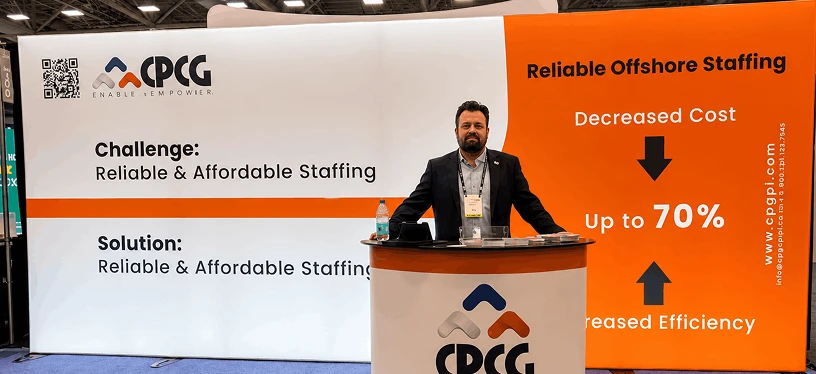
CPCG had been running remote kiosk support across three separate tools: Microsoft Teams, AnyDesk, and Splashtop. Consolidating them into one integrated platform removed the coordination overhead that fragmentation created.
Ask your vendor
Which third-party systems are included, which are we responsible for connecting ourselves, and what happens when one of them changes its API?
Third-party service
Technical Terms You Will Hear in Estimates
A third-party service is any external tool or platform your app depends on that your team does not build, host, or control, from analytics and authentication to maps, messaging, and payments. Each one is a live dependency on another company's uptime and pricing.
Often confused with
An integration is the work of connecting. A third-party service is the ongoing subscription and the dependency that comes with it.
What it costs you
Every third-party service is a recurring bill and a risk outside your control, including price changes, deprecated features, and outages you cannot fix. A complete proposal lists all of them with monthly costs.
Ask your vendor
Can we get a full list of every third-party service this app depends on, with its monthly cost at our volume?
Version control
Technical Terms You Will Hear in Estimates
Version control is the system that tracks every change made to an app's code, who made it, and when, so any previous state can be restored. Git is the current standard, hosted on services such as GitHub, GitLab, or Bitbucket.
Often confused with
Version control is the system tracking changes. Source control access is your login to the repository holding them. Having the first without the second leaves you dependent on your vendor.
What it costs you
No direct cost, and its absence is a serious risk signal. Who owns the repository determines whether you can switch vendors without renegotiating for code you already paid for.
Ask your vendor
Where does the code live, and do we have direct access to the repository from day one?
Technical debt
Budget mover
Technical debt is the future cost created when a team takes a shortcut now to meet a deadline. The shortcut works, and it accrues interest: every later feature built on top of it takes longer, until the interest payment exceeds the cost of fixing the original decision.
Often confused with
A bug is something behaving incorrectly. Technical debt is something working correctly in a way that makes the next change harder and more expensive.
What it costs you
Technical debt is unavoidable in most real timelines. The risk sits in nobody documenting where it is, so it surfaces as unexplained slowdown a year later rather than as a trade-off you knowingly agreed to.
In practice
Spruce came to us with a fragmented legacy architecture where feature updates and maintenance had both become difficult. That is what accumulated technical debt looks like from the business side: the app still runs, and shipping anything new costs more every quarter.
Ask your vendor
Where are we knowingly taking a shortcut on this build, and what will it cost to fix later?
Scalability
Technical Terms You Will Hear in Estimates
Scalability is an app's ability to keep working correctly as its users, data volume, and transaction load grow, without needing a rebuild. It is decided by architecture choices made before the first feature is written, covering how data is stored, how capacity is added under load, and where the first bottleneck appears.
Often confused with
Performance is how fast the app is for one user today. Scalability is whether that stays true at ten times the load.
What it costs you
Building for scale you do not need adds cost today for a problem you do not have. Building for too little means a rebuild later, at the point the app is live and the work has to happen without downtime.
In practice
We rebuilt the Spruce platform after its original architecture stopped supporting feature updates. The redesigned system now runs 6,477 properties and more than 685,000 customers across 67 service providers.
Ask your vendor
Is this architecture built for our current user count or for where we expect to be in two years, and what breaks first?
App Store Optimization (ASO)
Technical Terms You Will Hear in Estimates
ASO, or app store optimization, is the practice of improving an app's title, keywords, description, screenshots, and ratings so it ranks higher in App Store and Play Store search. It is the app store equivalent of SEO, and store search is where most organic installs begin.
Often confused with
SEO governs how people find your website. ASO governs how they find your app inside the stores. Ranking well in one does nothing for the other.
What it costs you
ASO is sold separately from development and is the first thing cut on a tight budget, which leaves a well-built app with no organic discovery path. Paid installs then become the only route to users.
Ask your vendor
Is ASO included in this proposal, or is it a separate line item we need to budget for?
14terms
Commercial and Contract Terms
Statement of work (SOW)
Commercial and Contract Terms
A statement of work is the formal document defining deliverables, timeline, cost, responsibilities, and acceptance conditions for a project. It is the document that actually governs the engagement, and the one a dispute is settled against.
Often confused with
A proposal is a sales document. A statement of work is a contractual one. Anything present in the first and missing from the second is not enforceable.
What it costs you
If a commitment made during a sales call is not written into the statement of work, it does not survive a disagreement. Verbal assurances about timelines, team seniority, and included revisions are the ones that most often go missing.
Ask your vendor
Does the statement of work contain everything we discussed, or only part of it?
Change order
Commercial and Contract Terms
A change order is a formal, signed amendment to the statement of work that adds, removes, or alters scope after the original agreement is in place. It restates the price and the timeline implications before the work begins.
Often confused with
A change order is scope change that was priced and approved. Scope creep is the same change without either step.
What it costs you
Every change order resets both price and delivery date. A vendor who makes changes without raising one is building an unbillable liability for themselves and an unbudgeted surprise for you.
Ask your vendor
What is the process and turnaround time for a change order once we are underway?
Time and materials
Commercial and Contract Terms
Time and materials is a billing model where you pay for hours actually worked at an agreed rate, rather than one fixed number for a defined scope. Scope can change during the project without renegotiating the contract, because you are buying capacity rather than a specified deliverable.
Often confused with
A fixed bid sets one price against one written scope. Time and materials sets a rate and leaves the total open. The first suits fully specified work; the second suits genuine uncertainty.
What it costs you
Time and materials suits projects with real unknowns in their requirements. Your final cost has no ceiling unless you negotiate one, so the spend cap and the reporting cadence matter more than the hourly rate.
Ask your vendor
Is there a cap on total hours or spend, and how often do we see a burn report against it?
Fixed bid
Commercial and Contract Terms
A fixed bid is a single agreed price for a clearly defined scope of work, set before development begins. The vendor carries the risk of having underestimated, which is why a credible fixed bid usually follows a paid discovery phase that produced the scope behind it.
Often confused with
A fixed bid transfers estimation risk to the vendor. Time and materials keeps it with you. Neither is safer in the abstract; the scope document decides which one protects you.
What it costs you
A fixed bid protects your budget only to the extent that the scope behind it is written in detail. A fixed number attached to a vague scope moves the risk straight back to you through change orders.
Ask your vendor
Can I see the detailed scope document this fixed bid is calculated from?
Milestone payment
Commercial and Contract Terms
A milestone payment is a portion of the total fee released when a specific, agreed deliverable is completed and formally accepted. The milestone schedule sets how much of your money is committed at each stage of the build.
Often confused with
A milestone is the deliverable. Acceptance criteria are the written conditions it must meet before payment is due. A milestone without them is a date rather than a checkpoint.
What it costs you
Milestone structure controls your exposure directly. Fewer, larger milestones mean more of your budget is committed before you have seen working software, which is the position with the least leverage.
Ask your vendor
How many milestones are there, and what specifically triggers each payment?
Discovery phase
Commercial and Contract Terms
A discovery phase is an initial, separately priced stage where requirements, scope, technical approach, and risks are defined before a full quote is issued. Its output is a scope document detailed enough to price against.
Often confused with
Discovery produces the scope. The fixed bid is calculated from it. Skipping discovery and asking for a fixed bid anyway produces a number based on assumptions rather than requirements.
What it costs you
A real discovery phase costs money before any software exists and produces a materially more accurate estimate afterwards. Skipping it means accepting a rougher number and absorbing the variance through change orders.
Ask your vendor
Is a discovery phase included, and does its output become the scope for our fixed bid?
Code ownership
Budget mover
Code ownership defines who legally holds the rights to the source code once the project is finished and paid for. It covers the application code, the configuration, and usually the designs and any custom framework built along the way.
Often confused with
Code ownership is the outcome you want. IP assignment is the contract clause that delivers it. Source control access is the practical ability to use it. All three need to be present.
What it costs you
Ownership does not transfer automatically on payment in most jurisdictions. Without an explicit clause you can pay in full for an app you are not permitted to take to another developer to modify or extend.
Ask your vendor
Where in this contract does it state that we own the source code when the project ends?
IP assignment
Commercial and Contract Terms
IP assignment is the contract clause that formally transfers intellectual property, including source code, designs, and any custom components, from the vendor to you. It usually takes effect on final payment.
Often confused with
A license grants you permission to use something someone else still owns. An assignment transfers ownership outright. A contract offering only a license is not giving you the code.
What it costs you
Without a signed IP assignment clause, code ownership has no legal mechanism behind it. This is the clause that turns the promise into something enforceable.
Ask your vendor
Where in the contract is the IP assignment clause, and does it assign or merely license?
Source control access
Commercial and Contract Terms
Source control access means you hold your own login to the repository, such as GitHub or GitLab, where your app's code lives, with visibility of the full commit history. Access from day one rather than at handover.
Often confused with
Owning the code is a legal position. Holding repository access is a practical one. Vendors sometimes concede the first and quietly withhold the second.
What it costs you
Without direct access, changing vendors means negotiating for a copy of code you have already fully paid for, at the moment your leverage is lowest. Delayed access also hides how the work is actually progressing.
Ask your vendor
Do we get direct repository access from day one, or only at project handoff?
Retainer
Commercial and Contract Terms
A retainer is a recurring fee paid for ongoing access to a vendor's team for support, small updates, or advisory work after launch. It reserves a set allocation of hours each month.
Often confused with
A retainer buys reserved availability whether you use it or not. Time and materials bills only for work performed. The retainer costs more in a quiet month and less in a busy one.
What it costs you
A retainer is billed whether or not the allotted hours are used. Whether unused hours roll forward is the single term that most affects what you actually get for the money.
Ask your vendor
Do unused retainer hours roll over to the next month, or do we lose them?
Staff augmentation
Commercial and Contract Terms
Staff augmentation means hiring individual developers from a vendor to work inside your own team, your process, and your management structure, rather than contracting the vendor to deliver a whole project. You direct the work; they supply the people.
Often confused with
Staff augmentation gives you people and leaves management with you. A dedicated team or managed project gives you an outcome and includes the management.
What it costs you
The hourly rate runs lower than a managed project because project management sits with you. That cost does not disappear, it moves onto your team's calendar as planning, review, and coordination time.
In practice
On one current engagement we act as the client's dedicated frontend team, building interfaces alongside their in-house backend team and integrating against systems they own.
Ask your vendor
Are we managing this engagement ourselves, or is project management included in the rate?
Dedicated team
Commercial and Contract Terms
A dedicated team is a vendor-assigned group working exclusively on your project for an agreed period, rather than shared across several clients at once. The same people stay with the product long enough to build context in it.
Often confused with
A dedicated team is exclusive and includes management. Staff augmentation supplies individuals into your process. A shared or part-time allocation is neither, and costs least.
What it costs you
A dedicated team costs more than a shared allocation and buys faster response times, fewer scheduling conflicts, and retained knowledge of your product. Shared teams cost less and reset context every time they return.
Ask your vendor
Is this team dedicated to us full time, or split across other clients?
Acceptance criteria
Commercial and Contract Terms
Acceptance criteria are the specific written conditions a deliverable must satisfy before you are contractually obliged to approve it and release payment. They are written before the work starts, not judged after it.
Often confused with
A feature description says what will be built. Acceptance criteria say how both sides will know it is finished, including error states and edge cases.
What it costs you
Vague acceptance criteria let a vendor declare something done while you have no written basis to disagree. That weakens your position on every milestone payment that follows.
Ask your vendor
Are acceptance criteria for each milestone written down before we start, or decided when we get there?
Warranty period
Commercial and Contract Terms
A warranty period is a defined window after launch, commonly 30 to 90 days, during which the vendor fixes defects in the delivered work at no additional charge. It covers work that did not meet the agreed specification.
Often confused with
A warranty covers defects in what was already delivered. Post-launch support covers ongoing maintenance and monitoring. Neither covers new features.
What it costs you
A missing warranty period means every post-launch defect is billed as new work, including problems that should have been caught before delivery. The definition of a covered defect matters as much as the length.
Ask your vendor
How long is our warranty period, and what specifically counts as a covered defect?
No term matches that search. Try a shorter word, or the exact term as it appears in your proposal.
Scope, MVP, integration, technical debt, and code ownership move a budget more than any other five words in a proposal, and four of the five are commercial terms rather than technical ones.
Four of these five terms are commercial rather than technical. That is not a coincidence. The words that decide a budget are almost never the ones a buyer feels least qualified to question.
Next step
Moving from initial concept to technical execution?
Walk through the 8 mandatory stages of bringing a custom app to market.
When These Terms Are Used Loosely: What to Watch For
A term used precisely protects your budget. The same term used loosely is the first sign that scope, cost, or ownership was never actually agreed on, only implied.
MVP used to describe a full build
if every feature on your wish list is inside the MVP, the term is not doing its job.
A fixed price quoted with no written scope
a number without a document behind it is a guess with a dollar sign on it.
A feature called done before error states exist
what happens when a payment fails or the connection drops is where real completion gets tested.
Code ownership left unstated
silence on code ownership defaults to a legal gray area.
What we ask when a client pushes back on a scope document
Buyer misunderstanding during scoping concentrates on the same handful of terms, and MVP sits at the top of that list, according to Ali Hassan, Product Strategy and Client Success at AppVerticals, who scopes MVPs and manages delivery from kickoff through launch.
“MVP is the word clients push back on most in a scope document, and the pushback holds up. The fix is a feature-by-feature walkthrough: what gets cut and what it costs to add back later. That conversation belongs before the quote is signed.”
Ali Hassan · Product Strategy and Client Success, AppVerticals
Take the first step towards your perfect mobile app today
Know the terms. Now see what they cost.
The vocabulary is only half of it. The other half is the number attached to each decision.
A mobile app development glossary defines the terms that appear in app proposals and scope documents. It covers platform choices, design stages, delivery methods, and commercial language. A buyer-focused glossary goes further than definitions. It names what each term changes about cost, timeline, or ownership. That is the part that affects the decision you are about to make.
Which app development terms affect cost the most?
Scope, MVP, technical debt, and integration affect cost more than any framework name. Scope defines what is included before the price is fixed. MVP decides how much you build before real users see it. Technical debt sets what you pay later for shortcuts taken now. Integration counts the outside systems your app must connect to. Each one moves a budget further than the choice of language.
What is the difference between native, hybrid, and cross-platform apps?
A native app is built separately for iOS and Android. It performs best and costs the most because two codebases are maintained. A hybrid app wraps web code inside an app shell. A cross-platform app uses one codebase compiled for both systems. Cross-platform suits most business apps. Native suits apps that lean heavily on cameras, sensors, or offline speed.
What does time and materials mean in an app development contract?
Time and materials means you pay for hours worked at an agreed rate. Scope can change during the build without a new contract. A fixed-price contract sets one number for a defined scope. Any change then needs a change order and fresh approval. Time and materials suits an unclear scope. Fixed price suits work that is fully specified before it starts.
What should I ask a vendor about their proposal?
Ask what is excluded from the scope. Ask who owns the source code when the project ends. Ask which third-party services carry ongoing fees after launch. Ask how change requests are priced and approved. Ask what happens to the timeline if a dependency slips. These five questions surface most of the cost that proposals leave unstated.
Do I need to understand technical terms to manage an app project?
Yes, but only the terms that carry money or risk. Writing code is a separate skill and most project sponsors never need it. A sponsor who understands scope, MVP, and technical debt can question an estimate. A sponsor who cannot will approve decisions without seeing the trade-off. Vocabulary is what separates reviewing a proposal from simply receiving one.
Final Thoughts
These 60 terms are the vocabulary your estimate is written in. Knowing them lets you question a proposal instead of approving one. When you are ready to test yours against real figures, read our app development cost breakdown.
0 questions on your list
Contact Us
Let’s Build Your Digital Future Great
Wait! You're So Close to Something Great
AppVerticals has developed 2000+ apps and digital products. Our experts are ready to help you build something amazing.
Still Thinking It Over?
Submit your details, and our team will reach out to explore how we can bring your idea to life.
A Technology Partner You Can Rely On
1000+ brands trust AppVerticals to create high-performing digital solutions.
Catherine
Founder, Real Estate Agency
They delivered a top-tier solution that’s fast, user-friendly, and packed with features tailored to the real estate industry. The team was professional, detail-oriented, and easy to work with from start to finish.
Bruce Wilson
CEO, Logistics SaaS Startup
The app came together exactly how we hoped. If you're looking for a team that knows what they’re doing and respects your time, they’re a solid choice.
Amit Chopra
Head of Marketing, Al Rostamani Group
Successfully delivered the project on time and within budget. They remained flexible and cooperative with backend content organization, and their support, company culture, and client-centric approach truly stood out.
Trusted by Global Industry Leaders
Your Next Big Idea Needs the Right Team
Share a few details and get a clear timeline, cost estimate, and technical roadmap, tailored to your idea.