- AI verticals
Intelligence built into your products and operations. Consulting, custom models, agents, and copilots designed around how your business actually runs.

The AI-native system behind every project.
Get AI ConsultationAI Services
Generative AI Services
Machine Learning Services
Company
- Industries
Comprehensive App & Software Development across 20+ industries
Awards & Recognitions

 All IndustriesTrusted and Recognized by


- From fast-moving startups to Fortune 500 enterprises.
A future-focused tech partner building, shipping, and scaling products for some of the world's most demanding companies.
View All Case Studies











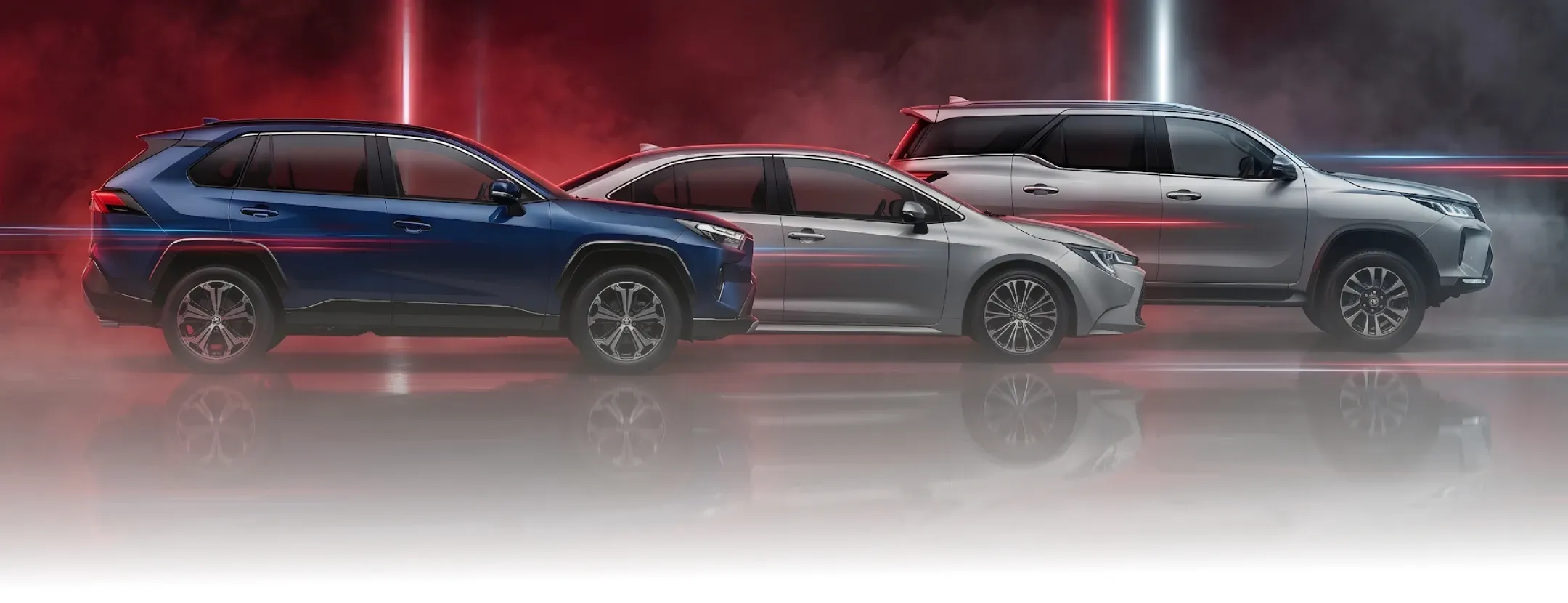
How We Rebuilt Toyota Libya's Website So a Buyer Can Get a Price Without Phoning a Dealer
Toyota Libya's Website & Dealer Platform Rebuild
Toyota Libya’s website could show you a Land Cruiser. It could not tell you what one costs. Fourteen models, no prices, no finance calculator, a compare tool capped at two cars, and no way for Toyota to know which advert produced a call. We rebuilt it, pricing and quote PDFs, an EMI calculator, compare three with export, dealer subsites, and every enquiry into their CRM inside 24 hours.
The Impact
When your benchmark is Toyota USA and your market is Libya
Toyota Libya distributes and services Toyota vehicles across Libya through an authorised dealer network. They arrived with the Toyota USA digital ecosystem as the standard to hit and a question underneath it: how much of that translates to a market where the primary device is a phone, the primary language reads right to left, and the dealer network owns the customer relationship on the ground?
They wanted the build shaped around Libya’s dealer network and the five buyer types their own research had already identified.
The site worked. It just could not sell a car.
Toyota Libya’s website worked. That was what made it hard to diagnose.
Fourteen models, each with a gallery, a spec sheet, and a brochure. A compare tool. Forms for a quote, a test drive, a service, a part. Nothing obviously broken.
Then you try to buy a car. No model shows a price. There is no finance calculator, so a buyer cannot work out a monthly payment. The compare tool takes two cars and gives you nothing to take away. Dealers have no page of their own. And when a buyer submits the form, Toyota’s marketing team cannot say which campaign produced it.
Their own buyer research had already said as much: comparing vehicles was hard, pricing was unclear, the forms were complicated.

Why we made the enquiries work before we made the pages look good
A working site invites the wrong project. The obvious move on a brief like this is a reskin, new type, new photography, same site underneath. We said no. What was missing was not styling. It was a price, a monthly payment, and any way to know where an enquiry came from.
We also kept them on WordPress. Their content team already knew it, and moving platforms would have spent the budget on a migration nobody asked for. The CMS foundation, information architecture, and base templates went in during Sprint 2, before a single vehicle page existed, because every module after that inherited from them. We built bilingual and RTL behavior into the same layer as the models and vehicle detail templates in Sprint 3. Retrofitting Arabic into a finished English site is where these projects die, and we were not going to spend Sprint 11 discovering it.
Then the enquiry path, in order. Campaign tagging agreed before the forms were built. Forms, consent, and spam controls in Sprint 5. CRM sync and SLA monitoring in Sprint 6. Every submission got a correlation ID at the point of capture, so one enquiry stays traceable across the form, the CRM call, the confirmation email, and the dashboard. Analytics came last, because the dashboards read from timestamps the integration layer had to produce first.
A Digital Platform Built Around the Buyer Journey
From vehicle discovery and comparison to finance estimates, enquiries, dealer engagement, and business intelligence, the platform connects every stage in one experience.
How Toyota knew, every single week, exactly what they were getting for their money
Toyota’s PMO held the Product Owner role and used it. They accepted or rejected every sprint themselves, and every milestone gate carried a named approver on their side before scope or money moved.
We ran one rule that shaped everything else: no evidence, no acceptance. Every story carried acceptance criteria, and every acceptance criterion carried a screenshot, a payload log, or a test result, traced from the business requirements through the functional spec to the test pack. Nobody on either side had to take a status update on trust.
| Cadence | Who | What they got |
| Every sprint | PMO + business owners | Live demo, acceptance decision recorded in Jira |
| Weekly | PMO + core team | Status, burndown, RAID review |
| Monthly | Steering committee | Progress against milestones, budget, KPI tracking |
| Within 24 hours | PMO | Any sprint impediment, escalated rather than saved for the weekly |
| Per milestone (M0–M6) | Named approver per gate | Evidence pack, then sign-off |
We told them what we needed from them in Sprint 0, not in Sprint 11.
A rebuild like this depends on things only the client can hand over: the production domain, CRM API credentials and allowlisting, the email service, the maps key, final bilingual content approvals. We wrote every one of those into a dependency register in the first sprint, with a named owner on Toyota’s side against each line, and reviewed it in the weekly. Scope changes went through a change request with written impact analysis before entering a sprint, which is why the sprint goal held every time.
Handover was a deliverable with its own sign-off. Bilingual CMS and analytics training with attendance logs, manuals in English and Arabic, a knowledge transfer plan closed out formally, and 30 days of hypercare with critical response tracked to a 24-hour SLA.
What Toyota owns now, and what it costs them to change it
The platform is built and accepted. Fourteen models with pricing and a finance estimate, six CRM-integrated forms, dealer subsites, and four dashboards passed UAT, cleared penetration testing, and were handed over with bilingual manuals and a trained Toyota admin team. The items still open before public launch are the ones that were always Toyota’s to close: production domain cutover, live CRM credentials, and final content approvals, every one of them on a register both teams have been reading since Sprint 0.
The three questions Toyota Libya could never answer each have a dashboard behind them now. Which advert produced the enquiry. Which dealer turns enquiries into sales. Which model page people leave from. Adding a market, a dealer, or a service line is a content job now, done by Toyota’s own team in the CMS.
Testimonials
"The discipline was the difference. Every sprint we saw the evidence before we signed anything, the payload, the log, the Arabic layout on an actual phone. And they told us in month one what they would need from us in month five, so nothing landed on us as a surprise. That is not how these projects usually go."

Running a website that looks fine and cannot tell you where your customers come from?
We have built exactly this, pricing, finance, enquiry forms, dealer routing, and reporting that shows which advert brought the customer in, for an automotive distributor with a dealer network to answer to, and a client who needed to see the evidence every week.
Start the conversation