- AI verticals
Intelligence built into your products and operations. Consulting, custom models, agents, and copilots designed around how your business actually runs.

The AI-native system behind every project.
Get AI ConsultationAI Services
Generative AI Services
Machine Learning Services
Company
- Industries
Comprehensive App & Software Development across 20+ industries
Awards & Recognitions

 All IndustriesTrusted and Recognized by


- From fast-moving startups to Fortune 500 enterprises.
A future-focused tech partner building, shipping, and scaling products for some of the world's most demanding companies.
View All Case Studies















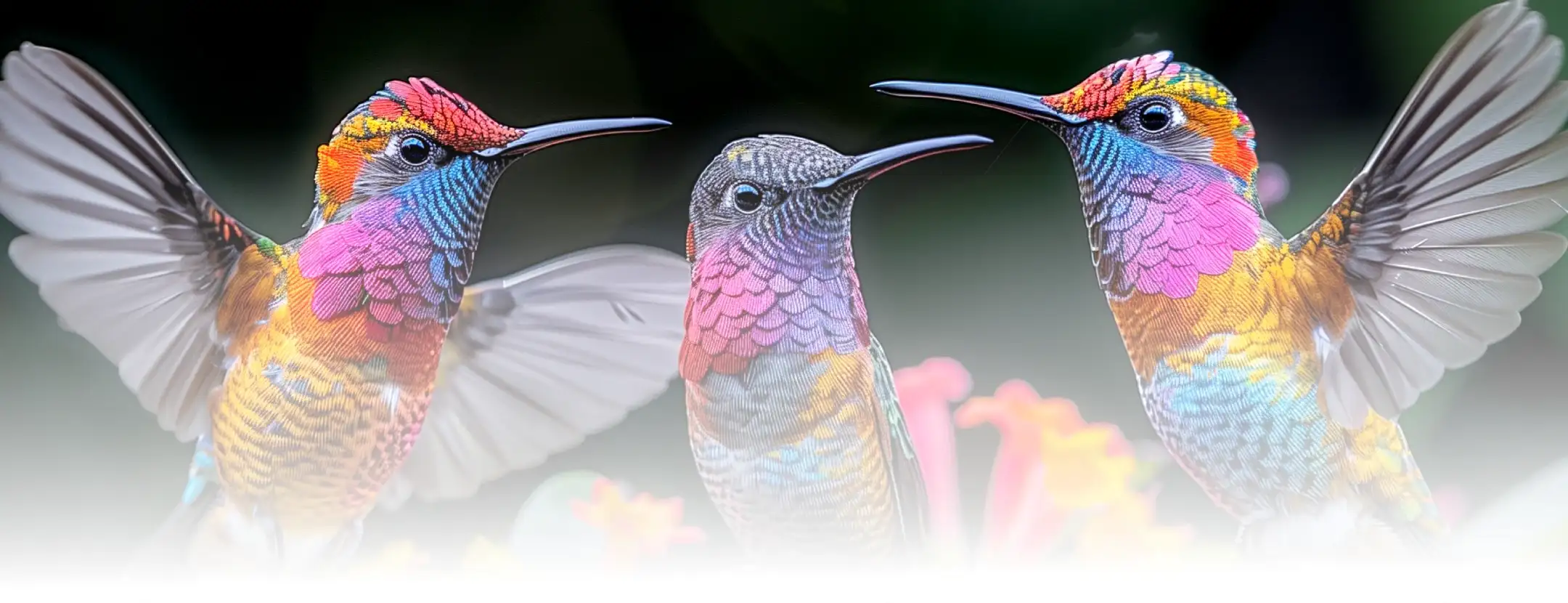
How We Built an AI Birdwatching App That Identifies 1,000+ Species, Even Offline
BirdWatcher Pro's AI Identification App
A bird lands, and you have seconds to know what it is before it’s gone. That moment usually happens far from a signal, which is exactly where most identification apps stop working. BirdWatcher Pro set out to put fast, accurate AI identification in a birder’s hand anywhere, connected or not. We built the app that recognizes a bird in about three seconds, in the field.
The Impact
Identification Has to Happen in Seconds, Often With No Signal
BirdWatcher Pro is a US-based birdwatching app that combines real-time AI identification, a customizable photo ID tool, and a large species database. It’s built to carry the whole moment of spotting a bird: recognizing the species fast, capturing the photo, and drawing on behavioral insight, for beginners learning their first birds and experts chasing rarities alike.
They weren’t after a single feature to add to an existing app. They wanted an identification tool fast and accurate enough to trust in the field, and one that kept working where birdwatching actually happens, out past the edge of a reliable connection. That’s the build we took on.
Fast AI Identification That Still Works Off the Grid
A birdwatching app faces a problem most identification tools quietly avoid: the moment that matters happens outdoors, often miles from a cell tower. A bird appears for a few seconds, and the user needs an accurate answer before it flies. That demands AI identification fast and precise enough to trust, delivered in remote places with little or no connectivity. Speed and offline capability usually trade against each other, and this app couldn’t sacrifice either.
Real-time identification was the core challenge. Recognizing a bird from a photo instantly and accurately is a hard AI problem on its own, and the answer has to arrive in seconds rather than after a long upload-and-wait, because a birder staring at a branch doesn’t have a minute to spare.
The database behind it had to be both vast and current. Comprehensive coverage means little if the information is stale, so the species data needed to stay accurate and keep growing with detailed profiles and behavioral information. A database that stopped being updated would slowly stop being trustworthy for the experts who rely on it most.
And the app had to welcome two very different users at once. A beginner identifying their first robin and an expert logging a rare warbler need the same tool to feel simple and powerful at the same time. An interface built for only one would have shut out the other.


We Built Around the Moment a Bird Appears
We started from the moment that defines the app: a bird is in front of the user, and the clock is running. Identification, photo capture, species data, and offline access aren’t separate products. They’re one need in that instant, and if any part fails offline, the app fails.
We worked through that moment with the BirdWatcher Pro team: what a birder needs to identify fast, contribute a photo, pull up accurate species detail, and do all of it beyond a connection. Offline capability and identification speed were first-order requirements from the start, not features to bolt on later.
That moment-first framing decided everything that followed: what to build, how the pieces fit together, and where identification speed and offline reliability mattered the most.
AI-Powered Instant Identification
We built real-time identification that recognizes a bird from a photo in about three seconds. The advanced AI does the hard recognition work fast enough to catch a bird before it's gone, turning a fleeting sighting into a confident answer rather than a maybe.
Customizable Photo ID Feature
We built a customizable photo ID tool that lets users capture or upload a bird photo and get it identified, and contribute those photos back to the platform. Birders become active participants rather than passive lookup users, and their uploads strengthen the identification experience for everyone.
Comprehensive Species Database
We built a large, continuously updated species database with detailed profiles and behavioral insights. Regular updates, more than 50 new species and counting, keep it current, so the information a birder relies on stays accurate rather than freezing at launch.
Offline Mode
We built essential identification and database features to work offline, so the app keeps performing in the remote, low-connectivity places birding happens. The identification a birder needs most in the field no longer depends on a signal that often isn't there.
One App Across the Whole Birding Moment
The build covered everything a birder needs when a bird appears. Each module was built for a specific part of that moment.
AI Speed and Offline, Engineered Together
We treated identification speed and offline capability as core infrastructure from the start, not features to add once the AI worked online. The recognition pipeline was engineered so a bird could be identified in about three seconds and so essential identification worked without a connection, because a birding app that only works with signal is useless in exactly the places birders go.
We built the AI and the species database to work hand in hand, so identification could draw on accurate, current data and still return an answer fast. For a tool judged on both speed and accuracy at once, that tight coupling let the app stay quick without guessing and thorough without lagging.
Throughout the six-month build, we kept the BirdWatcher Pro team close to the work. A tool serving both first-time birders and serious experts has to feel right to two very different users, and decisions made without the people who actually bird tend to look right on a screen and feel wrong out in the field.
One App. Any Bird. Even Where There's No Signal.
BirdWatcher Pro went live as a single identification platform that recognizes more than 1,000 species in about three seconds, works offline, and has already processed 5,000-plus photo identifications from its users. Birders now identify a bird, capture the photo, and pull up accurate species detail in one app, connected or not.
The species database keeps growing through regular updates, more than 50 new species so far, so the tool stays accurate for beginners and experts alike rather than freezing at launch.
The old gap, fast identification indoors but a dead app in the field, is gone, replaced by one tool that works in the remote places birding actually happens. And it was built to grow from here: more species, more photo contributions, and more behavioral data extend the same foundation rather than requiring another one. That’s what engineering AI speed and offline capability together from the start makes possible.
Testimonials
"BirdWatcher Pro has transformed my birdwatching experience. The real-time identification and photo ID tool are incredible, and I love how easy it is to use. Plus, the offline mode is a game-changer when I’m exploring remote areas"

Building an app that has to be fast, accurate, and work with no connection?
We've engineered exactly that.
Start the conversation