- AI verticals
Intelligence built into your products and operations. Consulting, custom models, agents, and copilots designed around how your business actually runs.

The AI-native system behind every project.
Get AI ConsultationAI Services
Generative AI Services
Machine Learning Services
Company
- Industries
Comprehensive App & Software Development across 20+ industries
Awards & Recognitions

 All IndustriesTrusted and Recognized by


- From fast-moving startups to Fortune 500 enterprises.
A future-focused tech partner building, shipping, and scaling products for some of the world's most demanding companies.
View All Case Studies













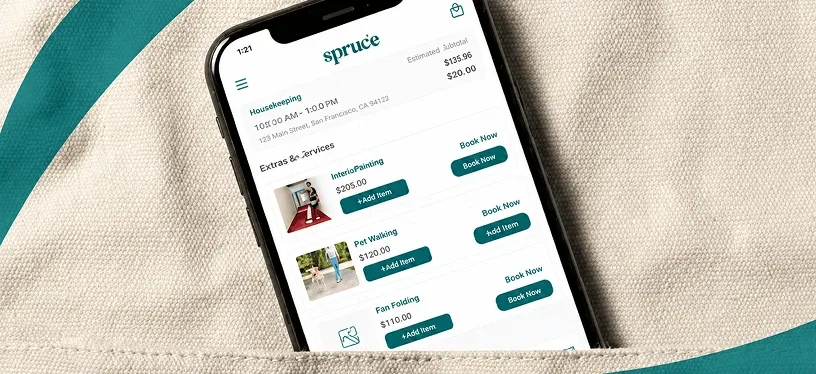

One For All Pro's Service Marketplace Platform
Two founders came to us with a home services marketplace and no operating model underneath it. Who pays when a provider shows up and loses the job. How a provider company splits money with its own employees. What keeps an unvetted stranger out of a customer’s house. We designed three applications, four role levels, and a three-tier payout structure. The money model was settled before the first screen.
The Impact
A category, two founders, and no specification anyone could build from.
One For All Pro is a US home and field services marketplace, founder-led and pre-launch. The founders had category and ambition. What they did not have was a specification anyone could build from. They wanted the hard questions answered on paper before engineering started spending money.
The rules nobody sees are the ones that decide whether a marketplace works.
A provider drives across town, quotes a job, and the customer walks. Who pays for the trip. A provider company signs up with a dozen employees. How does the platform take its cut, then the company take its cut, then pay the person who actually did the work.
A customer disputes that a job was finished. What proof exists. None of these had answers, and every one of them changes the data model, the payment flow, and half the screens. Building first would have meant rebuilding.


We mapped the actors against each other before anyone opened a design file.
Cross-role flows came first, two weeks ahead of any visual work. We mapped every actor against every other actor: what a customer sees when a provider accepts, what the provider sees when a company reassigns the job, what the admin sees when either one disputes it. Screens drawn before that map would have been guessed.
We designed the provider app before the customer app. Supply is the harder side of a services marketplace and the side carrying all the constraints, including verification, availability, earnings, and payouts. Once the provider experience was held together, the customer app had a real system to book against.
The money model was settled in the same pass. Visiting fees apply when a provider attends and does not win the work, and drop away the moment a quote is accepted. Verification is gated by category, so a licensed trade cannot list without a license, photo ID, state ID, and insurance on file.
Platform Modules & Product Experience
Three connected applications designed around customer requests, provider operations, and marketplace administration.
A weekly demo, a fixed slot, and a scope log that recorded what moved.
Five people ran the engagement: a project manager, a business analyst, a relationship manager, a customer success manager, and design. Reviews ran on a fixed weekly slot, scheduled around the gap between the founders’ morning and our team’s evening. Every design set was demoed live rather than sent as a file, so feedback landed in the call instead of a thread. Confluence held the flows, the action items, and the scope decisions, including the ones that moved in and out of phase one.
A platform that is specified rather than sketched.
Three applications, four role levels, and every cross-role interaction between them sit in a documented flow set that engineering can estimate against. The commission and payout logic is defined down to who is paid in what order. Verification requirements are set per service category. Job evidence carries a retention rule, so storage cost was decided at design time instead of discovered later. Scope that moved into phase two, including the company module and live tracking, moved with a cost change order. Development starts from a specification.
Testimonials
We came in wanting to see screens. They spent the first two weeks asking us questions we had not thought about, like who eats the cost when a provider drives out for nothing. Annoying at the time. It is the reason the thing is actually specified now.

Marketplace products fail on the rules underneath them. The screens are the easy part.
If you are building two-sided and the money model is still an open question, that is the conversation we would start with.
Start the conversation