- AI verticals
Intelligence built into your products and operations. Consulting, custom models, agents, and copilots designed around how your business actually runs.

The AI-native system behind every project.
Get AI ConsultationAI Services
Generative AI Services
Machine Learning Services
Company
- Industries
Comprehensive App & Software Development across 20+ industries
Awards & Recognitions

 All IndustriesTrusted and Recognized by


- From fast-moving startups to Fortune 500 enterprises.
A future-focused tech partner building, shipping, and scaling products for some of the world's most demanding companies.
View All Case Studies













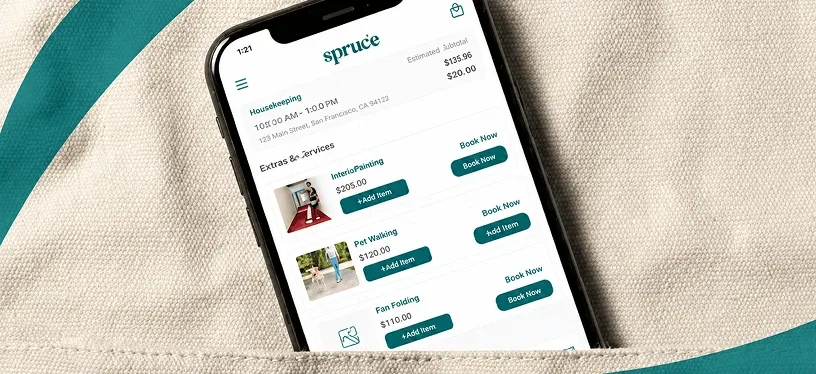

How We Turned Failing App Reviews Into a Stable, Scalable Mobile Product Through Audit-Led Rebuilding and Ongoing Engineering Support.
Hip2Save's Mobile App Rebuild and Maintenance
Hip2Save reaches millions of US readers, and its apps were the most problematic thing about the brand. Reviews on both stores had collapsed. We audited every public complaint against the code that caused it, catalogued thirty-six defects, rebuilt both apps off single-file architecture, and closed the cleartext HTTP holes. Four years on, we still ship the releases. The apps stopped being the thing readers complained about.
The Impact
A publisher whose website worked and apps did not.
Hip2Save is one of the largest deals and frugal-living publishers in the US, with a team of forty-plus editors posting around the clock. The site performed. The apps were where the most loyal readers lived, and they were failing in public. Hip2Save needed someone to tell them how bad it actually was, in terms they could act on.
The most visible part of the brand was the least maintained.
Sorting the App Store reviews by most recent returned almost nothing but single stars. Readers said the app was slow, that scrolling was miserable, that they dreaded opening it. Hip2Save’s own replies on the store acknowledged the bugs.
Underneath, the Android build had ClearTextTraffic force-enabled, so traffic was permitted over plain HTTP. Neither platform had an architecture worth the name: business logic, views, and networking all sat in the same Activity and the same ViewController. Twenty Android defects and sixteen on iOS were reproducible on a first pass, including a crash on adding a recipe to the cookbook and a login flow that silently redirected instead of showing an error.


The reviews were the requirements document. We just had to find the code behind them.
The audit read the reviews first. Every complaint on Google Play and the App Store went into a list, then we went into the source to find what produced it. A reader saying the app is slow is not a bug report, but pair it with the render path and an unpaginated payload and it becomes one. That mapping is what made the estimate defensible rather than a guess with a number attached.
We separated the critical bug work from the architecture work and priced them apart. Fixing crashes and broken redirects would move the reviews within weeks. Refactoring out of single-file Activities and ViewControllers would change nothing a reader could see. Both mattered, and only one was urgent. Bundling them would have cost Hip2Save a quarter before the ratings moved.
Security came out of the audit rather than the brief. ClearTextTraffic had been force-enabled on Android, permitting non-HTTPS routes throughout the app. Nobody had asked us to look. It went to the top of the list anyway.
From Failing Apps to a Reliable Mobile Platform
An audit-led rebuild that stabilized two mobile apps and created a long-term engineering function.
A retainer, a named engineer per platform, and a paper trail every hour.
The engagement runs as a retainer with a named engineer per platform and a biweekly client call. Defects arrive through Firebase Crashlytics and the client’s Slack, get triaged into the H2S Jira project, and go out on the next release. Anything beyond maintenance goes through a written change request with hours and budget stated before work starts. Two SDK integrations went through that process. Monthly hours reports go to the client with time logged against each ticket, so the retainer is auditable rather than assumed.
The apps ship on a cadence, and the roadmap conversation has changed.
Both apps release on a regular rhythm and clear Apple and Google review without incident. Crashes surface in Crashlytics, get triaged onto the board, and go out in the next build instead of waiting for a reader to report them. Both codebases have layer separation, so a fix in one place stops breaking something in another. App traffic runs over HTTPS. Hip2Save now brings feature ideas to the roadmap rather than defect lists, including analytics instrumentation and deep linking from the email platform. That is a different conversation than the one that started in 2022.
Testimonials
The audit was uncomfortable to read. They went through our one-star reviews line by line and told us which ones were our code and which ones were our server. Nobody had done that before. It was the first time I could explain to the team why the app was bad.

If your app store reviews are telling you something your backlog is not, that gap is readable.
We audit the complaint against the code that causes it, then price the fix and the refactor separately so you can choose.
Start the conversation