- AI verticals
Intelligence built into your products and operations. Consulting, custom models, agents, and copilots designed around how your business actually runs.

The AI-native system behind every project.
Get AI ConsultationAI Services
Generative AI Services
Machine Learning Services
Company
About AppVerticalsWe're a future-focused tech partner working with some of the world's top startups & enterprises.

AppVerticals Named to Inc. 5000 as One of America’s Fastest-Growing Companies Read More
Company
Resources
- Industries
Comprehensive App & Software Development across 20+ industries
Awards & Recognitions

 All IndustriesTrusted and Recognized by


- From fast-moving startups to Fortune 500 enterprises.
A future-focused tech partner building, shipping, and scaling products for some of the world's most demanding companies.
View All Case Studies













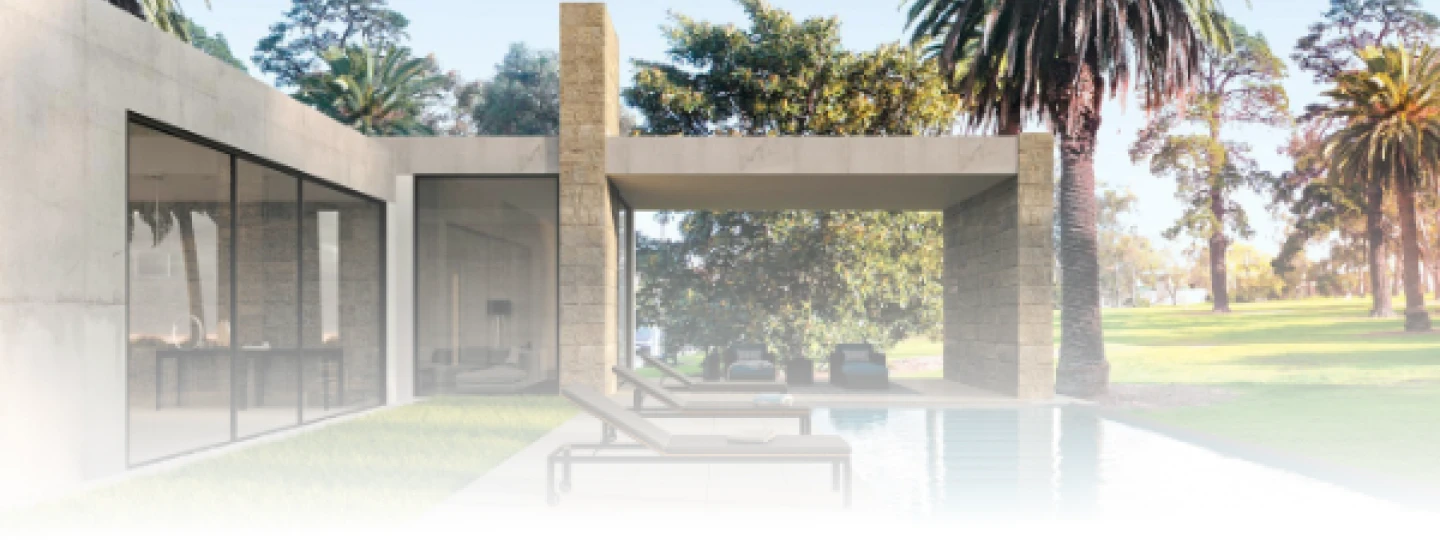
How We Turned Three Days of On-Site Templating into a Minutes-Long Scan, and Built a Coping-Fit Algorithm the Market Had Never Seen
Classic Pool Tile and Stone's AR Coping Measurement Platform
Classic Pool Tile and Stone sold high-value granite coping the only way the trade knew, send a crew to the pool, measure by hand, template on paper, quote manually. Three to four days before a single tile was ordered, with expensive mistakes baked into every guess. We built an AR app that scans the pool boundary, stitches the captures into one view, and runs a geometric coping-fit algorithm that calculates which tiles go in as-is, which get trimmed, and how many are needed, then takes the order and quote in-app. Days of fieldwork now take minutes.
The Impact
A High-Value Trade Running on Paper, Tape Measures, and On-Site Guesswork
Classic Pool Tile and Stone is a US-wide business that supplies and installs tile and granite coping for cemented swimming pools, a high-value trade where a wrong measurement is an expensive one. Andreas didn’t come to us with a spec to execute; he came with a problem no one had solved, looking for a partner who would do the research rather than a vendor who would build to order. He gave us a year of freehand exploration and the industry knowledge to make it possible.
Getting Coping Right Depended Entirely on Days of Manual Fieldwork
Every coping job started the same way: send a crew to the pool to physically measure and template the edge before anything could be ordered. Three to four days of work on a custom, three-dimensional surface, for a material that is costly to get wrong. Contractors couldn’t reliably predict how a given coping would fit a unique pool, so design indecision, aesthetic errors, and friction-heavy ordering were constant. The business ran on paper; manual templating, manual invoicing, no usage control. At roughly 100 pools a year at around $100,000 per pool, every templating trip and every hand-built quote was time and margin the company couldn’t get back. And there was nothing on the market that could change that.


We Spent a Year on the Hard Part First, because the Algorithm Was the Whole Product
We recognized this was a build with no precedent. There was no LLM to lean on and nothing off-the-shelf to adapt, so we treated the first year as pure research into the AR and the mathematics of fitting coping to a real pool boundary. The client gave us a freehand year and the patience to use it, we met weekly, and for most of those meetings we were reporting what hadn’t worked yet. His deep industry knowledge carried the work we couldn’t do ourselves: we couldn’t test on live pool construction in our own city, so his on-site feedback became the ground truth the algorithm was built against. About a year in, an idea clicked, we showed a launchable version-one algorithm, and he confirmed it was exactly what he had been looking for.
We knew the architecture had to answer to the people using the app. We built native; Swift on iOS, Kotlin on Android, instead of a cheaper single-codebase hybrid, because the AR module is computationally heavy and only native gave us the performance and native UI it demanded. We wrote the algorithm in Python for its mathematical and ML libraries and ran it on a serverless, microservice architecture, so a genuinely complex computation ran fast and stayed operationally affordable.
We also pushed back where effort outran value. The end users are contractors aged 40 to 60, working in bright sun, so we adapted the interface for readability rather than chasing a developer-default look. When a separate Windows and desktop build was floated, we advised against it, the contractors already carry one device, and a second platform was a large effort for a marginal return.
One Native App, One Geometric Engine, From Scan to Quote
The platform covers the full job, from pointing a phone at the pool to placing the order.
A Three-Year Research Partnership, Run Lean and Built Native
The engagement started in 2023 as a proof of concept and is now in its third year, currently split roughly 80% feature development and 20% monthly maintenance. It ran on an unusually tight, high-trust collaboration model: weekly working sessions with the owner himself, whose knowledge transfer about real pool sites filled the gap we couldn’t close remotely. The team began at four people and now runs lean at two in multi-role coverage; one across PM, technical, and algorithm work, and other on the apps, backed by engineers chosen for heavy algorithmic and data-structure thinking. The hardest problem was the one at the center: a coping-fit algorithm with no existing blueprint, solved by sustained research, then hardened into a launched product across native iOS and Android.
Days of Fieldwork, Replaced by a Scan
Classic Pool Tile and Stone now estimates a coping job from a phone. A contractor scans the pool, the app stitches the captures, the geometric engine calculates which tiles fit as-is and which need trimming, and the order and quote are placed in the same flow. The three-to-four-day templating trip is gone; the same work takes minutes, with roughly half the labor it used to demand. Paper templating and manual invoicing have been replaced by an in-app order-and-quotation pipeline. And the platform keeps growing, three years in, the algorithm is still being refined, and the architecture was built to scale its computational power as the model gets sharper.
Testimonials
"Most teams I talked to wanted a spec they could just go build. I didn't have one, nobody had solved this. AppVerticals sat in the hard part with me for a year, and a lot of those weekly calls were them telling me honestly what still didn't work. When it finally clicked, it was exactly what I'd been chasing. Three years on, we're still building together."

Unsolved Problems, Engineered From Research
If you're holding a problem the market hasn't solved yet, one that needs real research, not just execution, that's the kind of engagement we built our team for. We've done it before. We know what it takes.
Start a conversation