- AI verticals
Intelligence built into your products and operations. Consulting, custom models, agents, and copilots designed around how your business actually runs.

The AI-native system behind every project.
Get AI ConsultationAI Services
Generative AI Services
Machine Learning Services
Company
- Industries
Comprehensive App & Software Development across 20+ industries
Awards & Recognitions

 All IndustriesTrusted and Recognized by


- From fast-moving startups to Fortune 500 enterprises.
A future-focused tech partner building, shipping, and scaling products for some of the world's most demanding companies.
View All Case Studies













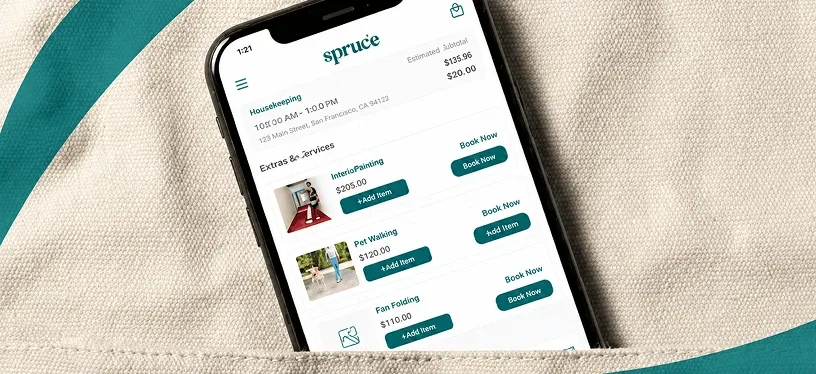

Built in six months: student, tutor, school and admin experiences that turned 38,000 sessions into fundable evidence.
A K-12 Tutoring Network's Multi-Role Platform
A US tutoring network placed 1,240 tutors into 14 school districts using a shared spreadsheet, a group of text message threads, and a lot of manual follow-up to confirm whether a session had actually happened. Districts paying with federal funds needed per-student attendance evidence the network could not reliably produce, and two contract renewals were already sitting on that unanswered question. We built four role-based experiences on one shared platform: a parent and student app that confirms a session in real time, a tutor app with geo-verified session check-in and check-out, a district coordinator portal built around funding-ready reporting, and an admin console that runs matching, credentialing and payouts from one place. Nine days of manual reporting became an export a coordinator generates themselves.
The Impact
US Supplemental-Instruction Network Operating Across 14 School Districts
A US supplemental-instruction network placing tutors into K-12 districts, funded largely through federal programmes that require attendance evidence per student per session as a condition of continued funding. The network had grown from a handful of pilot districts into fourteen in a few years, adding tutors and contracts faster than its internal operations could keep pace with administratively. What made this engagement different from a typical marketplace build was that the client understood, before we did any discovery, that the reporting requirement was the actual product they needed built, not a dashboard bolted on afterward, and they wanted a partner who would treat it that way from the first sprint.
Attendance Evidence Required for Federal Funding Did Not Exist
Tutors were matched to students in a shared sheet and confirmed by text message, which worked at 200 tutors and broke at 1,000. Nobody could say with certainty whether a session had happened. Parents phoned the office to ask if a tutor had turned up. Coordinators at each district needed per-student attendance to justify the funding line, and assembling it took the operations team nine days of chasing tutors for retrospective confirmations, a process that is both expensive and, to a district auditor, unconvincing. Two renewals were already sitting on that question, and the network had no way to answer it.


Session Attendance Tracking Was Built Before Matching or Scheduling
Marketplaces get built matching-first, because matching is the interesting problem. Here that would have produced a faster way to arrange sessions nobody could evidence, and evidence is what the districts are buying. Session check-in and check-out came before matching, before scheduling, before payments.
Scheduling came second, because a check-in only means something against a session that was supposed to happen. Once both existed, the attendance record was complete without anyone typing anything after the fact.
Matching came third, after scheduling rather than before it, which reversed the usual marketplace build order again. A match that cannot be scheduled and evidenced is just a better spreadsheet, so the matching rules, subject, grade band, geography, language, were layered onto a scheduling and attendance foundation that already worked, rather than the other way around.
Payouts went last, and deliberately. Tutor payment should compute from verified session records rather than from claims, and building it earlier would have meant paying against a data source we were still replacing. We knew the sequencing mattered: getting the order backwards is how a marketplace ends up with a payments system it cannot reconcile against its own attendance.
Student data protection requirements shaped the build alongside the features, not after them. Attendance and progress records for K-12 students, some under thirteen, sit under FERPA and COPPA, so per-student consent, access scoping by district, and what each role could see were decided as the records were designed rather than retrofitted once a district’s privacy officer asked.
Connected Education Platform
Two Mobile Applications and Two Web Portals Covering Four User Roles
Six-Month Build with Two Districts Running the Platform From Month Three
Seven people: one PM, one BA, one UX designer, two React Native engineers, two Node engineers and a QA engineer. We built against two pilot districts from month three, which meant coordinator feedback arrived while the reporting export was still changeable and surfaced a per-student consent requirement the requirements had missed entirely. Roster sync per district turned out to be the integration risk, because every district exposed the same data differently, so we shipped a mapping layer rather than an integration per district.
Every Session Is Evidenced and Every District Reports Same Day
A tutor checks in at the school and the parent’s phone tells them it happened. Coordinators open their district and see per-student attendance without asking anyone for it, then export the funding evidence in the format their office accepts. Sessions that go wrong land in an exception queue instead of disappearing. Tutors are paid from verified records in one consolidated run per cycle. Adding the fifteenth district is contract setup and a roster mapping, and the reporting question that was holding up two renewals is now the network’s strongest argument in the room.
Testimonials
"The first export I sent our funding office came back approved with no questions, which had never happened. That was the moment the platform stopped being an IT project internally."

Turn Evidence Into Infrastructure
If your marketplace runs on evidence someone has to assemble by hand, that record is the part to build first.
Start the conversation