About Us

About Us
We’re a future-focused tech partner working with some of the world’s top enterprises. At AppVerticals, we design solutions that drive growth and reimagine digital experiences.

Services
Software Development
Mobile App Development
Web Design & Development
Tell us what you're looking for, and we'll tailor a solution based on your business needs.
Talk to Experts
Health Tech

EdTech

Logistics

Real Estate

Ecommerce

Sports

Fintech

Travel

Restaurant

Automotive
HIPAA-compliant digital solutions for hospitals, clinics, and healthtech startups driving better patient outcomes.
What we do:
Scalable learning platforms for schools, universities, and EdTech startups transforming education delivery.
What we do:
Real-time tracking and automation solutions for freight companies, warehouses, and delivery services.
What we do:
PropTech platforms for brokerages, property managers, and real estate marketplaces are streamlining operations.
What we do:
High-converting commerce platforms for D2C brands, retailers, and online marketplaces are driving revenue growth.
What we do:
Fan engagement platforms for sports teams, leagues, and betting operators are creating immersive experiences.
What we do:
PCI-DSS compliant solutions for digital banks, payment platforms, and InsurTech companies, ensuring security.
What we do:
Booking and hospitality solutions for OTAs, hotels, and tourism platforms, enhancing traveler experiences.
What we do:
Online ordering and operations software for restaurants, cloud kitchens, and food delivery platforms.
What we do:
Connected vehicle platforms for automotive OEMs, dealerships, and mobility providers are accelerating innovation.
What we do:
Portfolio
AppVerticals was featured in Inc. 5000 as
America’s Fastest Growing Tech Company
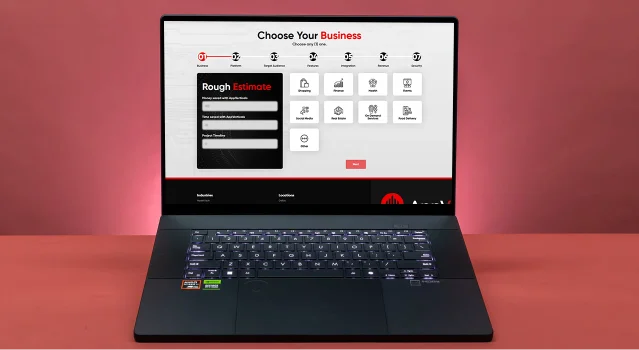
See what it might cost to bring your app idea to life. Our calculator gives you a quick, simple estimate based on what you need.


 verified expert
Senior Content Writer — Mobile & Software Development, AI
Zainab helps tech brands sound more human. She takes app ideas, features, and updates and turns them into content people actually want to read. Whether it’s for a launch, a campaign, or just making things...
See Full Bio18 minutes read
The average healthcare app development cost in 2026 can range from $30,000 to $500,000 or more, varying on the basis of multiple factors including app’s complexity, features, and specific compliance needs. This price variation reflects the diversity in healthcare app types, ranging from basic patient management tools to advanced platforms powered by AI and integrated with Electronic Health Records (EHR).
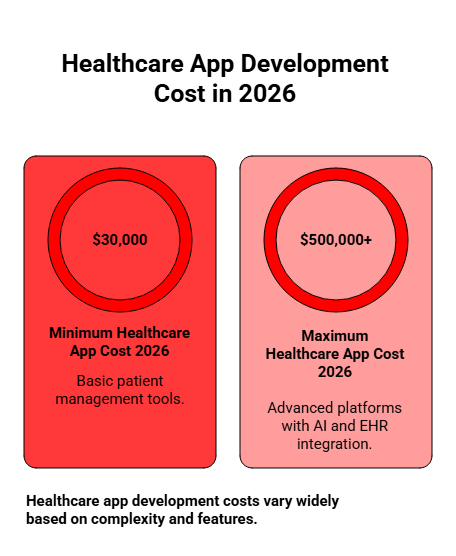
Whether you’re planning to build a simple healthcare app for appointment scheduling or an advanced solution with real-time health data monitoring, this guide will break down the costs you can expect at each stage.
Explore which factors are influencing the healthcare app development cost the most.
The cost estimates throughout this article are based on insights from multiple healthcare app development projects across different regions, with the following assumptions:
These assumptions give an accurate reflection of industry trends while factoring in different development models and regions, including the competitive mobile app development cost in Dubai, which has become a popular hub for tech innovation in the Middle East.
The development costs vary significantly across different app types, from basic patient management apps to sophisticated platforms featuring AI in medical diagnosis and real-time monitoring.
To help you better understand these costs, here’s a detailed breakdown of healthcare app development based on complexity and the inclusion of AI functionalities.
The cost of developing a healthcare app depends largely on the app’s complexity and the features it includes. Here’s how costs typically break down:
| App Complexity | Cost Range | Development Time | Key Features |
|---|---|---|---|
| Basic Level | $30,000 – $75,000 | 3-6 months | Patient records, appointment scheduling, basic messaging |
| Mid-Level Complexity | $75,000 – $250,000 | 6-12 months | Telemedicine, EHR integration, e-prescriptions |
| Advanced Level | $250,000 – $500,000+ | 12-24+ months | AI diagnostics, IoT integration, multi-system integration |
As the app complexity increases, so do the costs and development timelines. Basic apps typically include essential features like appointment scheduling and basic patient management. In contrast, mid-level apps integrate telemedicine features, while advanced apps include high-end technologies like AI-powered diagnostics and real-time monitoring.
Incorporating AI into healthcare apps raises costs significantly. AI-powered features such as diagnostic tools, predictive analytics, and real-time monitoring require advanced technologies and a more substantial infrastructure.
Here’s a breakdown of costs specifically related to AI features:
When planning your healthcare app, it’s essential to factor in the complexity of the features you need, especially if you’re considering advanced capabilities like AI, to ensure a clear understanding of the budget required. You can also read our detailed article around app development cost n 2026 to gain a more in-depth understanding.

Ensuring the safety and privacy of sensitive data comes with specific security requirements that can add substantial costs.
The key security measures include:
When integrating AI and Electronic Health Records (EHR) into your healthcare app, costs can increase based on the complexity of the features and the number of systems integrated.
EHR integrations:
Specific EHR System Costs:
Epic System Costs:
Cerner System Costs:
By planning for these added costs upfront, you can ensure that your healthcare app meets HIPAA compliance standards while also delivering advanced features like AI diagnostics and EHR integration.
Here’s a detailed description of what factors drive the cost healthcare app development:
The complexity of the app and the features it offers are significant determinants of the cost. Here’s a detailed look at the price range based on different healthcare app features:
| Feature | Cost Range | Complexity |
|---|---|---|
| Telemedicine/Video Consultation | $8,000 – $25,000 | High |
| E-Prescription | $15,000 – $40,000 | Medium-High |
| Remote Patient Monitoring (RPM) | $50,000 – $200,000 | Very High |
| IoMT Device Integration | $30,000 – $100,000 | High |
| Appointment Scheduling | $5,000 – $15,000 | Medium |
| Patient Portal | $20,000 – $50,000 | Medium |
| Medication Reminders | $3,000 – $10,000 | Low-Medium |
| Wearable Device Integration | $15,000 – $40,000 | Medium-High |
Security and Compliance Factors:
Designing an intuitive, user-friendly interface is crucial, especially when dealing with clinical-grade apps. Healthcare apps require special attention to accessibility standards (such as WCAG 2.1), clinical workflow integration, and medical terminology for effective user engagement.
| Design Complexity | Cost Range |
|---|---|
| Simple App (Few Screens) | $3,000 – $7,000 |
| Medium Complexity | $7,000 – $15,000 |
| Complex App | $15,000 – $30,000 |
| Enterprise-Level | $50,000 – $100,000+ |
For clinical-grade healthcare apps, expect to pay 15-20% more in design costs compared to consumer apps. The enterprise-level apps with complex workflows and multiple user roles (doctors, nurses, patients) can push costs higher.
Security measures are essential for healthcare apps, especially for HIPAA-compliant apps. Integrating robust encryption, access controls, and audit logs to protect PHI can significantly add to the cost.
| Security Measure | Cost Range |
|---|---|
| PHI Encryption (at rest and in transit) | $7,000 – $18,000 |
| Comprehensive Audit Logging System | $8,000 – $15,000 |
| SOC 2 Type I Certification | $20,000 – $30,000 |
| SOC 2 Type II Certification | $12,000 – $30,000 |
| Multi-Factor Authentication (MFA) | $3,000 – $8,000 |
| Penetration Testing | $10,000 – $25,000 |
Incorporating these elements is critical to ensure that your app is secure and meets necessary regulatory standards.
The geographic location of your development team plays a huge role in determining the overall costs. Here’s a breakdown of the hourly rates by region:
| Region | Hourly Rate (USD) |
|---|---|
| United States | $100 – $200/hour |
| Western Europe | $70 – $150/hour |
| Eastern Europe | $40 – $80/hour |
| India/South Asia | $20 – $50/hour |
Cloud platforms like AWS, Azure, and Google Cloud are widely used for healthcare app hosting. Cloud hosting is essential for scalability and security, and costs vary depending on the platform and scale.
| Platform | Small Practice (Annual) | Medium Clinic (Annual) | Large Hospital (Annual) |
|---|---|---|---|
| AWS HealthLake | $6,000 – $12,000 | $15,000 – $36,000 | $60,000 – $240,000 |
| Azure Health Data Services | $5,000 – $10,000 | $12,000 – $30,000 | $50,000 – $200,000 |
| Google Cloud Healthcare API | $3,600 – $9,600 | $12,000 – $36,000 | $48,000 – $180,000 |
Healthcare apps require ongoing maintenance and scaling to ensure they meet the growing needs of users and continue to operate securely.
| Category | Annual Cost |
|---|---|
| Bug fixes | $5,000 – $25,000 |
| Security updates | $10,000 – $40,000 |
| OS compatibility updates | $5,000 – $20,000 |
| HIPAA compliance updates | $5,000 – $20,000 |
| Feature enhancements | $10,000 – $50,000 |
As your user base grows, you’ll need to invest in additional infrastructure. Here’s a rough estimate of the costs involved in scaling your healthcare app:
| User Range | Infrastructure Cost (Monthly) |
|---|---|
| 0-10,000 users | $500 – $2,000 |
| 10,000-100,000 users | $2,000 – $10,000 |
| 100,000-500,000 users | $10,000 – $30,000 |
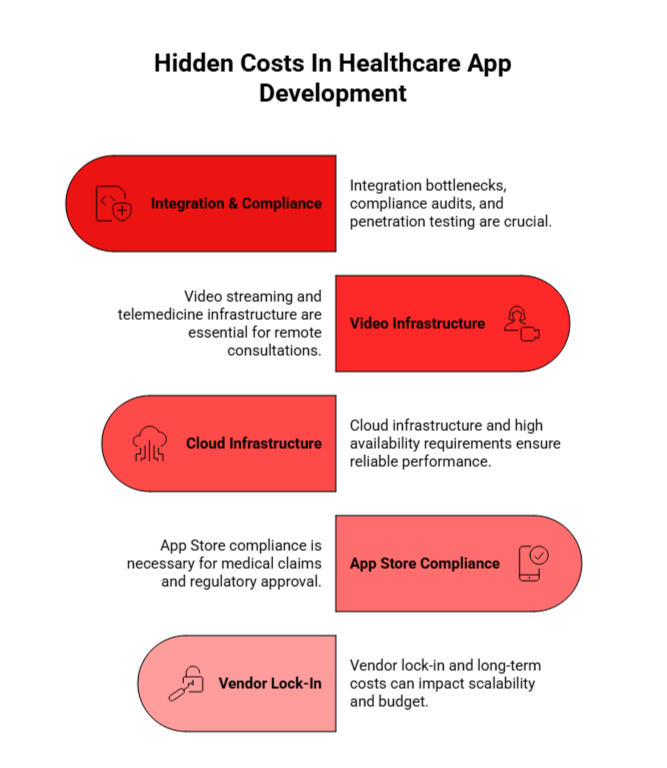
During healthcare app development, unexpected costs can arise from integration complexities, compliance audits, and security testing. Here are some key hidden cost areas:
Penetration Testing & Security: Penetration testing ensures your app is secure from cyber threats and vulnerabilities, which is especially important when dealing with sensitive health data.
| Testing Type | Cost Range |
|---|---|
| Initial Penetration Testing | $10,000 – $25,000 |
| Vulnerability Assessments | $5,000 – $10,000 |
| Ongoing Security Monitoring | $500 – $2,000/month |
| Annual Penetration Testing | $15,000 – $30,000 |
Compliance Audits: To maintain regulatory compliance (such as HIPAA or SOC 2), regular audits are required, and these can add considerable costs.
| Audit Type | Cost Range |
|---|---|
| HIPAA Audit | $15,000 – $200,000+ |
| SOC 2 Type I Audit | $20,000 – $30,000 |
| SOC 2 Type II Audit | $12,000 – $30,000 |
| State-Specific Compliance | $5,000 – $15,000 |
For telemedicine apps, setting up real-time video streaming infrastructure is crucial. The costs involved in providing high-quality video consultations and maintaining the infrastructure are often underestimated.
| Item | Cost Range |
|---|---|
| Video Streaming Setup | $8,000 – $25,000 |
| Real-Time Video Infrastructure (monthly) | $300 – $3,000 |
| Content Delivery Network (CDN) costs | $500 – $2,000/month |
| Video Quality Optimization | $5,000 – $15,000 |
If you’re planning to use third-party video services (such as Twilio or Agora), these add both setup and usage fees on top of your overall telemedicine app development cost estimation.
To ensure your healthcare app remains operational with high availability (especially for critical services), you may need to invest in redundant infrastructure, disaster recovery, and load balancing.
| Infrastructure Type | Cost Range |
|---|---|
| 99.9% Uptime Infrastructure | +15-20% to hosting costs |
| 99.99% Uptime Infrastructure | +30-40% to hosting costs |
| Load Balancing Setup | $5,000 – $15,000 |
| Disaster Recovery Systems | $10,000 – $40,000 |
Healthcare apps that involve medical claims or diagnoses often need to go through FDA and medical app classification reviews. These reviews and approvals can be a significant hidden cost.
| Medical Claims Compliance | Cost Range |
|---|---|
| Medical Device App Review | $2,000 – $8,000 |
| FDA Documentation (if required) | $50,000 – $150,000 |
| App Store Optimization | $1,000 – $5,000 |
| OS Updates (Annual) | $5,000 – $20,000 |
One often overlooked hidden cost is vendor lock-in, which happens when your app becomes dependent on a single cloud platform or service. This can result in hefty migration costs if you decide to switch providers later.
| Action | Cost Range |
|---|---|
| Migration to New Platform | $100,000 – $500,000 |
| Rewriting Proprietary Integrations | $50,000 – $200,000 |
| Business Disruption | Potentially Millions |
When developing a healthcare app, hidden costs such as integration challenges, compliance audits, security testing, and telemedicine infrastructure can significantly increase the budget. Additionally, ongoing expenses like video streaming, cloud infrastructure, and vendor lock-ins are also crucial to consider in healthcare software development and healthcare web development projects.
In 2026, healthcare app development continues to evolve with emerging technologies and regulatory requirements shaping costs. Whether you’re looking to develop a Telemedicine app, a Remote Patient Monitoring (RPM) solution, or a Mental Health app, the price tag varies significantly based on features, integrations, and compliance needs. Below, we compare the costs for different types of healthcare apps in 2026.
| App Type | Cost Range | Key Features |
|---|---|---|
| Telemedicine App | $50,000 – $200,000+ | Video consultations, appointment scheduling, e-prescriptions |
| Remote Patient Monitoring (RPM) | $100,000 – $300,000+ | Real-time monitoring, AI-based analysis, device integration |
| Mental Health / Behavioral Therapy App | $40,000 – $150,000+ | Therapy sessions, mood tracking, mental health support tools |
| Women’s Health (FemTech) | $50,000 – $200,000+ | Reproductive health tracking, prenatal care, fertility apps |
| Fitness / Wellness / Meditation App | $25,000 – $75,000 | Exercise tracking, meditation features, wellness programs |
| Chronic Disease Management App | $60,000 – $250,000+ | Disease monitoring, medication management, care coordination |
| Hospital/Clinical Enterprise Apps | $250,000 – $500,000+ | Electronic Health Records (EHR), multi-user access, patient management |
When planning for healthcare app development in 2026, it’s important to factor in not just the initial development costs, but also the Total Cost of Ownership (TCO). TCO encompasses the costs for hosting, ongoing maintenance, security, feature iterations, and scaling over time. Here’s a breakdown of the key components:
| Cost Component | Yearly Cost Estimate | Description |
|---|---|---|
| Cloud Hosting (AWS/Azure/GCP) | $10,000 – $250,000 | Costs for cloud infrastructure, data storage, and scalability. |
| DevOps, Analytics, & Monitoring | $25,000 – $100,000 | Maintenance of deployment pipelines, analytics tools, and performance monitoring. |
| Bug Fixes & Feature Iterations | $20,000 – $100,000+ | Ongoing bug fixes, feature enhancements, and app updates. |
| Security Updates & Compliance Renewals | $15,000 – $50,000 | Ensuring security patches, encryption updates, and HIPAA compliance. |
| Scaling from 10K → 1M Users | $50,000 – $500,000 | Infrastructure and hosting costs for scaling up the user base. |
Total Cost of Ownership Over 1 Year
When combined, these factors contribute to the total cost of ownership for a healthcare app. While the initial development cost may seem high, ongoing expenses like hosting, bug fixes, and compliance updates can add up significantly over time. In the first year alone, the TCO can range from $100,000 to $800,000, depending on the scale, features, and infrastructure required.
By considering the long-term costs of hosting, maintenance, and scaling, you can make a more informed decision about your healthcare app’s total budget and expected ROI.
The healthcare app market is growing rapidly, offering opportunities in telemedicine, wellness, and remote patient monitoring. Profitability depends on choosing the right revenue model and balancing customer acquisition cost (CAC) with lifetime value (LTV).
Revenue Models:
CAC vs. LTV:
Break-Even and ROI Examples:
By understanding revenue models and LTV, developers can forecast profitability and ROI more accurately.
Building a healthcare app can be expensive, but there are ways to minimize costs while maintaining high standards of quality. By focusing on strategic decisions, streamlined processes, and smart technology choices, businesses can keep development costs under control.
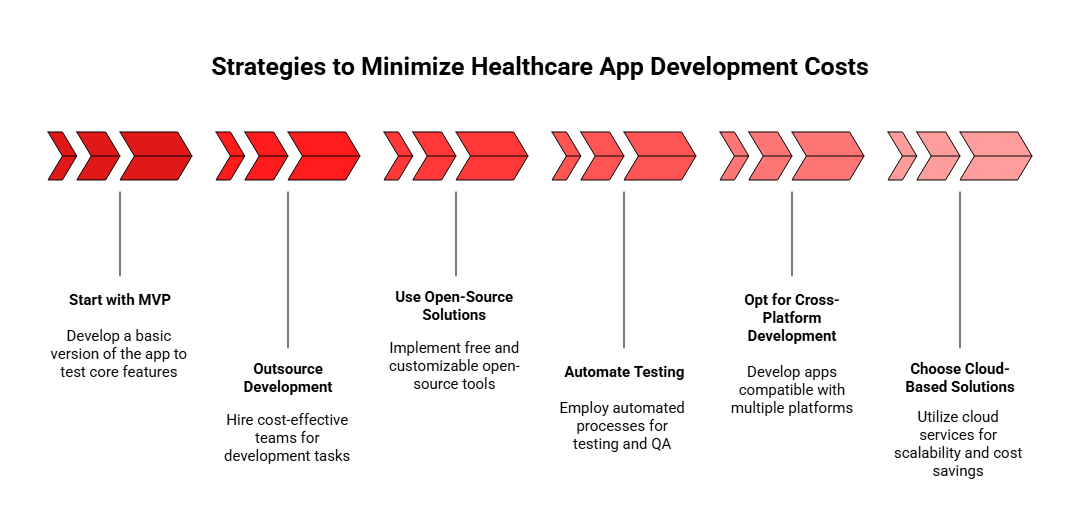
Developing a healthcare app can be costly, but with strategic decisions, businesses can cut costs while ensuring high quality. Here’s how:
The customized approach allowed them to streamline workflows and improve care delivery, reducing errors and operational overhead while meeting stringent compliance requirements.
By focusing on these strategies, businesses can minimize healthcare app development costs without compromising on quality or user experience.
Final Thoughts
As we look ahead to 2026, the healthcare app development landscape is set to evolve rapidly, driven by new technological advancements and regulatory shifts. While the cost of developing a healthcare app can vary widely, strategic planning, careful feature selection, and the smart use of modern technologies such as AI and cloud solutions can help streamline development and optimize costs.
As the digital health market continues its expansion, those who invest in secure, compliant, and user-centered solutions will likely see the greatest returns. According to health tech experts,
Keeping these principles in mind will ensure long-term success in this competitive industry.
verified expert
Zainab helps tech brands sound more human. She takes app ideas, features, and updates and turns them into content people actually want to read. Whether it’s for a launch, a campaign, or just making things clearer, she’s all about simple words put together to form stories that stick.
 We’re AppVerticals
AppVerticals is where innovative startups and Fortune 500s come for transformation.
View About Us Industry
The global freight and logistics market is on track to hit $18.2 trillion by 2032, fueled by rising eCommerce demand, supply chain disruptions, and th...

11 min read
 Industry
The first question logistics startup founders and business owners planning to build a software solution cone around is: ‘how much does logistics softw...
20 min read
 Industry
Ever waited hours for a truck to arrive, only to find out the shipment was delayed, rerouted, or worse, lost in paperwork? Frustrating, isn’t it? That...
14 min read
Discover how our team can help you transform your ideas into powerful Tech experiences.
AppVerticals © 2026 | All Rights Reserved

Get In Touch.











 ChatGPT
 Perplexity
 Google AI