About Us

About Us
We’re a future-focused tech partner working with some of the world’s top enterprises. At AppVerticals, we design solutions that drive growth and reimagine digital experiences.

Services
Software Development
Mobile App Development
Web Design & Development
Tell us what you're looking for, and we'll tailor a solution based on your business needs.
Talk to Experts
Health Tech

EdTech

Logistics

Real Estate

Ecommerce

Sports

Fintech

Travel

Restaurant

Automotive
HIPAA-compliant digital solutions for hospitals, clinics, and healthtech startups driving better patient outcomes.
What we do:
Scalable learning platforms for schools, universities, and EdTech startups transforming education delivery.
What we do:
Real-time tracking and automation solutions for freight companies, warehouses, and delivery services.
What we do:
PropTech platforms for brokerages, property managers, and real estate marketplaces are streamlining operations.
What we do:
High-converting commerce platforms for D2C brands, retailers, and online marketplaces are driving revenue growth.
What we do:
Fan engagement platforms for sports teams, leagues, and betting operators are creating immersive experiences.
What we do:
PCI-DSS compliant solutions for digital banks, payment platforms, and InsurTech companies, ensuring security.
What we do:
Booking and hospitality solutions for OTAs, hotels, and tourism platforms, enhancing traveler experiences.
What we do:
Online ordering and operations software for restaurants, cloud kitchens, and food delivery platforms.
What we do:
Connected vehicle platforms for automotive OEMs, dealerships, and mobility providers are accelerating innovation.
What we do:
Our Odoo implementation brings financial discipline, operational visibility, and process control across departments. From accounting automation to manufacturing workflows, we design ERP systems that reduce operational leakage and provide real-time decision clarity.
We use Sitecore to drive measurable revenue growth through intelligent personalization and behavior-driven content delivery. By aligning marketing automation, data orchestration, and omnichannel engagement, we help brands turn digital touchpoints into retention engines.
We architect AWS environments that stay stable under scale, traffic spikes, and compliance pressure. From secure cloud migrations to CI/CD automation and cost governance, we engineer cloud foundations that protect performance while enabling rapid product evolution.
We implement Dynamics 365 to align systems with actual business operations, bringing clarity, control, and accountability across CRM, ERP, and service functions. From sales to finance, configurations eliminate inefficiencies and enable confident, real-time decisions.
Tell us what you're looking for, and we'll tailor a solution based on your business needs.
Talk to ExpertsPortfolio
AppVerticals was featured in Inc. 5000 as
America’s Fastest Growing Tech Company
See what it might cost to bring your app idea to life. Our calculator gives you a quick, simple estimate based on what you need.



 verified expert
Senior Content Writer — Mobile & Software Development, AI
Zainab helps tech brands sound more human. She takes app ideas, features, and updates and turns them into content people actually want to read. Whether it’s for a launch, a campaign, or just making things...
See Full Bio16 minutes read
By 2026, both frameworks are fully scalable, but the decision depends more on your product vision, your team’s expertise, and the app’s future complexity.
Global mobile app revenue is experiencing rapid growth, with estimates showing that mobile apps generated over $935 billion in 2025, and the industry is projected to exceed $1 trillion by 2026. Revenue is driven by in-app purchases, advertising, and subscriptions, with Asia-Pacific leading in market share.
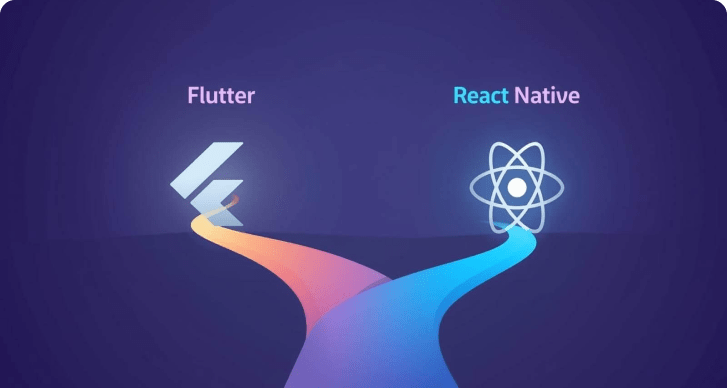
With such immense financial stakes, choosing the best cross-platform framework is crucial, it impacts time-to-market, long-term maintainability, and your ability to stand out in a competitive market. This guide will help you explore the key differences between Flutter vs React Native, so you can make the best choice for your app’s needs.
| Key Area | Flutter | React Native |
|---|---|---|
| Market Growth | Mobile apps generated $935 billion in 2025, projected to exceed $1 trillion by 2026. | Same growth trend; decision impacts future market success. |
| Framework Strengths | Ideal for custom UI, motion-rich experiences, and visual consistency across platforms. | Best for teams familiar with React/JavaScript, offers faster development and integration with web apps. |
| Performance | Owns rendering pipeline, excels in animation smoothness and UI consistency. | New Architecture improves performance, native integration, and reduces overhead. |
| Team Fit | Requires Dart knowledge and different UI model. Slower for teams unfamiliar with it. | Faster for teams experienced with React, JavaScript/TypeScript, and web workflows. |
| Real-World Examples | Google Pay, Shopify, and other design-heavy global apps use Flutter. | Used by Microsoft, Amazon, Meta for scalable, complex systems. |
| Decision-Making | Best for UI-focused apps, design-heavy, brand-driven projects. | Best for workflow-heavy, integration-heavy apps, or leveraging existing React expertise. |
At its core, both Flutter and React Native are powerful cross-platform app development frameworks, but they have distinct approaches. Flutter is a UI toolkit that draws its own interface, giving developers full control over the look and feel of the app. It uses a single codebase to generate the user interface, providing a high level of consistency across platforms.
On the other hand, React Native is built on React and renders using native components. In its latest iteration, React Native communicates far more efficiently with the native layers using JSI (JavaScript Interface) and the New Architecture, which allows for smoother performance and better integration with native functionality.
That single architectural difference explains most of the tradeoffs decision-makers actually care about: consistency, performance profile, team fit, and long-term operating cost.
Let’s take a quick look at how the two differentiate:
| Decision Area | Flutter | React Native | What It Means for the Business |
|---|---|---|---|
| Rendering Model | Draws its own UI with its own widget system | Uses React model with native components; New Architecture improves native interfacing | Flutter offers stronger cross-platform visual consistency; React Native offers better alignment with React organizations |
| Primary Language | Dart | JavaScript / TypeScript | React Native usually fits faster into existing web teams |
| Performance Philosophy | Minimize platform abstraction, own the rendering path | Reduce JS/native overhead, support concurrent rendering, improve layout timing | Flutter often shines in custom UI; React Native closes the gap for many mainstream apps |
| Ecosystem Fit | Strong for product teams willing to standardize on Flutter | Strong for teams already invested in React, npm, and TypeScript | React Native often reduces onboarding friction |
| Best First-Fit Use Case | Brand-heavy apps, custom interfaces, motion-rich UX | MVPs, commerce, content, and operational apps with React org support | Team composition often matters more than benchmark debates |
Flutter usually wins when the product experience itself is the differentiator; React Native usually wins when speed of execution across an existing JavaScript organization matters more.
Flutter bypasses system UI widget libraries in favor of its own widget set, then compiles Dart code into native code and renders through its own engine. That is why Flutter apps can feel unusually consistent across devices: the framework controls more of the pipeline itself instead of negotiating the interface through each platform’s native UI layer.
Flutter’s own architectural principle is blunt and useful: simple is fast.
React Native approaches the problem from the opposite direction. It gives teams the React mental model, then improves how JavaScript talks to native code. In the New Architecture, the old asynchronous bridge is replaced by JSI, enabling synchronous layout work, concurrent rendering support, and faster native-JavaScript interfacing.
The approach bridges the gap between native and cross-platform, making React Native more competitive for production workloads that require integration with native systems.
If you are comparing Flutter vs React Native performance, the practical answer is: Flutter has the cleaner story for custom rendering and animation predictability, while React Native’s New Architecture makes it much more competitive for real production workloads than many outdated comparison posts suggest.
Neither framework should be selected from synthetic benchmarks alone. Select from product demands.
Flutter draws the interface itself, which removes a class of back-and-forth overhead between app code and platform code. Its Impeller renderer precompiles a smaller, simpler shader set at engine-build time instead of compiling shaders at runtime, explicitly targeting more predictable rendering behavior.
If your roadmap includes complex motion, custom transitions, or heavy visual differentiation, that matters.
React Native’s New Architecture adds synchronous layout, React concurrent features, automatic batching, lazily loaded native modules, and direct JS/native communication via JSI.
In simple terms, its fewer visual jumps, less serialization overhead, and better conditions for smoother interactions in demanding interfaces. That does not make React Native identical to Flutter, but it does make the gap far narrower for many business apps than older framework lore implies.
Flutter often has the stronger argument for animation smoothness and cross-device visual consistency because it owns the rendering path. React Native, meanwhile, benefits from a mature native ecosystem and now from lazy-loaded modules and faster interface calls in its newer architecture.
App size and startup performance remain project-specific: your asset load, third-party packages, analytics stack, and native dependencies often matter more than framework choice alone. The right move is to prototype the heaviest real screen in each framework before treating blog-level claims as operational truth.
For leaders evaluating React Native in 2026 before hiring a mobile app development company, that is the important signal: the framework is no longer standing still. Its ecosystem is adapting around architecture that is materially different from the old bridge-era assumptions.
Let us guide you through the decision-making process with a personalized consultation.
When leaders ask about flutter vs react native development speed, the real question is usually: which team can ship confidently with less friction over the next 12 to 24 months? That answer depends more on current talent and process than on isolated coding features.
If your company already has React engineers, React Native is usually the faster organizational fit. You reuse mental models, component patterns, testing habits, and often staff itself. Flutter can still move fast, but it asks teams to adopt Dart and a different UI model.
That initial relearning cost is real, even though teams like Google Pay reported strong developer enthusiasm once they were inside the framework.
Flutter’s hot reload, rich widget set, and end-to-end control create a very cohesive experience. React Native benefits from the broader JavaScript ecosystem and easier overlap with web development practices, especially for organizations already standardized on React.
The tradeoff is governance: React Native’s flexibility can be a strength or a mess, depending on how disciplined your package strategy and upgrade process are.
For most scale-ups and enterprises, React Native has the easier internal staffing story because JavaScript and TypeScript talent is more transferable from existing web teams.
Flutter can absolutely scale, but it usually works best when leadership is ready to make a more intentional platform bet rather than simply extend current front-end capacity.
The best react native vs flutter comparison is scenario-based, not abstract.
| Criteria | React Native | Flutter |
|---|---|---|
| Best Fit for Startup MVPs | Ideal if your team already has React talent. It minimizes team-switching costs and speeds up first release. | Better if the MVP’s core value is a differentiated visual experience or highly polished interaction design. |
| Best Fit for Highly Branded or Design-Heavy Apps | Good for apps where the focus is on functionality and integration rather than design. | Stronger for design-heavy apps, offering better control over UI rendering, consistency, and visual systems. Perfect for fintech or premium consumer apps. |
| Best Fit for Operational, Multi-Role, Dashboard-Heavy Products | Excellent for apps focused on business logic, role-based workflows, dashboards, notifications, and integrations. | Less ideal for this type of app, as its strength lies in custom design rather than operational functions. |
| Best Fit for Apps Expected to Grow in Complexity and Team Size | Ideal if your team is already working in React, as it allows for greater organizational leverage. | Better for centralized UI control, especially when consistent design systems are crucial as the app scales. |
Whether you’re launching an MVP or scaling your enterprise app, we can help you pick the best framework for your needs. Let’s discuss your project!
This is where most comparison posts fall short. They compare APIs, not business reality.
Google Pay chose Flutter as part of a global product rewrite because it wanted faster, more efficient cross-platform development. Google said Flutter would require about 1.2x the effort instead of building everything twice, and that the resulting codebase became 35% smaller than the original combined implementations.
For a product operating across countries, payment rails, and platform demands that is meaningful evidence that Flutter is not just a “nice UI” framework.
React Native’s official showcase includes Shopify, Microsoft Office, Outlook, Teams, Amazon Shopping, Alexa, and major Meta products.
That list matters because it demonstrates something executives often undervalue: React Native is deeply viable for organizations that need cross-platform delivery without abandoning the React ecosystem they already know.
The Google Play Store stat box decision-makers should care about:
| Statistic | Value |
|---|---|
| Consumer Spend on Google Play (2025) | $49.2 billion |
| Total App Downloads (2025) | 100 billion+ |
| Total Game Downloads (2025) | 36.2 billion |
| Total App Downloads (2025) | 67.7 billion |
| Apps Listed in Google Play (2025) | 1.58 million |
| Developers with Published Apps (2025) | 1 million+ |
And despite all of that, more than one quarter of apps get fewer than 100 downloads.
Flutter is still actively evolving, with Impeller documented as the only supported renderer on iOS and enabled by default on many Android devices. React Native’s New Architecture is now the default direction of travel, with the framework emphasizing synchronous layout, concurrent rendering support, and faster JS/native interfacing.
That is why the right 2026 conclusion is not one replaces the other. It is that both frameworks are maturing along different strategic lines.
AppVerticals’ decision to use React Native for the Spruce app was driven by the platform’s unique needs and complexity. Unlike a simple MVP development, Spruce required serving multiple user roles, including residents, service professionals, managers, and admins, across a wide array of tasks, such as scheduling, pricing, reporting, and coordination.
It’s a highly integrated system designed to keep bookings, operations, and growth in sync.
The scale of the Spruce platform also influenced the decision. With over 685K customers, 6,477 properties, and 7,581 property management companies, it’s clear that Spruce is not just a standalone mobile app but a vital part of a broader operational system.
For this type of project, React Native provides a robust and scalable solution without sacrificing performance.
Another key consideration was cost-efficiency. AppVerticals estimates that React Native saved Spruce 30–40% in development costs compared to building separate native apps, while still delivering 85–95% of native app performance.
This was crucial for Spruce, where workflow coverage, speed, and budget efficiency were more important than ultra-custom UI rendering.
What Decision-Makers Can Learn from Spruce
• Choose a framework that aligns with your product’s operating model.
• Unify user roles across the platform where possible to streamline development.
• Prioritize speed and maintainability over complex custom design, especially when the app is part of a larger service ecosystem.
While React Native was the right choice for Spruce, it’s not automatically the best framework for every app. If your product’s key advantage is visual brand expression rather than operational efficiency, Flutter might still be the better fit.
Learn how these frameworks can drive efficiency, scalability, and performance in your specific use case. Our experts are ready to assist you!
If your real question is, ‘Should we build this primarily for the web?’, that is not the same as asking about Flutter vs React Native. React remains the more natural answer for web-first products. Flutter becomes compelling when you want tighter control over cross-platform UI and the mobile experience is primary.
Ionic is still relevant when a web-stack-first hybrid approach is enough. React Native is typically the better call when you want stronger native ecosystem alignment without leaving React. Flutter is typically the better call when UI control and consistency are the top priority.
Native Swift still wins when you need the deepest possible iOS integration, Apple-first UX precision, or features where platform specialization itself is a competitive advantage. Cross-platform frameworks win when speed, budget efficiency, and unified product delivery matter more than platform-pure engineering.
For most new comparisons in 2026, the live innovation signal in the sources reviewed is concentrated around Flutter and React Native. If you are making a fresh cross-platform decision today, those are usually the two frameworks that deserve primary attention.
No, Flutter is not replacing React Native, and React Native is not making Flutter irrelevant. Both are durable because they solve the same business problem from different starting points. Flutter starts from UI control. React Native starts from organizational leverage around React.
There is also no evidence in the official sources reviewed that Flutter is being discontinued. Flutter documentation continues to be updated, Impeller remains a core rendering direction, and official showcase material still points to large production apps such as Google Pay.
Final recommendation for CTOs and founders: comparing flutter vs react native in 2026 should not end in a generic it depends. It should end in a portfolio decision. If interface differentiation is the product, lean Flutter. If execution leverage is the product advantage, lean React Native.
If you need a second opinion on architecture, budget, and delivery tradeoffs, our cross-platform app development experts can help.
verified expert
Zainab helps tech brands sound more human. She takes app ideas, features, and updates and turns them into content people actually want to read. Whether it’s for a launch, a campaign, or just making things clearer, she’s all about simple words put together to form stories that stick.
 We’re AppVerticals
AppVerticals is where innovative startups and Fortune 500s come for transformation.
View About Us Android
A realistic custom Android app development cost in 2026 falls between $20,000 to $300,000+, with most serious startup MVPs landing around $30,000 to $...

19 min read
 Mobile App
Choosing the right mobile app development framework is one of the most important decisions when building an app. The right framework helps you create...

13 min read
 Mobile App
The mobile app market is expected to reach $585 billion in 2025, with over 181 billion global app downloads in 2026. As businesses shift to mobile-fir...
25 min read
Discover how our team can help you transform your ideas into powerful Tech experiences.
AppVerticals © 2026 | All Rights Reserved

Get In Touch.












 ChatGPT
 Perplexity
 Google AI