About Us

About Us
We’re a future-focused tech partner working with some of the world’s top enterprises. At AppVerticals, we design solutions that drive growth and reimagine digital experiences.

Services
Software Development
Mobile App Development
Web Design & Development
Tell us what you're looking for, and we'll tailor a solution based on your business needs.
Talk to Experts
Health Tech

EdTech

Logistics

Real Estate

Ecommerce

Sports

Fintech

Travel

Restaurant

Automotive
HIPAA-compliant digital solutions for hospitals, clinics, and healthtech startups driving better patient outcomes.
What we do:
Scalable learning platforms for schools, universities, and EdTech startups transforming education delivery.
What we do:
Real-time tracking and automation solutions for freight companies, warehouses, and delivery services.
What we do:
PropTech platforms for brokerages, property managers, and real estate marketplaces are streamlining operations.
What we do:
High-converting commerce platforms for D2C brands, retailers, and online marketplaces are driving revenue growth.
What we do:
Fan engagement platforms for sports teams, leagues, and betting operators are creating immersive experiences.
What we do:
PCI-DSS compliant solutions for digital banks, payment platforms, and InsurTech companies, ensuring security.
What we do:
Booking and hospitality solutions for OTAs, hotels, and tourism platforms, enhancing traveler experiences.
What we do:
Online ordering and operations software for restaurants, cloud kitchens, and food delivery platforms.
What we do:
Connected vehicle platforms for automotive OEMs, dealerships, and mobility providers are accelerating innovation.
What we do:
Portfolio
AppVerticals was featured in Inc. 5000 as
America’s Fastest Growing Tech Company
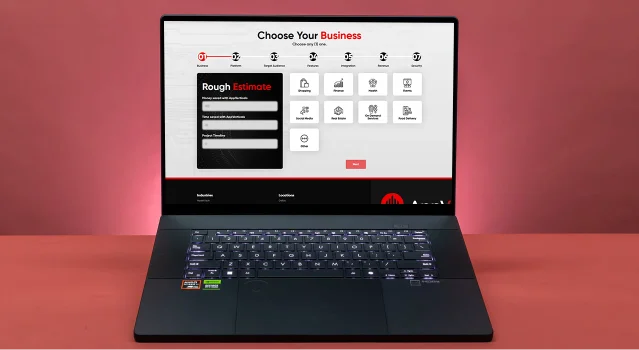
See what it might cost to bring your app idea to life. Our calculator gives you a quick, simple estimate based on what you need.


 verified expert
Senior Content Writer — Mobile & Software Development, AI
Zainab helps tech brands sound more human. She takes app ideas, features, and updates and turns them into content people actually want to read. Whether it’s for a launch, a campaign, or just making things...
See Full Bio15 minutes read
To help you navigate this range, this guide is created for decision-makers, CTOs, CFOs, and founders, who need a clear understanding of where their investment will go.
We’ll break down the key factors driving the cost of ios app development, including complexity, compliance, team composition, and post-launch overhead.
iPhone App Development Costs in 2026
Key Factors Influencing Cost
Hidden or Ongoing Costs
Cost Breakdown by Project Stage
Take control of your app development budget and get clear on your next steps.
Cost isn’t random; it is a function of specific, measurable inputs. The problem is that most teams don’t scope these inputs sufficiently before requesting quotes, which is why estimates vary so wildly. A simple app to a stakeholder might imply a complex backend to an architect.
If you’re looking to hire iOS developers, it’s essential to ensure they understand these variables upfront to avoid discrepancies in the iPhone app feature costs. To get an accurate number, you must define these five variables.
The number of screens, user roles, and unique interactions is the single largest cost variable. A 6-screen MVP with a single user role and basic API calls is a different product, and a different budget, than a 30-screen app with real-time sync, multi-role access, and custom business logic.
Every feature added pre-launch adds an average app complexity cost of $8,000–$30,000 to your scope.
There’s a meaningful cost gap between functional design (system components, clean layout) and bespoke design (custom motion, micro-animations, brand-specific design system). The former adds $10,000–$20,000 to a project.
The latter adds $30,000–$60,000. For most early-stage apps, a functional design that reduces friction is worth more than visual sophistication.
The APIs and services your app connects to determine complexity. Payment gateways (Stripe, Apple Pay), mapping (MapKit), push notifications (APNs), AI/ML pipelines, real-time databases (Firebase, WebSockets), each integration adds scope.
A single well-documented API adds 20–40 development hours. A custom ML model integration adds 80–200+ hours.
A senior iOS architect in San Francisco billing at $180/hr and a mid-level developer in Eastern Europe billing at $65/hr can produce equivalent outputs on well-defined tasks, but they are not interchangeable.
The ratio of senior to junior developers, the presence of a dedicated QA engineer, and whether architecture decisions are being made by someone with iOS-specific depth all affect both cost and outcome quality.
HIPAA-compliant data handling, PCI DSS for payment processing, GDPR consent flows, and Apple’s App Transport Security requirements are non-optional in regulated industries. These aren’t add-ons, they’re baseline requirements that need to be scoped into your initial build.
Compliance work typically adds $20,000–$80,000 to a healthcare or fintech app and cannot be retrofitted cheaply post-launch.
We can help you manage the complexities of building a compliant iOS app.
The most common question in any iOS mobile app development budget conversation is: just give me a number. The honest answer is that the number depends on scope, but scope can be tiered. Most applications fall into one of three distinct tiers based on their feature density and technical requirements.
When working with a mobile app development company, understanding these tiers will help you get a more accurate iPhone app development estimate and avoid the frustration of wild price discrepancies. Here are the three tiers most apps fall into, along with the cost formula that underpins every professional estimate.
Here are the three tiers most apps fall into, along with the cost formula that underpins every professional estimate.
| Tier | Typical Features | Estimated Cost | Timeline |
|---|---|---|---|
| Simple / MVP | 3–6 screens, basic auth, 1–2 integrations | $25,000 – $60,000 | 2–4 months |
| Mid-Complexity | Custom UI, 3rd-party APIs, CMS, analytics | $80,000 – $180,000 | 4–8 months |
| Complex / Enterprise | Real-time sync, AI/ML, multi-role, compliance | $200,000 – $400,000+ | 8–18 months |
Note: Always add a 15–20% contingency buffer to any fixed estimate to account for discovery unknowns.
Whether you need a basic MVP or a full-featured enterprise app, we’ve got you covered.
Generic cost tiers are a starting point, but if you’re building a fintech app, the cost structure looks nothing like a fitness tracker. Compliance requirements, real-time data demands, and integration complexity vary dramatically by vertical.
Here is where the average cost to develop an iPhone app becomes industry-specific.
| App Category | Core Complexity Drivers | Estimated Cost Range |
|---|---|---|
| On-Demand (ride, food, delivery) | Real-time tracking, dual-sided UX, payments | $80,000 – $200,000 |
| eCommerce & Marketplace | Catalog, cart, payment, inventory sync | $60,000 – $180,000 |
| Fintech & Banking | PCI DSS, biometric auth, real-time transactions | $150,000 – $400,000+ |
| Healthcare & Fitness | HIPAA compliance, EHR integrations, wearables | $120,000 – $350,000 |
| SaaS / Enterprise | Role-based access, cloud infra, dashboards | $100,000 – $300,000 |
| Gaming & AR/VR | 3D rendering, physics engine, ARKit | $150,000 – $500,000+ |
Note on AI Integration: AI/ML feature integration, recommendation engines, NLP, computer vision, adds $20,000–$80,000 to any category above, depending on whether you’re calling a third-party API (cheaper) or training and deploying a custom model (significantly more expensive).
Understanding this breakdown gives you the ability to prioritize, phase, and renegotiate if budget constraints emerge mid-project.
| Stage | Activities | % of Total Budget | Approx. Cost (on $150K project) |
|---|---|---|---|
| Discovery & Scoping | Requirements, architecture, tech stack selection | 5–10% | $7,500 – $15,000 |
| UI/UX Design | Wireframing, prototyping, design system | 10–15% | $15,000 – $22,500 |
| Frontend Development | Swift/SwiftUI coding, screen builds | 30–40% | $45,000 – $60,000 |
| Backend & API Development | Server logic, database, integrations | 20–30% | $30,000 – $45,000 |
| QA & Testing | Functional, performance, regression, device testing | 10–15% | $15,000 – $22,500 |
| App Store Submission | Metadata, compliance review, TestFlight | 2–5% | $3,000 – $7,500 |
| Post-Launch (Year 1) | Bug fixes, OS updates, minor enhancements | 15–25% of build cost/yr | $22,500 – $37,500 |
The discovery phase is consistently the most under-budgeted stage. Teams that skip or rush it pay for that decision in scope creep during development, often doubling the cost of a single misunderstood requirement.
Location is the most visible cost lever in iOS app development, and the most misunderstood. The assumption that lower rates always mean lower costs overlooks key factors like rework, communication overhead, and time-to-delivery.
The cost of building an app by country varies, with lower rates often coming at the cost of slower delivery or reduced quality. Higher-cost regions may offer better expertise and faster results, ultimately reducing overall costs.
Here are the actual market rates for 2026, followed by what those rates actually buy you.
Location is the most visible cost lever in iOS app development, and the most misunderstood. The assumption that lower rates automatically mean lower costs ignores the real variables: rework rates, communication overhead, architectural decision quality, and time-to-delivery.
Here are the actual market rates for 2026, followed by what those rates actually buy you.
| Region | Junior Developer | Mid-Level Developer | Senior Developer |
|---|---|---|---|
| USA / Canada | $80 – $120/hr | $120 – $180/hr | $150 – $250/hr |
| Western Europe (UK, Germany) | $60 – $90/hr | $90 – $140/hr | $120 – $180/hr |
| Eastern Europe (Poland, Ukraine) | $35 – $55/hr | $55 – $80/hr | $75 – $110/hr |
| India / Southeast Asia | $20 – $35/hr | $35 – $55/hr | $50 – $80/hr |
| Latin America | $30 – $50/hr | $50 – $75/hr | $65 – $95/hr |
Rate is not the right filter. A senior iOS architect in Eastern Europe billing at $85/hr who owns the technical architecture, makes sound decisions on data models, and delivers clean Swift code is worth significantly more than a US-based junior at $110/hr who requires daily supervision.
The cost per output, not cost per hour, is what your CFO should be tracking.
The development invoice you approve is not your total iPhone app development cost. What most teams discover too late is that the post-launch cost structure is substantial, recurring, and non-negotiable if you intend to keep the app in production.
Here is everything that belongs on your budget sheet after go-live.
If you’re deciding between iOS vs Android app development as your launch platform, the cost delta is real but often overstated. The more important variable is not which platform costs less, it’s which platform your target user actually uses. That said, here is what the cost comparison actually looks like in 2026.
| Dimension | iOS (iPhone) | Android |
|---|---|---|
| Language / Toolchain | Swift / SwiftUI / Xcode | Kotlin / Jetpack Compose / Android Studio |
| Device Fragmentation | Low (Apple-controlled hardware) | High (500+ device variants) |
| QA & Testing Effort | Lower—fewer devices to test | Higher—broader device matrix |
| App Store Fees | $99/year (Apple Developer Program) | $25 one-time (Google Play) |
| Approval Timeline | 1–3 days avg. (stricter review) | Hours to 3 days (faster, less strict) |
| Development Cost Delta | Baseline | Typically 10–25% higher for native |
| Maintenance Complexity | Lower | Higher due to OS version fragmentation |
If your target user is a premium consumer or enterprise buyer in Western markets, iOS-first is the rational default. For high-volume consumer apps targeting emerging markets, Android-first or cross-platform frameworks (Flutter, React Native) deserve consideration. However, it’s important to note that while cross-platform development can reduce costs and time-to-market, it often comes with trade-offs in performance and access to native iOS capabilities.
There is a meaningful difference between reducing cost and reducing scope arbitrarily. The strategies below are about eliminating waste, not value. Each one has been validated across real iOS projects, not theoretical frameworks.
The wrong development partner is the most expensive mistake you can make, more expensive than overpaying for the right one. Here is a practical framework for evaluating iOS development options across engagement models, followed by the four criteria that should be non-negotiable in any selection process.
| Model | Best For | Cost Range | Key Risk |
|---|---|---|---|
| In-House iOS Team | Ongoing product with >$1M tech budget | Highest (salary + benefits + tools) | High fixed cost, slow to scale |
| Dedicated Agency | Funded startups, complex products | $80–$200/hr (agency blended rate) | Scope overruns if requirements aren’t locked |
| Offshore Dedicated Team | Cost-sensitive builds with clear specs | $30–$75/hr (blended) | Communication and timezone friction |
| Freelancer | Small feature work or prototypes only | $40–$120/hr | Single point of failure, no QA layer |
The most useful budget number isn’t the industry average, it’s the number that makes sense for your specific business stage, risk tolerance, and product hypothesis.
Here is a practical framework for calibrating your iPhone app development budget to where you actually are.
| Business Stage | Recommended Starting Budget | Rational Approach |
|---|---|---|
| Pre-seed / Idea validation | $25,000 – $50,000 | Clickable prototype + scoped native MVP |
| Seed / Early-stage startup | $60,000 – $120,000 | Core-feature native iOS app, BaaS backend |
| Series A / Scaling product | $150,000 – $300,000 | Full product, scalable infrastructure, QA automation |
| Enterprise / Regulated | $300,000 – $600,000+ | Compliance layer, custom integrations, security audit |
In 2026, iPhone app development costs vary widely based on complexity, industry, and post-launch requirements. By understanding the key cost drivers and planning effectively, you can build a solution that meets your goals without breaking your budget.
At AppVerticals, we specialize in delivering budget-friendly, high-quality iOS apps designed for scalability and long-term success. Whether you’re just starting with an MVP or scaling to an enterprise-level solution, our expert team can help bring your vision to life with competitive ios app development pricing strategies and a focus on value.
With proven experience in creating apps that grow with your business, we’ll help you bring your idea to life.
verified expert
Zainab helps tech brands sound more human. She takes app ideas, features, and updates and turns them into content people actually want to read. Whether it’s for a launch, a campaign, or just making things clearer, she’s all about simple words put together to form stories that stick.
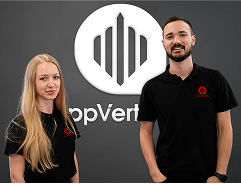 We’re AppVerticals
AppVerticals is where innovative startups and Fortune 500s come for transformation.
View About Us Mobile App
Los Angeles has become an epicenter for mobile innovation, with startups budding across silicon beach taking leads in the app-first disruption. With t...

16 min read
 Mobile App
Denver has become a strong market for mobile app development, with businesses across healthcare, real estate, logistics, and transportation investing...

9 min read
 ios
ios
Hiring iOS developers may seem simple initially, but the real challenges emerge once you're faced with app store deadlines, debugging complex systems,...
13 min read
Discover how our team can help you transform your ideas into powerful Tech experiences.
AppVerticals © 2026 | All Rights Reserved

Get In Touch.













 ChatGPT
 Perplexity
 Google AI