We’re a future-focused tech partner working with some of the world’s top enterprises. At AppVerticals, we design solutions that drive growth and reimagine digital experiences.
Senior Content Writer — Mobile & Software Development, AI
Zainab helps tech brands sound more human. She takes app ideas, features, and updates and turns them into content people actually want to read. Whether it’s for a launch, a campaign, or just making things...
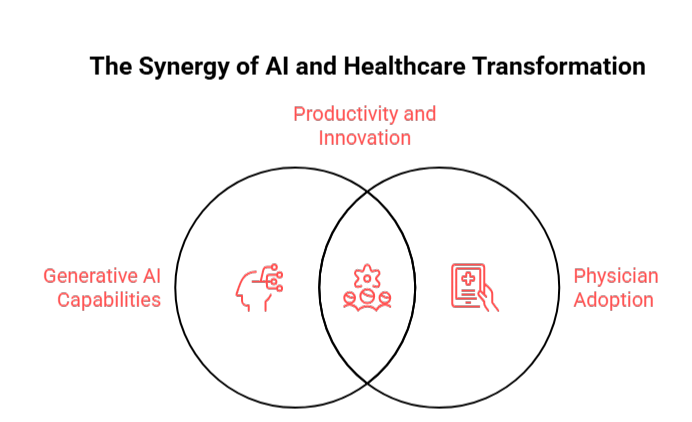
AI is rapidly becoming a core component of healthcare infrastructure. Healthcare AI spending maximized to $1.4 billion in 2025, nearly tripling from 2024, and healthcare is adopting AI 2.2x faster than the broader U.S. economy. 66% of U.S. physicians and 71% of hospitals now use AI-integrated tools, pushing the bar higher for Healthtech companies.
With AI driving major changes, healthcare software must evolve to stay ahead. In this article, we’ll dive into the top healthcare software development trends to watch in 2025.
Key Takeaways From Healthcare Software Development Trends 2026
AI adoption is inevitable, with 66% of physicians already using it; prioritize governance and training to prevent over-reliance.
HIPAA’s 2026 deadline is approaching; many organizations need to improve security and cybersecurity remains a top challenge.
Cloud-based, FHIR-enabled platforms are key to interoperability, with wearable and RPM integration cutting readmissions by up to 50%.
67% of healthcare organizations are increasing software budgets due to price hikes; negotiating multi-year contracts ensures cost control.
Only 1.6% of AI devices have RCT evidence, so demand real-world data and pilot before full-scale AI deployment.
EHR integration is crucial for successful telehealth and ensuring seamless data exchange across platforms.
Build AI-Ready Healthcare Software The Right Way
Unsure how to adopt AI without risking compliance or clinical accuracy? Our experts help you architect AI-driven healthcare software that’s secure, validated, and scalable.
Trend #1. Generative AI in Healthcare Software
Generative AI is redefining healthcare by automating routine tasks, enhancing diagnostic accuracy, and improving clinician productivity. As AI adoption accelerates, its applications are becoming more integrated into clinical workflows, from documentation to drug discovery.
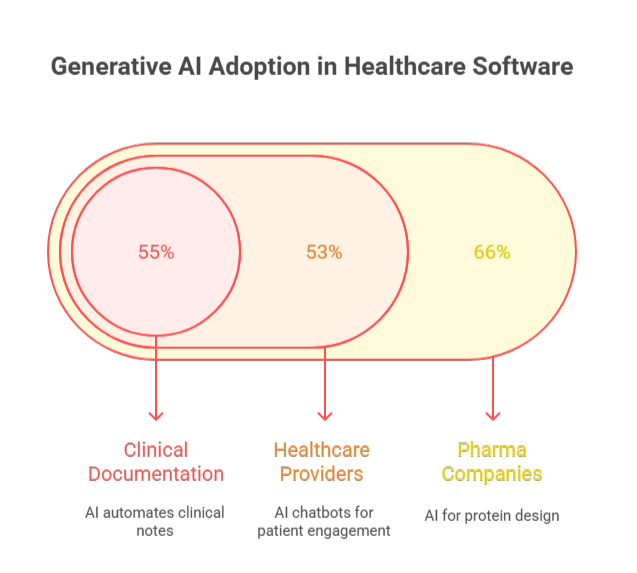
With 55% of physicians adopting ambient scribing and AI-driven documentation tools, the healthcare sector is poised to see substantial productivity gains, with applications across multiple domains from medical imaging to patient engagement. Kazim Qazi, CEO at AppVerticals, also mentions about the use of AI in healthcare in his LinkedIn post, emphasizing how the bar is getting high for healthtech companies.
Shahrzad Shariatpanahi, a doctoral candidate in Biomedical Engineering with industry experience in medical manufacturing, highlights that generative AI’s strength lies in its ability to synthesize complex data and augment clinical judgment rather than replacing it. As she explains, “Generative AI represents a pivotal moment for healthcare innovation…it has the potential to accelerate device development, enhance diagnostic precision, and reduce administrative burden. Properly governed, it can act as a force multiplier for clinical expertise.”
This underscores the importance of integrating AI-driven models thoughtfully, ensuring that AI serves as a support tool rather than a substitute decision-maker. When implemented with care, AI in healthcare enhances both innovation and patient protection, key considerations as the healthcare landscape continues to evolve.
What Are the Top Clinical Use Cases of Generative AI in Healthcare Software?
Clinical Documentation & Ambient Scribing: AI automates clinical notes from patient conversations, saving physicians 1-2 hours/day. With 55% adoption, it also reduces physician burnout by 31%.
Chatbots and AI Agents: Widely adopted by 53% of healthcare providers, AI chatbots enhance patient engagement, streamline triage, and automate revenue cycle management.
Medical Imaging Enhancement: AI enhances diagnostic accuracy in radiology report generation and generates synthetic data for better training, improving overall diagnostic performance.
Drug Discovery & Molecular Design: 66% of pharma companies leverage AI for protein design, accelerating clinical trial optimization and reducing time-to-market for new drugs.
Emerging Applications: Prior authorization automation has seen 10x growth year-over-year, while AI is also optimizing coding and billing processes, creating more efficient workflows in healthcare.
How Generative AI Improves Diagnostic Accuracy and Clinician Productivity?
Diagnostic Accuracy: AI enhances diagnostic decision-making, outperforming traditional methods and improving cancer detection accuracy.
Radiology Productivity: AI boosts radiologist productivity by up to 40%, cutting reading time by 90% for tasks like mammography.
Clinical Documentation: AI reduces note-taking time by 20-30%, improving efficiency and minimizing after-hours work for clinicians.
What Are the Ethical, Regulatory, and Data Privacy Challenges of Generative AI in Healthcare?
Algorithmic Bias & Fairness: AI models often lack demographic diversity, which may exacerbate existing healthcare disparities.
Clinical Accuracy & Hallucinations: AI can sometimes generate clinically invalid responses, requiring rigorous validation before clinical deployment.
Governance Gaps: Concerns around “shadow AI” usage without institutional oversight are rising, potentially leading to deskilling and over-reliance on AI.
Regulatory Compliance: New FDA guidelines and the EU AI Act call for stricter regulation and risk management to ensure safe AI implementation in healthcare.
Data Privacy: AI systems are vulnerable to data breaches and adversarial attacks, posing significant risks to sensitive patient health data.
Trend #2. Cloud Computing for Scalable Healthcare Systems
Cloud computing is transforming healthcare by enabling scalable, cost-efficient solutions that improve access to electronic health records (EHRs), enhance AI-powered clinical decision support, and streamline operations. It provides flexibility for hospitals and clinics to scale resources without compromising quality, leading to better interoperability and more efficient care delivery.
As cloud adoption accelerates, healthcare organizations benefit from reduced IT costs, improved data security, and enhanced patient outcomes. These solutions are crucial for supporting innovations in telemedicine app development, medical imaging, and population health management, ensuring that telemedicine platforms are both scalable and secure while enhancing the overall patient experience.
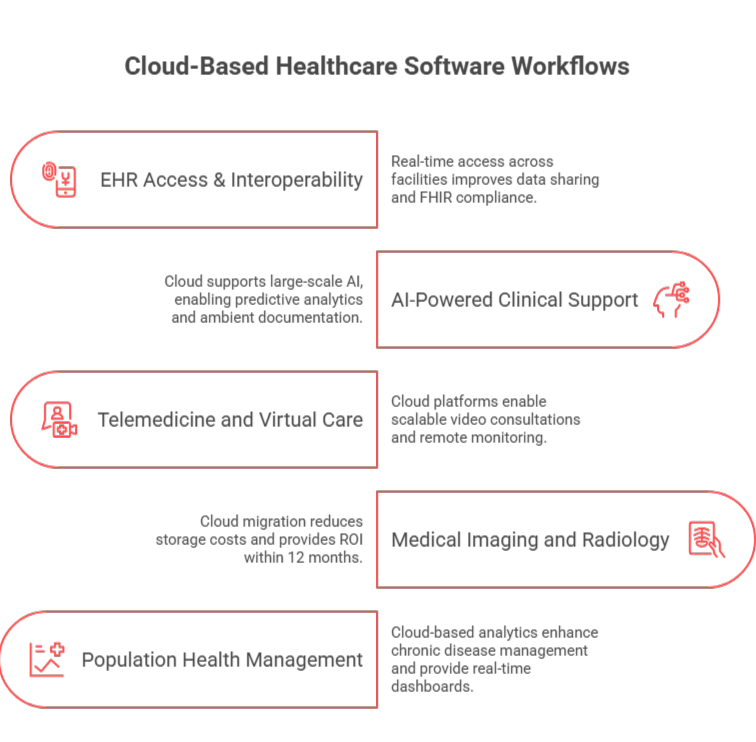
What Are the Key Clinical Workflows Enabled by Cloud-Based Healthcare Software?
Electronic Health Records (EHR) Access & Interoperability: Cloud-based EHRs enable real-time access across facilities, improving data sharing and FHIR compliance, and integrating with wearables and remote monitoring.
AI-Powered Clinical Decision Support: Cloud supports large-scale AI, enabling predictive analytics for conditions like sepsis and enhancing ambient documentation within EHR systems.
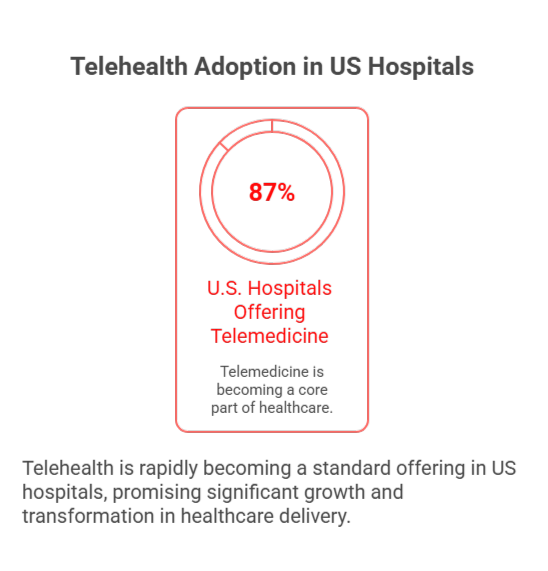
Telemedicine and Virtual Care Platforms:87% of U.S. hospitals offered telemedicine services in 2024. Cloud platforms enable scalable video consultations and remote monitoring, integrated with EHRs for seamless documentation.
Medical Imaging and Radiology: Cloud migration reduces storage costs by 38% and provides ROI within 12 months for imaging services.
Population Health Management and Analytics: Cloud-based analytics enhance chronic disease management and provide real-time dashboards for public health monitoring.
What Are the Security and Compliance Best Practices for Healthcare Cloud Deployments?
HIPAA Compliance Framework: Use multi-factor authentication (MFA), end-to-end encryption, and conduct regular security audits to ensure compliance with HIPAA.
Six Best Practices for Cloud Security: Implement role-based access controls, ensure regular patching for vulnerabilities, and develop incident response and disaster recovery plans.
Data Governance Frameworks: Enforce data minimization, ensure compliance with data residency requirements, and maintain audit trails for PHI access.
How Does Migrating Healthcare Software to the Cloud Lead to Cost Savings and ROI?
Direct Cost Reductions: Cloud adoption leads to 20% savings on IT costs, 38% savings on imaging storage, and 30-40% savings on infrastructure maintenance.
Operational Efficiency Gains: Cloud systems offer scalability for fluctuating patient volumes and remote access for clinicians, enhancing care coordination.
Total Cost of Ownership (TCO) Considerations: Cloud migration reduces CapEx by eliminating hardware refresh cycles and on-site IT staff requirements.
EHR Cloud Migration Specifics: Cloud-based EHRs cost $200-$700 per provider per month, compared to $15,000-$70,000 upfront for on-premise systems.
The healthcare cloud computing market is expected to see significant growth through 2026-2033, driven by rising demand for scalable infrastructure and cost optimization.
Modernize Your Healthcare Infrastructure
From cloud migration to FHIR-enabled interoperability, we help healthcare organizations build systems that scale, integrate, and stay compliant.
Trend #3. AI-Enhanced Diagnostics and Clinical Decision Support
AI is transforming diagnostics by improving accuracy, enhancing productivity, and supporting clinical decision-making. From radiology to cardiology, AI is being integrated into diverse clinical workflows to enhance diagnostic performance and help clinicians make data-driven decisions more effectively.
While AI has demonstrated significant potential in diagnosing common diseases like breast cancer and diabetic retinopathy, challenges remain around domain specificity, data quality, and the need for robust validation. Despite these hurdles, AI’s role in diagnostics continues to expand rapidly.
Shahrzad also emphasized that generative AI’s ability to synthesize multi-modal data allows it to enhance clinical judgment in diagnostic environments. As she notes, “Generative AI represents a pivotal moment for healthcare innovation, it has the potential to accelerate device development, enhance diagnostic precision, and reduce administrative burden.”This capability can be especially valuable in clinical settings like oncology and radiology, where early pattern recognition is critical to improving outcomes.
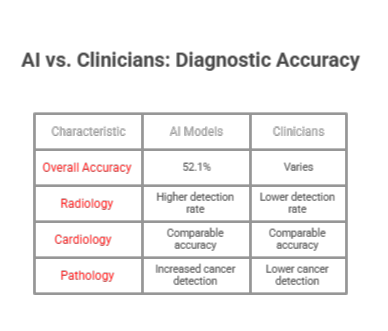
What Is the Diagnostic Accuracy of AI Models Compared to Clinicians?
Overall Diagnostic Accuracy: AI models have shown an overall diagnostic accuracy of 52.1% in meta-analyses of 83 studies, with varying performance across applications and disease types.
Radiology and Medical Imaging: AI systems outperform or match radiologists in specific tasks, such as breast cancer screening, with a 17.6% higher detection rate, and diabetic retinopathy detection, with an 87-97% sensitivity.
Cardiology: AI-powered ECG interpretation by systems like AliveCor KardiaMobile shows comparable accuracy to cardiologists for arrhythmia detection and coronary artery disease risk stratification.
Pathology: AI-assisted pathology increases cancer detection rates by 20-30% and cuts diagnostic turnaround time by up to 50%.
What Are the Diseases with the Strongest Clinical Evidence for AI-Based Diagnosis?
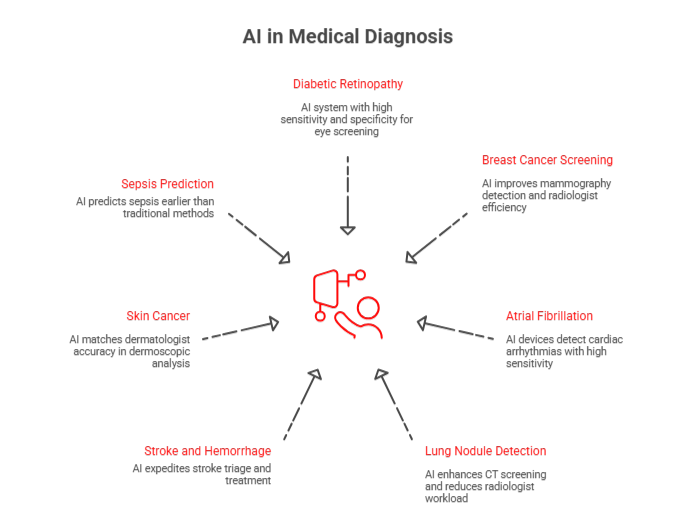
Diabetic Retinopathy: IDx-DR, the first FDA-approved autonomous AI system, demonstrates 87.2% sensitivity and 90.7% specificity, widely deployed for primary care screening.
Breast Cancer Screening: AI improves mammography detection by 17.6%, reduces false positives, and enhances radiologist efficiency. FDA-cleared systems like Transpara and QuantX are at the forefront.
Atrial Fibrillation: AI devices such as AliveCor KardiaMobile provide >95% sensitivity for detecting cardiac arrhythmias, reducing stroke risk through early detection.
Lung Nodule Detection: AI-enhanced CT screening improves detection of small pulmonary nodules, reducing radiologist workload by 30-40%.
Stroke and Intracranial Hemorrhage: AI platforms like Viz.ai expedite stroke triage, reducing treatment time by 30-45 minutes and improving outcomes.
Skin Cancer (Dermatology): AI-powered dermoscopic analysis matches dermatologist accuracy and improves training data access through synthetic data generation.
Sepsis Prediction: AI models predict sepsis 6-12 hours earlier than traditional methods, enabling timely intervention and improving patient survival.
What Are the Regulatory and Validation Pathways for AI Diagnostic Software?
FDA Regulatory Framework (U.S.)
510(k) Premarket Notification: The most common pathway, with 97% of AI devices cleared under this process.
De Novo Classification: For new devices, like IDx-DR, that don’t have a predicate.
Premarket Approval (PMA): Required for high-risk devices and involves clinical trials, though rarely used for software-only tools.
Key Regulatory Requirements
Predetermined Change Control Plans: The FDA’s 2024 guidance allows continuous learning AI systems with predefined update protocols.
Clinical Validation Standards: Only 1.6% of cleared devices included randomized trials, and there’s growing demand for real-world evidence.
International Regulatory Approaches
European Union: AI diagnostic tools are classified as high-risk under the EU AI Act, with a focus on post-market surveillance.
UK MHRA: AI tools are now reviewed by notified bodies, requiring alignment with ISO and IMDRF standards.
Post-Market Surveillance: Despite rapid growth, only 5% of devices reported adverse events to the FDA, highlighting the need for better post-market monitoring.
Trend #4. Wearable Health Technology Integration
Wearable health technology is driving a revolution in patient care by enabling continuous monitoring, early detection, and personalized treatment. As the global wearable market grows, reaching an estimated $83.9 billion by 2026, the integration of wearable data into healthcare systems is becoming crucial for improving patient outcomes and reducing healthcare costs.
Health and fitness apps, which are predicted to represent 10% of downloads in 2026, will play a significant role in this trend. With the integration of wearable tech and AI-powered health tracking, these apps will offer a more holistic approach, blending physical and mental wellness to improve overall well-being.
From chronic disease management to mental health monitoring, wearables are enhancing clinician-patient interactions and offering real-time insights that enable proactive care. However, integrating wearable data into existing healthcare infrastructure presents challenges that must be addressed for seamless, secure, and effective use.
What Are the Leading Clinical Use Cases for Wearable Health Technology in 2026?
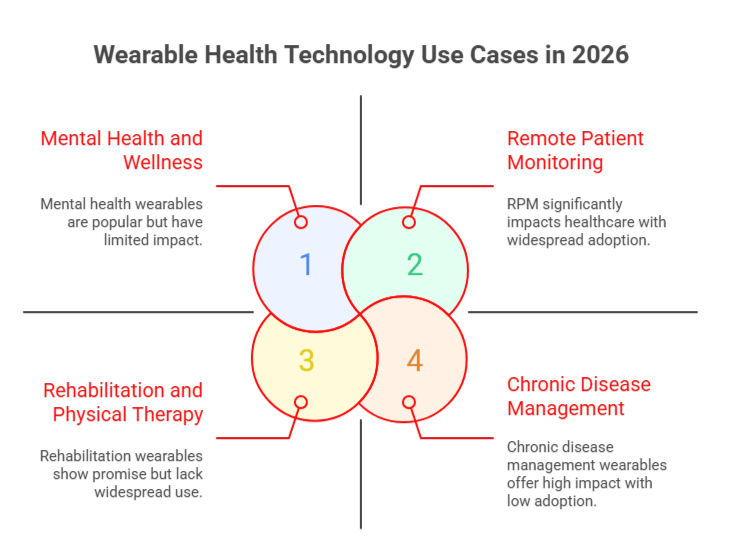
Chronic Disease Management: Wearables track conditions like heart failure, COPD, and diabetes, reducing readmissions by 20-50% and offering AI-driven insights for hypertension and glucose management.
Cardiac Arrhythmia Detection: Devices like AliveCor and the Apple Watch offer real-time atrial fibrillation alerts, reducing stroke risk by 60%+ with timely anticoagulation.
Remote Patient Monitoring (RPM): One in three U.S. adults use wearables, with over 80% willing to share data with clinicians, enabling proactive interventions and reducing hospitalization rates.
Rehabilitation and Physical Therapy: Motion tracking devices provide real-time feedback on recovery exercises, improving adherence by 30-40% through gamification.
Mental Health and Wellness: Wearables track heart rate variability (HRV) for stress and anxiety, replacing static assessments like PHQ-9 and GAD-7, while improving sleep quality monitoring for behavioral health.
Preventive Care and Early Detection: AI-driven insights from wearable data offer personalized wellness recommendations, while predictive alerts can signal developing conditions early.
How Wearable Data Is Integrated into EHR and Healthcare Software Platforms?
FHIR API Standards: FHIR ensures standardized data exchange, enabling seamless integration with platforms like Apple Health and Fitbit, improving interoperability.
AI-Powered Data Processing: Machine learning models prioritize actionable insights from wearable data, reducing alert fatigue by 50-60%.
Real-Time Dashboards: Clinician-facing interfaces display aggregated data from wearables, offering customizable alerts and integration with EHR workflows for seamless chart updates.
Clinical Workflow Integration: Wearable data is incorporated into pre-visit, in-visit, and post-visit workflows, supporting decision-making and triggering alerts for concerning trends.
Data Quality and Validation: Ensuring medical-grade accuracy and filtering out false readings are crucial for clinical use, with wearables requiring FDA 510(k) clearance for diagnostic claims.
Reimbursement and Billing: Wearable integration can generate $60-$85 per patient/month in RPM program revenue, with annual revenues estimated at $144,000-$204,000 for 200 patients.
What Are the Regulatory, Privacy, and Data Security Risks of Medical Wearables?
Regulatory Landscape
FTC Health Breach Notification Rule (HBNR): Wearable manufacturers must notify consumers of breaches involving personal health records (PHRs).
Proposed HIPRA Legislation: Potential extension of medical-grade privacy protections to consumer health companies, including consent and breach notification requirements.
FDA Oversight: Medical-grade wearables with diagnostic claims require FDA clearance, with a new cybersecurity mandate for medical devices under Section 524B.
Privacy and Security Risks
Weak Encryption: Many wearables use outdated encryption protocols, exposing data to potential breaches.
Inadequate Access Controls: Limited user control over data sharing raises concerns over third-party app access.
Mitigation Strategies: Implement end-to-end encryption, granular consent management, and regular security audits to address risks.
Best Practices for Healthcare Organizations: Prioritize vendor due diligence, establish data governance policies, and educate patients about data risks and protections.
Trend #5. Telehealth and Remote Care Software Platforms
Telehealth is reshaping how healthcare is delivered, with the global telehealth market projected to grow from $186.41 billion in 2025 to $791.04 billion by 2032. With 87% of U.S. hospitals offering telemedicine services by 2024, telemedicine app features such as virtual consultations, patient monitoring, and secure data exchange have become critical to improving patient outcomes and access.
However, as telehealth adoption increases, several challenges remain, including regulatory uncertainty, technology access, and integration with clinical workflows. Both healthcare web development and software development are critical in addressing these barriers and optimizing telehealth solutions for better patient and clinician experiences.
Which Conditions Are Best Managed Through Telehealth Software Solutions?
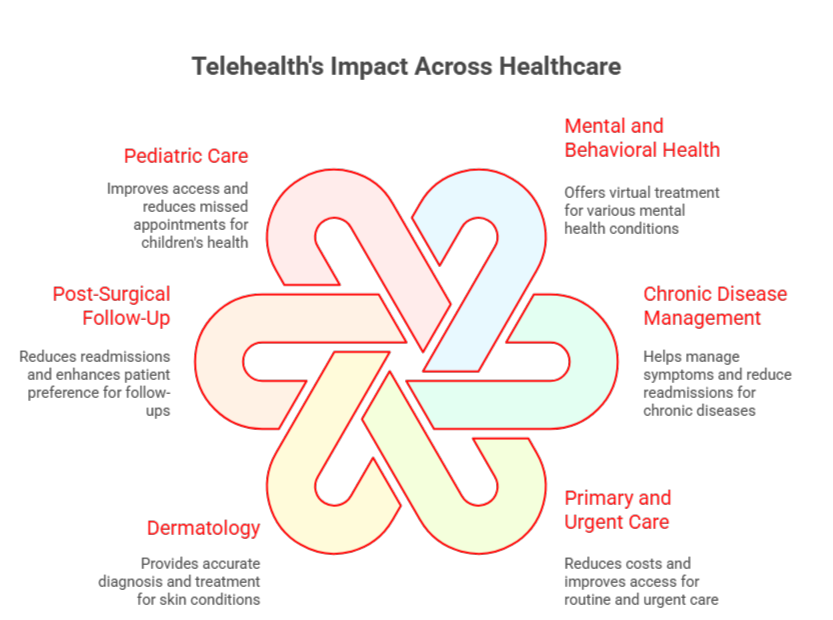
Mental and Behavioral Health: Telehealth has the highest adoption for mental health, with over 40% of sessions conducted virtually, offering treatment for depression, anxiety, PTSD, and substance use disorders.
Chronic Disease Management: Telehealth programs for diabetes, hypertension, and COPD help manage symptoms effectively. Virtual care improves HbA1c by 0.5-1% and reduces readmissions for chronic conditions.
Primary and Urgent Care:60-70% of primary care visits can be managed via telehealth, reducing visit costs by $40-50 per visit compared to in-person care.
Dermatology: Telemedicine is 80-90% accurate for common skin conditions, expanding access to underserved areas via store-and-forward technology.
Post-Surgical Follow-Up: Telehealth follow-ups reduce readmissions by 15-20%, with 85% of patients preferring virtual check-ups when appropriate.
Pediatric Care: Telehealth is improving access for well-child visits and developmental screenings, reducing missed appointments by 30-40%.
How Do Telehealth Outcomes Compare to In-Person Care Models?
Patient Satisfaction:67% of patients report higher satisfaction with telehealth, driven by convenience and ease of access.
Quality of Care: No significant difference in outcomes for most conditions, with mental health and chronic disease management showing comparable or even improved results.
Access and Equity: Telehealth improves access for rural populations and reduces no-show rates by 15-25%. However, 51% of North Americans still face limited technology access.
Cost-Effectiveness: Virtual visits offer substantial savings through lower patient out-of-pocket costs and reduced transportation expenses.
What Are the Barriers to Telehealth Adoption and How Can Software Platforms Address Them?
Regulatory and Reimbursement Uncertainty: Varying regulations and payer policies hinder adoption. Software platforms can mitigate this with built-in compliance workflows, helping streamline prior authorization and billing.
Technology Access and Digital Literacy:51% of North Americans face challenges with technology access. Solutions include multi-modal access, such as phone or SMS options, and low-bandwidth optimization.
EHR Integration:40% of practices still use non-integrated video tools. Telehealth platforms that integrate with EHR systems ensure seamless workflows and secure documentation.
Clinician Adoption and Training: Overcome resistance to change with user-friendly interfaces and AI-powered documentation assistance that reduce clinician burnout.
Data Security and Privacy: Ensuring HIPAA compliance with end-to-end encryption and audit trails is critical for maintaining patient trust.
How Do Software Platforms Address These Barriers?
Technical Solutions: Platforms using FHIR standards improve interoperability with EHRs, while AI-powered triage streamlines appointment scheduling and multilingual support breaks down language barriers.
Compliance Features: Built-in HIPAA compliance, state licensing verification, and automated billing make workflows efficient and reduce administrative burden.
Workflow Optimization: Software platforms streamline workflows with features like pre-visit intake, waiting room management, and automated post-visit summaries, while integrating remote patient monitoring (RPM).
Trend #6. Data Privacy, Security, and Compliance in Healthcare Software
As healthcare software evolves, maintaining data privacy and security has become paramount. With the 2026 HIPAA Rule updates and increasing global attention on cross-border data transfers, healthcare organizations must stay ahead of regulatory changes and implement robust governance frameworks to protect sensitive patient information.
How Are HIPAA and State-Level Privacy Laws Impacting Healthcare Software?
2026 HIPAA Rule Updates: Effective February 16, 2026, new requirements will mandate Multi-Factor Authentication (MFA), encryption for data at rest and in transit, and enhanced business associate breach reporting. These changes also emphasize stricter privacy protections for reproductive and behavioral health data.
State-Level Privacy Laws: States like California and Virginia are introducing HIPAA-style safeguards for non-covered entities, while laws like Ohio HB 525 aim to regulate AI’s role in therapeutic decision-making.
Compliance Challenges: 29% of healthcare practices report needing significant improvement in data protection, network security, and cybersecurity.
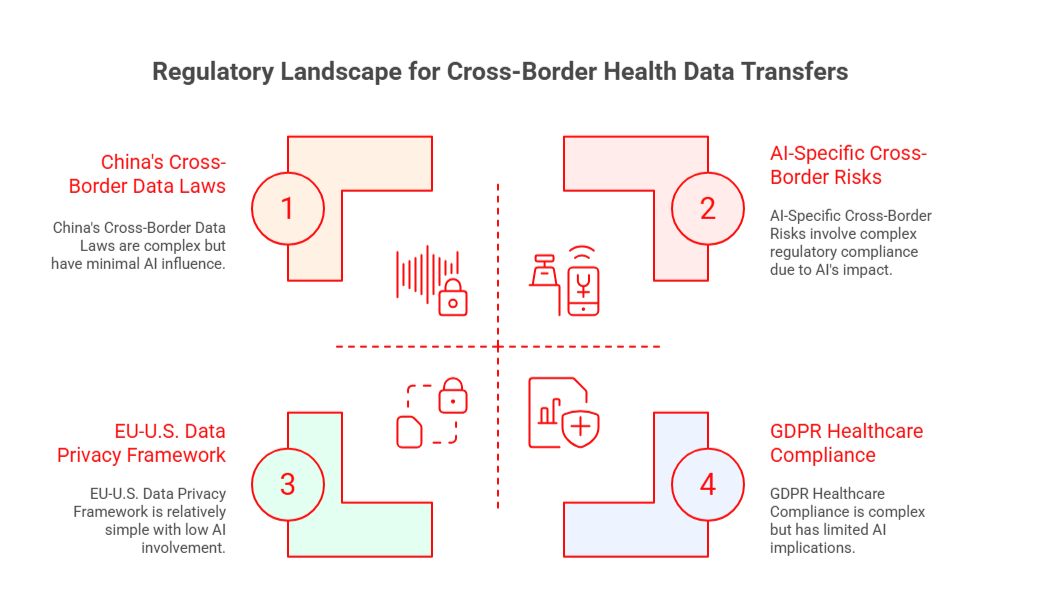
What Are the Key Regulations for Cross-Border Health Data Transfers?
EU-U.S. Data Privacy Framework: Standard Contractual Clauses (SCCs) are required for transferring health data between the EU and U.S. as the framework faces increasing scrutiny.
GDPR Healthcare Compliance: Health data under GDPR requires explicit consent and mandates data minimization for cross-border transfers. Organizations must appoint Data Protection Officers (DPOs).
China’s Cross-Border Data Laws: With China’s PIPL law, health data exports will face tighter restrictions, requiring security assessments for cross-border transfers.
AI-Specific Cross-Border Risks: As AI-enabled medical devices increase, data flows during model training and development complicate privacy compliance, requiring stringent records of processing activities.
How Do Healthcare Systems Implement Secure Data Governance Frameworks?
Data Classification and Inventory: Identify and classify PHI/ePHI, using automated discovery tools to track data across systems and partners.
Access Control and Identity Management: Enforce role-based access control (RBAC) and MFA as required by HIPAA, with periodic access reviews to ensure proper data handling.
Encryption and Data Protection: Apply AES-256 encryption for data at rest, TLS 1.3 for data in transit, and manage keys with Hardware Security Modules (HSMs).
Audit Logging and Monitoring: Ensure all PHI access is logged with real-time anomaly detection, storing logs for at least 6 years to meet HIPAA compliance.
Risk Assessment and Management: Conduct annual HIPAA risk assessments, including penetration testing and vulnerability scanning to evaluate potential risks.
Data Lifecycle Management: Implement data retention policies, use the 3-2-1 rule for backups, and ensure secure disposal at end-of-life.
Third-Party Risk Management: Perform vendor due diligence, establish Business Associate Agreements (BAAs), and monitor the security posture of all third parties handling PHI.
What Are the Best Tools for Healthcare Data Governance?
Data Discovery and Classification: Tools like Microsoft Purview and Varonis help in identifying and classifying PHI/ePHI.
Identity and Access Management: Okta and Ping Identity support secure identity management and access controls.
Cloud Security and Data Loss Prevention: Platforms such as Prisma Cloud and Symantec DLP ensure that healthcare organizations maintain secure data practices.
Are You Ready for HIPAA 2026?
Don’t wait for audits or penalties. Get expert guidance on HIPAA 2026 readiness, AI governance, and secure healthcare software development.
What Healthcare Organizations Should Prioritize When Adopting Emerging Trends
As healthcare organizations adopt new technologies, it is crucial to prioritize key strategic areas to ensure successful integration, long-term value, and compliance with evolving regulations.
Healthcare Software Adoption Checklist
Here’s a checklist to guide adoption and maximize outcomes:
Clinical Validation and Evidence Review: Ensure clinical efficacy by reviewing peer-reviewed studies and real-world evidence. Verify FDA clearances, regulatory compliance, and conduct pilot programs before full deployment.
Security and Compliance Readiness: Update systems for the 2026 HIPAA changes (MFA, encryption, breach notification). Conduct risk assessments, implement data governance, and secure vendor certifications and BAAs.
AI Governance and Oversight: Establish an AI governance committee with clinical, IT, and legal oversight. Create AI “safe zones” for controlled testing and ensure ongoing monitoring for biases.
Interoperability and Integration: Prioritize solutions with FHIR API support, ensure EHR compatibility, and plan for wearable data integration. Test data exchange accuracy and streamline workflows.
Workforce Readiness: Assess change management needs, provide training, and address clinician concerns regarding AI reliance and job satisfaction.
Financial Planning and ROI Tracking: Develop a multi-year budget with contingencies and track ROI based on clinical outcomes, efficiency gains, and cost savings.
Patient Engagement and Communication: Educate patients on AI in care, obtain informed consent, and provide transparent data usage policies through patient portals.
Shahrzad, in her conversation, also suggested that, as healthcare organizations embark on adopting emerging AI trends, they should prioritize embedding AI within existing healthcare infrastructure. She emphasizes, “Generative AI must be embedded within existing quality management systems, not layered on top of them.” This aligns with the need for disciplined governance and continuous oversight to ensure that AI systems are fully integrated into clinical workflows while safeguarding patient safety and maintaining accountability.
Build vs. Buy Considerations
When deciding between building custom solutions and purchasing commercial products, healthcare organizations must weigh several factors:
Build When:
Unique clinical workflows or proprietary algorithms are needed.
Strong internal development expertise is available.
Buy When:
Proven clinical efficacy, regulatory clearances, and robust vendor support are required.
Time-to-value is critical, and there is a need for rapid deployment.
Hybrid Approach:
Purchase core platforms and build custom integrations or workflow automations to meet specific needs.
However, cost considerations, whether for building custom solutions or purchasing off-the-shelf software, play a major role. Learn more about the financial aspects of healthcare app development in our comprehensive blog on healthcare app development cost.
Conclusion
As healthcare continues to embrace cutting-edge technologies like AI and cloud computing, staying ahead of evolving trends is critical for success. Organizations must focus on ensuring robust data security, implementing AI governance, and integrating interoperable systems.
Meeting new regulatory standards, such as the 2026 HIPAA updates, while managing data privacy and compliance requirements, will be pivotal. Forward-thinking healthcare software solutions are essential to navigate these challenges while improving operational efficiency and patient care.
AppVerticals is uniquely positioned to help healthcare organizations build the most innovative and compliant software solutions. With expertise in AI, cloud-based platforms, and custom healthcare software development solutions, we ensure seamless integration, top-tier security, and full regulatory compliance.
Partner with our experts to stay ahead of the curve and create software that drives efficiency, enhances patient outcomes, and supports long-term success.
Frequently Asked Questions
As healthcare continues to evolve, key software development trends to expect in 2026 include AI-powered virtual health assistants, IoMT (Internet of Medical Things) integration, cloud healthcare solutions, and advancements in generative AI for drug discovery. These technologies are set to enhance patient care, streamline operations, and reduce healthcare costs.
AI is expected to play a transformative role in healthcare software in 2026, especially in predictive analytics, personalized medicine, and automated administrative tasks. AI-driven tools like virtual health assistants and AI diagnostics will help in enhancing patient care, improving diagnostic accuracy, and optimizing treatment plans.
AI-powered virtual assistants will provide 24/7 patient support, helping with appointment scheduling, medication reminders, and follow-up care. These assistants also offer personalized care, improve patient engagement, and help reduce healthcare costs by automating administrative tasks.
Healthcare software must comply with HIPAA and GDPR regulations, ensuring data security, patient confidentiality, and secure cloud storage. With the rise in cyberattacks, it's crucial to implement end-to-end encryption, multi-factor authentication, and secure APIs to safeguard sensitive data.
IoMT devices like wearable health monitors and smart medical devices can collect real-time patient data, improving diagnostics and treatment plans. These devices integrate seamlessly with EHR systems, allowing for better remote patient monitoring, chronic disease management, and early detection of health issues.
Some key challenges include integration with existing systems, data privacy concerns, and high initial costs. Healthcare providers must also address regulatory compliance and ensure that new technologies such as AI and IoT devices meet industry standards while delivering tangible improvements.
Cloud healthcare solutions provide scalable, secure storage, and data sharing capabilities, making it easier for healthcare providers to access patient information across multiple platforms. In 2026, the integration of AI, IoT, and FHIR standards in cloud environments will enable more efficient care coordination and patient management.
Generative AI in drug discovery helps to accelerate research by predicting molecular structures and identifying potential drug candidates. It enables faster trials, reduced costs, and more personalized treatments, improving the overall drug development process.
Cloud-based solutions, AI-powered platforms, and IoT-enabled devices will provide cost-effective, scalable, and secure options for enterprises looking to modernize legacy systems. These technologies allow for seamless integration, real-time data sharing, and automated operations that reduce operational costs over time.
Healthcare software trends, such as AI, IoMT, and cloud-based systems, will improve patient care by providing real-time monitoring, personalized treatment plans, and enhanced diagnostic accuracy. These technologies will enable healthcare providers to offer more efficient, precise, and timely care.
Senior Content Writer — Mobile & Software Development, AI
Zainab helps tech brands sound more human. She takes app ideas, features, and updates and turns them into content people actually want to read. Whether it’s for a launch, a campaign, or just making things clearer, she’s all about simple words put together to form stories that stick.
Share This Blog
We’re AppVerticals
AppVerticals is where innovative startups and Fortune 500s come for transformation.
Telemedicine is transforming healthcare, and the demand for feature-rich telemedicine apps is skyrocketing. With the market set to grow from $124 bill...
Most enterprise learning platforms don’t collapse overnight. They slowly stop serving the teams relying on them. What begins as a smart, tactical solu...
The average healthcare app development cost in 2026 can range from $30,000 to $500,000 or more, varying on the basis of multiple factors including app...
Zainab Hai
18 min read
Book Your Free Growth Call with Our Digital Experts
Discover how our team can help you transform your ideas into powerful Tech experiences.
A Technology Partner You Can Rely On
1000+ brands trust AppVerticals to create high-performing digital solutions.
Amit Chopra
Head of Marketing, Al Rostamani Group
Successfully delivered the project on time and within budget. They remained flexible and cooperative with backend content organization, and their support, company culture, and client-centric approach truly stood out.
Bruce Wilson
CEO, Logistics SaaS Startup
The app came together exactly how we hoped. If you're looking for a team that knows what they’re doing and respects your time, they’re a solid choice.
Catherine
Founder, Real Estate Agency
They delivered a top-tier solution that’s fast, user-friendly, and packed with features tailored to the real estate industry. The team was professional, detail-oriented, and easy to work with from start to finish.
Trusted by Global Industry Leaders
Your Next Big Idea Needs the Right Team
Share a few details and get a clear timeline, cost estimate, and technical roadmap, tailored to your idea.




















 verified expert
 We’re AppVerticals
 Healthcare

 EdTech

 Healthcare












 ChatGPT
 Perplexity
 Google AI