About Us

About Us
We’re a future-focused tech partner working with some of the world’s top enterprises. At AppVerticals, we design solutions that drive growth and reimagine digital experiences.

Services
Software Development
Mobile App Development
Web Design & Development
Tell us what you're looking for, and we'll tailor a solution based on your business needs.
Talk to Experts
Health Tech

EdTech

Logistics

Real Estate

Ecommerce

Sports

Fintech

Travel

Restaurant

Automotive
HIPAA-compliant digital solutions for hospitals, clinics, and healthtech startups driving better patient outcomes.
What we do:
Scalable learning platforms for schools, universities, and EdTech startups transforming education delivery.
What we do:
Real-time tracking and automation solutions for freight companies, warehouses, and delivery services.
What we do:
PropTech platforms for brokerages, property managers, and real estate marketplaces are streamlining operations.
What we do:
High-converting commerce platforms for D2C brands, retailers, and online marketplaces are driving revenue growth.
What we do:
Fan engagement platforms for sports teams, leagues, and betting operators are creating immersive experiences.
What we do:
PCI-DSS compliant solutions for digital banks, payment platforms, and InsurTech companies, ensuring security.
What we do:
Booking and hospitality solutions for OTAs, hotels, and tourism platforms, enhancing traveler experiences.
What we do:
Online ordering and operations software for restaurants, cloud kitchens, and food delivery platforms.
What we do:
Connected vehicle platforms for automotive OEMs, dealerships, and mobility providers are accelerating innovation.
What we do:
Portfolio

AppVerticals was featured in Inc. 5000 as
America’s Fastest Growing Tech Company
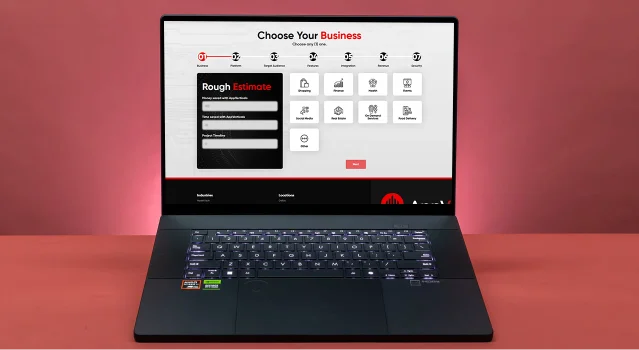
See what it might cost to bring your app idea to life. Our calculator gives you a quick, simple estimate based on what you need.


 verified expert
Senior Content Writer — Mobile & Software Development, AI
Zainab helps tech brands sound more human. She takes app ideas, features, and updates and turns them into content people actually want to read. Whether it’s for a launch, a campaign, or just making things...
See Full Bio14 minutes read
If you’re a founder, operator, or investor evaluating WMS software, avoid the common mistake of treating it as a basic inventory tool.
Having worked on both successful and challenging WMS projects, I’ve learned that the solution often lies in redesigning workflows, strengthening integrations, and focusing on data quality, rather than just training the team.
This guide will help you discover the best WMS solution that suits your specific use case or business needs, while also highlighting when a custom WMS might be the ideal choice.
WMS Market Growth: The warehouse management system market is expected to grow from $2.7B in 2021 to $12.3B in 2031, with a 16.3% CAGR, making strategic WMS decisions more crucial than ever.
Choosing the Right WMS: The best WMS for your business aligns with your specific fulfillment model, integrates seamlessly with existing systems, and scales as you grow. It should also handle exceptions effectively.
Cloud vs. On-Prem vs. ERP-Embedded: Cloud-based WMS reduces infrastructure burden, on-prem solutions are ideal for strict connectivity needs, and ERP-embedded systems offer convenience but need validation for warehouse workflows.
Top WMS Vendors: Leading solutions like Blue Yonder, SAP EWM, Oracle, and Infor offer advanced features like AI, real-time visibility, and strong integrations. Each is tailored to different operational needs, from ecommerce to large enterprises.
Custom WMS Considerations: A custom WMS may be the ideal choice if your business requires unique workflows, complex integrations, or specialized billing logic, particularly in 3PLs or for competitive advantages.
Custom WMS Solutions: AppVerticals offers custom logistics software development to create tailored WMS solutions, optimizing workflows, integrations, and scalability to match your operational needs.
The best WMS is the one that aligns with your warehouse’s complexity and integration needs. While this may seem obvious, it’s often where most selection processes lose focus. In practice, the best WMS typically meets these criteria:

However, if the available WMS options don’t align with your unique requirements, whether due to complexity, integration limitations, or specific business processes, you may need to consider custom WMS software development.
AppVerticals offers logistics software development services that can help build a custom solution tailored to your precise operational needs, ensuring flexibility and scalability as your business evolves.
If off-the-shelf solutions aren’t cutting it, AppVerticals can design a WMS tailored to your unique workflows and integration
As WMS vendors’ feature lists converge, buyers are focusing on architecture and integration as key differentiators in 2026. Operators now prioritize factors like technical architecture, integration capabilities, analytics/AI, user experience, and product support, rather than just core functionalities.
A few practical insights include:
| WMS Type | Key Benefits | Considerations |
|---|---|---|
| Cloud/SaaS WMS | Reduces infrastructure burden and streamlines upgrades (assuming backward compatibility) | Ideal for businesses looking to reduce hardware reliance and simplify maintenance. |
| On-prem WMS | Relevant for strict connectivity requirements, legacy automation systems, or regulatory constraints | May require higher initial investment for hardware and maintenance. |
| ERP-embedded WMS | Offers convenience with integration to ERP systems | Requires validation of execution features and RF workflows for optimal warehouse performance. |
While popularity can help build an initial shortlist, it shouldn’t be your only deciding factor. Still, it’s useful for investor decks and early-stage evaluations. Below are some of the most frequently mentioned WMS vendors from leading industry sources:

A comprehensive enterprise-scale WMS designed for complex supply chains and high-volume operations.
A robust WMS that seamlessly integrates with SAP ERP systems, catering to large enterprises with complex needs.
A cloud-native WMS offering full integration within the Oracle ecosystem, designed for enterprises looking for flexibility and scalability.
A powerful WMS solution designed for large and mid-market businesses, with strong AI/analytics positioning.
A flexible, enterprise-level WMS offering deep labor management integration and high scalability.
A highly configurable WMS designed for complex warehouses that require tailored workflows and system integrations.
A flexible WMS focused on providing tailored solutions for various industries with complex operational needs.
A cost-effective WMS solution targeting small to mid-market businesses, often used alongside QuickBooks for streamlined inventory management.
An entry-level WMS for SMBs, offering easy integration with Zoho’s suite of applications and a user-friendly interface.
Unlike the generic top 10 warehouse management systems, selecting the best WMS requires mapping your use case to the must-have capabilities.
Below are the ideal WMS solutions tailored for key industries and operational needs:

Ecommerce growth requires a WMS that functions as a real-time execution layer, seamlessly syncing with your storefront and shipping stack.
Prioritize in demos:
Top Choice: ShipHero Integrates ecommerce platforms for real-time updates, barcode scanning, analytics, and faster workflows.
Retailers need a WMS that ensures inventory accuracy across all nodes (warehouse, store, 3PL, or drop-ship) and enables seamless fulfillment from the best location.
Look for:
Top Choice: SAP EWM is the best option for omnichannel operations, offering real-time visibility and inventory accuracy across stores and warehouses.
For 3PLs, a WMS needs to handle multi-client inventory, workflows, SLAs, and billing. Client segmentation and billing rules often make this more complex than a standard WMS.
Prioritize:
Top Choice: Manhattan Active WMS offers a multi-client support, activity-based billing, and flexible SLAs to meet 3PL demands.
For enterprises, the WMS decision revolves around integration with ERP systems, labor management, automation orchestration, and governance for multi-site rollouts.
Focus on:
Top Choice: Oracle Warehouse Management Cloud offers strong ERP integration, automation orchestration, and enterprise-scale capabilities.
When evaluating WMS software for scalability and ERP integration, I recommend using a two-layer approach: execution features and system qualities. The core WMS functions include inventory management, order management, receiving/putaway, picking/packing strategies, shipping, and barcoding/RFID integration.
Here’s the demo checklist I’d use to evaluate vendors:
Ask vendors to demonstrate:
Since picking impacts labor costs, validate:
For real-world efficiency:
RF scanning is essential in any serious WMS:
Integration failures often go unnoticed. Ask:
To effectively budget and forecast ROI, break down these components:
For leadership teams, measuring ROI becomes easier when tied to specific, quantifiable outcomes. According to ShipHero, WMS adoption in ecommerce improves critical operational metrics.
Here is the list of some real and measurable ROI Levers:
Simple ROI Worksheet (Track Baseline vs. Post-Go-Live)
Payback expectation: Many teams target a 1–3 year payback window, depending on complexity and how quickly workflows and integrations stabilize.
Migration isn’t simply about moving data, it’s about rebuilding operational truth. Below are the common failure modes I watch for during the migration of either a warehouse management system or a warehouse management application.
Not all business situations can be dealt with an existing WMS software, but it’s where strategic decisions are made. You might consider a custom WMS if:
If your warehouse processes give you a competitive edge, such as same-day delivery, unique kitting, or specialized compliance flows, off-the-shelf solutions might be too restrictive.
If you have a complex tech stack (ERP, multiple storefronts, TMS, EDI), a custom WMS layer can reduce system fragility.
For 3PLs, the need for customized billing logic and specific SLAs often makes off-the-shelf solutions require extensive customization anyway, making a custom build a more viable long-term solution.
When selecting a build partner, look for one that demands clarity on processes, exceptions, and integrations before coding. AppVerticals can be the ideal partner if you’re not replacing your WMS but need to create custom components that enhance your system, whether its integrations, rule engines, billing logic, or dashboards, without an endless rebuild cycle.
Don’t settle for a one-size-fits-all solution. Let AppVerticals design a custom WMS that adapts to your unique business requirements and growth.
verified expert
Zainab helps tech brands sound more human. She takes app ideas, features, and updates and turns them into content people actually want to read. Whether it’s for a launch, a campaign, or just making things clearer, she’s all about simple words put together to form stories that stick.
 We’re AppVerticals
AppVerticals is where innovative startups and Fortune 500s come for transformation.
View About Us Healthcare
Telemedicine is transforming healthcare, and the demand for feature-rich telemedicine apps is skyrocketing. With the market set to grow from $124 bill...

17 min read
 Healthcare
Telemedicine has evolved far beyond its initial role as a pandemic stopgap, establishing itself as a permanent and transformative care channel, with t...
15 min read
 EdTech
In 2026, AI in EdTech delivers value when models are allowed to override static curricula, like skipping, repeating, or reordering learning paths base...

19 min read
Discover how our team can help you transform your ideas into powerful Tech experiences.
AppVerticals © 2026 | All Rights Reserved

Get In Touch.












 ChatGPT
 Perplexity
 Google AI