About Us

About Us
We’re a future-focused tech partner working with some of the world’s top enterprises. At AppVerticals, we design solutions that drive growth and reimagine digital experiences.

Services
Software Development
Mobile App Development
Web Design & Development
Tell us what you're looking for, and we'll tailor a solution based on your business needs.
Talk to Experts
Health Tech

EdTech

Logistics

Real Estate

Ecommerce

Sports

Fintech

Travel

Restaurant

Automotive
HIPAA-compliant digital solutions for hospitals, clinics, and healthtech startups driving better patient outcomes.
What we do:
Scalable learning platforms for schools, universities, and EdTech startups transforming education delivery.
What we do:
Real-time tracking and automation solutions for freight companies, warehouses, and delivery services.
What we do:
PropTech platforms for brokerages, property managers, and real estate marketplaces are streamlining operations.
What we do:
High-converting commerce platforms for D2C brands, retailers, and online marketplaces are driving revenue growth.
What we do:
Fan engagement platforms for sports teams, leagues, and betting operators are creating immersive experiences.
What we do:
PCI-DSS compliant solutions for digital banks, payment platforms, and InsurTech companies, ensuring security.
What we do:
Booking and hospitality solutions for OTAs, hotels, and tourism platforms, enhancing traveler experiences.
What we do:
Online ordering and operations software for restaurants, cloud kitchens, and food delivery platforms.
What we do:
Connected vehicle platforms for automotive OEMs, dealerships, and mobility providers are accelerating innovation.
What we do:
Portfolio
AppVerticals was featured in Inc. 5000 as
America’s Fastest Growing Tech Company
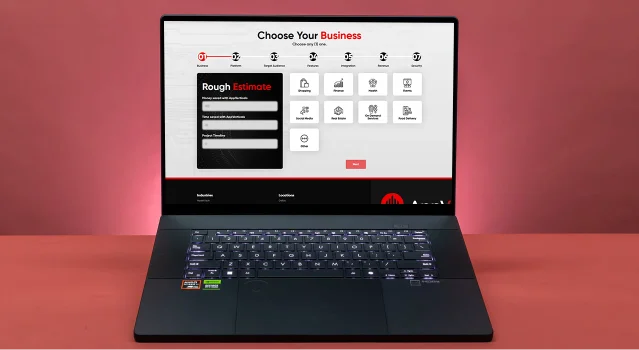
See what it might cost to bring your app idea to life. Our calculator gives you a quick, simple estimate based on what you need.


 verified expert
Senior Content Writer — Mobile & Software Development, AI
Zainab helps tech brands sound more human. She takes app ideas, features, and updates and turns them into content people actually want to read. Whether it’s for a launch, a campaign, or just making things...
See Full Bio18 minutes read
Android still gives businesses access to the largest slice of the global mobile market: Statcounter’s worldwide data shows Android at 68.24% of mobile OS share versus 31.48% for iOS.
That scale is exactly why Android budgets matter, but it’s also why estimates vary so widely. In current benchmark guides, a basic Android app can start as low as $5,000–$12,000, while a simple custom mobile app can also be priced closer to $30,000–$40,000.
The gap is not random; it comes from scope, quality expectations, backend complexity, testing depth, and the realities of building for Android’s broader device ecosystem. This guide explores all of that in great detail to help you understand how to plan your android app development cost and budget.
When planning your app development, the most honest answer to What’s the average cost is? : there’s no one-size-fits-all number. The cost depends heavily on what kind of app you’re building.
Let’s break it down:
| App Type | Price Range | Description |
|---|---|---|
| Basic App | $5,000–$12,000 | A minimal app with limited features. |
| Medium App | $10,000–$30,000 | A more complex app with additional functionality. |
| Enterprise-Level App | $50,000–$100,000+ | Sophisticated app with scalability and advanced features. |
The key difference lies in the features included in the estimate:
Separate your costs into two parts:
When evaluating these quotes, it’s crucial to partner with a mobile app development company that understands the nuances of Android app development.
With AppVerticals, for instance, you’re not only getting an accurate cost estimate but also a strategic approach that ensures your app is growth-focused and outcome-driven.
Ensure your app development stays on track with accurate cost planning and expert insights. Let’s discuss your project today!
| Cost Driver | Why It Moves Budget | How to Control It |
|---|---|---|
| Product Scope | More user flows, roles, and edge cases create more engineering and QA work | Lock the MVP to one core job-to-be-done |
| UI/UX Depth | Custom flows, animation, branded design systems, and usability iteration add time | Use design where it improves conversion, not everywhere |
| Backend and Integrations | Auth, payments, notifications, dashboards, search, and sync multiply system complexity | Reuse proven services where possible |
| Android Device Coverage | More OS versions, screen sizes, tablets, and foldables increase testing effort | Define minimum supported devices and OS versions early |
| Security and Compliance | Fintech, healthcare, and enterprise products require more architecture, auditability, and QA | Match compliance work to actual business risk |
| Timeline Pressure | Faster delivery means more staffing, parallel work, and more management overhead | Phase releases instead of compressing the whole roadmap |
This is where Android-specific cost logic matters. Fragmentation is a major cost driver in 2026, and Android’s own large-screen guidance explicitly points teams toward tablets, foldables, and ChromeOS devices.
That means Android budgeting is not only about writing the app; it is about supporting a wider device matrix and more layout scenarios than many founders initially expect.
UI and architecture decisions also matter more than many buyers assume. If your app requires offline sync, real-time updates, custom dashboards, and a polished, high-retention experience, design and backend choices become budget drivers just as much as raw coding hours do.
This is also where cheap now often becomes expensive later. Technical debt, rushed architecture, and change requests during development are some of the fastest ways to turn a low quote into a missed budget.
When deciding between Native Android and Cross-Platform, consider the long-term goals of your app. Both approaches have their merits depending on the type of app you’re building.
The mistake isn’t always in choosing between native or cross-platform frameworks; it’s often choosing the cheaper model without considering your product’s needs over the next 12-24 months.
If you plan to implement advanced camera features, background services, or high-performance interactions, a native Android build may be a more economical choice in the long run, even if it seems costlier upfront.
When planning to launch your app on both Android and iOS from day one, the cost will typically be 1.7x to 2.2x the price of an Android-only app.
This isn’t a perfect 2x increase, as some backend, design, and project management tasks can be shared between the two platforms. However, platform-specific engineering and QA still require separate efforts, which increases the overall cost.
For most startups, the most practical sequencing is:
A useful estimate for mobile app development cost, be it android or ios, starts with the business model, not just the screen count. The same number of screens can hide very different backend, compliance, and operational costs.
| App Type | Typical Feature Set | Practical Android Budget |
|---|---|---|
| Basic Utility / Internal Tool | Login, simple forms, dashboard, push notifications | $20,000–$50,000 |
| SaaS / Productivity App | Auth, subscriptions, syncing, admin panel, analytics | $50,000–$120,000 |
| E-commerce App | Catalog, search, checkout, payments, order history, notifications | $60,000–$160,000 |
| Marketplace App | Buyer/seller flows, chat, payouts, moderation, search, admin | $100,000–$220,000 |
| Fintech / Healthcare / Regulated App | Sensitive data, audit trails, stronger security, compliance, integrations | $150,000–$350,000+ |
A good Android app cost calculator should go beyond just estimating the number of pages or features in your app.
A detailed breakdown should include the following six layers:
Additionally, it’s wise to factor in a contingency layer for unforeseen challenges, such as scope creep, refactoring, or unexpected complexity. A common recommendation is to set aside 10% to 20% of your initial budget for these contingencies.
Certain features can significantly impact the overall cost of your app. Here’s how different features typically affect the budget:
| Feature | Budget Impact |
|---|---|
| Payments/Subscriptions | Moderate to High |
| Real-time Chat | Moderate to High |
| Maps/Geolocation | Moderate |
| Admin Panel/Back Office | Moderate |
| AI Assistant/LLM Workflow | High (upfront + ongoing) |
| Advanced Analytics | Moderate |
| Offline Sync | High (due to data & conflict handling) |
Need a cost estimate for your app? Use our Android app cost calculator to get a detailed estimate based on your app’s features.
Use our Cost CalculatorA common guideline is to budget for annual maintenance costs between 15% to 25% of the original development cost. This can vary based on product maturity, how often new features are released, and how quickly updates are required.
There are several ongoing costs that often get overlooked, but together, they can significantly impact the total cost of ownership. These include:
While each of these items may not seem dramatic on its own, combined, they can materially increase your total cost of ownership over time.
It’s important to also understand the fees associated with distributing your app through platforms like Google Play. Many developers mistakenly assume Google takes a flat 30% fee on all earnings, but the reality is more nuanced.
Reducing the cost of android app development without compromising long-term stability requires a strategic approach:
The best way to reduce costs isn’t to outsource development immediately; it’s to scope the project correctly from the start. Begin with the smallest version of your product that can still prove demand, retention, or revenue.
The goal is to fund a version that validates the next milestone, not the entire imagined roadmap. Focus on business outcomes rather than building every feature right away.
Not every feature needs to be custom-built. Payments, authentication, analytics, messaging, and cloud infrastructure are all areas where pre-existing solutions can be leveraged.
For example, using third-party services instead of building these features from scratch can drastically reduce development time and costs, especially for early-stage products. Similarly, pre-trained AI tools and cloud services can provide more efficient alternatives to custom development.
Freeze the MVP once it’s defined and avoid scope creep. Run short development cycles and treat every change request as a budget decision. Working in agile sprints (such as two-week cycles) can help catch issues early, reducing rework costs and improving efficiency.
This approach may not always cut 20% off costs, but the principle remains: uncontrolled changes are one of the fastest ways to drain your budget.
Cheaper development quotes aren’t necessarily a sign of hidden brilliance. While a low bid may be appealing, it’s often a result of:
Be cautious of quotes that are far below market rates, as they might reflect a lack of thorough planning or potential technical debt.
When choosing a mobile app development company and approving budgets for android app development, it’s important to ensure that the quote is clear and realistic.
Here’s how to evaluate vendor proposals effectively:
| Key Question | Why It Matters |
|---|---|
| What exact MVP outcomes does this quote fund? | Helps avoid wishlists disguised as scope and keeps the focus on core features. |
| What assumptions are built into the estimate? | Highlights gaps in backend, QA, or device support that may not be accounted for. |
| How many Android versions and device classes are covered? | Ensures you won’t be surprised by fragmentation-related issues. |
| What is included in post-launch support? | Differentiates between build costs and ongoing ownership costs. |
| What happens if roadmap priorities shift mid-build? | Tests the vendor’s change-management process and flexibility. |
| What contingency is built into the budget? | Reduces the risk of budget overruns by planning for unexpected changes. |
A well-structured quote will clearly define what’s included in each phase of development: discovery, design, development, QA, release, and maintenance.
A weak quote, on the other hand, may provide a single cost without breaking down what’s included or excluded, leaving you open to hidden costs down the line.
It’s also important to add contingency to your budget. A 10% to 20% contingency is typically recommended, especially for CFO reviews, to account for unforeseen complexities. A budget without any buffer is often less realistic than one that acknowledges potential risks and scope changes.
Evaluating Multiple Scenarios
If Android is only one phase of a broader mobile strategy, it’s crucial to evaluate multiple scenarios:
For companies looking for a partner who understands the balance between cost efficiency and future growth, AppVerticals helps build budget-friendly Android apps that don’t compromise on growth potential.
With a focus on outcome-driven development, we guide CTOs, Founders, and CFOs through each phase of app development, from discovery to launch, ensuring every dollar spent is aligned with business objectives and long-term ROI.
These evaluations will help you make the most informed decision and ensure that the project is aligned with your long-term ROI goals.
Understanding post-launch maintenance is key. Let’s talk about how we can help you manage updates and scale efficiently.
The real question is not ‘How much does an Android app cost?’ but ‘What version of the product are we funding, for what market, with what level of quality and future flexibility?’ Android’s scale makes it commercially attractive, but that same scale also makes budgeting discipline more important.
Teams that scope tightly, price ownership costs honestly, and compare quotes on assumptions, not just totals, are the ones most likely to launch on budget and avoid a painful rewrite later.
Now that you’ve explored the costs and key factors, let’s dive into the specifics of your project. We’ll help you finalize your budget, scope, and next steps for a successful launch.
verified expert
Zainab helps tech brands sound more human. She takes app ideas, features, and updates and turns them into content people actually want to read. Whether it’s for a launch, a campaign, or just making things clearer, she’s all about simple words put together to form stories that stick.
 We’re AppVerticals
AppVerticals is where innovative startups and Fortune 500s come for transformation.
View About Us Mobile App
From tracking logistics fleets to improving in-store experiences, location-based apps are transforming how companies understand, engage, and serve the...

9 min read
 Mobile App
In a city as dynamic and fast-paced as Los Angeles, building a successful mobile app requires more than just a great idea—it starts with the right dev...

13 min read
 Mobile App
In 2026, the average mobile app development cost ranges from $40,000 to $400,000 or more, depending on complexity, platform, and features. Mobile app...
22 min read
Discover how our team can help you transform your ideas into powerful Tech experiences.
AppVerticals © 2026 | All Rights Reserved

Get In Touch.













 ChatGPT
 Perplexity
 Google AI