About Us

About Us
We’re a future-focused tech partner working with some of the world’s top enterprises. At AppVerticals, we design solutions that drive growth and reimagine digital experiences.

Services
Software Development
Mobile App Development
Web Design & Development
Tell us what you're looking for, and we'll tailor a solution based on your business needs.
Talk to Experts
Health Tech

EdTech

Logistics

Real Estate

Ecommerce

Sports

Fintech

Travel

Restaurant

Automotive
HIPAA-compliant digital solutions for hospitals, clinics, and healthtech startups driving better patient outcomes.
What we do:
Scalable learning platforms for schools, universities, and EdTech startups transforming education delivery.
What we do:
Real-time tracking and automation solutions for freight companies, warehouses, and delivery services.
What we do:
PropTech platforms for brokerages, property managers, and real estate marketplaces are streamlining operations.
What we do:
High-converting commerce platforms for D2C brands, retailers, and online marketplaces are driving revenue growth.
What we do:
Fan engagement platforms for sports teams, leagues, and betting operators are creating immersive experiences.
What we do:
PCI-DSS compliant solutions for digital banks, payment platforms, and InsurTech companies, ensuring security.
What we do:
Booking and hospitality solutions for OTAs, hotels, and tourism platforms, enhancing traveler experiences.
What we do:
Online ordering and operations software for restaurants, cloud kitchens, and food delivery platforms.
What we do:
Connected vehicle platforms for automotive OEMs, dealerships, and mobility providers are accelerating innovation.
What we do:
Portfolio

AppVerticals was featured in Inc. 5000 as
America’s Fastest Growing Tech Company
See what it might cost to bring your app idea to life. Our calculator gives you a quick, simple estimate based on what you need.


 verified expert
Senior Content Writer — Mobile & Software Development, AI
Zainab helps tech brands sound more human. She takes app ideas, features, and updates and turns them into content people actually want to read. Whether it’s for a launch, a campaign, or just making things...
See Full Bio25 minutes read
Telemedicine has evolved from a digital channel to a core care modality, but the budgeting process remains complex.
This guide offers a thorough understanding of telemedicine app development cost breakdowns, key cost drivers, hidden expenses, and strategies to optimize ROI, ensuring you don’t overlook critical elements like compliance or scalability.
Telemedicine lets healthcare providers deliver services remotely through video visits, secure messaging, and other digital tools, often connected to patient records, e-prescriptions, and remote monitoring.
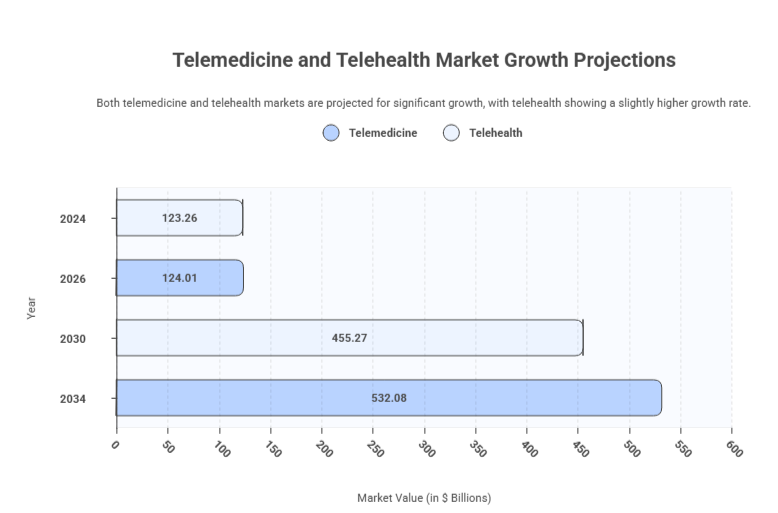
Telemedicine and telehealth are no longer niche markets, they’re rapidly growing industries:
Telehealth reimbursement policies continue to evolve, especially with Medicare:
The telemedicine market is growing quickly, but payment rules are still in flux. To succeed, your app must be built with a strong compliance and reimbursement strategy, incorporating features like robust documentation, multi-modal care (video + audio-only where permitted), and solid audit trails.
Whether you’re looking to create a basic app for a single practice or considering full-fledged healthcare app development solutions to cater to you telemedicine needs, here’s a breakdown of the typical costs and timelines for each stage of development in 2026.
| Tier | What You’re Building | Typical Budget | Typical Timeline |
|---|---|---|---|
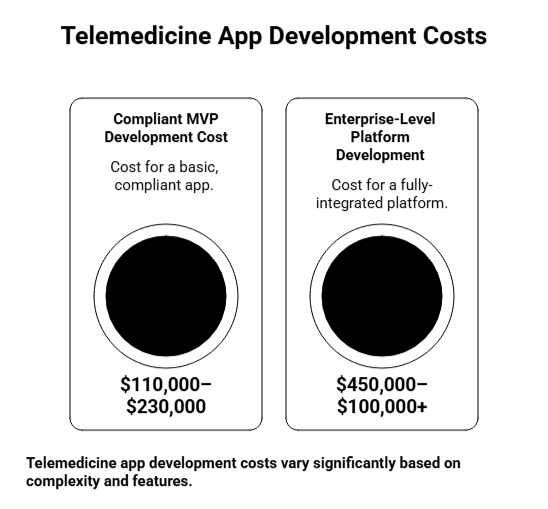
| MVP | A single specialty app with scheduling, video calls, basic messaging, and admin | $110k–$230k+ | 3–5 months |
| Growth Product | Adds EHR/FHIR integration, e-prescriptions, advanced admin features, and payment flows | $230k–$450k | 6–10 months |
| Enterprise Platform | A multi-org platform with SSO, complex roles, state/provider operations, and compliance automation | $450k–$1M+ | 9–18+ months |
It’s important to understand that when dealing with patient health information (PHI), the “cheap telemedicine app” is often a myth.
Once you require HIPAA-compliant security, reliable auditability, and dependable clinical workflows, you’re stepping into “platform engineering” rather than just app development. These features require a higher level of investment, time, and expertise. So, expect the costs to rise significantly as you move beyond the basics.
When planning a telemedicine app, understanding what drives the cost is crucial. The overall price depends on various factors, such as the telemedicine app features you want, the platform choice, the development approach, and even where your team is located.
Let’s break it down into digestible pieces.
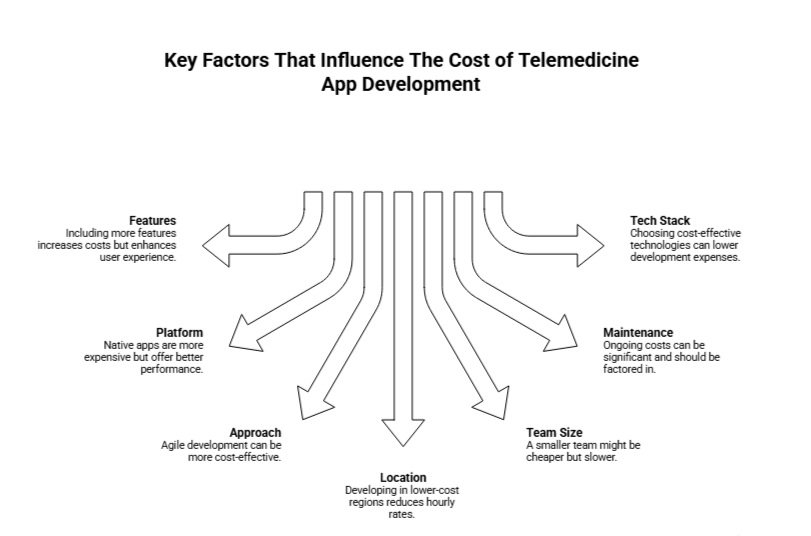
One practical way to approach budgeting is by pricing the capabilities you need rather than focusing on individual screens. Below are some common features you might include in your app and their typical development costs.
| Feature | Estimated Cost |
|---|---|
| User login & profiles | $10k – $20k |
| Video conferencing | $20k – $40k |
| Secure in-app messaging | $10k – $25k |
| Appointment scheduling | $12k – $25k |
| Prescription management | $15k – $25k |
| Payment gateway integration | $8k – $15k |
| EHR integration | $15k – $30k |
| HIPAA compliance workstream | $20k – $50k |
The platform you choose for your app can greatly affect both the development cost and maintenance over time:
The budget for telemedicine app development is typically split among several key phases. Here’s a rough breakdown of where the money tends to go:
Backend complexity is often a major cost driver, and ongoing maintenance typically accounts for 15–20% of the initial build cost annually.
Where your development team is based can have a significant impact on the cost. Here’s a snapshot of hourly rates by region for 2026:
| Location | Hourly Rate Range |
|---|---|
| United States | $100 – $149/hr |
| India | < $25/hr |
| Ukraine | $25 – $49/hr |
| Poland | $50 – $99/hr |
The size and composition of your team also play a big role in the cost. A typical telemedicine development team includes:
For white-label builds, a typical team should consist of a product manager, backend developers, mobile developers, designer, and QA engineers.
Ongoing maintenance is a critical part of any telemedicine app’s lifecycle. Typically, you’ll need to budget around 15–20% of your initial development cost each year for maintenance. This covers things like updates, security patches, operating system changes, infrastructure tuning, and keeping up with compliance requirements.
The technology stack you choose will have a significant impact on your development cost. For telemedicine apps, the stack usually includes:
Interoperability, or how your app communicates with other systems, often relies on FHIR standards (Fast Healthcare Interoperability Resources). The healthcare industry is increasingly moving towards API-based exchanges, driven by regulatory push for easier data sharing.
Don’t take shortcuts when it comes to healthcare data security. Our team can help you integrate HIPAA compliance seamlessly into your app, protecting patient data while ensuring legal adherence.
Building a telemedicine app doesn’t end with the initial development. There are hidden costs that you’ll need to account for, especially once the app is live and being used.
Let’s break down some of these ongoing costs.
Maintenance isn’t just about fixing bugs; it includes ongoing updates to keep the app running smoothly. Some of the key ongoing maintenance costs are:
These upgrades and improvements are essential to keeping the app secure and functional, but they also represent a significant ongoing budget.
Video functionality is usually the biggest ongoing cost for telemedicine apps. Here’s how video APIs typically charge for usage:
| Service | Cost |
|---|---|
| Twilio Video | $0.004 per participant per minute |
| Amazon Chime SDK (WebRTC) | $0.0017 per attendee-minute (plus extra features like capture/recording) |
| Vonage Video API | $0.00395 per participant per minute |
| Agora (Video HD) | $3.99 per 1,000 participant minutes (plus tiers/analytics packages) |
If you have a 20-minute video call with 2 participants, that’s 40 participant-minutes. On Twilio, this would cost $0.16 for video transport alone, before factoring in other costs like recording, transcription, and storage. At scale, say 100k visits per month that cost can quickly add up.
A major reason why telemedicine apps fail isn’t that the video feature didn’t work, it’s because:
To avoid these pitfalls, make sure to budget for onboarding content, training for providers, and ongoing engagement strategies, especially for apps that need to support multiple sites or locations.
Healthcare apps need to meet strict regulations, and staying compliant can be costly. Here are some key compliance costs to watch for:
Security isn’t something you can overlook, it’s essential for telemedicine apps, especially when dealing with sensitive patient data. Here’s why getting security wrong can be so costly:
When it comes to healthcare app development cost, be it a telemedicine app or another, the hidden expenses can quickly escalate if not planned for, so it’s important to keep them in mind as you budget. Maintaining security, compliance, and ongoing system reliability are non-negotiable, and crucial for long-term success.
When developing a telemedicine app, an MVP (Minimum Viable Product) isn’t just about launching a basic app, it’s about testing and validating whether your clinical workflows and reimbursement models will work in the real world.
The goal of the MVP should be to prove the essential elements of your telemedicine app before committing to full development.
A typical MVP for telemedicine will include the following core functionalities:
Cost Estimate: Based on experience, the cost of building a telemedicine MVP typically ranges from $110k to $230k+, depending on the depth of features and compliance requirements.
When developing a telemedicine app, there are several ways to keep costs down without sacrificing quality. Here are some practical strategies to optimize development costs:
One way to reduce the scope of your app and keep costs manageable is by cutting out non-essential features. Here’s what you can remove from the MVP scope:
However, there are some things you should never cut:
Using cross-platform development tools can save you both time and money, especially for apps that don’t require complex, device-specific features. Here’s how you can use cross-platform development strategically:
For clinician/admin workflows, consider using a web-based platform instead. Web apps allow you to prioritize release velocity (faster iterations) and screen real estate (especially for complex workflows).
Outsourcing certain parts of development to cost-effective regions can save money without compromising quality or compliance. Here’s how to make outsourcing work:
These strategies can help you reduce costs while still building a high-quality, compliant telemedicine app. By focusing on essential features, leveraging cross-platform tools, and using outsourcing strategically, you can build an effective telemedicine solution without breaking the bank.
Let’s help you plan a cost-effective solution tailored to your business needs.
Building a telemedicine app can be expensive, but with the right strategy, you can keep costs under control without sacrificing essential features.
Here’s your telemedicine app development guide, offering a quick approach towards building cost-effective solutions:
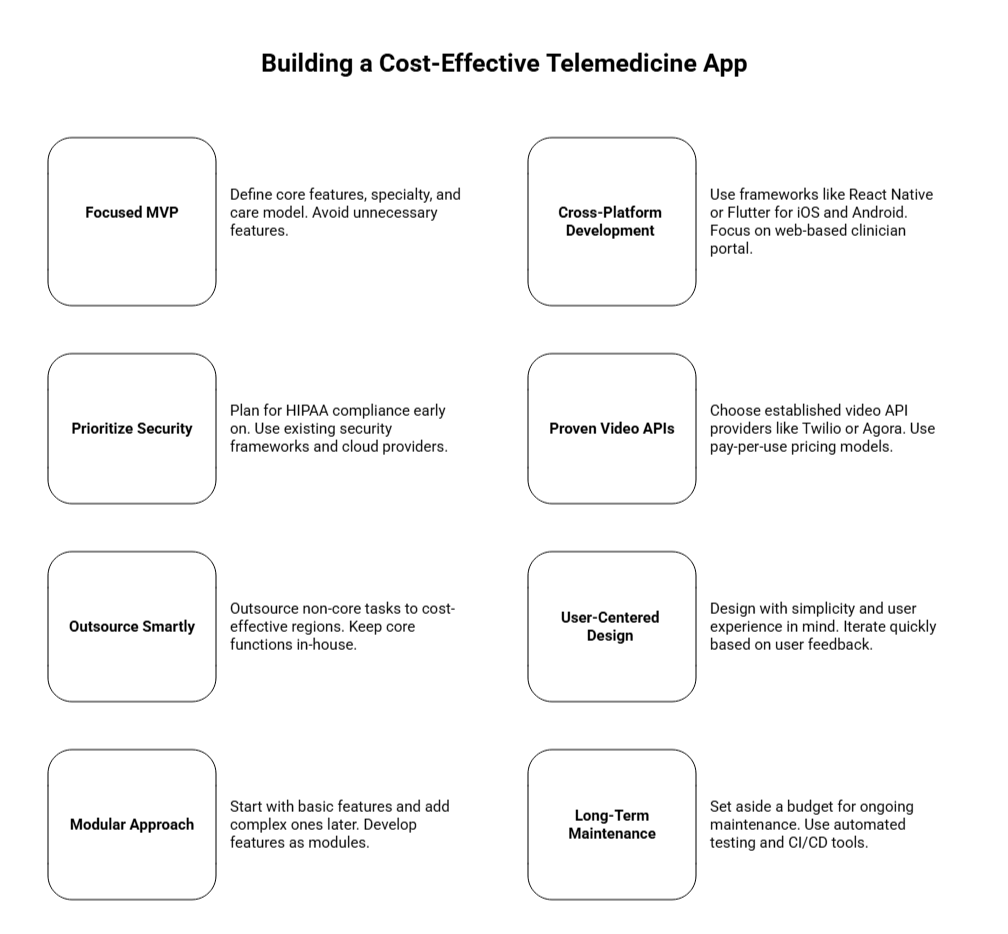
Starting with a Minimum Viable Product (MVP) helps you launch faster and reduces initial development time and costs. By focusing on essential features, you avoid overspending on non-critical components.
Cross-platform development allows you to target both iOS and Android users without doubling the cost for two separate apps. It also reduces long-term maintenance costs because you only need to update one codebase.
By integrating compliance and security features from the beginning, you avoid the costly risk of needing to retrofit these components later. Many cloud providers offer security tools that simplify the process, saving you time and money.
Developing a custom video infrastructure is expensive and time-consuming. By leveraging existing, reliable APIs, you can cut down on development time and ensure a high-quality video experience without the overhead of building it yourself.
Outsourcing tasks to regions with lower hourly rates can significantly reduce development costs. However, maintaining oversight of core functions ensures that the app remains secure, compliant, and of high quality.
By designing a user-friendly app and focusing on ease of use, you increase user adoption and retention, reducing the need for costly customer support or rework due to bad user experiences. An intuitive app can also decrease the time spent on training providers and onboarding new users.
Building your app in phases allows you to launch sooner and spread out costs over time. Instead of building a full-featured app right away, you can focus on validating your core product and adding features based on user feedback.
Ongoing maintenance is inevitable, but planning for it early can help you avoid unplanned expenses. Automating testing and deployment processes helps keep costs low and improves the speed of future updates.
By focusing on the essentials, leveraging cross-platform tools, and outsourcing smartly, you can build a telemedicine app that’s both high-quality and cost-effective.
Learn how to optimize your app development costs and ensure compliance from day one.
To take your telemedicine app to the next level, it’s important to include advanced features in alignment with the latest healthcare software development trends. It can not only improve performance but also deliver a strong return on investment (ROI).
Here are a few capabilities that can make a big difference:
Integrating AI and automation for security can provide significant cost savings. According to a report from IBM, organizations using AI for security had an average breach cost of $3.84 million, compared to $5.72 million for those that didn’t use AI, saving $1.88 million on average.
Why it’s valuable: Automating security tasks helps reduce the risk of data breaches and cuts down on costly manual monitoring, making your telemedicine app both more secure and cost-efficient.
Integrating your app with EHR (Electronic Health Records) through FHIR (Fast Healthcare Interoperability Resources) standards can improve the workflow for clinicians. It helps them access patient information quickly while reducing the need for duplicate documentation.
Why it’s valuable: FHIR integration improves clinician adoption, reduces errors, and makes your app more efficient, leading to better patient care and a smoother user experience for healthcare providers.
Features like recording, transcription, and audit logs are key for compliance and clinical quality. These features can help you meet regulations and track patient-provider interactions.
Why it’s valuable: These capabilities are essential for maintaining a high standard of care and protecting against legal issues. However, they do come with added costs, such as fees for transcription services or recording APIs (e.g., Twilio).
Turning your telemedicine app into a profitable business is key. Here are a few ways to monetize your app effectively:
One of the most straightforward monetization options is charging per visit. This can either be a consumer-pay model (where patients pay out of pocket) or a payer contract (where insurance providers cover the cost).
What to consider: When using this model, you’ll need to account for the cost of video minutes, provider time, support, and payment processing. This model works well if you’re targeting high-volume, single-use consultations.
Another option is to charge a per-member-per-month fee for employers or health plans offering telehealth services to their members. This provides more stable, recurring revenue.
What to consider: While this model helps smooth revenue, it requires strong retention and active utilization to be successful. Ensuring that users regularly engage with your app is key to keeping them subscribed long-term.
While not common for clinical telemedicine apps (due to trust and compliance concerns), ads can sometimes be used for wellness apps or adjacent health services. This can be an additional revenue stream if your app includes non-clinical features like wellness tracking or lifestyle coaching.
What to consider: Be mindful of how ads may affect the user experience and overall trust in your app. Clinical apps need to maintain a high level of professionalism and privacy, so ads should only be used carefully and strategically.
If you’re ready to invest in a telemedicine app, here’s the list of suggestions you must consider:
At AppVerticals, we specialize in developing secure, scalable, and cost-effective telemedicine apps that meet both healthcare regulations and user needs. Whether you’re building an MVP, expanding features, or navigating compliance challenges, we bring deep expertise in telemedicine solutions, ensuring your app is both efficient and compliant from the start.
With our expert developers as your partner, you’ll receive strategic guidance on everything from cost optimization and cross-platform development to security and compliance. We are committed to helping you build a high-quality telemedicine app that delivers value to both healthcare providers and patients, while keeping costs manageable and scaling as needed for future growth.
We’ll help you design a flexible, secure, and adaptable platform that supports growth and keeps you ahead of the competition.
verified expert
Zainab helps tech brands sound more human. She takes app ideas, features, and updates and turns them into content people actually want to read. Whether it’s for a launch, a campaign, or just making things clearer, she’s all about simple words put together to form stories that stick.
 We’re AppVerticals
AppVerticals is where innovative startups and Fortune 500s come for transformation.
View About Us Mobile App
Los Angeles has become an epicenter for mobile innovation, with startups budding across silicon beach taking leads in the app-first disruption. With t...

16 min read
 Mobile App
Building a mobile app starts with understanding the cost to hire an app developer. Whether you’re a startup or an established business, knowing what a...

20 min read
 Mobile App
Telemedicine apps are redefining healthcare by improving accessibility and efficiency, allowing patients to connect with providers remotely from home....
24 min read
Discover how our team can help you transform your ideas into powerful Tech experiences.
AppVerticals © 2026 | All Rights Reserved

Get In Touch.













 ChatGPT
 Perplexity
 Google AI