About Us

About Us
We’re a future-focused tech partner working with some of the world’s top enterprises. At AppVerticals, we design solutions that drive growth and reimagine digital experiences.

Services
Software Development
Mobile App Development
Web Design & Development
Tell us what you're looking for, and we'll tailor a solution based on your business needs.
Talk to Experts
Health Tech

EdTech

Logistics

Real Estate

Ecommerce

Sports

Fintech

Travel

Restaurant

Automotive
HIPAA-compliant digital solutions for hospitals, clinics, and healthtech startups driving better patient outcomes.
What we do:
Scalable learning platforms for schools, universities, and EdTech startups transforming education delivery.
What we do:
Real-time tracking and automation solutions for freight companies, warehouses, and delivery services.
What we do:
PropTech platforms for brokerages, property managers, and real estate marketplaces are streamlining operations.
What we do:
High-converting commerce platforms for D2C brands, retailers, and online marketplaces are driving revenue growth.
What we do:
Fan engagement platforms for sports teams, leagues, and betting operators are creating immersive experiences.
What we do:
PCI-DSS compliant solutions for digital banks, payment platforms, and InsurTech companies, ensuring security.
What we do:
Booking and hospitality solutions for OTAs, hotels, and tourism platforms, enhancing traveler experiences.
What we do:
Online ordering and operations software for restaurants, cloud kitchens, and food delivery platforms.
What we do:
Connected vehicle platforms for automotive OEMs, dealerships, and mobility providers are accelerating innovation.
What we do:
Platforms
Our Odoo implementation brings financial discipline, operational visibility, and process control across departments. From accounting automation to manufacturing workflows, we design ERP systems that reduce operational leakage and provide real-time decision clarity.
We use Sitecore to drive measurable revenue growth through intelligent personalization and behavior-driven content delivery. By aligning marketing automation, data orchestration, and omnichannel engagement, we help brands turn digital touchpoints into retention engines.
We architect AWS environments that stay stable under scale, traffic spikes, and compliance pressure. From secure cloud migrations to CI/CD automation and cost governance, we engineer cloud foundations that protect performance while enabling rapid product evolution.
We implement Dynamics 365 to align systems with actual business operations, bringing clarity, control, and accountability across CRM, ERP, and service functions. From sales to finance, configurations eliminate inefficiencies and enable confident, real-time decisions.
Tell us what you're looking for, and we'll tailor a solution based on your business needs.
Talk to ExpertsPortfolio
AppVerticals was featured in Inc. 5000 as
America’s Fastest Growing Tech Company
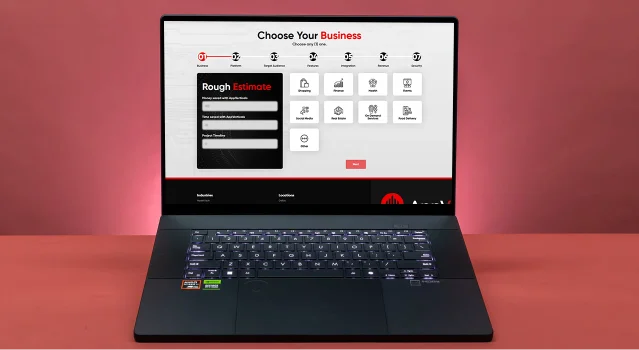
See what it might cost to bring your app idea to life. Our calculator gives you a quick, simple estimate based on what you need.


 verified expert
Senior Content Writer — Mobile & Software Development, AI
Zainab helps tech brands sound more human. She takes app ideas, features, and updates and turns them into content people actually want to read. Whether it’s for a launch, a campaign, or just making things...
See Full Bio21 minutes read
When choosing a mobile app development company, the key is to find a partner that not only has the technical expertise but also aligns with your project’s goals and budget constraints. It’s about finding the right balance between experience, reliability, and communication.
As a founder, CTO, or investor, the question isn’t just “Who can build an app?”, it’s how to choose a mobile app development company that won’t blow your budget, miss deadlines, or leave you with a product that’s impossible to maintain post-launch.
I’ve been on both sides of the table, building apps, inheriting half-built ones, and even hiring mobile development teams that seemed perfect on paper, only to have them underdeliver. The tough lesson I learned: A flashy portfolio doesn’t always equate to a reliable development partner.
In this guide, I’ll walk you through how I’d evaluate a mobile app development company today, if I were working with a tight timeline, real stakeholders, and a budget I needed to defend.
Before you even start comparing vendors, you need to get crystal clear on what you’re actually buying. Most bad agency experiences stem from an unclear scope, undefined success metrics, and a budget that’s based more on hope than reality.
So, how do you choose the right mobile app development company? Start with these foundational questions:
Here’s a structured outlay of what factors you must consider when choosing a mobile app development company:

I always encourage teams to write goals in clear, simple language. This makes it easier to stay focused on the core objectives:
From there, break down these goals into a feature list: Must-have, Should-have, and Nice-to-have. This will help you avoid a common pitfall: adding small features that can silently extend timelines, like admin panels, analytics, role-based access, or offline syncing.
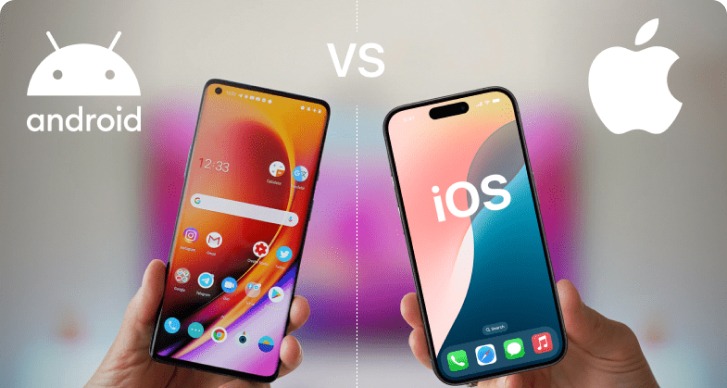
Choosing the right platform is a strategic decision, not a developer’s personal preference. Here’s a quick rundown of your options:
A key cost consideration: While developers may charge similar hourly rates for both iOS and Android, building separate native apps for each platform can effectively double your effort. So, sharing code thoughtfully is essential for efficiency.
The most important step is: Define your budget and timeline upfront, and be honest about what you can realistically achieve.
Clutch’s dataset shows the following averages for app development:
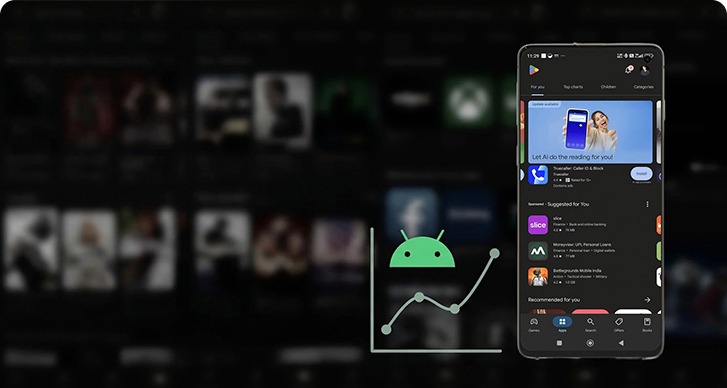
In a market where global mobile app downloads have risen from 115 billion in 2021 to an expected 143 billion in 2026 on the Google Play Store (a 30% increase), and the Apple App Store is projected to reach 38 billion downloads (a 15% growth over the same period), it’s crucial to align your project scope with the realities of engineering effort and time required. As the competition grows, it’s not just about building any app, but one that stands out amidst billions of downloads each year.
Choosing the right development partner isn’t just about finding someone with technical skills, it’s about ensuring they can deliver on your project’s unique needs. Evaluating a company’s expertise involves looking beyond the surface.
Here’s how to assess whether a mobile app development company has the right experience and capabilities for your project.

Portfolios are important, but I don’t judge them based on how pretty the screens look. Instead, I focus on deeper questions that reveal how well a company truly understands the development process:
If they can’t explain the trade-offs they made during the project, it’s a red flag. It likely means they were just executing tickets without fully understanding the strategic and technical nuances.
A quote I always keep in mind when reviewing codebases and vendor outputs is:
Your future team should be able to maintain what they’ve shipped, and their code should reflect that.
I put more trust in review patterns than the star ratings themselves. Look for recurring themes like:
Industry experience becomes especially important when your app involves:
However, be cautious of agencies claiming to have built 40 apps in your niche without providing concrete proof of outcomes. I’d prefer to hire a team that demonstrates strong architectural discipline and a solid discovery process over one that simply knows the buzzwords of your industry.
Book a free consultation with our experts and get personalized advice for your project.
The success of your app project doesn’t just depend on the development process, it hinges on the strength of the team behind it. When evaluating a potential app development team, consider these key factors:

It’s essential to ask what they actually ship with, not just what they promise. A strong mobile development agency should be able to explain their approach in detail:
On methodology: While many teams claim to follow “Agile,” it’s important to dig deeper. Look for specifics, such as:
How product decisions are made
A great team should use tools like Agile planning or Scrum boards to stay organized and efficient, ensuring a clear workflow throughout the project.
This is where projects can either succeed or fail. Good communication is the bedrock of a successful partnership. Here’s what I insist on:
One of my favorite leadership principles that resonates with app delivery is:
In simple terms: if the development team is fragmented and communication is handoff-heavy, your app will likely end up with the same issues.
A polished app launch is far from the finish line. To keep things running smoothly and to meet evolving user needs, you need to make sure your team is ready for post-launch support. This includes:
Don’t forget to budget for maintenance. A general rule of thumb is that annual maintenance costs can be around 20% of the initial development cost.
Let’s discuss your requirements and start building your app.
In my experience, certain red flags repeatedly pop up, each one costing real money and slowing down projects. Here are the most common mistakes to watch out for:
A portfolio alone can be misleading. Sure, a beautiful design looks impressive, but that doesn’t always translate to solid delivery. Relying too much on portfolio reviews can lead you to miss the more important factors:
Ask for references that align with the specific scope and stage of your project. A portfolio may showcase great design, but the real test is how the team handles your specific needs, timeline, and budget.
Communication is the backbone of any successful project. If a development team can’t clearly explain:
You’re essentially buying chaos. Make sure the team uses structured project management tools like Jira, Linear, or similar platforms that keep things organized and transparent.
A commonly faced problem is not fully understanding the cost breakdown upfront, leading to surprise expenses later on. Some typical hidden costs include:
Be sure to clarify every aspect of the cost structure upfront to avoid these surprises.
Security isn’t a feature you can add after the fact, it’s a habit, a core part of the development process. Here are the basic questions I always ask when vetting a potential partner:
Failing to consider these aspects can put your app and user data at significant risk.
Dario Bianchi also stressed on some additional points during his conversation, they include:
Choosing the right engagement model is just as crucial as selecting the right mobile app development company. The model you choose will influence how the project unfolds, how flexible the team is, and how well it aligns with your goals. Here’s a breakdown of the most common engagement models:
If you’re working with a $500K budget and tight deadlines, here’s what I look for in an engagement model:
To ensure alignment from day one, use this checklist during your project kickoff:
Teams like AppVerticals, who’ve handled multiple end-to-end launches, often have these mechanics already integrated into their delivery playbooks. This is exactly what you want from a mature and experienced partner.
First things first: the bulk of your app’s cost will be tied to labor and time-to-ship. Development costs depend largely on the complexity of your app, the region of your development team, and the time required to complete the project. Clutch’s guide is a great resource as it provides typical hourly ranges and project cost bands.
There are several pricing models you’ll encounter when working with mobile app development companies:
Managing hidden costs is key to staying within budget. Here’s how I tackle this challenge:
Here’s a practical comparison of hourly rates for mobile app development based on region:
| Region / Country | Typical Hourly Rate (USD) | Notes |
|---|---|---|
| United States | $100–$149 | Higher cost, but stronger timezone alignment for US teams |
| Canada | $50–$99 | Mid-range pricing |
| India | < $25 | Lowest hourly rates, but requires strong processes to avoid rework |
| Philippines | $25–$49 | Cost-efficient option |
| Ukraine | $25–$49 | Common nearshore/offshore option |
| Poland | $50–$99 | Higher end of the Eastern Europe pricing bracket |
| Mexico | $25–$49 | Nearshore for US teams |
| Australia | $100–$149 | High-cost market, but strong capabilities |
Many teams underestimate this aspect: the app you launch is the app you’ll be paying for long after the initial release. Post-launch support, updates, and ongoing iterations are crucial to your app’s success and longevity.
Once your app is live, you’ll need ongoing work to keep it running smoothly and securely. Here’s what you can expect in terms of maintenance:
A helpful budgeting lens: Maintenance can be a significant annual cost, often ranging around 20% of the initial build cost. This estimate is widely cited in industry reports, such as a Siemens/TimeSeries post referencing CIO.com.
When evaluating potential vendors, it’s important to ask how they plan to handle long-term scalability and flexibility. Here are a few key aspects to consider:
The best outcomes I’ve seen often involve a long-term partnership. A successful relationship with your development team looks like this:
When choosing a mobile app development company, remember this: you’re not just buying code, you’re investing in decision-making under uncertainty, delivery discipline, and a team that will be with you every step of the way, even after the first production bug hits.
The right partner is more than just a developer, they’re an extension of your team, committed to delivering on time, handling complexity, and ensuring long-term success.
Mobile App Development Guide: A complete roadmap for building a successful mobile app.
Mobile App Development Cost: An overview of mobile app development pricing and factors.
Mobile App Monetization Statistics: Key trends on how mobile apps generate revenue.
Mobile App Development Market Statistics: Data on market growth, trends, and projections.
If you’re evaluating how to choose a mobile app development company, the “trial sprint” is often the fastest truth detector.
Freelancers can work for prototypes or highly scoped workstreams, but continuity risk is real.
verified expert
Zainab helps tech brands sound more human. She takes app ideas, features, and updates and turns them into content people actually want to read. Whether it’s for a launch, a campaign, or just making things clearer, she’s all about simple words put together to form stories that stick.
 We’re AppVerticals
AppVerticals is where innovative startups and Fortune 500s come for transformation.
View About Us Mobile App
The short answer: the cost to hire an app developer can range anywhere from $20 to $300+ per hour, depending on where they're based, what they're buil...

17 min read
 ios
ios
Hiring iOS developers may seem simple initially, but the real challenges emerge once you're faced with app store deadlines, debugging complex systems,...
14 min read
 AI
AI
The world of software development never stands still. New technologies appear, businesses adapt, and developers who want to stay relevant have to keep...

12 min read
Discover how our team can help you transform your ideas into powerful Tech experiences.
AppVerticals © 2026 | All Rights Reserved

Get In Touch.










 ChatGPT
 Perplexity
 Google AI