About Us

About Us
We’re a future-focused tech partner working with some of the world’s top enterprises. At AppVerticals, we design solutions that drive growth and reimagine digital experiences.

Services
Software Development
Mobile App Development
Web Design & Development
Tell us what you're looking for, and we'll tailor a solution based on your business needs.
Talk to Experts
Health Tech

EdTech

Logistics

Real Estate

Ecommerce

Sports

Fintech

Travel

Restaurant

Automotive
HIPAA-compliant digital solutions for hospitals, clinics, and healthtech startups driving better patient outcomes.
What we do:
Scalable learning platforms for schools, universities, and EdTech startups transforming education delivery.
What we do:
Real-time tracking and automation solutions for freight companies, warehouses, and delivery services.
What we do:
PropTech platforms for brokerages, property managers, and real estate marketplaces are streamlining operations.
What we do:
High-converting commerce platforms for D2C brands, retailers, and online marketplaces are driving revenue growth.
What we do:
Fan engagement platforms for sports teams, leagues, and betting operators are creating immersive experiences.
What we do:
PCI-DSS compliant solutions for digital banks, payment platforms, and InsurTech companies, ensuring security.
What we do:
Booking and hospitality solutions for OTAs, hotels, and tourism platforms, enhancing traveler experiences.
What we do:
Online ordering and operations software for restaurants, cloud kitchens, and food delivery platforms.
What we do:
Connected vehicle platforms for automotive OEMs, dealerships, and mobility providers are accelerating innovation.
What we do:
Portfolio
AppVerticals was featured in Inc. 5000 as
America’s Fastest Growing Tech Company
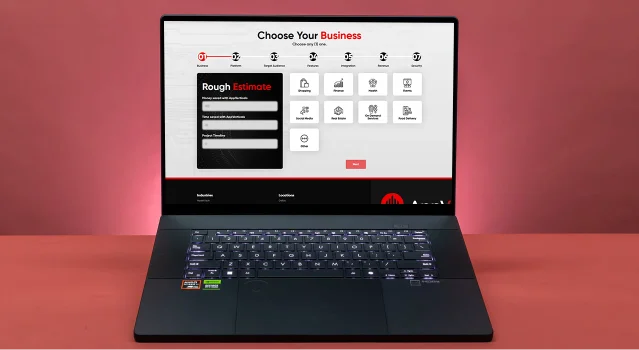
See what it might cost to bring your app idea to life. Our calculator gives you a quick, simple estimate based on what you need.


 verified expert
Senior Content Writer — Mobile & Software Development, AI
Zainab helps tech brands sound more human. She takes app ideas, features, and updates and turns them into content people actually want to read. Whether it’s for a launch, a campaign, or just making things...
See Full Bio13 minutes read
Hiring iOS developers may seem simple initially, but the real challenges emerge once you’re faced with app store deadlines, debugging complex systems, and performance issues in iOS app development.
A Stack Overflow survey shows 34% of developers find debugging the toughest part of development. However, the most common hiring mistakes stem from misalignment between a developer’s skills and your project’s needs, not a lack of technical expertise.
The issue isn’t about hiring bad engineers; it’s about matching their capabilities with your project’s scope, process, and maturity stage. From my experience, developers who don’t fit into the right context often fail to meet expectations, no matter how skilled they are.
In this guide, I’ll cover the essential steps to ensure you hire iOS developers the right way: defining roles, assessing production-readiness, choosing the right engagement model, and avoiding remote work pitfalls.
When founders ask for a job description, I reframe it: an iOS developer owns the end-to-end experience on Apple devices, performance, reliability, security, and shipping discipline.
With the Apple App Store expected to see 38 billion downloads this year, reflecting a 15% growth over the previous period, the competition to stand out and maintain a seamless user experience is more critical than ever. Developers need to not only ensure their apps meet Apple’s stringent performance standards but also anticipate how the app will scale and evolve in a rapidly growing market.
A strong iOS developer ships predictable increments using CI/CD pipelines, reviews pull requests, and ensures performance at every stage. A weaker developer might struggle with release cadence, pushing major updates all at once, and reacting only after issues arise.
| Project Type | Core Responsibilities | Typical Tools/Skills |
|---|---|---|
| New App Build | Architecture, feature delivery, App Store readiness | Swift, UIKit/SwiftUI, Xcode, testing, release |
| Scaling Existing App | Refactors, modularization, performance tuning | MVVM/Clean, profiling, CI/CD, analytics |
| Enterprise/Regulated | Security, access control, audit-friendly workflows | Keychain, secure storage, logging discipline |
| Level | Best Fit | What You Should Expect |
|---|---|---|
| Junior | Small features in a stable codebase | Executes well with guidance |
| Mid | Owns modules (payments, onboarding, etc.) | Debugs production issues and proposes fixes |
| Senior | Leads architecture and delivery | Prevents “rewrite cycles,” mentors, owns release strategy |
Don’t wait for challenges to catch up with you. Hire AppVerticals’ expert iOS developers today and ensure seamless development for your business.
When hiring for mobile app development, whether ios or android, I do not t just check the stack list. I look for developers who can build something maintainable for 18–36 months while the product, team, and roadmap evolve.

Compromising on these fundamentals leads to poor hires. Here’s the non-negotiable checklist:
Good signs include:
Most iOS and Android app development teams fail on integration, not UI polish. Check comfort with:
Ensure your project is on the right track by clearly outlining your needs. AppVerticals can help you define and execute the perfect plan with the right developer fit.
Even with great developers, choosing the wrong engagement model can cost months.
The pros and cons of each model can be described as follows:
| Model | Pros | Cons |
|---|---|---|
| Freelance | Fast start, flexible | Quality variance, knowledge loss risk |
| In-house | Strong ownership, long-term velocity | Higher fixed cost, slower hiring |
| Dedicated Developer | Scales quickly with continuity | Needs good management + clear scope |
A dedicated iOS developer should bring continuity: same engineer(s), stable cadence, consistent standards, and the ability to own outcomes, not just tasks. This model accelerates roadmap delivery without losing process discipline.
| Model | Cost | Risk | Control | Scalability |
|---|---|---|---|---|
| Freelance | Medium | Medium-High | Medium | Low-Medium |
| In-house | Medium | Low | High | High |
| Dedicated Team | Medium-High | Low-Medium | High | High |
A dedicated iOS developer brings continuity and expertise to your project. With AppVerticals, you can scale quickly with developers who match your business goals.
Hiring iOS developers involves more than just salaries; it’s about understanding the broader financial landscape, including mobile app development costs and regional differences that impact your hiring strategy.
Costs can vary widely depending on where your developers are based. Understanding these differences can help you make informed decisions about where to source talent and manage your budget.
| Region | Hourly Range (USD) | Source |
|---|---|---|
| North America | $55–$125+ | Innov8World |
| Western Europe | $50–$100 | Innov8World |
| Eastern Europe | $30–$59 | Innov8World |
| South Asia | $25–$50 | Innov8World |
Understanding the region-based cost differences is essential for making smart financial decisions about your developer team. For instance, if you’re working with a smaller budget, Eastern Europe and South Asia offer substantial talent pools at lower rates, though with trade-offs in terms of time zone and communication challenges.
The cost of hiring iOS developers is also highly dependent on their experience level. Seniority plays a crucial role not only in salary but also in the developer’s ability to contribute to the product at a strategic level. Here’s a rough estimate:
| Seniority | Local (US/Western Europe) | Overseas (Asia/Eastern Europe) |
|---|---|---|
| Junior | $25–$50/hr | $15–$30/hr |
| Mid | $50–$80/hr | $30–$50/hr |
| Senior | $100–$150/hr | $50–$80/hr |
Junior developers are typically well-suited for smaller features and support tasks but will need more mentorship. Mid-level developers can handle more complex features and will be able to debug production issues. Senior developers take charge of architecture and can make significant contributions to scalability, performance, and long-term project success.
It’s easy to focus only on the developer’s hourly rate or salary, but many overlooked costs can significantly impact your overall hiring budget. These hidden costs are often underestimated but can make or break a project if not properly planned for.
Key hidden costs include:

By factoring in these hidden costs, you can set more realistic expectations for the financial and time investment needed to build your iOS app.
Hiring iOS developers can be complex without a clear, repeatable process. Here’s a 6-step loop to minimize mis-hires and avoid wasting time.

Before you start hiring, define the core aspects of the project:
This ensures developers are aligned with your needs from the get-go.
Screen candidates efficiently with specific asks:
These questions give insight into their real-world experience and problem-solving skills.
Focus on practical problem-solving rather than abstract trivia:
This tests their ability to think critically and solve real-world issues.
A paid mini-project is a reliable way to assess:
This shows their technical and communication skills in action.
Communication is crucial, especially with remote teams. Ensure:
Effective communication keeps projects on track, even in different time zones.
Onboarding ensures smooth development from day one. Sprint 0 should include:
A solid onboarding process minimizes rework and sets the tone for quality.
These questions evaluate production judgment and can also help you determine how to choose a mobile app development company that aligns with your project’s needs.
Remote hiring increases risk, but it’s manageable with the right approach.

Checklist to prevent “async chaos”:
Minimum safeguards:
A practical shortlist balancing cost and talent depth:
AI is changing iOS development but won’t replace engineering roles.
The best teams pair AI speed with engineering discipline. If quality is your focus, hire developers who can balance AI assistance with solid engineering practices.
Hiring iOS developers isn’t just about technical expertise, it’s about finding developers who align with your project’s scope and maturity to deliver reliable, scalable solutions. By following a clear, repeatable process, you can avoid costly mis-hires and project delays.
With AppVerticals, you don’t have to worry about anything. Our team of expert iOS developers is ready to build tailored solutions that perfectly match your business needs, ensuring smooth development and rapid delivery of top-quality apps.
Don’t waste time on mis-hires. Let our expert team of iOS developers build custom solutions tailored to your business needs.
Hourly Rates Worldwide: $81–100/hr
Region-Based Costs:
North America: $55–$125/hr
Western Europe: $50–$100/hr
Eastern Europe: $30–$59/hr
South Asia: $25–$50/hr
The costs can vary significantly based on where the developers are located, so it’s important to consider both budget and project requirements.
verified expert
Zainab helps tech brands sound more human. She takes app ideas, features, and updates and turns them into content people actually want to read. Whether it’s for a launch, a campaign, or just making things clearer, she’s all about simple words put together to form stories that stick.
 We’re AppVerticals
AppVerticals is where innovative startups and Fortune 500s come for transformation.
View About Us Mobile App
In the current world, everyone needs quick cash to sort out an emergency due to overdue bills or any other difficult circumstances. Instant loan apps...

18 min read
 Mobile App
From tracking logistics fleets to improving in-store experiences, location-based apps are transforming how companies understand, engage, and serve the...

9 min read
 Mobile App
The mobile app development market has experienced exponential growth over the past decade, and 2026 marks a pivotal year for businesses looking to lev...

22 min read
Discover how our team can help you transform your ideas into powerful Tech experiences.
AppVerticals © 2026 | All Rights Reserved

Get In Touch.













 ChatGPT
 Perplexity
 Google AI