About Us

About Us
We’re a future-focused tech partner working with some of the world’s top enterprises. At AppVerticals, we design solutions that drive growth and reimagine digital experiences.

Services
Software Development
Mobile App Development
Web Design & Development
Tell us what you're looking for, and we'll tailor a solution based on your business needs.
Talk to Experts
Health Tech

EdTech

Logistics

Real Estate

Ecommerce

Sports

Fintech

Travel

Restaurant

Automotive
HIPAA-compliant digital solutions for hospitals, clinics, and healthtech startups driving better patient outcomes.
What we do:
Scalable learning platforms for schools, universities, and EdTech startups transforming education delivery.
What we do:
Real-time tracking and automation solutions for freight companies, warehouses, and delivery services.
What we do:
PropTech platforms for brokerages, property managers, and real estate marketplaces are streamlining operations.
What we do:
High-converting commerce platforms for D2C brands, retailers, and online marketplaces are driving revenue growth.
What we do:
Fan engagement platforms for sports teams, leagues, and betting operators are creating immersive experiences.
What we do:
PCI-DSS compliant solutions for digital banks, payment platforms, and InsurTech companies, ensuring security.
What we do:
Booking and hospitality solutions for OTAs, hotels, and tourism platforms, enhancing traveler experiences.
What we do:
Online ordering and operations software for restaurants, cloud kitchens, and food delivery platforms.
What we do:
Connected vehicle platforms for automotive OEMs, dealerships, and mobility providers are accelerating innovation.
What we do:
Platforms
Our Odoo implementation brings financial discipline, operational visibility, and process control across departments. From accounting automation to manufacturing workflows, we design ERP systems that reduce operational leakage and provide real-time decision clarity.
We use Sitecore to drive measurable revenue growth through intelligent personalization and behavior-driven content delivery. By aligning marketing automation, data orchestration, and omnichannel engagement, we help brands turn digital touchpoints into retention engines.
We architect AWS environments that stay stable under scale, traffic spikes, and compliance pressure. From secure cloud migrations to CI/CD automation and cost governance, we engineer cloud foundations that protect performance while enabling rapid product evolution.
We implement Dynamics 365 to align systems with actual business operations, bringing clarity, control, and accountability across CRM, ERP, and service functions. From sales to finance, configurations eliminate inefficiencies and enable confident, real-time decisions.
Tell us what you're looking for, and we'll tailor a solution based on your business needs.
Talk to ExpertsPortfolio
AppVerticals was featured in Inc. 5000 as
America’s Fastest Growing Tech Company
See what it might cost to bring your app idea to life. Our calculator gives you a quick, simple estimate based on what you need.



 verified expert
Senior Content Writer — Mobile & Software Development, AI
Zainab helps tech brands sound more human. She takes app ideas, features, and updates and turns them into content people actually want to read. Whether it’s for a launch, a campaign, or just making things...
See Full Bio18 minutes read
However, for founders, product teams, and growth leaders, scaling alone is no longer the central concern when it comes to Android app development. The key question is how these numbers can contribute to your launch startegy, pricing, ratings and international growth.
This guide breaks down the Google Play Store statistics that matter most and explains how businesses can use them to make smarter platform and growth decisions.
| Statistic | Value | Source |
|---|---|---|
| App Count | Varies by source and methodology: 2.26M apps (Q2 2024) | Statista |
| Annual Downloads | 81.4B downloads in 2024, marking Google Play as the world’s largest Android app distribution channel | Statista |
| Consumer Spend | $11.2B in Q2 2024 gross app revenue worldwide | Statista |
| Gaming Monetization | Mobile gaming in-app purchases reached $81B across iOS and Google Play in 2024 | Sensor Tower |
| Non-Gaming Monetization | $19.4B in non-game in-app purchases across iOS and Google Play in Q1 2025 | Sensor Tower |
| Free App Share | 97.03% of apps on Google Play are free to download | 42matters |
| Paid App Share | Only 2.97% of apps on Google Play are paid | 42matters |
| Publishers | 686,654 publishers with apps on Google Play | 42matters |
However, it’s important to note that the exact number of apps can vary depending on several factors, such as the methodology used to track them (e.g., live listings vs. broader app databases), the inclusion of low-quality or outdated apps, and updates in Google’s policy and app removal practices. For example, in 2017, the Play Store peaked at 3.6 million apps before Google purged large volumes of low-quality or obsolete listings.
For founders and investors, understanding the app landscape is key when evaluating the potential for growth and competition in the market. Collaborating with a mobile app development company can help you navigate this crowded space and focus on creating an app that stands out through effective app store optimization (ASO), user acquisition strategies, and ongoing improvements.
While the number of apps may fluctuate, one thing remains clear: the Play Store continues to be one of the largest and most competitive app markets worldwide, offering both challenges and opportunities for those looking to invest in successful app ventures.
The short answer: it is growing again, but under tighter quality control.
What that means
This shift can be traced back to Google’s efforts to clean up the platform, especially after 2017 when a large number of low-quality or outdated apps were removed.
For founders, this shift alters the risk profile significantly. Weak apps now face a higher risk of being removed or failing to gain traction, while stronger products benefit from a store that is less cluttered and more focused on quality.
Google Play remains the global leader in app downloads. Business of Apps reports 100+ billion downloads in 2025, up 2.1% year over year. Of those, 36.2 billion were game downloads and 67.7 billion were app downloads.
Android spend is certainly increasing, but my sense is that much of that growth is attributable to test budgets that will be transitory. Ultimately I see the spike in Android spend / costs as a sign of crowding in the lifeboats https://t.co/IZlil0I1eo
— Eric Seufert (@eric_seufert) July 6, 2021
Android’s biggest advantage is still distribution at scale. That matters most when your strategy depends on:
If your goal is reach first and monetization second, Google Play remains extremely attractive.
Understand the competition in the Google Play Store? Now it’s time to make your app stand out. Let us help you navigate the crowded marketplace and build a high-quality app that grabs attention.
Play Store net worth is not a precise business metric. A better framing is consumer spending and platform monetization scale.
Business of Apps reports $49.2 billion in consumer spend in 2025, up 13% year over year.
| Segment | Consumer Spend |
|---|---|
| Games | $31.0B |
| Apps | $19.2B |
| Total | $49.2B |
Games still account for the largest share of direct monetization, even though non-gaming apps represent a larger share of total downloads.
Balotech Game is an innovative AR-powered card scanning platform. By integrating AR technology, our team developed a solution that delivered gameplay in under 5 seconds, accurate card verification, and real-time insights. These improvements led to a 78% reduction in disputes and a 47% increase in game sharing. AppVerticals not only enhanced the user experience but also optimized the monetization strategy, enabling the game to effectively tap into the $31 billion gaming market on Google Play.
If you rely on direct in-app purchases or subscription-heavy behavior, gaming and a handful of high-intent app categories remain the clearest monetization opportunities. AppVerticals’ success with Balotech demonstrates how the right technical strategy and features can significantly boost revenue generation within the gaming segment.
If you monetize through ads, commerce, services, or lead generation, Google Play’s scale can still be a major advantage even when spend per user trails iOS.
As you evaluate how to best capitalize on the Play Store’s revenue potential, consider the Android app development cost. Building an app on Android can be more cost-effective than on iOS app development due to the open-source nature of Android and a less stringent approval process for apps. However, even with these cost advantages, you must factor in ongoing optimization and scaling costs as your app grows on the platform.
The cost can vary depending on factors such as:
While Android development may offer lower upfront costs compared to iOS, understanding these costs in relation to the revenue you plan to generate can help guide your overall app strategy and monetization decisions.
Google Play is booming with revenue. Don’t miss out on this massive opportunity, our team of experts is ready to help you scale your app with a powerful, growth-driven Android development strategy.
Google does not simply take 30% from every developer in every scenario.
Google also says 97% of developers distribute on Google Play at no charge, and that among developers who do pay service fees, 99% are eligible for 15% or less through applicable programs.
Why this matters for operators
Before modeling margins, ask:
Why that matters
This tells you a lot about how the store works:
In other words, the real competition is not just for installs. It is for engagement, reviews, repeat use, and monetizable behavior after install.
Ratings on Google Play are far from evenly distributed. Around 48% of apps have any user rating at all, while the remaining apps remain unrated. By mid-2025, only a small fraction of apps had achieved high ratings, with around 234,000 apps having earned a rating of 4.0 or higher, and a subset of around 109,000 apps reaching 4.5 or more.
Ratings are not just cosmetic; they serve as important signals:
Most apps never achieve the review density needed to appear credible to users. Therefore, generating reviews and ensuring product quality are essential strategies for growth teams, particularly in the post-launch phase.
Category performance on Google Play depends on what you mean by best. Some categories win on revenue, others on download scale, and others on broad utility and install penetration.
In terms of broad popularity and monetization potential, Games dominate the Google Play Store. Games consistently hold the top spot in terms of both app downloads and revenue generation.
According to Statista, in 2023, mobile gaming was projected to generate $104.6 billion in revenue, accounting for nearly 50% of all global app revenue.
Additionally, Sensor Tower research has shown that games are consistently the highest-grossing apps in the Play Store, driven by in-app purchases and ads.
Beyond games, Education and Business categories also perform well.
Education apps surged in popularity, especially following the COVID-19 pandemic, which significantly boosted demand for remote learning and productivity tools.
According to App Annie (now Data.ai), educational apps saw a 30% year-on-year increase in global downloads in 2021.
Business apps are also thriving, as they offer solutions for everything from project management to communication. In particular, productivity tools and cloud-based collaboration apps have seen a marked rise in the Play Store, with the Google Workspace suite leading the charge.
When examining apps based on download thresholds, Tools stand out. A September 2024 snapshot from AppBrain revealed that 19,539 apps in the Tools category had surpassed the milestone of 50,000 downloads.
This is significant because it indicates a large number of apps are achieving substantial traction in terms of user acquisition. AppBrain’s research also showed that Utility apps, such as weather, task management, and system cleaners, often perform well due to their wide utility and recurring use.
At the app level, rankings on Google Play reflect significant trends in both user behavior and revenue generation. According to Business of Apps, in 2025, ChatGPT was the most downloaded app on Google Play, with an impressive 553 million downloads.
Google One took the top spot for the highest-grossing app, generating an astounding $2.6 billion in revenue. This illustrates the vast reach and monetization potential of both AI-driven apps and cloud-based services.
| Rank | App | Category | Key Highlights |
|---|---|---|---|
| 1 | ChatGPT | AI & Communication | Most downloaded app in 2025, with 553 million downloads |
| 2 | Google Gemini | AI & Communication | Google’s AI chatbot, strong competition to ChatGPT |
| 3 | TikTok | Social Media/Entertainment | Leading platform for short-form video content |
| 4 | Messaging | Dominant messaging app, used by millions for communication | |
| 5 | Temu | E-commerce | Fast-growing shopping app with affordable global products |
While rankings can vary by region, it’s useful to look at trends from specific markets. As one market snapshot, the U.S. rankings for 2025 offer insight into how apps are performing within this major market:
When it comes to mobile platforms, there’s a clear distinction in performance: Google Play excels in app downloads, while Apple leads in consumer spending.
Here’s a quick snapshot:
| Metric | Google Play | Apple App Store |
|---|---|---|
| Downloads | 100B+ | 36.6B |
| Consumer Spend | $49.2B | $117.6B |
| App Count | 1.58M | 2.42M |
Choose Android-first if you need:
Choose iOS earlier if you need:
In many cases, a sequenced approach, starting on one platform and expanding to the other, might be the most strategic choice rather than committing exclusively to one.
Up to this point, the numbers describe the market. The more important question is how teams should act on them. Google Play statistics are most useful when they help teams decide where to launch, how to monetize, and what to prioritize after launch.
The data suggests that Google Play is not just a scale channel, it is a platform where business outcomes depend heavily on localization, pricing strategy, review generation, and listing optimization.
Taken together, these case studies show that Google play store statistics are most useful when they inform specific strategic choices. A founder deciding whether to prioritize Android should not only ask whether the Play Store is large enough.
They should ask whether their app can win through localization, freemium or hybrid monetization, review generation, and systematic conversion testing. That is where the numbers become decisions.
It’s clear: the right app strategy can make all the difference. Optimize your app for growth with our cutting-edge development services and boost your Google Play success.
Google Play is typically the stronger first move for teams that need:
It is usually less ideal as a first platform for apps that depend heavily on:
Still unsure whether Google Play is the right path for your app? Let’s talk about your vision and explore the best strategy for your business.
Google Play is still the default path to Android scale, but it is no longer a simple volume play. The biggest opportunities now go to teams that match the platform to the right business model: freemium or hybrid monetization, strong localization, disciplined ASO, and consistent product quality.
For founders and growth leaders, the takeaway is simple: Google Play can still be a major growth engine, but only if you treat it as a strategic operating environment, not just a distribution channel.
verified expert
Zainab helps tech brands sound more human. She takes app ideas, features, and updates and turns them into content people actually want to read. Whether it’s for a launch, a campaign, or just making things clearer, she’s all about simple words put together to form stories that stick.
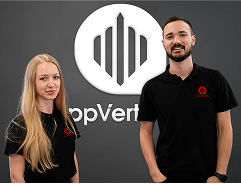 We’re AppVerticals
AppVerticals is where innovative startups and Fortune 500s come for transformation.
View About Us Mobile App
In 2026, global mobile app downloads are projected to reach 143 billion on the Google Play Store, a 30% increase from 2021. Meanwhile, the Apple App S...

20 min read
 Mobile App
The CashNow app is a fast, hassle-free way to get quick cash in the UAE. It offers instant approvals, direct transfers, and zero paperwork, making it...

8 min read
 Mobile App
Dallas is a growing hub for tech and innovation. Over 300,000 professionals work across the Dallas-Fort Worth area. The city’s strong talent pool, inf...
16 min read
Discover how our team can help you transform your ideas into powerful Tech experiences.
AppVerticals © 2026 | All Rights Reserved

Get In Touch.










 ChatGPT
 Perplexity
 Google AI