About Us

About Us
We’re a future-focused tech partner working with some of the world’s top enterprises. At AppVerticals, we design solutions that drive growth and reimagine digital experiences.

Services
Software Development
Mobile App Development
Web Design & Development
Tell us what you're looking for, and we'll tailor a solution based on your business needs.
Talk to Experts
Health Tech

EdTech

Logistics

Real Estate

Ecommerce

Sports

Fintech

Travel

Restaurant

Automotive
HIPAA-compliant digital solutions for hospitals, clinics, and healthtech startups driving better patient outcomes.
What we do:
Scalable learning platforms for schools, universities, and EdTech startups transforming education delivery.
What we do:
Real-time tracking and automation solutions for freight companies, warehouses, and delivery services.
What we do:
PropTech platforms for brokerages, property managers, and real estate marketplaces are streamlining operations.
What we do:
High-converting commerce platforms for D2C brands, retailers, and online marketplaces are driving revenue growth.
What we do:
Fan engagement platforms for sports teams, leagues, and betting operators are creating immersive experiences.
What we do:
PCI-DSS compliant solutions for digital banks, payment platforms, and InsurTech companies, ensuring security.
What we do:
Booking and hospitality solutions for OTAs, hotels, and tourism platforms, enhancing traveler experiences.
What we do:
Online ordering and operations software for restaurants, cloud kitchens, and food delivery platforms.
What we do:
Connected vehicle platforms for automotive OEMs, dealerships, and mobility providers are accelerating innovation.
What we do:
Portfolio

AppVerticals was featured in Inc. 5000 as
America’s Fastest Growing Tech Company
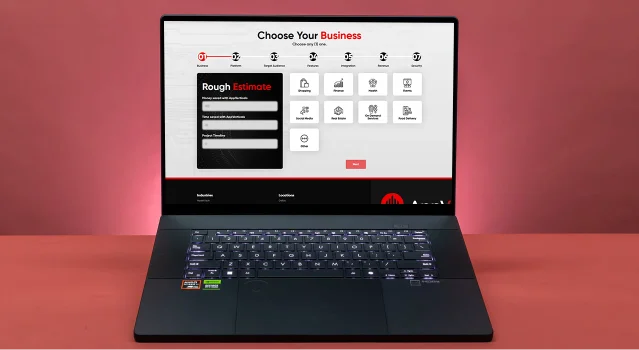
See what it might cost to bring your app idea to life. Our calculator gives you a quick, simple estimate based on what you need.


 verified expert
Senior Content Writer — Mobile & Software Development, AI
Zainab helps tech brands sound more human. She takes app ideas, features, and updates and turns them into content people actually want to read. Whether it’s for a launch, a campaign, or just making things...
See Full Bio17 minutes read
In the lab industry, many startups begin with simple tools like Google Sheets, and they’re not alone. Studies show 70% of manufacturers still rely on spreadsheets for data management. It works, until critical data is lost or an audit trail is missing.
Choosing the right lab inventory management software is about more than just organizing materials; it’s about protecting intellectual property and ensuring efficiency. According to Gartner, poor data quality costs organizations an average of $12.9 million per year, a risk no lab can afford to ignore.
In this guide, we’ll explore the best lab inventory software in 2026, reveal hidden costs of free tools, and discuss when to build or buy a solution. Additionally, we’ll dive into when custom healthcare software development makes sense for labs with unique workflows, helping you make an informed decision.
Best Lab Inventory Management Software Solutions:
Best Overall for Research & R&D: Benchling – A cloud-based, collaborative platform with inventory and molecular biology tools.
Best for Small Labs & Procurement: Quartzy – Combines inventory tracking with supplier ordering workflows.
Best for Pharma & Biotech (ELN+LIMS): Labguru – Integrates ELN with inventory management and tracking.
Best for Chemical & Sample Tracking: ChemInventory – Specializes in chemical tracking, while FreezerPro focuses on biobanking and sample management.
Best for Visual/Customization: Genemod – Offers a highly visual interface for freezer and storage mapping.
Best for Diagnostic Labs: CrelioHealth – Improves cost efficiency and visibility in clinical settings.
Key Features to Look For:
Barcode/QR Code Scanning: For accurate, rapid inventory checks.
Automated Reordering: To avoid critical supply shortages.
Compliance & Audit Trails: Essential for GMP/GLP labs (e.g., FreezerPro, Labware).
Instrument Tracking: Logs maintenance and usage for lab equipment (e.g., Zendo LIMS).
Which One to Choose?
Quartzy: Ideal for easy, collaborative, budget-friendly tracking.
Benchling or Labguru: Best for high-throughput, integrated R&D.
Genemod: Perfect for an intuitive, modern, visual experience.
Custom Solution: If off-the-shelf options don’t fully meet your lab’s specific needs, consider a custom system tailored to your unique workflows and processes for long-term scalability.
Based on market presence, user feedback, and feature sets, these are the platforms you should evaluate. I have categorized them to help you match them to your specific needs.
| Software Platform | Best For | Key Strengths | Limitations |
|---|---|---|---|
| Quartzy | Small to Mid-sized R&D Labs | Combines inventory with a powerful procurement marketplace. Free if you buy supplies through them. | Less suitable for complex sample management or strict GMP compliance. |
| eLabNext (eLabInventory) | Life Science Research | Highly customizable, excellent mobile app, strong ELN integration. | Can get pricey as you add modules; initial setup requires time. |
| SciNote | Academia & Startups | Open-source roots, very strong ELN/Project management focus. | Inventory module is less robust than standalone specialized tools. |
| Labguru | Biotech & Pharma | All-in-one ELN + Inventory + Informatics. Great visual storage mapping. | Complex interface; steep learning curve for non-scientists. |
| FreezerPro | Biobanks & Clinical | Visual freezer mapping is best-in-class. Alerts and freeze/thaw tracking. | It is a niche tool; not designed for chemical or general supply tracking. |
| ChemInventory | Chemistry Labs | Cloud-based, zero-setup SDS management, chemical structure search. | Limited utility for biological samples or general equipment. |
| Genemod | Collaborative Biotechs | Visual-first approach, extremely intuitive UI, built for modern teams. | Newer player compared to giants; fewer enterprise legacy integrations. |
| QBench | Service/Testing Labs | Highly configurable LIMS that handles inventory alongside test workflows. | Overkill if you just need to track bottles; built for throughput. |
| LabWare | Enterprise Pharma | Industry standard for stability and scale. Can do anything. | Expensive, requires dedicated administrators, rigid UI. |
| LabCollector | Versatile Labs | Modular design—pay for what you need (plasmids, animals, reagents). | Interface can feel dated compared to modern SaaS tools. |
At its core, laboratory inventory management software is the digital backbone of your physical operations. It connects the physical reality of your lab (what is in the freezer?) with your data (what did we use for this experiment?).

Without a dedicated system, labs bleed money and time. In my experience working with early-stage biotechs, the decision to implement software usually comes after a pain event. If you are a founder or lab manager, you might recognize these symptoms:
Not every lab needs the same tool. The best software depends entirely on who is logging in every day:
Before you look at a single vendor, you must categorize your need. In my experience working on custom software development projects for AppVerticals, I often see CTOs comparing tools that aren’t even competitors because they solve fundamentally different problems. You don’t compare a forklift to a scalpel just because they both move things.
Use this decision logic to narrow your search:

A General Inventory System (standalone) is great for tracking consumables like pipettes, gloves, and common salts. It functions like a stockroom ledger. It is usually cheaper and easier to set up.
An ELN/LIMS-Integrated System connects the inventory to the science. When a scientist records an experiment in their Electronic Lab Notebook (ELN), they can “deduct” the specific lot of reagent used. This provides traceability for reproducibility. If you are in drug discovery, the integrated route is almost mandatory.
For teams considering SaaS development, choosing the right type of system ensures the platform is scalable, secure, and customizable to your workflows, whether you’re integrating ELN/LIMS functionality or building a standalone solution.
If you manage cell lines or tissues, your software must support:
Using special chemical inventory systems can offer:
Do not confuse inventory (consumables) with assets (equipment). You consume inventory; you maintain assets. While some lab inventory management software includes a basic module for equipment, mature labs often separate this into a Calibration/Maintenance Management System (CMMS). If you just need to know where the centrifuge is, a general tool works. If you need to track its calibration certificates and preventive maintenance schedules, look for a dedicated asset module.
Not sure which system is right for your lab’s unique needs? Book a consultation with our experts to get personalized recommendations tailored to your workflow and inventory type.
When I evaluate software for clients, I categorize features into “Non-Negotiables” and “Nice-to-Haves.” Marketing pages will sell you on AI and dashboards, but your operations will fail on the basics. Here is the checklist you should use:

According to compliance experts, “If it isn’t documented, it didn’t happen.” An audit-ready system protects you during due diligence. Look for:
For a CTO, the integration reality is often disappointing. Many legacy LIMS claim to have APIs but offer poor documentation. The most critical integration is usually between your Inventory and your ELN. You want scientists to work in one interface. ERP integration (e.g., NetSuite, SAP) usually comes later, once purchasing volume justifies the technical debt of connecting the two systems.
Barcoding is only as good as the process behind it. A typical effective workflow looks like this:
Note on RFID: While promising, RFID is often overkill for general consumables due to cost and interference issues with liquids and metals. Stick to 2D Data Matrix barcodes for 95% of use cases.
If you are bootstrapping, free is a powerful price point. However, in software, if you aren’t paying for the product, you are often the product, or the upsell target.
But you must move off spreadsheets when:
When your lab reaches the scale where the CTO or IT security team gets involved, the conversation shifts from simple functionality to critical concerns like security, compliance, and ERP integration. At this point, the question becomes: Is it secure?
To ensure the right fit, use the following scorecard template to evaluate lab inventory vendors:
| Criteria | What to Ask |
|---|---|
| Data Security | Do you have SOC 2 Type II certification? Is data encrypted at rest and in transit? |
| Compliance | Does the system support 21 CFR Part 11 / Annex 11 electronic signatures? Can you validate the system (IQ/OQ)? |
| Scalability | Can the database handle 1 million+ records without slowing down search performance? |
| Exit Strategy | If we leave, in what format do we get our data? (SQL dump, CSV, JSON?) |
For CLIA/CAP certified labs or those in GMP manufacturing environments, priorities change. Usability becomes secondary to control, accuracy, and compliance. Here’s what to focus on:
While lab inventory management software is crucial, it only accounts for 20% of the solution. The remaining 80% comes down to human behavior. Even the best software won’t work if team members aren’t committed to tracking inventory properly.
Here’s a practical guide to help maintain order and avoid chaos in your lab:
A well-balanced approach to inventory management follows the PPA framework, which focuses on People, Process, and Automation. It works like this:
| People | Process | Automation |
|---|---|---|
| Train staff on why tracking matters, emphasizing time and cost savings, not just how to use the software. | Establish standard naming conventions (e.g., should it be “H2SO4” or “Sulfuric Acid”? Pick one). | Automate only when processes are stable. Don’t integrate ERP systems until manual ordering is running smoothly. |
By focusing on people, processes, and automation, labs can avoid inventory chaos and improve accuracy over time.
The lab inventory management market is projected to reach $4.08 billion by 2031. With so many commercial options available, why consider building custom software?
Use the following decision matrix to help you decide:
| Factor | Buy (SaaS) | Build (Custom) |
|---|---|---|
| Workflow | Standard (Store, Consume, Reorder) | Unique (Proprietary assays, complex robotics integration) |
| Budget | OpEx (Monthly subscription) | CapEx (High upfront cost: $100k+ for basic MVP) |
| Time to Value | Immediate (Days/Weeks) | Slow (3-9 Months) |
| IP Ownership | Vendor owns the code | You own the asset and data schema |
For growing teams, several factors can make off-the-shelf software impractical:
Not sure whether to buy or build? Book a free consultation with our experts to help you make an informed decision.
If you decide to build custom lab inventory software, treat it like a product, not just a side project. A structured Software Development Lifecycle (SDLC) ensures smooth execution and clear deliverables at every stage.
| Phase | Goal | Deliverable |
|---|---|---|
| 1. Discovery | Understand the user pain points. | User Stories & Requirements Document |
| 2. Design | Map the data and interface. | Wireframes & Database Schema |
| 3. Development | Write the code. | Alpha Build (Iterative sprints) |
| 4. Testing (QA) | Find bugs and validate logic. | Test Reports & Validation Documents |
| 5. Deployment | Go live. | Release to Production |
Your Minimum Viable Product (MVP) should focus on the core functionalities and avoid unnecessary features at the start. The goal is to deliver the essential functionality better than Excel or basic spreadsheets.
MVP Features:
By following the SDLC framework and prioritizing MVP development, you ensure your lab inventory system is both practical and scalable.
Choosing the right lab inventory management system is crucial for ensuring efficiency, compliance, and data integrity. While off-the-shelf tools work for some, growing labs with unique workflows often require custom solutions to meet their specific needs. A custom system not only protects critical data but also supports scalability and long-term success.
At AppVerticals, we specialize in crafting custom lab inventory solutions tailored to your unique processes. Our structured approach, from discovery to MVP development, ensures your system is both efficient and scalable, bridging the gap between scientific needs and technical expertise.
Let us help you create a solution that meets your lab’s exact requirements and minimizes the risks of poor data management.
Ready to scale your lab’s operations with custom software? We’ll help you every step of the way.
verified expert
Zainab helps tech brands sound more human. She takes app ideas, features, and updates and turns them into content people actually want to read. Whether it’s for a launch, a campaign, or just making things clearer, she’s all about simple words put together to form stories that stick.
 We’re AppVerticals
AppVerticals is where innovative startups and Fortune 500s come for transformation.
View About Us Industry
The global freight and logistics market is on track to hit $18.2 trillion by 2032, fueled by rising eCommerce demand, supply chain disruptions, and th...

11 min read
 EdTech
Every growing company faces the same question:Is our enterprise learning management system helping people do better work—or just checking boxes? Wheth...

8 min read
 Industry
A warehouse management system in logistics helps businesses optimize supply chain operations by improving speed, accuracy, and visibility. It provides...
19 min read
Discover how our team can help you transform your ideas into powerful Tech experiences.
AppVerticals © 2026 | All Rights Reserved

Get In Touch.









 ChatGPT
 Perplexity
 Google AI