




 ChatGPT
 Perplexity
 Google AI
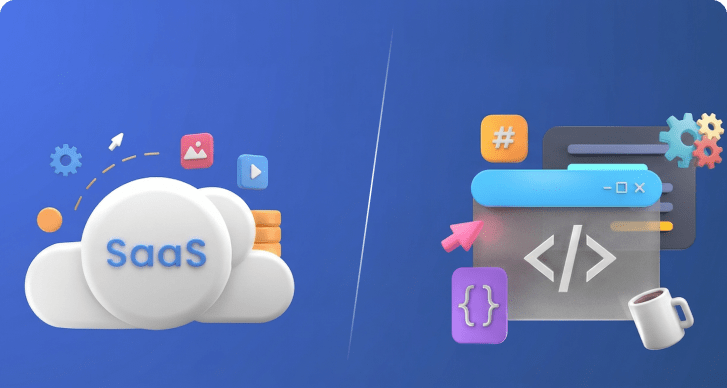
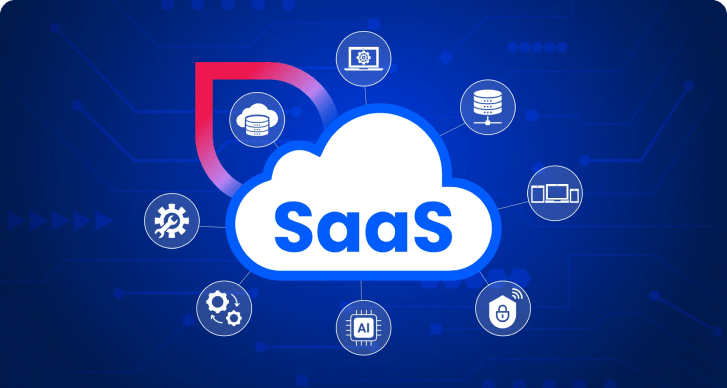
SaaS and custom software solve different business needs. SaaS offers ready-to-use applications with lower upfront cost and fast deployment.

About Us

About Us
We’re a future-focused tech partner working with some of the world’s top enterprises. At AppVerticals, we design solutions that drive growth and reimagine digital experiences.

Services
Software Development
Mobile App Development
Web Design & Development
Tell us what you're looking for, and we'll tailor a solution based on your business needs.
Talk to Experts
Health Tech

EdTech

Logistics

Real Estate

Ecommerce

Sports

Fintech

Travel

Restaurant

Automotive
HIPAA-compliant digital solutions for hospitals, clinics, and healthtech startups driving better patient outcomes.
What we do:
Scalable learning platforms for schools, universities, and EdTech startups transforming education delivery.
What we do:
Real-time tracking and automation solutions for freight companies, warehouses, and delivery services.
What we do:
PropTech platforms for brokerages, property managers, and real estate marketplaces are streamlining operations.
What we do:
High-converting commerce platforms for D2C brands, retailers, and online marketplaces are driving revenue growth.
What we do:
Fan engagement platforms for sports teams, leagues, and betting operators are creating immersive experiences.
What we do:
PCI-DSS compliant solutions for digital banks, payment platforms, and InsurTech companies, ensuring security.
What we do:
Booking and hospitality solutions for OTAs, hotels, and tourism platforms, enhancing traveler experiences.
What we do:
Online ordering and operations software for restaurants, cloud kitchens, and food delivery platforms.
What we do:
Connected vehicle platforms for automotive OEMs, dealerships, and mobility providers are accelerating innovation.
What we do:
Portfolio
AppVerticals was featured in Inc. 5000 as
America’s Fastest Growing Tech Company
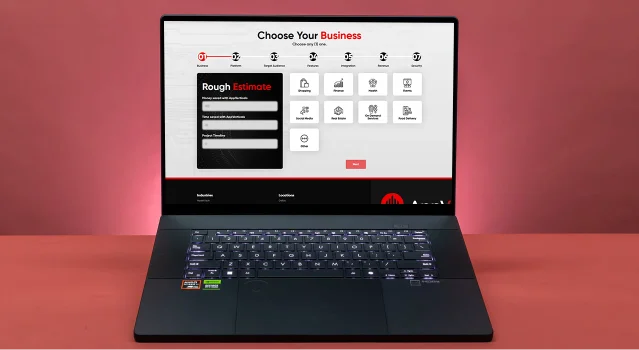
See what it might cost to bring your app idea to life. Our calculator gives you a quick, simple estimate based on what you need.


 verified expert
Senior Writer and Editor - App, AI, and Software
Muhammad Adnan is a Senior Writer and Editor at AppVerticals, specializing in apps, AI, software, and EdTech, with work featured on DZone, BuiltIn, CEO Magazine, HackerNoon, and other leading tech publications. Over the past 6...
See Full Bio24 minutes read
Custom software, often built with a custom software development company, supports specific workflows, greater control, and long-term scalability.
The global SaaS market is projected to exceed $1.25 trillion by 2034, reflecting widespread adoption. The right choice depends on your growth stage, operational complexity, and total cost over time.
This guide explains when to use each approach and how to decide with confidence.
The key difference between SaaS and custom software lies in control, cost structure, and flexibility. SaaS provides ready-to-use solutions with lower upfront investment but limited customization. Custom software requires higher initial investment but offers full control, better integration, and long-term scalability tailored to business needs.
| Decision Factor | SaaS (What It Means for Your Business) | Custom Software (What It Means for Your Business) |
|---|---|---|
| Time to Launch | Deploy in days. Ideal for quick market entry and MVP validation. | Takes weeks to months. Suitable when the long-term system matters more than speed. |
| Initial Investment | Low upfront cost. Subscription-based pricing reduces early financial risk. | High upfront cost. Requires capital but builds a long-term asset. |
| Total Cost Over Time | Costs increase as users, features, and integrations grow. Multiple tools add hidden expenses. | Higher initial cost but lower long-term cost by eliminating recurring SaaS fees and tool stacking. |
| Business Fit | Works best for common use cases like CRM, accounting, and email marketing. | Built around your exact workflows. Eliminates inefficiencies and manual workarounds. |
| Scalability | Scales within vendor limits. Pricing tiers can become restrictive at scale. | Scales based on your infrastructure and architecture decisions. No artificial limits. |
| Flexibility | Limited to vendor roadmap. Feature requests may take time or never happen. | Full flexibility. Features evolve with your business priorities. |
| Integration Complexity | Requires APIs, third-party tools, or middleware. Can lead to fragmented systems. | Designed for deep integration across internal systems, reducing operational friction. |
| Data Ownership | Data stored on vendor servers. Access and control depend on provider policies. | Full data ownership and control. Critical for regulated industries and sensitive data. |
| Security & Compliance | Standardized security. May not fully meet industry-specific compliance needs. | Security built around your requirements. Supports HIPAA, GDPR, UAE PDPL from day one. |
| Vendor Dependency | High dependency. Switching platforms can be costly and complex. | No vendor lock-in. Full control over product lifecycle and roadmap. |
| Performance | Shared infrastructure may affect performance under high load. | Optimized for your use case. Better performance for complex operations. |
| Maintenance | Managed by provider. Minimal internal effort required. | Managed internally or with a custom software development company. More control, more responsibility. |
| Competitive Advantage | Limited differentiation. Competitors can use the same tools. | Strong differentiation. Software becomes a strategic business asset. |
| Best Fit Scenario | Startups, small teams, or businesses with standard processes. | Scaling companies, enterprises, or businesses with unique operational needs. |
SaaS is designed for speed and accessibility. It allows businesses to adopt software quickly without investing in development, which is why it is often the default choice in early stages. It is especially done when supported by custom SaaS development services tailored to specific business needs.
SaaS platforms enable deployment within days, sometimes hours. There is no need for architecture planning or development cycles. Teams can start using the system almost immediately, which is critical when speed directly impacts growth or validation.
SaaS reduces the need for large initial investment. Instead of committing capital to development, businesses pay gradually through subscriptions. This creates flexibility, especially when requirements are still evolving or uncertain.
SaaS providers manage infrastructure, updates, and system reliability. This removes the need to build internal technical capabilities, allowing teams to focus on operations instead of maintaining systems.
SaaS products are built around widely used business processes. They have been tested across large user bases, which reduces the risk of failure and ensures stable performance for common use cases.
SaaS delivers speed early but introduces constraints as businesses grow. The limitations become more visible as workflows and requirements become more complex.
SaaS tools are designed for general use, not for how your business specifically operates. As complexity grows, teams begin adjusting processes to fit the software, which reduces efficiency over time.
SaaS pricing expands through user-based models, feature upgrades, and additional tools. What starts as a low monthly cost often grows into a fragmented and expensive stack as the business scales.
Businesses rely on vendors for updates, pricing, and product direction. This reduces control and introduces risk when the platform changes or no longer aligns with business needs.
As requirements grow, multiple SaaS tools are introduced. These systems often fail to integrate seamlessly, creating data silos and operational inefficiencies.
Data is stored on vendor-controlled infrastructure. This restricts direct control and can create challenges for businesses operating under strict regulatory requirements.
Custom software becomes valuable when systems need to reflect how a business actually operates. It shifts software from a tool into a strategic asset.
Custom software is built around your processes, not predefined templates. This removes inefficiencies and eliminates the need for workarounds.
Custom software gives you complete control over features, data, and system evolution. Decisions are driven by business priorities, not vendor limitations.
Custom software reduces long-term costs by eliminating recurring subscriptions and reducing reliance on multiple tools. Over time, this leads to a lower total cost of ownership.
Custom systems scale based on infrastructure and architecture decisions. There are no pricing tiers or feature restrictions limiting growth.
Custom software enables businesses to build unique systems that competitors cannot replicate. This creates differentiation and operational advantage.
Custom software provides long-term value but requires upfront investment and planning. The tradeoffs are visible early in the process.
Custom software involves significant upfront cost for design, development, and infrastructure. This makes it less suitable for early-stage or uncertain projects.
Custom systems require planning, development, and testing. This results in longer timelines compared to immediate SaaS deployment.
Custom software requires continuous management of updates, performance, and infrastructure. Businesses often handle this internally or through a renowned services provides like AppVerticals.
The success of custom software depends on early architectural choices. Poor planning can lead to scalability issues and increased long-term costs.
Choose SaaS when you need fast deployment, lower upfront cost, and standard functionality. It is the best option for early-stage businesses, predictable workflows, and teams without strong technical resources.
SaaS enables immediate deployment without development delays. Businesses can start using tools within days, which is critical when validating ideas or launching quickly.
This is one of the main reasons SaaS dominates modern software adoption. Today, about 99% of companies use at least one SaaS solution, showing how widely it is used for fast execution .
If speed directly impacts revenue or market entry, SaaS is the practical choice.
SaaS platforms are built for common business functions such as CRM, accounting, communication, and marketing.
This works well when:
The reality is most companies rely heavily on SaaS for these standard needs. In fact, around 75% of business applications are now SaaS-based, reflecting how dominant it is for common use cases .
SaaS reduces the need for large capital investment by shifting costs to a subscription model.
This is ideal when:
For startups and SMBs, this flexibility is a major advantage. Around 60% of SMBs already use SaaS tools, with over 80% planning to increase adoption, highlighting its role in cost-efficient growth .
SaaS eliminates the need to build and maintain infrastructure. The provider handles:
This makes SaaS a strong fit for businesses that:
Instead of managing systems, teams focus on growth and execution.
SaaS is ideal when your business model, workflows, or product direction are still evolving.
At this stage:
This is why many companies start with SaaS and transition later.
SaaS delivers immediate value without long development cycles.
If your priority is:
then SaaS is the better option.
Ownership and control matter later. Speed and execution matter now.
Launch faster with scalable SaaS solutions built for speed, reliability, and rapid growth. If your priority is quick deployment without heavy investment, SaaS is the smartest first step.
Explore SaaS IdeasBuild custom software when your business requires flexibility, control, and scalability that SaaS cannot provide. It is the right choice for complex workflows, growing operations, and companies that treat technology as a strategic asset.
Custom software is essential when your workflows cannot be supported by standard tools. SaaS platforms are designed for common use cases, not for how your business specifically operates.
Industries with specialized requirements such as healthcare, fintech, and logistics often choose custom solutions because generic tools cannot fully support compliance, integrations, or operational complexity.
Custom software becomes financially viable when SaaS costs scale faster than expected.
SaaS pricing grows through:
While SaaS reduces upfront cost, it shifts spending into long-term operational expense. In contrast, custom software shifts cost upfront and reduces recurring spend over time.
Custom software is the better choice when data control, security, and compliance are critical.
SaaS platforms store data on vendor-controlled infrastructure, which can limit governance and flexibility. This becomes a concern in regulated environments where businesses must meet strict compliance requirements.
Custom systems allow:
As businesses grow, they rely on multiple systems. SaaS tools often require APIs and middleware to connect, which creates inefficiencies.
SaaS-heavy environments commonly lead to:
Custom software solves this by creating a unified system designed for your ecosystem.
Custom software becomes the right choice when your business moves beyond early-stage growth and requires systems that scale without constraints.
SaaS platforms often introduce:
At scale, these limitations affect both cost and efficiency. Custom systems scale based on infrastructure, not vendor pricing. This allows businesses to grow without artificial limitations.
Custom software makes sense when technology is not just a support tool but a core part of your business strategy.
According to industry analysis, SaaS accounts for roughly 70% of new software implementations, but custom software delivers stronger strategic value in specialized operations where differentiation matters.
This is why:
Build custom software tailored to your workflows, integrations, and growth strategy. Gain full control, eliminate inefficiencies, and scale without limitations.
Talk to a Custom Software ExpertYou have outgrown SaaS when your tools create complexity, costs increase without clear ROI, and your workflows no longer fit the software. At this stage, custom software becomes the more scalable and efficient solution.
Businesses outgrow SaaS when their stack becomes fragmented. Instead of solving problems, tools start creating operational overhead.
The reality is most companies operate in this state. This creates:
SaaS starts as cost-effective but becomes expensive at scale. Costs grow through user licenses, feature upgrades, and multiple subscriptions.
Many companies now prioritize cost control because of this.
SaaS platforms are designed for standard use cases. As your operations evolve, they stop fitting your workflows.
This shows up as:
As more tools are added, integration becomes harder. APIs and middleware create partial connections, not unified systems.
This leads to:
SaaS puts control in the hands of the vendor. As your business grows, this becomes a constraint.
You cannot control:
As businesses scale, regulatory and security requirements become stricter.
SaaS platforms offer standardized compliance, but they may not fully support:
SaaS should support growth. When it starts slowing you down, it is a clear signal.
This often happens when:
Choose SaaS when your needs are standard, your priority is speed, and your budget is limited. Choose custom software when your workflows are complex, your costs are scaling, and your business requires control, integration, and long-term efficiency.
The first decision point is how unique your workflows are.
SaaS works well when your processes are standard and align with widely used tools such as CRM, accounting, or marketing platforms. Custom software becomes necessary when your workflows are unique and cannot be supported without compromises.
Your stage of growth directly impacts the right choice.
Early-stage businesses benefit from SaaS because it enables rapid deployment and reduces upfront risk. As companies grow, SaaS limitations start to surface through cost, flexibility, and integration challenges.
This shift is reflected in adoption trends. According to Statista SaaS Market Outlook, SaaS continues to dominate global software usage, especially among startups and SMBs.
The decision is not just about upfront cost. It is about long-term spending.
SaaS appears affordable initially but scales through subscriptions, add-ons, and multiple tools. Custom software requires higher upfront investment but reduces recurring costs over time. Companies now rely heavily on SaaS ecosystems.
Control becomes a key factor as businesses scale.
SaaS platforms limit control over:
Custom software provides full ownership and control, which is critical for businesses operating in regulated or highly competitive environments.
As your business grows, your systems need to work together seamlessly.
SaaS tools often require APIs and third-party integrations, which can create fragmented systems. Custom software enables unified architecture designed specifically for your ecosystem.
The final decision depends on how important software is to your business model.
If software is only a support function, SaaS is sufficient. If software drives operations, revenue, or differentiation, custom software becomes a strategic investment.
SaaS has lower upfront cost but becomes expensive over time due to subscriptions and tool stacking. Custom software requires higher initial investment but delivers better long-term ROI by reducing recurring costs and improving operational efficiency.
SaaS pricing looks simple, but it expands as your business grows.
Typical SaaS Cost Components:
Most businesses underestimate how quickly this scales.
Estimated SaaS Cost Range (Mid-Sized Business):
| Cost Element | Monthly Cost | Annual Cost |
|---|---|---|
| Core tools (CRM, PM, Accounting) | $50–$150 per user | $30,000–$120,000 |
| Add-ons & integrations | $5,000–$15,000 | $60,000–$180,000 |
| Additional tools (stack expansion) | $10,000+ | $120,000+ |
| Total Estimated Cost | — | $200,000–$400,000+ / year |
👉 SaaS cost increases as you scale users, features, and tools.
Custom software requires upfront investment but reduces recurring costs over time.
Typical Custom Software Cost Components:
Estimated Custom Software Cost Range:
| Cost Element | One-Time Cost | Annual Cost |
|---|---|---|
| Development (MVP to full system) | $50,000–$300,000+ | — |
| Infrastructure & hosting | — | $10,000–$50,000 |
| Maintenance & updates | — | $20,000–$80,000 |
| Total Estimated Cost | $50K–$300K+ upfront | $30K–$130K/year |
Cost alone is not the full picture. ROI comes from efficiency and control.
Custom software improves ROI by:
SaaS improves ROI by:
SaaS works well in industries with standard workflows such as basic CRM or accounting. Custom software becomes essential in industries like healthcare, fintech, and logistics where compliance, integration, and performance are critical.
Healthcare systems must comply with strict regulations such as HIPAA and GDPR. These requirements go beyond what most SaaS platforms can fully support.
SaaS works for:
Custom software becomes necessary for:
Financial systems operate under strict regulatory and performance requirements. Standards such as PCI DSS and regional financial regulations demand high levels of control.
SaaS works for:
Custom software is preferred for:
Logistics businesses depend on real-time coordination across multiple systems such as inventory, tracking, and fleet management.
SaaS works for:
Custom software becomes necessary for:
Real estate platforms often start with SaaS but outgrow it as listings, users, and transactions increase.
SaaS works for:
Custom software becomes valuable for:
As platforms scale, performance and flexibility become critical. SaaS limitations often impact speed and customization.
For SaaS companies themselves, software is not a tool. It is the business.
SaaS tools are used internally for:
Custom software is used for:
A hybrid approach combines SaaS for standard operations and custom software for core workflows. It allows businesses to move fast, reduce costs, and gain control without rebuilding entire systems.
The most effective approach is to separate commodity functions from core operations.
SaaS works best for:
Custom software should focus on:
Most companies begin with SaaS because it reduces time to market. As the business grows, limitations start to appear in cost, flexibility, and integration.
At that point, businesses:
A hybrid approach does not require removing SaaS entirely. In many cases, SaaS can be extended with custom layers.
This includes:
Instead of replacing SaaS, you build around it to remove limitations.
As SaaS stacks grow, businesses often use multiple tools for overlapping functions. A hybrid approach allows consolidation.
Instead of:
You move toward:
This reduces:
A pure SaaS approach limits control. A fully custom approach requires full responsibility.
Hybrid gives you both:
This balance allows businesses to:
A hybrid model is ideal when:
There is no universal winner between SaaS and custom software. The right choice depends on how your business operates and where it is heading.
SaaS helps you move fast. It reduces risk, lowers upfront investment, and allows you to start without technical overhead. That is why it works best in early stages and for standard business needs.
Custom software becomes the better choice when growth introduces complexity. As workflows evolve, costs increase, and systems become fragmented, control and flexibility start to matter more than speed. This is where custom solutions create long-term value.
If your priority is speed, choose SaaS.
If your priority is scalability, control, and efficiency, invest in custom software.
Choosing between SaaS and custom software depends on your goals, scale, and systems. Get a clear, expert recommendation based on your business needs.
Get a Free Consultation
verified expert
Muhammad Adnan is a Senior Writer and Editor at AppVerticals, specializing in apps, AI, software, and EdTech, with work featured on DZone, BuiltIn, CEO Magazine, HackerNoon, and other leading tech publications. Over the past 6 years, he’s known for turning intricate ideas into practical guidance. He creates in-depth guides, tutorials, and analyses that support tech teams, business leaders, and decision-makers in tech-focused domains.
 We’re AppVerticals
AppVerticals is where innovative startups and Fortune 500s come for transformation.
View About Us Custom Software
A sobering 68% of software projects exceed their budget, according to the Standish Group’s CHAOS Report. For founders and CTOs, inaccurate cost estima...

16 min read
 Custom Software
The software powering our world is constantly transforming the way we live, work, and connect. This rapid change can be exciting but also overwhelming...

30 min read
 Custom Software
The manufacturing industry is at a crossroad. Manufacturers are under constant pressure of cutting-down costs and improving supply chain resiliency wi...
26 min read
Discover how our team can help you transform your ideas into powerful Tech experiences.
AppVerticals © 2026 | All Rights Reserved

Get In Touch.