About Us

About Us
We’re a future-focused tech partner working with some of the world’s top enterprises. At AppVerticals, we design solutions that drive growth and reimagine digital experiences.

Services
Software Development
Mobile App Development
Web Design & Development
Tell us what you're looking for, and we'll tailor a solution based on your business needs.
Talk to Experts
Health Tech

EdTech

Logistics

Real Estate

Ecommerce

Sports

Fintech

Travel

Restaurant

Automotive
HIPAA-compliant digital solutions for hospitals, clinics, and healthtech startups driving better patient outcomes.
What we do:
Scalable learning platforms for schools, universities, and EdTech startups transforming education delivery.
What we do:
Real-time tracking and automation solutions for freight companies, warehouses, and delivery services.
What we do:
PropTech platforms for brokerages, property managers, and real estate marketplaces are streamlining operations.
What we do:
High-converting commerce platforms for D2C brands, retailers, and online marketplaces are driving revenue growth.
What we do:
Fan engagement platforms for sports teams, leagues, and betting operators are creating immersive experiences.
What we do:
PCI-DSS compliant solutions for digital banks, payment platforms, and InsurTech companies, ensuring security.
What we do:
Booking and hospitality solutions for OTAs, hotels, and tourism platforms, enhancing traveler experiences.
What we do:
Online ordering and operations software for restaurants, cloud kitchens, and food delivery platforms.
What we do:
Connected vehicle platforms for automotive OEMs, dealerships, and mobility providers are accelerating innovation.
What we do:
Platforms
Our Odoo implementation brings financial discipline, operational visibility, and process control across departments. From accounting automation to manufacturing workflows, we design ERP systems that reduce operational leakage and provide real-time decision clarity.
We use Sitecore to drive measurable revenue growth through intelligent personalization and behavior-driven content delivery. By aligning marketing automation, data orchestration, and omnichannel engagement, we help brands turn digital touchpoints into retention engines.
We architect AWS environments that stay stable under scale, traffic spikes, and compliance pressure. From secure cloud migrations to CI/CD automation and cost governance, we engineer cloud foundations that protect performance while enabling rapid product evolution.
We implement Dynamics 365 to align systems with actual business operations, bringing clarity, control, and accountability across CRM, ERP, and service functions. From sales to finance, configurations eliminate inefficiencies and enable confident, real-time decisions.
Tell us what you're looking for, and we'll tailor a solution based on your business needs.
Talk to ExpertsPortfolio

AppVerticals was featured in Inc. 5000 as
America’s Fastest Growing Tech Company
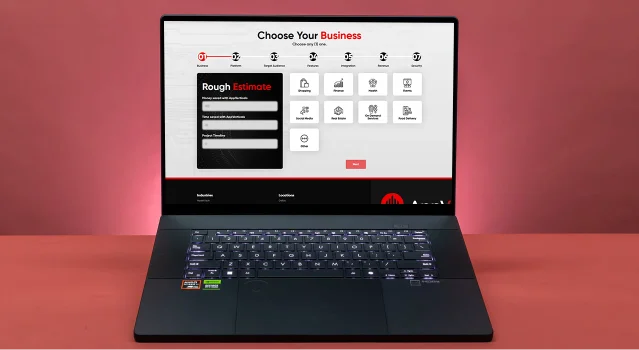
See what it might cost to bring your app idea to life. Our calculator gives you a quick, simple estimate based on what you need.


 verified expert
Senior Content Writer — Mobile & Software Development, AI
Zainab helps tech brands sound more human. She takes app ideas, features, and updates and turns them into content people actually want to read. Whether it’s for a launch, a campaign, or just making things...
See Full Bio17 minutes read
The Warehouse Management System (WMS) market is projected to grow from USD 4.38B in 2026 to USD 10.64B by 2034, driven by e-commerce, omnichannel demands, and automation.
Order picking alone typically represents 50–55% of total warehouse operating expense, making it the single largest lever for operational efficiency.
A WMS is more than just an inventory tracker; it’s an important tool that optimizes the movement of goods from receiving and put-away to inventory control, picking, packing, and shipping. By reducing labor and error costs, a WMS directly improves operational efficiency, margin, customer experience, and working capital.
For businesses investing in logistics software development, a tailored WMS solution is crucial in addressing these pain points, streamlining operations, and ultimately boosting the bottom line. This guide will cover how investing in the right WMS can address these key pain points, streamline your logistics, and ultimately boost your bottom line.
82% of supply chains are expected to adopt AI within the next 5 years, emphasizing the importance of clean execution data from WMS for AI integration.
55% of warehouse operating costs come from picking, making it a critical area for optimization with WMS to improve efficiency and reduce costs.
Robot shipments in warehouses are projected to grow by up to 50% annually through 2030, underlining the need for a cohesive WMS to orchestrate automation.
58% of warehouse decision-makers plan to implement RFID by 2028, helping to address stockouts and inventory inaccuracies with better real-time visibility.
WMS implementation costs range from $9,000–$18,000 for setup, with monthly subscriptions ranging from $100–$500 per user, depending on the system’s scale and features.
A WMS can significantly improve inventory accuracy, which is currently at an average of 83%, closing the gap on hidden costs due to miscounts and errors in warehouse operations.
Here are the key benefits of WMS that directly impact P&L, cash flow, and risk:

Many businesses think their inventory is accurate, until they measure it. A modern WMS enforces scan-confirmed receiving and picking, plus structured cycle counts, raising accuracy levels significantly. Only 69% of companies track inventory accuracy, with an average of 83% in 2024.
Order picking typically accounts for about 55% of warehouse operating costs. A WMS can reduce these costs by optimizing pick paths, interleaving tasks, and utilizing wave planning. Even small reductions in travel time and exception handling result in significant savings.
According to Zebra’s global study, 91% of decision-makers expect to use technology to enhance supply chain visibility in the next five years. A WMS provides up-to-the-minute insights into inventory and work-in-progress, eliminating blind spots.
A WMS naturally supports automation, with 69% of warehouse decision-makers planning to automate workflows. As the control layer for automation, the WMS helps scale operations without the need to hire additional staff, increasing efficiency as you grow.
A WMS turns tribal knowledge into standardized workflows, reducing dependency on specific individuals and improving process auditability. This ensures that staff can be onboarded more quickly and procedures are consistently followed.
Inventory errors can lead to phantom stock, unnecessary safety-stock levels, and costly expedited replenishment. A WMS improves inventory accuracy, making purchasing more reliable and freeing up cash that would otherwise be tied up in stock.
Discover how a custom WMS can streamline your processes, boost efficiency, and cut costs.
When executives ask me, what type of warehouse management system in logistics should we buy or build? I break it down into four main models. Each has its strengths, and the best fit depends on complexity, timeline, and how closely you want your warehouse operations integrated with finance and planning.

Standalone systems focus exclusively on warehouse execution, labor management, slotting, wave planning, multi-client 3PL billing, and more. This model is common in 3PLs and complex distribution environments where warehouse optimization must operate independently of ERP release cycles.
This model lives “inside” the ERP system, making it easier to align master data (items, customers, general ledger). The tradeoff is that while it provides faster data alignment, it may offer less depth in advanced warehouse optimization compared to top-tier standalone systems, depending on the vendor and edition.
A cloud-based WMS shifts infrastructure management and updates to the vendor, which often leads to faster deployment across multiple sites. Fortune Business Insights notes that cloud deployment is a key driver of WMS growth, owing to its scalability and cost-efficiency.
In this model, WMS is just one module within a broader supply chain execution ecosystem (WMS + TMS + order orchestration + planning signals). This is ideal when you need network-wide coordination, not just operations within a single warehouse.
A best WMS software works as a closed-loop control system that converts demand (orders) into tasks (work), verifies execution (scan/confirm), updates inventory in real time, and escalates exceptions.
Here’s how the process should look like:

The WMS ingests ASN/PO/inbound shipments from ERP, suppliers, or EDI. It handles unloading and verification, checking for counts, damages, and capturing lot/serial data. Then, it labels and assigns pallet/tote IDs before directing put-away based on defined rules (e.g., temperature zone, velocity, hazard class, or available locations).
WMS workflows reduce errors like miscounts or misplaced goods by enforcing structured verification and accurate handling.
WMS manages real-time on-hand inventory by bin and location, along with lot/serial expiration controls, cycle counting programs, and discrepancy workflows. It ensures inventory status controls (available, QC hold, damaged, quarantine), addressing gaps in inventory accuracy.
With the average inventory accuracy at 83%, according to CAPS Research, WMS improves execution and
Picking typically accounts for around 55% of warehouse operating costs, making it a critical area for optimization. A WMS supports batch/wave picking, zone picking, pick path optimization, and pick-to-tote or pick-to-cart logic.
It ensures accuracy with scan-confirmed item, quantity, and location, transforming picking from a cost center to a source of operational efficiency and cost savings.
WMS optimizes packing with cartonization logic to ensure the right-size packing for items. It verifies the packing process by scanning items into the cartons and handling inserts, labels, and compliance documents. This ensures that packing is efficient, accurate, and compliant with shipping standards.
WMS handles carrier selection and manifesting, often through integration with external systems. It supports load planning, staging, and ship confirmation, providing real-time order status updates back to the ERP or Order Management System (OMS). This streamlines the shipping process, ensuring orders are shipped promptly and accurately.
Each section of the WMS process is designed to increase efficiency, accuracy, and real-time visibility, ultimately leading to cost savings and better operational control.
To further improve warehouse operations, here are some critical functions that a WMS can provide:
A WMS provides real-time insights into labor-related costs and productivity, allowing businesses to optimize labor utilization. It tracks key metrics such as response times and productivity gaps, helping companies make informed decisions. Task interleaving features allow the WMS to assign tasks based on factors like proximity or priority, reducing travel time and minimizing wasted time (“deadheading”).
WMS can help optimize yard and dock operations by guiding truck drivers to the right loading docks quickly. Additionally, it supports cross-docking, ideal for products that need to move quickly, such as fresh groceries. The system can check receiving scans against sales orders and alert the receiver if goods need to be cross-docked for immediate shipment.
Real-time data collection through a WMS eliminates manual errors and speeds up processes. This data can be integrated with analytics to track key performance metrics, such as:
The WMS generates visual reports that can be easily shared with stakeholders and used for decision-making to drive continuous improvement.
In my experience, ERP integration is where WMS implementations either accelerate progress or become budget sinkholes. Integration goes beyond just connecting orders; it’s about synchronizing a living system: items, units of measure, locations, inventory status, shipments, returns, and adjustments.
Here’s the list of common integration patterns I’ve observed:
| Integration Challenge | How to Reduce It |
|---|---|
| Master Data Drift (Items/UOMs/Customers) | Set clear system-of-record rules, automate sync jobs, and create exception queues to handle discrepancies. |
| Timing and Status Mismatches (What Does “Shipped” Mean?) | Define canonical statuses and event triggers early in the process to ensure all systems agree on key definitions (e.g., what constitutes a “shipped” order). |
| Inventory Ownership / Multi-Client Complexity | Ensure your WMS supports ownership tracking for multi-client operations or multiple entities. Microsoft’s external ERP mode addresses ownership patterns. |
| API Governance | Use iPaaS to move and transform data, while API management governs and secures the APIs, ensuring smooth communication across platforms. |
| ERP-Suite Integration Example (For SAP Leaders) | SAP’s embedded Extended Warehouse Management (EWM) in S/4HANA integrates a unified data model, reducing duplicated interfaces and simplifying processes. |
Want to integrate WMS with your ERP systems? Let us guide you through the process with smooth, error-free syncing.
AI and automation are transforming warehouse management, driving innovation at the board level and across operations. Here’s how these technologies are shaping the future of warehousing:
According to MHI and Deloitte, AI usage in warehouses is on the rise, with 28% currently using AI and 54% planning to adopt it in the next five years, bringing the total to 82% within five years. The key to unlocking AI’s value lies in having clean execution data, something a WMS provides.
This data feeds AI algorithms, enabling smarter decisions, predictive analytics, and more efficient operations.
McKinsey reports that robot shipments are expected to increase by up to 50% annually through 2030, and warehouse automation is growing at over 10% per year. However, automation projects often fail without a cohesive vision and strong alignment with operations.
The WMS acts as the orchestration layer, ensuring that automation is seamlessly integrated into warehouse workflows. Without it, automation efforts risk being misaligned and chaotic.
Zebra’s research shows that 58% of warehouse decision-makers plan to deploy RFID by 2028, and 91% expect to use technology to enhance supply chain visibility. This isn’t just a trend, it’s a direct response to challenges like stockouts, inaccurate inventory, and labor strain. RFID and visibility technologies provide real-time insights, improving inventory accuracy, and operational efficiency.
AI, automation, and visibility technologies are not just changing the way warehouses operate, they’re reshaping how supply chains function on a global scale. A WMS integrated with these innovations helps unlock new levels of efficiency, accuracy, and scalability.
The total cost of ownership (TCO) includes more than just the upfront price, it also encompasses setup, integration, ongoing subscriptions, and maintenance.
While implementation costs cover the price of adopting an existing WMS solution, developing a custom WMS involves additional costs for design, development, and ongoing maintenance. A custom solution allows for tailored functionality but comes with higher upfront development costs, typically $50,000 to $500,000 or more, depending on the complexity and scope of features.
SaaS Subscription (Cloud WMS): Typically priced per user, site, or transaction volume. SaaS solutions have lower upfront costs, hosted and maintained by the vendor, making them scalable and easy to update.
Perpetual/On-Prem Licensing: Involves large upfront costs with annual maintenance fees. Often chosen for legacy systems or specific regulatory needs but requires more in-house IT resources.
Hybrid: A mix of on-prem control with cloud synchronization, used for situations requiring local data control but with cloud flexibility.
SaaS is typically more cost-efficient upfront with lower IT maintenance costs, while on-prem solutions have higher initial setup costs and require ongoing internal management.
The ROI for a WMS often comes from improving efficiency in picking, which accounts for ~55% of warehouse operating costs. Key savings include:
With average inventory accuracy at 83%, many businesses are unknowingly absorbing costs from errors, expedited shipments, and lost sales. A WMS directly addresses these inefficiencies, offering a solid return on investment.
Investing in a WMS not only optimizes operations but also reduces hidden costs, positively impacting your bottom line.
See the long-term benefits with a tailor-made WMS solution that boosts your efficiency and cuts unnecessary costs.
Choosing the right warehouse management application or software can be overwhelming, but a structured evaluation approach ensures the selection process stays focused on what truly matters to your business.
Here’s how I recommend CEOs, CFOs, and CTOs approach this decision:

Begin by understanding the unique needs and challenges of your warehouse:
This decision shapes the long-term strategy of your warehouse operations:
If you have multiple systems (ERP, OMS, carriers, automation, BI tools), integration should be carefully planned:
Before going live, conduct a pilot to prove the WMS’s value. Focus on KPIs that directly impact your bottom line:
By focusing on these KPIs, you can measure the tangible benefits of your WMS and ensure it delivers the expected improvements in efficiency and cost savings.
A well-planned selection process ensures that the WMS you choose not only fits your current needs but also scales as your business grows.
Investing in a Warehouse Management System (WMS) is more than just a software purchase, it’s a strategic move to enhance operational efficiency and gain a competitive edge. If your warehouse plays a critical role in customer experience, margin control, or inventory management, a WMS is undoubtedly worth the investment. However, it’s important to treat it as an operating model upgrade, not just an IT solution.
The macro signals are clear:
The common denominator across all these trends is the need for a WMS that provides clean execution data and enforces repeatable, efficient processes. A WMS is the backbone that enables your warehouse to leverage emerging technologies, scale operations effectively, and maintain a competitive edge in the market.
By implementing a WMS, you not only optimize core processes, receiving, inventory management, picking, packing, and shipping, but also set the stage for future innovations like AI and automation. The result? Faster, more accurate order fulfillment, improved customer satisfaction, and reduced operating costs.
At AppVerticals, we specialize in custom WMS solutions tailored to your business needs. We ensure seamless integration with your existing systems and processes, allowing your warehouse to operate more efficiently and become a data-driven asset that adds measurable value to your bottom line.
See how a custom WMS can reduce labor costs, boost accuracy, and enhance warehouse efficiency.
verified expert
Zainab helps tech brands sound more human. She takes app ideas, features, and updates and turns them into content people actually want to read. Whether it’s for a launch, a campaign, or just making things clearer, she’s all about simple words put together to form stories that stick.
 We’re AppVerticals
AppVerticals is where innovative startups and Fortune 500s come for transformation.
View About Us Industry
Ever waited hours for a truck to arrive, only to find out the shipment was delayed, rerouted, or worse, lost in paperwork? Frustrating, isn’t it? That...

14 min read
 Industry
If you’re planning to build a logistics app in 2025, the first question is usually cost. In the US market, logistics app development cost typically ra...
11 min read
 EdTech
Most educational apps launch with great intentions, but fall short where it matters most: trust. Parents worry about data privacy. Schools hesitate ov...

17 min read
Discover how our team can help you transform your ideas into powerful Tech experiences.
AppVerticals © 2026 | All Rights Reserved

Get In Touch.













 ChatGPT
 Perplexity
 Google AI