About Us

About Us
We’re a future-focused tech partner working with some of the world’s top enterprises. At AppVerticals, we design solutions that drive growth and reimagine digital experiences.

Services
Software Development
Mobile App Development
Web Design & Development
Tell us what you're looking for, and we'll tailor a solution based on your business needs.
Talk to Experts
Health Tech

EdTech

Logistics

Real Estate

Ecommerce

Sports

Fintech

Travel

Restaurant

Automotive
HIPAA-compliant digital solutions for hospitals, clinics, and healthtech startups driving better patient outcomes.
What we do:
Scalable learning platforms for schools, universities, and EdTech startups transforming education delivery.
What we do:
Real-time tracking and automation solutions for freight companies, warehouses, and delivery services.
What we do:
PropTech platforms for brokerages, property managers, and real estate marketplaces are streamlining operations.
What we do:
High-converting commerce platforms for D2C brands, retailers, and online marketplaces are driving revenue growth.
What we do:
Fan engagement platforms for sports teams, leagues, and betting operators are creating immersive experiences.
What we do:
PCI-DSS compliant solutions for digital banks, payment platforms, and InsurTech companies, ensuring security.
What we do:
Booking and hospitality solutions for OTAs, hotels, and tourism platforms, enhancing traveler experiences.
What we do:
Online ordering and operations software for restaurants, cloud kitchens, and food delivery platforms.
What we do:
Connected vehicle platforms for automotive OEMs, dealerships, and mobility providers are accelerating innovation.
What we do:
Platforms
Our Odoo implementation brings financial discipline, operational visibility, and process control across departments. From accounting automation to manufacturing workflows, we design ERP systems that reduce operational leakage and provide real-time decision clarity.
We use Sitecore to drive measurable revenue growth through intelligent personalization and behavior-driven content delivery. By aligning marketing automation, data orchestration, and omnichannel engagement, we help brands turn digital touchpoints into retention engines.
We architect AWS environments that stay stable under scale, traffic spikes, and compliance pressure. From secure cloud migrations to CI/CD automation and cost governance, we engineer cloud foundations that protect performance while enabling rapid product evolution.
We implement Dynamics 365 to align systems with actual business operations, bringing clarity, control, and accountability across CRM, ERP, and service functions. From sales to finance, configurations eliminate inefficiencies and enable confident, real-time decisions.
Tell us what you're looking for, and we'll tailor a solution based on your business needs.
Talk to ExpertsPortfolio
AppVerticals was featured in Inc. 5000 as
America’s Fastest Growing Tech Company
See what it might cost to bring your app idea to life. Our calculator gives you a quick, simple estimate based on what you need.



 verified expert
Senior Content Writer — Mobile & Software Development, AI
Zainab helps tech brands sound more human. She takes app ideas, features, and updates and turns them into content people actually want to read. Whether it’s for a launch, a campaign, or just making things...
See Full Bio16 minutes read
A sobering 68% of software projects exceed their budget, according to the Standish Group’s CHAOS Report. For founders and CTOs, inaccurate cost estimates lead to financial overruns, failed launches, and long-term setbacks.
However, modern software projects are complex, involving variables like team composition, tech stack, compliance, and integration. A $120,000 estimate can quickly escalate to $180,000 once maintenance, security audits, and infrastructure are factored in.
This guide helps you learn essential software development cost estimation methods to avoid budget overruns including, industry pricing benchmarks, and frameworks to predict costs with great accuracy.
Typical Cost Breakdown by Project Complexity (2026 Estimates)
Key Cost Drivers
Regional Cost Variations (Hourly Rates)
Project Lifecycle Cost Distribution
The cost of software development in 2026 varies significantly based on project complexity, platform choice, and feature requirements.
Here’s a breakdown of current market data to help you estimate costs effectively:
Costs vary significantly based on project type. Simple apps are budget-friendly and quick to build, while complex enterprise solutions require more time and a higher budget for specialized features and integrations.
| Project Type | Cost Range | Time Frame | Key Features | Examples |
|---|---|---|---|---|
| Simple Applications | $40,000–$120,000 | 2-3 months |
|
Internal tools, simple mobile apps, basic SaaS MVPs |
| Medium Complexity Projects | $120,000–$200,000 | 3-6 months |
|
E-commerce platforms, booking systems, CRM applications |
| Complex/Enterprise Software | $200,000–$500,000+ | 6-12+ months |
|
Healthcare management systems, financial trading platforms, enterprise resource planning |
Each industry has unique requirements that drive the costs of software development. Regulatory compliance, integration with existing systems, and scalability are key factors influencing cost in specific industries like healthcare and finance.
| Industry | Typical Cost Range | Key Cost Drivers |
|---|---|---|
| Healthcare | $75,000–$250,000 | HIPAA compliance, EHR integration, patient data security, FDA regulations |
| FinTech | $90,000–$300,000 | PCI DSS compliance, banking API integration, fraud detection, regulatory reporting |
| Logistics/WMS | $50,000–$250,000 | Real-time tracking, inventory management, multi-location support, IoT integration |
| E-commerce | $40,000–$150,000 | Payment processing, inventory sync, shipping integrations, product catalogs |
Different platforms have varying cost structures. Cross-platform development offers substantial savings by reusing code across multiple platforms, while native apps and web applications have specific advantages for performance and functionality.
| Platform Type | Cost Difference | Key Characteristics |
|---|---|---|
| Native Mobile Development (Single Platform) | Base cost | Dedicated to one platform (iOS or Android), specialized development required for each platform. |
| Native iOS + Android | 1.8–2.0× the cost of a single platform | Requires separate codebases for each platform and specialized developers for both. |
| Cross-Platform (Flutter/React Native) | 30-40% savings compared to separate native apps | 90% code reuse across iOS and Android, reducing development time and costs. |
| Progressive Web Apps (PWA) | 20-30% less than native mobile | Offline capabilities, app-like experiences, and simpler deployment than native mobile apps. |
| Web Applications | 15-25% less than mobile apps for equivalent functionality | Standardized deployment and testing environments result in lower costs compared to mobile app development. |
Don’t let uncertainty derail your project. Contact us today for a detailed, obligation-free estimate that outlines your software development costs with clarity.
Reliable software cost estimation relies on four proven methodologies, each with specific use cases and accuracy rates. Choosing the right technique can make a significant impact on your project’s success.

Considered the most accurate when the project scope is well-defined, this method involves breaking down the project into granular tasks and estimating each component’s cost.
Here’s how you can do that:
A Real Example
A custom CRM project:
Total: 500 hours × $150/hour = $75,000
2. Top-Down/Analogous Estimation (Mid-Level Accuracy)
This method leverages historical project data to make quick estimates based on similar past projects.
Here’s how you do that:
For Example: We built a similar inventory management system for $120,000. However, the project in discussion has 30% more features and requires mobile support, so we estimate $156,000.
3. Parametric Estimation (COCOMO II) (Average-Level Accuracy)
Data-driven models like COCOMO II use statistical relationships between project variables and costs to provide a more consistent estimate.
The factors you must consider include:
4. Three-Point/PERT Estimation (Risk-Aware)
This technique accounts for uncertainty by considering three potential scenarios: optimistic, most likely, and pessimistic.
Here’s the formula that helps calculating:
Expected Cost = (O + 4M + P) ÷ 6
For Example:
Expected Cost: ($80K + 4×$120K + $180K) ÷ 6 = $126,667
| Project Characteristic | Recommended Method |
|---|---|
| Well-defined scope, need high accuracy | Bottom-Up |
| Early planning, rough budgeting | Top-Down |
| Large organization with data history | Parametric |
| High uncertainty, need risk ranges | Three-Point |
| Critical business decision | Combine 2-3 methods |
When estimates from different methods vary by more than 25%, it may indicate missing requirements, underestimated technical risks, or scope ambiguity. This discrepancy is an opportunity to uncover further details before committing.
To keep up with evolving software development trends, understanding the driving factors is essential for accurately estimating costs. Here’s a breakdown of current market data to help you estimate costs effectively:

Not all features cost the same, architecture complexity often matters more than feature count.
Geographic differences are a major cost factor. Rates vary widely across regions:
| Region | Hourly Rate Range | Quality Level | Timezone Overlap (US) |
|---|---|---|---|
| United States | $120-$200/hour | Excellent | Perfect |
| Western Europe | $100-$180/hour | Excellent | Moderate |
| Eastern Europe | $40-$75/hour | Very Good to Excellent | Good (4-7 hr overlap) |
| Latin America | $40-$70/hour | Good to Very Good | Excellent |
| Asia (India) | $20-$50/hour | Variable | Poor (opposite timezone) |
| Asia (Philippines) | $25-$55/hour | Good | Moderate |
Design directly influences development complexity and user adoption. Design tiers are:
The choice between modern and legacy technologies affects both upfront costs and long-term maintenance:
Your platform choice creates multiplier effects on cost:
Compliance adds substantial costs but is essential in regulated industries:
Integration complexity drives costs:
Architecture decisions impact both short-term and long-term costs:
Estimating the cost of software development in enterprise environments can be a complex task, especially when legacy system integration is involved. These integrations often add significant costs, typically 30-50%, due to the hidden complexities associated with older systems.
The key cost drivers include:

Legacy systems often present challenges such as:
The complexity of migration scales with:
Older systems rarely support modern APIs, necessitating custom solutions, which involve:
Complex enterprise environments require sophisticated middleware to:
Testing enterprise integrations requires a thorough approach to ensure that all systems function properly:
Here’s how you can mitigate the challenges:
Before diving into the integration process, invest in a technical discovery phase to:
Start with read-only integration to understand the behavior of the legacy system before attempting bidirectional data synchronization. This reduces risk and provides valuable insights before fully committing to the integration.
Engage developers with experience in enterprise integration patterns and specific legacy technologies. Junior developers may struggle with undocumented systems, leading to extended timelines and additional costs.
Establish visibility into the health of your integrations early on to prevent minor issues from escalating into major problems. Implement logging, alerting, and real-time dashboards to track integration performance.
By understanding the unique challenges posed by legacy system integration, enterprises can better estimate their software development costs, reduce risks, and ensure smoother project execution.
Beyond developer hours and project management, numerous invisible costs can add up over the software lifecycle. Failing to account for these can lead to budget shortfalls long after launch.
Cloud Hosting
Automated pipelines are essential for rapid iteration and reducing human error.
Compliance costs vary significantly depending on whether the organization is pursuing formal certification or simply engineering toward alignment. For mid-sized SaaS platforms, compliance preparation and audits can add $30,000 to $120,000+ to overall program costs, depending on scope and audit depth.
QA is often underestimated. It includes:
Strategic cost reduction focuses on maximizing value rather than cutting corners. Here are 8 proven ways to save on software development without sacrificing quality:

Launch with only core features to validate assumptions and expand based on real user data.
Outsource to Eastern Europe or Latin America to save on labor costs while benefiting from cultural compatibility and time zone overlap.
Save by using frameworks like Flutter or React Native for a single codebase across iOS and Android.
Spending $5,000-$15,000 on discovery prevents costly rework by identifying hidden requirements and aligning expectations early.
Avoid costly scope changes with a detailed discovery phase. Let’s uncover your project’s exact requirements before development begins.
Release in stages, validating with users before investing in further development.
Smaller teams (3-5 developers) are more efficient due to lower communication overhead and faster decision-making.
Data: A 3-person team outperforms a 6-person team with mixed experience levels due to fewer communication paths.
Use proven libraries and services for non-core functions (e.g., authentication, payment processing).
Select the best model for your needs:
Calculating ROI for software development transforms it from a cost into a strategic investment. Here’s how to build an ROI model:
Time Savings (Labor Cost Reduction)
Error Reduction (Cost Avoidance)
Revenue Enablement (New Capabilities)
Off-the-Shelf:
Custom Software:
Off-the-Shelf Solution:
Custom Solution:
| Custom Software | Off-the-Shelf |
| Unique workflows or competitive differentiation | Standard workflows |
| Scalability for 100+ users | Small user base |
| Long-term investment (3+ years) | Short time horizon |
| Critical integration and data control | Limited resources for maintenance |
Schedule a consultation to explore the potential return on investment for your software project, understand the financial impact before making any commitments.
Accurate cost estimation starts with understanding your project’s unique needs, whether it’s healthcare, fintech, logistics, ecommerce or anything else. Choosing the right methodologies and working with experienced teams ensures predictable, transparent outcomes.
Need help estimating your custom software project? AppVerticals has delivered over 200 successful projects across various industries, providing clear and accurate estimates within 48 hours, no obligation, just transparency.
The gap between a $120,000 estimate and a $180,000 final cost often comes down to asking the right questions upfront. Let’s start with those questions.
Need a reliable estimate for your software development project? AppVerticals delivers accurate, transparent estimates tailored to your needs, within 48 hours.
On average:
Location plays a significant role, with developers in the US or Western Europe typically commanding higher rates compared to those in Eastern Europe, Latin America, or Asia.
Long-term maintenance and updates also add to the overall cost, typically 15-25% of the initial development cost annually.
verified expert
Zainab helps tech brands sound more human. She takes app ideas, features, and updates and turns them into content people actually want to read. Whether it’s for a launch, a campaign, or just making things clearer, she’s all about simple words put together to form stories that stick.
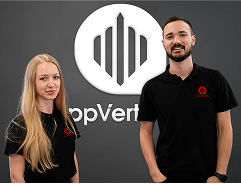 We’re AppVerticals
AppVerticals is where innovative startups and Fortune 500s come for transformation.
View About Us Custom Software
SaaS and custom software solve different business needs. SaaS offers ready-to-use applications with lower upfront cost and fast deployment. Custom so...

24 min read
 Custom Software
The software powering our world is constantly transforming the way we live, work, and connect. This rapid change can be exciting but also overwhelming...
30 min read
 Custom Software
SaaS application development is the process of building cloud-based software that users access through a browser, typically on a subscription model. B...
23 min read
Discover how our team can help you transform your ideas into powerful Tech experiences.
AppVerticals © 2026 | All Rights Reserved

Get In Touch.











 ChatGPT
 Perplexity
 Google AI