About Us

About Us
We’re a future-focused tech partner working with some of the world’s top enterprises. At AppVerticals, we design solutions that drive growth and reimagine digital experiences.

Services
Software Development
Mobile App Development
Web Design & Development
Tell us what you're looking for, and we'll tailor a solution based on your business needs.
Talk to Experts
Health Tech

EdTech

Logistics

Real Estate

Ecommerce

Sports

Fintech

Travel

Restaurant

Automotive
HIPAA-compliant digital solutions for hospitals, clinics, and healthtech startups driving better patient outcomes.
What we do:
Scalable learning platforms for schools, universities, and EdTech startups transforming education delivery.
What we do:
Real-time tracking and automation solutions for freight companies, warehouses, and delivery services.
What we do:
PropTech platforms for brokerages, property managers, and real estate marketplaces are streamlining operations.
What we do:
High-converting commerce platforms for D2C brands, retailers, and online marketplaces are driving revenue growth.
What we do:
Fan engagement platforms for sports teams, leagues, and betting operators are creating immersive experiences.
What we do:
PCI-DSS compliant solutions for digital banks, payment platforms, and InsurTech companies, ensuring security.
What we do:
Booking and hospitality solutions for OTAs, hotels, and tourism platforms, enhancing traveler experiences.
What we do:
Online ordering and operations software for restaurants, cloud kitchens, and food delivery platforms.
What we do:
Connected vehicle platforms for automotive OEMs, dealerships, and mobility providers are accelerating innovation.
What we do:
Portfolio
AppVerticals was featured in Inc. 5000 as
America’s Fastest Growing Tech Company
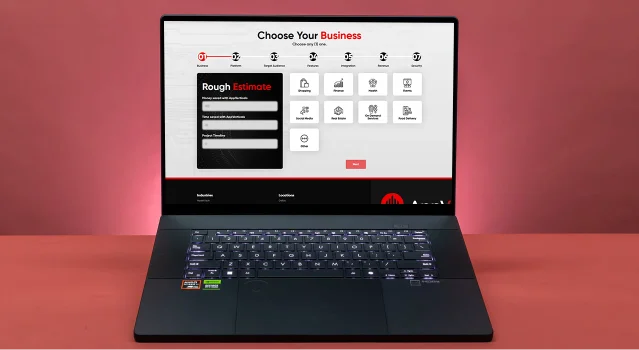
See what it might cost to bring your app idea to life. Our calculator gives you a quick, simple estimate based on what you need.


 verified expert
Senior Content Writer — Mobile & Software Development, AI
Zainab helps tech brands sound more human. She takes app ideas, features, and updates and turns them into content people actually want to read. Whether it’s for a launch, a campaign, or just making things...
See Full Bio14 minutes read
When executives ask, Odoo vs SAP, which ERP is right for us? I start by focusing on what really impacts your investment: total cost, implementation risks, and how much change your organization can handle without disruption.
Odoo works well for those seeking a modular ERP that’s easy to roll out and customize quickly, especially with a clear scope and speed in mind. SAP, on the other hand, is designed for larger enterprises that need deep control, global-scale processes, and a higher tolerance for structured transformation.
In this guide, I’ll break down the key factors you need to know: cost, customization, scalability, and my advice on which direction to go.

Odoo is an ERP suite designed for modular adoption, allowing businesses to implement one app at a time. With 15 million users, 6,000+ employees, and 16,000+ partners, it serves everyone from startups to large enterprises, offering a flexible, scalable ecosystem. If you’re considering Odoo for your business, working with an experienced Odoo development company can significantly streamline the process.
SAP (S/4HANA) is considered a top-tier ERP for large enterprises, particularly those with $750M+ in revenue. It’s recognized as a Tier I ERP by Panorama Consulting, making it ideal for complex organizations needing deep control and process governance.
So, the real question isn’t which is better? But which model suits your business? Odoo rewards speed, modular adoption, and flexible customization, while SAP excels at standardization, enterprise control, and rigorous process governance.
Let’s take a look at quick decision-matrix:
| Criteria | Odoo | SAP |
|---|---|---|
| Best For | Small to medium enterprises, phased modular rollouts | Large enterprises, global scale, complex governance |
| Cost Transparency | Clear, predictable pricing with flexible plans | Complex pricing, often requires custom quotes |
| Speed of Implementation | Fast deployment, can start with core apps and expand | Longer timelines, often requires enterprise-level planning |
| Customization Flexibility | High flexibility with modular customization (Custom plan) | Strong customization but with higher complexity and cost |
| Integration Capabilities | API access on Custom plan, external integrations easy | Integration Suite for seamless, enterprise-grade integrations |
| Support | Community-driven support with paid options | Enterprise-level support, with optional premium guidance (Preferred Success) |
| Scalability | Excellent for operational scalability in specific business units | Built for enterprise-scale, global standardization, and complex environments |
| Governance & Control | Lower control but flexible for evolving business needs | Strong governance, compliance, and process standardization |

Odoo is a modular ERP suite covering core functions like finance, sales, inventory, HR, and more. It comes in two editions: Odoo Community (open-source) and Odoo Enterprise (licensed). Whether you’re looking to implement Odoo CRM or the entire suite, the Odoo implementation process is designed to scale with your business needs.
The key takeaway here is flexibility, Odoo allows businesses to start small (e.g., CRM + invoicing) and expand as needed, without the hassle of re-platforming. It also offers a broad range of apps, with contributions from both the core team and the community.
Ready to implement Odoo ERP? Our experienced development team ensures a smooth transition, from setup to full customization.

SAP, in this context, refers to SAP S/4HANA, a powerful ERP designed for large-scale finance, supply chain, and manufacturing operations. It’s considered a Tier I product, ideal for large enterprises requiring strict governance and process control. SAP’s focus is on enterprise-grade functionality and scalability.
The main difference? Odoo encourages iteration and customization, while SAP expects you to align with standard processes and manage change through formal programs. Neither approach is universally better, but depending on your organization’s appetite for governance and transformation, one may fit better than the other.
Odoo implementation cost is highly transparent. In the U.S., Odoo Standard costs $31.10/user/month (billed yearly) or $38.90 monthly, while Odoo Custom is $61.00/user/month (yearly) or $76.20 monthly.
The Custom plan is essential for multi-entity setups or integration-heavy projects, as it includes Odoo Studio, Multi Company, and External API access, key features for complex deployments. Notably, external API access is limited to the Custom plan, which is a crucial cost driver for those planning integrations with BI, data warehouses, or legacy systems.
On the SAP side, pricing varies based on scope, user types, packages, and agreements, making it harder to pin down. However, SAP’s Integration Suite follows a tenant subscription model for integration costs.
What many teams overlook is that ERP costs go beyond just software, implementation often drives up costs significantly. Panorama’s 2024 ERP data shows the median project cost is $450,000, with an average duration of 15.5 months, a reminder that execution and organizational change can exceed the first-year software subscription.
Let’s take a quick look at the cost breakdown:
| Cost Component | Odoo: What Typically Drives It | SAP: What Typically Drives It | CFO/CTO Note |
|---|---|---|---|
| Subscription/Licenses | Standard vs. Custom; Custom needed for API/multi-company/studio | Packaged subscriptions + user models; varies by deal/package | Treat as “entry ticket,” not total cost. |
| Implementation | Partner scope, data migration, customization | Program scale, process standardization, change management | Benchmark against median $450K / 15.5 months |
| Integration | API availability (Custom plan) | iPaaS strategy, Integration Suite as common layer | Integration scope often silently expands budget |
| Support | Ecosystem-based support (varies by approach) | Enterprise Support + optional Preferred Success | Support models impact risk and internal headcount |
Discover how Odoo’s flexible pricing can be tailored to your unique business needs. Our team will provide a personalized quote based on your specific requirements.
Get Your Custom Quote NowWhen explaining customization, I break it down like this: Odoo is easier to customize early on, while SAP is safer to govern at scale, if you follow the platform’s rules.

For small businesses, Odoo often wins on time-to-value and cost transparency, as long as the scope remains realistic. Its published pricing makes budgeting clear, start with Standard pricing and upgrade to Custom when you need multi-company support, Studio, or API integration. This upgrade path is key because many small businesses don’t need deep integration upfront, but want the option as they grow.
A common problem for small businesses is assuming the ERP’s sticker price is the total project cost. According to Panorama, the median ERP project cost is $450,000, with an average duration of 15.5 months, numbers that can be out of reach for many SMBs if they aim for an enterprise-style rollout.
Here’s my recommendation for small businesses:
While SAP can be a good fit for small businesses in specific cases (e.g., regulated industries or strict governance), it’s rarely the default unless there’s already a broader SAP ecosystem decision at the group level.
Large enterprises typically choose ERP systems to reduce operational variance, gain more control, and scale reliably, not just for features.

SAP S/4HANA is a Tier I ERP, ideal for complex environments like multi-entity consolidation, global process governance, and compliance-heavy operations. Its support structure is tailored for large enterprises, with Enterprise Support included in every cloud subscription, ensuring robust assistance.
Odoo, while often associated with smaller companies, is also used by large enterprises. It works well for specific business lines, subsidiaries, or when a phased, modular rollout is preferred over a single large-scale transformation. Odoo’s flexibility makes it suitable for enterprises looking for speed and cost transparency in certain areas.
Odoo offers faster deployment and greater cost transparency but requires careful discipline around customization and integration, especially as API access is restricted to the Custom plan.
SAP tends to have higher program overhead but excels in environments where governance, auditability, and standardized global execution are top priorities.
Odoo’s strength lies in its flexibility, with a one app at a time approach that suits businesses of all sizes, from startups to large enterprises. This modularity makes it easy to start small (e.g., CRM + invoicing) and scale up as the business grows (e.g., adding inventory, HR, manufacturing).
However, this flexibility comes with a cost: you need strong architectural discipline. As soon as you integrate custom apps, analytics, or external APIs, you’ll need the Custom plan, something many businesses overlook early on, leading to rework and frustration.
SAP’s scalability comes from its ecosystem maturity and robust enterprise guardrails. The Integration Suite serves as a unified layer to connect SAP and third-party systems, making integration a permanent capability at enterprise scale.
As enterprises adopt more cloud-based solutions, scalability becomes easier, with SaaS enabling flexibility, modern capabilities, and seamless data integration. Panorama notes the growing preference for cloud as it supports enterprise scalability while offering flexible data access.
Learn how Odoo can grow with your business. Our experts will help you integrate a scalable ERP solution that adapts to your future needs.
Integration is where ERP ROI is either captured or lost.
Odoo offers external connectivity via APIs (XML-RPC and similar), but it’s important to note that API access is only available on the Custom plan.
This means that for a CTO, integration strategy and licensing must go hand-in-hand, especially if you’re planning for BI pipelines, middleware, or custom app development. Without the Custom plan, integration capabilities are limited, which can be a critical cost consideration.
SAP takes a more structured, platform-driven approach with its Integration Suite, a unified platform designed to connect SAP and third-party applications, processes, and data.
SAP also provides clear pricing for the Integration Suite, allowing you to model integration as a defined line item, rather than burying it under “hidden consulting” costs. This ensures better transparency and budgeting for large-scale integrations.
Support is about more than just tickets, it’s about how risk is managed when your business is live.
Odoo’s support includes email access (24/5 on weekdays in multiple languages) and free upgrades. The Odoo Community Association (OCA) plays a key role by promoting collaboration and creating lower-cost, high-quality solutions faster through community-driven development.
SAP offers Enterprise Support with every cloud subscription, providing structured support channels like a knowledge base, cases, expert chat, and community forums. For a more proactive approach, SAP Preferred Success includes targeted release guidance, enhanced SLAs, and access to customer success experts.
If I had to summarize Odoo vs SAP in one line: Odoo optimizes for modular speed and cost transparency; SAP optimizes for enterprise governance and standardized scale.
For investors, the key takeaway is to treat implementation + integration as major cost categories, not afterthoughts. Panorama’s benchmarks, $450,000 median project cost and 15.5 months median duration, offer a useful reality check against overly optimistic projections.
For CTOs, it’s crucial to note that Odoo’s External API access requires the Custom plan, which can significantly impact both your budget and integration strategy.
If you’d like to explore how Odoo ERP can fit your needs, AppVerticals specializes in Odoo ERP development and can help tailor a solution that scales with your business.
If you share your company’s size (revenue, users), number of legal entities, countries, and any plans for custom app development or deep BI integration, I can help you build a 3-year cost model and decision matrix specific to your situation, without assumptions.
Take the next step towards a more efficient, scalable, and cost-effective ERP solution with Odoo.
verified expert
Zainab helps tech brands sound more human. She takes app ideas, features, and updates and turns them into content people actually want to read. Whether it’s for a launch, a campaign, or just making things clearer, she’s all about simple words put together to form stories that stick.
 We’re AppVerticals
AppVerticals is where innovative startups and Fortune 500s come for transformation.
View About Us![Odoo_Implementation_Cost__Complete_Pricing_Guide_&_TCO_Breakdown[1]](https://www.appverticals.com/blog/wp-content/uploads/2026/01/Odoo_Implementation_Cost__Complete_Pricing_Guide__TCO_Breakdown1.png) Odoo
Odoo
In 2026, Odoo implementation typically costs $15,000–$40,000 for small businesses, $50,000–$100,000 for mid-market companies, and $120,000–$250,000+ f...

30 min read
 Platforms
Sitecore is a Digital Experience Platform (DXP) that unifies content management, customer data, marketing automation, and AI-driven personalization in...

19 min read
 Platforms
Choosing between Sitecore and WordPress depends on your organization’s scale, complexity, and digital experience goals. Sitecore provides an enterpris...
14 min read
Discover how our team can help you transform your ideas into powerful Tech experiences.
AppVerticals © 2026 | All Rights Reserved

Get In Touch.





 ChatGPT
 Perplexity
 Google AI