About Us

About Us
We’re a future-focused tech partner working with some of the world’s top enterprises. At AppVerticals, we design solutions that drive growth and reimagine digital experiences.

Services
Software Development
Mobile App Development
Web Design & Development
Tell us what you're looking for, and we'll tailor a solution based on your business needs.
Talk to Experts
Health Tech

EdTech

Logistics

Real Estate

Ecommerce

Sports

Fintech

Travel

Restaurant

Automotive
HIPAA-compliant digital solutions for hospitals, clinics, and healthtech startups driving better patient outcomes.
What we do:
Scalable learning platforms for schools, universities, and EdTech startups transforming education delivery.
What we do:
Real-time tracking and automation solutions for freight companies, warehouses, and delivery services.
What we do:
PropTech platforms for brokerages, property managers, and real estate marketplaces are streamlining operations.
What we do:
High-converting commerce platforms for D2C brands, retailers, and online marketplaces are driving revenue growth.
What we do:
Fan engagement platforms for sports teams, leagues, and betting operators are creating immersive experiences.
What we do:
PCI-DSS compliant solutions for digital banks, payment platforms, and InsurTech companies, ensuring security.
What we do:
Booking and hospitality solutions for OTAs, hotels, and tourism platforms, enhancing traveler experiences.
What we do:
Online ordering and operations software for restaurants, cloud kitchens, and food delivery platforms.
What we do:
Connected vehicle platforms for automotive OEMs, dealerships, and mobility providers are accelerating innovation.
What we do:
Portfolio
AppVerticals was featured in Inc. 5000 as
America’s Fastest Growing Tech Company
See what it might cost to bring your app idea to life. Our calculator gives you a quick, simple estimate based on what you need.



 verified expert
Luca Collina is a senior advisor with 20+ years’ experience guiding organisations through strategy, transformation, and complex change. He specialises in AI adoption, digital transformation, and governance, helping leaders assess value, risk, and organisational fit....
See Full Bio7 minutes read
They are one of the most visible forms of artificial intelligence in modern organizations. In contrast to previous AIs, which sat silently in the background, sorting options, predicting demand, and automating tasks, chatbots speak directly to workers, customers, pupils, and patients.
They do not process data–they maintain conversations.
This move is significant. When artificial intelligence shifts from ‘background’ optimization to ‘front-line’ conversation, it involves concepts such as trust, judgment, or authority. People always talk now to something which not only responds but also probes, denies membership in groups they believe should have it, or guides.
Most discussion on chatbots is about how they maximize efficiency or automate processes more completely. Much less public effort goes into asking how they change human judgment and attendant emotions; what is transformative about chatbot culture? And yet chatbots are anything but neutral instruments. They are tools functioning within an organizational structure that can shape where authority lies, who bears responsibilities for what, and how people live with visibility–all are affected by this impact.
In that sense, they are not just technical systems. They are part of organisational theory in practice.

For years, AI influenced organisations from behind the scenes. Candidate screening, sales forecasts, and abnormal situations could be found by using algorithms. The humans who actually made decisions were offstage.
It is this arrangement that chatbots challenge. They answer questions about rules, payback warranties, approvals to promote staff, time off… Every year, they handle tens of thousands, one might say millions or billions, of interactions on a large scale.
If a chatbot can say “no”, it’s hard to argue with the authority behind that response. If a chatbot says nothing at all and something still happens, it is likely that this silence implies approval — even if purely automatic responses are turned around into short words which carry a certain emotion, thus breaching what we would normally call “good English”.
Trust no longer depends merely on whether something is right. It springs from whether the user knows what can be done with a system and what cannot, as well as who is ultimately responsible for its operations.
Conversational AI doesn’t simply automate decisions. It changes the nature of decision-making.
An increasing number of institutions make use of chatbots to decrease layoffs and speed up routine exchanges. It is well-suited to simple questions.
But the difficulty comes when vague inputs give way to inaccurate policies. Exceptions rise, and contexts are important.
This is merely an automatic system.
The purpose changes. It’s no longer about eliminating positions. It’s about removing confusion and letting people make responsible judgement calls for themselves.
Wherever the demarcation is evident, people have confidence; where it merges into uncertainty, they inevitably are confused.
When users feel uncertain or full of frustration, there is a temptation to design chatbots that seem to care and are expressed in vivid language, or are depicted as very friendly and warm.
But embracing artifice can sound unconvincing.
Users develop trust in the system when they come to understand what it can do. But trust is endangered by confident language disguising uncertainty.
In the near term, apparent certainty may ramp up interaction. Yet make no mistake: In the long run, it means a greater amount of risk.
Authority shouldn’t play at being authority. It should be transparently situated and solidly established.
How leaders introduce chatbots influences how they are perceived.
This becomes particularly visible during organisational change.
When systems are replaced, teams are reorganised, or new policies are introduced, employees ask repeated questions, often with anxiety:
Traditional communication channels provide information but not continuous reassurance. Chatbots increasingly fill this space. They explain procedures, clarify steps, and guide users to decision makers.
In doing so, they shape what change feels like.
At customer interfaces, the same dynamic applies. Chatbots may efficiently handle routine questions. Yet if speed becomes the only priority, interactions may feel transactional rather than supportive.
Chatbots do not merely support change. They influence how change is experienced.
With chatbots deployed more broadly in HR, finance, compliance, operations, and customer service, that freedom expands. So does risk.
Clear governance starts with simple questions:
There’s ambiguity in authority without limits. Answers can sound official but lack accountable oversight. Confusion replaces clarity.
Transparency anchors flexibility.
Not all resistance is visible.
Some workers shun chatbots because they fear the errors will be documented or misconstrued.
The Achilles’ heel of others is too great a reliance on confident answers without using independent reasoning.
Both behaviours are two sides of the same coin: a lack of boundaries.
It decreases avoidance as well as over-reliance.

Chatbots tend to follow a familiar trajectory:
As they develop, they advance toward the centre of organisational decision-making.
Governance becomes crucial at this point. Chatbots clarify organisations with transparency and defined accountability. Without them, they shake up lines of authority and generate subtle instability.
Human-driven AI is not a top layer. It is an architectural decision.
That requires deliberate design choices:
Chatbots have become mainstream technologies. They are social participants in organisational life.
The long-term impact of those constructs has less to do with linguistic sophistication than with leadership framing, governance, and human-centred design.
It isn’t all about the technology. Leadership does.
verified expert
Luca Collina is a senior advisor with 20+ years’ experience guiding organisations through strategy, transformation, and complex change. He specialises in AI adoption, digital transformation, and governance, helping leaders assess value, risk, and organisational fit. Based in London, Luca works internationally, contributing to publications like California Management Review and delivering executive training on responsible AI and change management.
 We’re AppVerticals
AppVerticals is where innovative startups and Fortune 500s come for transformation.
View About Us AI
AI
The software powering our world is constantly transforming the way we live, work, and connect. This rapid change can be exciting but also overwhelming...

30 min read
 AI
AI
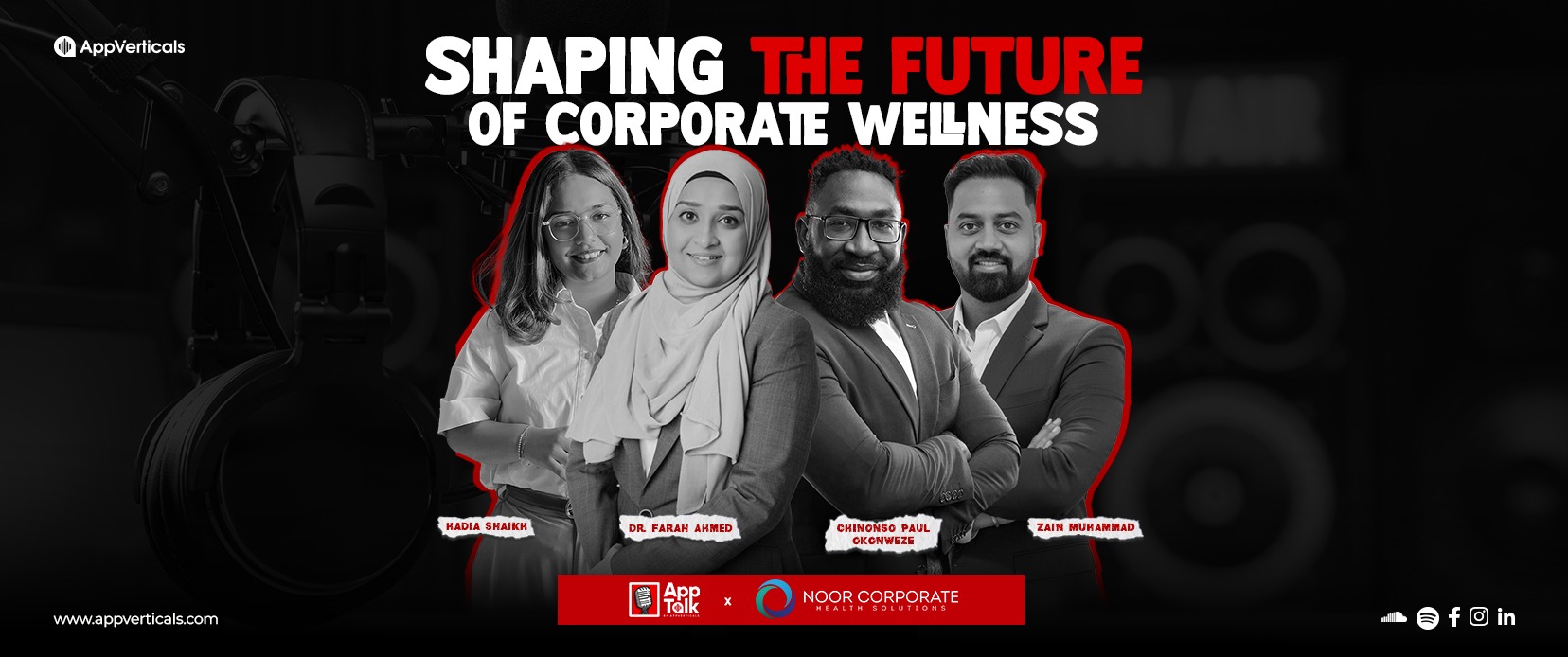
Think of a workplace where mental wellness isn’t just a checkbox, but a priority. In the latest episode of AppTalk by AppVerticals, Dr. Farah Ahmed, F...

4 min read
 AI
AI
Your biggest AI bottleneck in 2026 isn’t infrastructure, it’s your workforce. And this blog gives you the roadmap to fix it. We all agree that AI is a...

6 min read
Discover how our team can help you transform your ideas into powerful Tech experiences.
AppVerticals © 2026 | All Rights Reserved

Get In Touch.











 ChatGPT
 Perplexity
 Google AI