About Us

About Us
We’re a future-focused tech partner working with some of the world’s top enterprises. At AppVerticals, we design solutions that drive growth and reimagine digital experiences.

Services
Software Development
Mobile App Development
Web Design & Development
Tell us what you're looking for, and we'll tailor a solution based on your business needs.
Talk to Experts
Health Tech

EdTech

Logistics

Real Estate

Ecommerce

Sports

Fintech

Travel

Restaurant

Automotive
HIPAA-compliant digital solutions for hospitals, clinics, and healthtech startups driving better patient outcomes.
What we do:
Scalable learning platforms for schools, universities, and EdTech startups transforming education delivery.
What we do:
Real-time tracking and automation solutions for freight companies, warehouses, and delivery services.
What we do:
PropTech platforms for brokerages, property managers, and real estate marketplaces are streamlining operations.
What we do:
High-converting commerce platforms for D2C brands, retailers, and online marketplaces are driving revenue growth.
What we do:
Fan engagement platforms for sports teams, leagues, and betting operators are creating immersive experiences.
What we do:
PCI-DSS compliant solutions for digital banks, payment platforms, and InsurTech companies, ensuring security.
What we do:
Booking and hospitality solutions for OTAs, hotels, and tourism platforms, enhancing traveler experiences.
What we do:
Online ordering and operations software for restaurants, cloud kitchens, and food delivery platforms.
What we do:
Connected vehicle platforms for automotive OEMs, dealerships, and mobility providers are accelerating innovation.
What we do:
Portfolio
AppVerticals was featured in Inc. 5000 as
America’s Fastest Growing Tech Company
See what it might cost to bring your app idea to life. Our calculator gives you a quick, simple estimate based on what you need.


 verified expert
Researcher | Writer
Madiha sits at the intersection of AI, apps, and human behavior. She turns product complexity into stories users and teams actually get.
See Full Bio7 minutes read
Shopify powers millions of online stores, but it’s not the perfect fit for every business, especially in 2026. Rising transaction fees, heavy app dependency, limited B2B features, and escalating scaling costs are prompting many merchants to explore other options.
This guide breaks down the best Shopify alternatives, including BigCommerce, WooCommerce, Wix, Squarespace, Shift4Shop, and Adobe Commerce. We provide honest comparisons on pricing, SEO, scalability, and control, helping you choose a platform that truly grows with your business.
Shopify is a hosted e-commerce SaaS platform that lets anyone launch an online store without worrying about servers, security, or maintenance. It handles hosting, payments, inventory, checkout, and apps under one roof, which is why it’s often the first platform entrepreneurs choose. But here’s the trade-off: Shopify prioritizes simplicity over flexibility. As businesses grow, many discover that:
Merchants usually start exploring Shopify alternatives when costs scale faster than revenue or when platform limitations block growth.
This is where working with an e-commerce consulting partner like AppVerticals’ ecommerce development team helps businesses evaluate platforms based on total cost of ownership, not just monthly fees.
Short answer: Yes, for some businesses. Not for all. Shopify remains a strong choice if you:
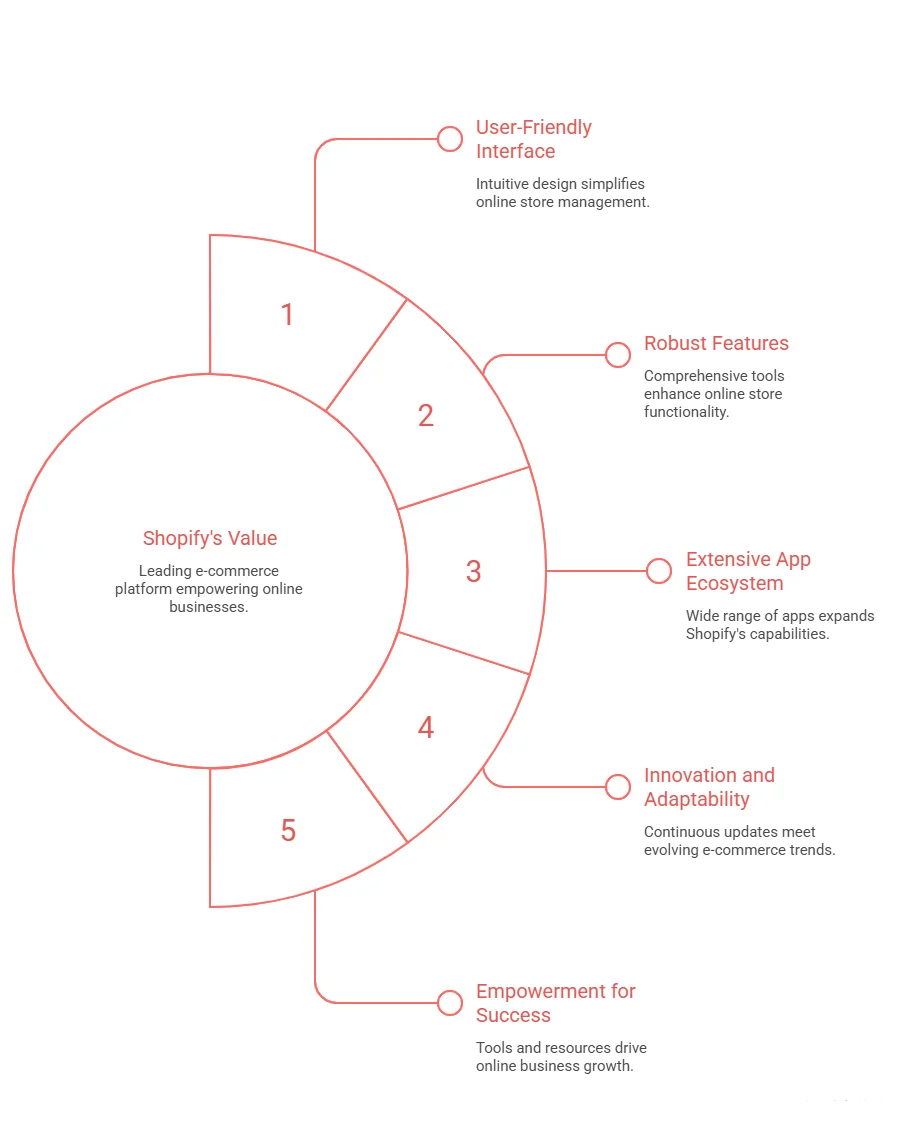
However, the e-commerce market has matured. According to 2025 ecommerce market share data, WooCommerce powers ~39% of online stores globally, while Shopify holds under 20%. That shift reflects a growing demand for control, SEO flexibility, and predictable costs. Shopify starts to lose value when:
For growing brands, Shopify often becomes a temporary stop, not a long-term home.
As e-commerce evolves, businesses are re-evaluating platforms that better support growth, flexibility, and cost efficiency. Below are the best Shopify alternatives in 2026, selected based on scalability, pricing transparency, customization, and long-term performance.
If Shopify is beginner-friendly, BigCommerce is growth-friendly. It removes one of Shopify’s biggest pain points: transaction fees, while offering many enterprise-grade features natively, which reduces reliance on paid apps.
BigCommerce stands out for its zero transaction fees on all plans, built-in B2B capabilities like customer groups, price lists, and quotes, multi-storefront support, advanced SEO controls, and access to over 130 native payment gateways.
WooCommerce isn’t just a platform; it’s a framework. Built on WordPress, WooCommerce gives businesses complete ownership of their store, content, and data. This flexibility is a major reason it powers the largest share of e-commerce sites globally.
Businesses choose WooCommerce for its lack of platform or transaction fees, unlimited customization options, best-in-class SEO capabilities, and seamless integration between content and commerce.
Wix excels where Shopify feels rigid: design freedom. With drag-and-drop editing and hundreds of templates, Wix lets non-technical users create visually striking stores quickly.
Squarespace blends content, commerce, and subscriptions better than most platforms. It’s ideal if products support your brand, not the other way around.
Shift4Shop flips the SaaS model entirely. If you use Shift4 Payments, the platform itself is free.
Adobe Commerce is for businesses that outgrow platforms altogether. It’s powerful, flexible, and expensive, but unmatched for complexity.
Reduce app overload. Eliminate unnecessary fees. Build an e-commerce stack that supports real growth.
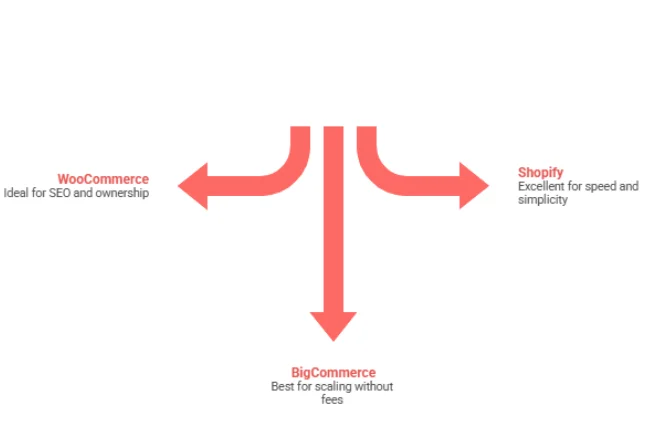
There is no single “best” e-commerce platform, only the right one for your current growth stage. Shopify is an excellent starting point, but when it begins to feel limiting, expensive, or rigid, that’s not failure; it’s progress.
This is why many growing brands start exploring Shopify alternatives that don’t tax success, reduce dependence on third-party apps, and support long-term flexibility. If you’re considering a move, working with an experienced e-commerce partner like AppVerticals can help you choose, build, and migrate to the right platform without costly mistakes.
verified expert
Madiha sits at the intersection of AI, apps, and human behavior. She turns product complexity into stories users and teams actually get.
 We’re AppVerticals
AppVerticals is where innovative startups and Fortune 500s come for transformation.
View About Us Web Development
Your CMS choice, Webflow or WordPress, shapes more than your site’s look; it impacts SEO, growth potential, budgets, workflows, and upkeep. At AppVert...

9 min read
 Web App
By 2026, more than 70% of new enterprise applications will include components built with low-code or no-code platforms, a structural shift in how soft...

19 min read
 Web App
Angular vs React is a strategic decision that affects scalability, hiring, and long-term maintainability. Whether you're building in-house or workin...
19 min read
Discover how our team can help you transform your ideas into powerful Tech experiences.
AppVerticals © 2026 | All Rights Reserved

Get In Touch.












 ChatGPT
 Perplexity
 Google AI