About Us

About Us
We’re a future-focused tech partner working with some of the world’s top enterprises. At AppVerticals, we design solutions that drive growth and reimagine digital experiences.

Services
Software Development
Mobile App Development
Web Design & Development
Tell us what you're looking for, and we'll tailor a solution based on your business needs.
Talk to Experts
Health Tech

EdTech

Logistics

Real Estate

Ecommerce

Sports

Fintech

Travel

Restaurant

Automotive
HIPAA-compliant digital solutions for hospitals, clinics, and healthtech startups driving better patient outcomes.
What we do:
Scalable learning platforms for schools, universities, and EdTech startups transforming education delivery.
What we do:
Real-time tracking and automation solutions for freight companies, warehouses, and delivery services.
What we do:
PropTech platforms for brokerages, property managers, and real estate marketplaces are streamlining operations.
What we do:
High-converting commerce platforms for D2C brands, retailers, and online marketplaces are driving revenue growth.
What we do:
Fan engagement platforms for sports teams, leagues, and betting operators are creating immersive experiences.
What we do:
PCI-DSS compliant solutions for digital banks, payment platforms, and InsurTech companies, ensuring security.
What we do:
Booking and hospitality solutions for OTAs, hotels, and tourism platforms, enhancing traveler experiences.
What we do:
Online ordering and operations software for restaurants, cloud kitchens, and food delivery platforms.
What we do:
Connected vehicle platforms for automotive OEMs, dealerships, and mobility providers are accelerating innovation.
What we do:
Portfolio
AppVerticals was featured in Inc. 5000 as
America’s Fastest Growing Tech Company
See what it might cost to bring your app idea to life. Our calculator gives you a quick, simple estimate based on what you need.



 verified expert
Senior Content Writer — Mobile & Software Development, AI
Zainab helps tech brands sound more human. She takes app ideas, features, and updates and turns them into content people actually want to read. Whether it’s for a launch, a campaign, or just making things...
See Full Bio21 minutes read
If you’re asking do apps make money, you’re thinking like an operator, not just a builder. The real question is: which monetization model fits your app, users, and goals?
Successful monetization is complex. Partnering with an experienced mobile app development company ensures your app is optimized for profitability from day one. It’s about designing your app’s value proposition and implementing the right monetization model to meet your long-term goals. In this article, we’ll explore how apps can make money, the best strategies, and how to build your app for sustainable profitability.
Freemium/In-App Purchases: The app is free to download, but users pay for premium features, virtual goods, or in-game currency (e.g., Fortnite skins, game boosters).
Subscriptions: Users pay a recurring fee (monthly/yearly) for ongoing access to content or services, common in streaming (Spotify) and utility apps.
In-App Advertising: Developers earn revenue by displaying ads (banners, video, interstitial) from networks like AdMob or AppLovin, with earnings based on impressions.
Paid Apps: Users pay a one-time fee to download the app, typically for niche, high-value tools.
Affiliate/E-commerce: Apps earn commissions by selling physical goods or promoting other products, often seen in shopping, travel, or marketplace apps.
User Base Size: High-grossing apps generally require millions of active users to generate significant revenue.
User Engagement: Daily active users (DAU) drive more revenue than total downloads—engagement is key for monetization.
Marketing: Significant and consistent marketing efforts are usually required to build traction and sustain growth.
Targeted Niche: Apps focused on areas like health, wealth, and productivity tend to be more profitable due to strong user interest and engagement.
Yes, apps can be profitable. But many apps don’t monetize well because they confuse traction metrics (downloads, installs) with revenue metrics (conversion, ARPU/ARPDAU, retention, LTV). Here’s the practical lens decision-makers use:
Transform your idea into a profitable app with a strong monetization strategy from day one.
Whether you’re considering MVP development to test your idea or building a fully-fledged Android or iOS app, the monetization strategy needs to be integrated from the beginning to ensure sustainable profitability. Here are 10 proven ways to generate revenue from apps, with tradeoffs to consider for each method:
Best for: Apps where free usage builds habits and paid features unlock speed, depth, or automation.
Watch-outs:
Freemium allows users to engage with your app without commitment, and you can upsell them to unlock advanced features. The challenge is making the paid features enticing without hurting the user experience.
Best for: Apps with high trust, a narrow scope, and a high perceived value.
Watch-outs:
A one-time paid download can work well for niche, high-value apps. However, it limits distribution and growth, so you’ll need to ensure the app’s value proposition is clear and compelling.
Best for: Games, creator tools, marketplaces (boosts/credits), feature unlocks.
Watch-outs:
In-app purchases allow users to buy additional features or content inside the app. This works well in gaming or creator-focused apps, but it requires a strong balance between offering enough value in the free version and encouraging purchases without being too aggressive.
Best for: Ongoing workflows, B2B tools, content libraries, utilities with repeated use.
Watch-outs:
Subscription models provide predictable revenue and are best suited for apps that deliver continuous value, like SaaS tools, content libraries, or utility apps. The challenge is keeping users engaged long-term to minimize churn.
Platform fees reminder:
Best for: Apps with a large free user base, content feeds, casual utilities, and some games.
Watch-outs:
Monetizing with ads is great for apps with a broad audience. However, to maximize revenue, you need to balance the number and type of ads shown to avoid user frustration.
Best for: Apps with repeat engagement, education, content, or offers.
Watch-outs:
Building an email list can be a goldmine if your app provides ongoing value. By sending targeted offers or content, you can drive further monetization. However, it’s crucial to maintain user trust and ensure your messages are timely and relevant.
Best for: Brands, DTC businesses, niche communities, and service add-ons.
Watch-outs:
Ecommerce is one of the most straightforward ways to monetize apps. You can sell physical or digital products directly through the app, but this method requires managing supply chains, fulfillment, and customer service.
Best for: Transactional alerts and reactivation in commerce/marketplaces.
Watch-outs:
SMS marketing works well for pushing promotions or re-engaging users. However, it’s crucial to manage compliance and ensure messages are useful and non-intrusive to avoid annoying users.
Best for: B2B distribution where other companies pay for a branded version of your app.
Watch-outs:
White labeling lets other companies use your app with their branding. While this can be lucrative, it comes with additional responsibilities for customer support and software maintenance.
Best for: Aggregated, non-identifying insights that can be valuable to other businesses.
Watch-outs:
Selling non-identifiable data or insights can be a profitable option, especially for apps with valuable user behavior insights. However, it must be done transparently and within the boundaries of privacy laws.
Ultimately, the best monetization model depends on the type of app you’re building and the kind of value it delivers:
If your app provides ongoing value, subscriptions are a powerful way to generate revenue. However, keep in mind that you’ll need a strong retention strategy in place to make this model successful.
On the other hand, if your app provides occasional value, the combination of a freemium model with in-app purchases may outperform a subscription model, allowing you to capture a larger audience while still generating revenue.
Choosing the right app monetization strategy for 2026 isn’t just about what’s trending; it’s about understanding your users, your app’s value, and how to create a seamless experience that keeps them coming back.
Leverage AppVerticals’ expertise to select the right monetization model and build an app that maximizes revenue.
Whether you’re creating a gaming app, social media platform, or e-commerce solution, understanding your monetization model from the start is crucial. With the right strategy, your app can maximize its revenue potential, ensuring long-term success.
Here’s a quick overview of how some of the mainstream app categories make money:
| App Type | Monetization Methods | Examples |
|---|---|---|
| Gaming Apps | In-app purchases (IAP), ads, subscriptions | Fortnite, Candy Crush |
| Social Media Apps | Advertising, sponsored content, influencer partnerships | Instagram, TikTok |
| Receipt Scanning Apps | Affiliate programs, brand partnerships, and data licensing | Fetch Rewards, Receipt Hog |
| Cash Back Apps | Affiliate fees, transaction margins, and user data insights | Rakuten, Dosh |
| Delivery Apps | Take-rate from restaurants, delivery fees, subscriptions | Uber Eats, DoorDash |
| Travel Apps | Affiliate marketing, commission on bookings | Booking.com, Airbnb |
| Trading/Investment Apps | Transaction fees, subscription plans, and interest on uninvested cash | Robinhood, eToro |
| Cash Advance Apps | Fees for advances, premium services | Earnin, Dave |
| P2P Payment Apps | Transaction fees, instant transfer fees, and merchant services | Venmo, Cash App |
| Walking Apps | Affiliate commissions, brand partnerships, and in-app purchases | Sweatcoin, Charity Miles |
| E-commerce & Affiliate Apps | Affiliate sales, commissions on products, product promotions | Amazon, eBay, Rakuten |
When it comes to monetizing an app, the big question often is: Do apps make money from downloads, or is it from in-app conversions? Here’s the blunt truth:
In many successful app categories, the journey looks like this:
That’s why focusing only on download count is misleading. Without looking at retention and conversion data, the number of downloads doesn’t accurately predict revenue.
When people ask, how much money do apps make? Or Is owning an app profitable? They’re often hoping for simple, one-size-fits-all answers. The reality is much more nuanced, and the numbers tell a sobering but navigable story.
Here’s a realistic framework to understand app revenue:
The gap between downloads and actual earnings is brutal. According to RevenueCat’s State of Subscription Apps, the median monthly revenue for an app 12 months after launch is less than $50/month. That’s not a typo. At the very top of the pyramid, the top 200 apps average $82,500 per day, while apps ranked in the top 800 average around $3,500/day.
Retention is the silent multiplier behind every revenue metric. The 14-day Realized LTV per download in North America sits at $0.35, which is already 4x the global average of $0.08, a gap that holds true on both the App Store and Google Play.
A healthy benchmark for long-term profitability: target an LTV: CPI ratio of at least 3:1. Anything below that means your acquisition cost is eating into sustainable growth.
This is where the platform split becomes undeniable. Overall: Only 1.7% of all app downloads convert to a paying subscriber within the first 30 days, across both platforms combined.
| Metric | iOS (App Store) | Android (Play Store) |
|---|---|---|
| Trial Start Rate | 39.0% | 28.5% |
| Trial Conversion Rate | Higher (iOS leads) | Lower (lags iOS) |
| Avg. Monthly User Spend | $10.40/month | Significantly lower |
ARPU / ARPDAU: The Number That Actually Predicts Revenue. This is the clearest lens for understanding platform-level earning potential. The iOS/Android ARPU gap is stark and consistent across every model: Subscription Apps (Non-Gaming):
| Platform | ARPU |
|---|---|
| iOS | $8.39 per user |
| Android | $1.54 per user |
iOS outperforms Android by more than 5x on subscription ARPU. Ad-Supported Apps / IAA (Non-Gaming):
| Platform | ARPU |
|---|---|
| iOS | $0.77 per user |
| Android | $0.35 per user |
Revenue Per App (Blended Average):
| Platform | Revenue Per App |
|---|---|
| iOS | $12.77 |
| Android | $6.19 |
The industry-wide average ARPU currently sits around $10, with Statista projecting it to peak at $11.79 by 2027.
Ad Yield: What Ad-Monetized Apps Actually Earn
For apps relying on in-app advertising, approximately 90% of total ad revenue for the first three months is captured within the first 30 days, meaning early engagement is everything?
Total verified in-app advertising revenue in high-income markets hit $900 million in Q3 2024 alone. iOS continues to command significantly higher eCPMs due to its user base skewing toward high-income markets like the US and Japan. iOS accounts for 70% of total app consumer spending despite having a smaller global market share.
Customer Acquisition Cost (CAC): The Hidden Profit Killer
CAC is where iOS and Android diverge again, this time in Android’s favor:
| Platform | Average CPI (Cost Per Install) |
|---|---|
| iOS | $4.70 |
| Android | $3.40 |
These are blended averages. By category, CPI in gaming drops to ~$1, while shopping apps can run as high as $5 per install. The takeaway: iOS users cost more to acquire but are worth significantly more in LTV.
Android users are cheaper to acquire but monetize at a much lower rate, making unit economics the deciding factor in which platform deserves your growth investment.
However, ios app development sounds like a better option.
If you’re asking about net profit per download, the answer is: it varies significantly. In fact, the net profit per download could range anywhere from near-zero (for apps that don’t convert users effectively) to meaningful (for apps with solid conversion and retention strategies). If you mean store price per download, it’s easier to determine, but still not an indicator of “profit” because:
Instead of asking about the revenue per download, a much more useful question is: How much money do we make per activated user over a 90-day period? This is a good proxy for Customer Lifetime Value (LTV), and it gives you a better understanding of how much your app will generate in the long run based on user engagement and retention.
By tracking LTV, you can optimize your monetization strategies to maximize profitability.
In 2026, the most profitable app categories tend to share common traits: high frequency of use, high willingness to pay, or high transaction value. Here’s a breakdown:
To pick the right monetization strategy, consider these key questions in a simple, CTO-friendly decision matrix:
When considering the cost to build an app, especially one that generates revenue, it’s important to focus on the monetization-ready scope, not just the app’s design or screens. The mobile app development cost is influenced by several key factors that ensure the app is optimized for profitability from the start:
The ROI timeline can be broken down into three phases to ensure a profitable outcome:
Tracking these phases closely is essential—without it, ROI is just a theory. By understanding the true mobile app development cost, you can better plan your monetization strategy and build an app designed to generate revenue from day one.
To ensure revenue isn’t an afterthought, build these elements from day one:
This proactive approach makes monetization smoother and more efficient.
App monetization is not just a one-time consideration, but an ongoing strategy that requires careful planning and execution. By leveraging insights from successful apps, we help create solutions that are not only designed to meet user needs but also to drive profitability.
Whether you’re opting for a subscription model, freemium, or in-app purchases, we ensure that your app is optimized for making money while providing users with valuable and seamless experiences.
If you’re looking to build an app that makes money, AppVerticals is the right partner to guide you through every step of the process. The apps we build focus on revenue flows and how they are intricately tied to well-engineered user experiences. By prioritizing transactions, conversion, performance, and trust, we ensure that monetization is a natural result of the product’s execution, rather than an afterthought.
With AppVerticals, build an app optimized for revenue generation, from user acquisition to conversion.
verified expert
Zainab helps tech brands sound more human. She takes app ideas, features, and updates and turns them into content people actually want to read. Whether it’s for a launch, a campaign, or just making things clearer, she’s all about simple words put together to form stories that stick.
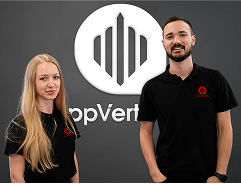 We’re AppVerticals
AppVerticals is where innovative startups and Fortune 500s come for transformation.
View About Us Mobile App
The cost to develop an ecommerce app ranges from $30,000 for a basic MVP to $300,000+ for a feature-rich platform. Pricing depends on design, features...

11 min read
 Mobile App
Got an exciting app idea but not sure how to bring that to life and make it a hit in the super-crowded startup landscape of LA. You’re not alone and p...

15 min read
 Mobile App
The global sports app market is projected to reach $128.34 billion by 2027, growing at a CAGR of 17.24%. This surge reflects not just fan enthusiasm b...
5 min read
Discover how our team can help you transform your ideas into powerful Tech experiences.
AppVerticals © 2026 | All Rights Reserved

Get In Touch.













 ChatGPT
 Perplexity
 Google AI