About Us

About Us
We’re a future-focused tech partner working with some of the world’s top enterprises. At AppVerticals, we design solutions that drive growth and reimagine digital experiences.

Services
Software Development
Mobile App Development
Web Design & Development
Tell us what you're looking for, and we'll tailor a solution based on your business needs.
Talk to Experts
Health Tech

EdTech

Logistics

Real Estate

Ecommerce

Sports

Fintech

Travel

Restaurant

Automotive
HIPAA-compliant digital solutions for hospitals, clinics, and healthtech startups driving better patient outcomes.
What we do:
Scalable learning platforms for schools, universities, and EdTech startups transforming education delivery.
What we do:
Real-time tracking and automation solutions for freight companies, warehouses, and delivery services.
What we do:
PropTech platforms for brokerages, property managers, and real estate marketplaces are streamlining operations.
What we do:
High-converting commerce platforms for D2C brands, retailers, and online marketplaces are driving revenue growth.
What we do:
Fan engagement platforms for sports teams, leagues, and betting operators are creating immersive experiences.
What we do:
PCI-DSS compliant solutions for digital banks, payment platforms, and InsurTech companies, ensuring security.
What we do:
Booking and hospitality solutions for OTAs, hotels, and tourism platforms, enhancing traveler experiences.
What we do:
Online ordering and operations software for restaurants, cloud kitchens, and food delivery platforms.
What we do:
Connected vehicle platforms for automotive OEMs, dealerships, and mobility providers are accelerating innovation.
What we do:
Our Odoo implementation brings financial discipline, operational visibility, and process control across departments. From accounting automation to manufacturing workflows, we design ERP systems that reduce operational leakage and provide real-time decision clarity.
We use Sitecore to drive measurable revenue growth through intelligent personalization and behavior-driven content delivery. By aligning marketing automation, data orchestration, and omnichannel engagement, we help brands turn digital touchpoints into retention engines.
We architect AWS environments that stay stable under scale, traffic spikes, and compliance pressure. From secure cloud migrations to CI/CD automation and cost governance, we engineer cloud foundations that protect performance while enabling rapid product evolution.
We implement Dynamics 365 to align systems with actual business operations, bringing clarity, control, and accountability across CRM, ERP, and service functions. From sales to finance, configurations eliminate inefficiencies and enable confident, real-time decisions.
Tell us what you're looking for, and we'll tailor a solution based on your business needs.
Talk to ExpertsPortfolio
AppVerticals was featured in Inc. 5000 as
America’s Fastest Growing Tech Company
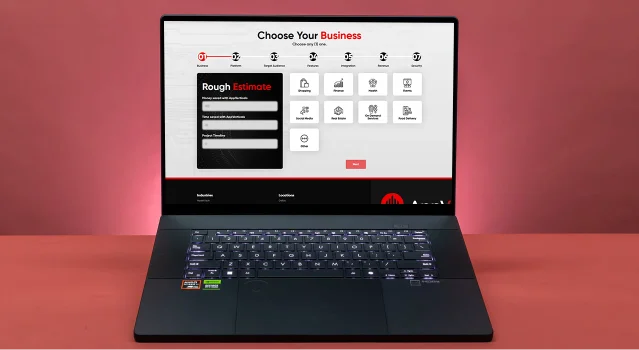
See what it might cost to bring your app idea to life. Our calculator gives you a quick, simple estimate based on what you need.


 verified expert
Editorial & Research Team
The AppVerticals Content Team brings together experienced writers, strategists, and technologists with deep expertise in technology, AI, software, and digital innovation. With hundreds of published articles and years of hands-on industry experience, the team focuses...
See Full Bio9 minutes read
With the rise of the food delivery app, customers can enjoy their favorite meals from the comfort of their homes or offices. The convenience, speed, and accessibility of digital ordering have transformed dining into an on-demand experience.
For restaurant owners and entrepreneurs, this shift presents a massive business opportunity. The online food delivery market surpassed $180 billion globally in 2024, with projections showing continued double-digit growth through 2028.
Consumers now expect seamless mobile experiences, and businesses that adapt gain a clear edge over competitors. Let’s go through this guide
Building a full-scale food delivery app is not a one-step process. It involves planning, design, coding, testing, and post-launch optimization. The development time depends on various factors, including the app’s complexity, target platforms, design depth, and team expertise.
Here’s a general timeline overview:
| Development Stage | Estimated Duration |
|---|---|
| Research & Planning | 2–4 weeks |
| UI/UX Design | 4–6 weeks |
| Frontend & Backend Development | 10–20 weeks |
| Testing & QA | 3–6 weeks |
| Deployment & Launch | 1–2 weeks |
In total, a food delivery app may take 4 to 9 months to complete. A simple MVP version with core features can go live within 4–5 months, while a large-scale app similar to Uber Eats, Grubhub, or DoorDash may require 8–9 months of active development.
The speed of development also depends on the project’s scope, team size, and whether the app is built for iOS, Android, or both. Choosing the right approach from the beginning can save months of work and thousands in development costs.
Get your custom food delivery app developed with seamless features and real-time tracking.
Partner with AppVerticalsBefore exploring the costs and technical aspects, it’s worth understanding why restaurants, food chains, and entrepreneurs are investing in mobile delivery solutions.
Mobile ordering gives customers freedom. They can browse menus, place orders, and make payments without visiting a restaurant. This convenience builds long-term customer loyalty, especially among busy professionals and digital-first consumers.
Food delivery apps enable restaurants to reach customers beyond physical boundaries. Even small local eateries can attract new customers from nearby neighborhoods, corporate offices, and residential areas. This geographic reach drives consistent order growth and brand recognition.
Mobile apps collect valuable user insights — including order history, time preferences, and favorite cuisines. Restaurants can use this data to create personalized offers, loyalty rewards, and targeted campaigns that strengthen retention and increase average order value.
A food delivery app automates much of the restaurant workflow. From order management and menu updates to driver tracking and customer notifications, automation reduces manual errors and improves efficiency.
With more consumers relying on mobile ordering, businesses without a digital presence risk being overlooked. A dedicated food delivery app gives you control over branding, pricing, and customer interaction — unlike third-party aggregators that take high commissions.
The cost of developing a food delivery app depends on multiple variables — from platform selection and feature scope to backend architecture and design complexity.
Here’s a general cost breakdown:
| Type of App | Estimated Development Cost |
|---|---|
| Basic App (Core Ordering Features) | $25,000 – $50,000 |
| Mid-Level App (Tracking, Loyalty, Analytics) | $50,000 – $90,000 |
| Advanced App (AI-based Suggestions, Multi-vendor, Chatbots) | $100,000+ |
Businesses should treat these as starting points. The actual cost varies based on your goals, integrations, and the technical capabilities of your development team.
At AppVerticals, we emphasize clarity during project planning, helping clients understand cost-driving factors before development begins.
Your platform choice directly impacts both development time and cost.
iOS Apps
Businesses targeting users who value performance and security often prefer iOS. Partnering with professionals who provide ios app development services helps maintain compliance with Apple’s strict standards and ensures smooth user experiences.
Android Apps
If your goal is to reach a larger and more diverse market, Android is ideal. Working with an experienced android app development company ensures your app runs efficiently across multiple device types and versions.
Cross-Platform Apps
Using frameworks like Flutter or React Native, cross-platform development allows a single codebase for both platforms. This approach saves time and reduces cost while maintaining native-like performance.
Ultimately, your choice should align with your audience demographics, budget, and business objectives.
The design is the first impression your users get. A clean, visually appealing, and easy-to-navigate interface builds trust and satisfaction. Customers should be able to browse menus, customize meals, and make payments effortlessly.
In food delivery, speed matters. A few seconds of delay can lead to abandoned carts. Therefore, responsive layouts, quick animations, and minimal clicks between selection and checkout are crucial.
A well-thought-out user experience encourages repeat use — and returning customers are, statistically, 60% more valuable than first-time users.
Your app’s success depends on offering the right mix of features for users, restaurants, and delivery partners.
User registration and login
Restaurant listings and filters
Menu browsing and customization
Order placement and tracking
Payment gateway integration
Order history and receipts
Real-time delivery tracking with GPS
Chat support for customers and drivers
In-app promotions and loyalty rewards
Push notifications for updates and discounts
Multi-language and multi-currency support
Admin dashboards for analytics and management
The more complex and interconnected the features are, the higher the cost and development time. However, advanced functionalities often bring better retention and stronger ROI.
The backend is the operational backbone of your app. It handles user management, order processing, and communication between restaurants, customers, and delivery staff.
For restaurant managers, an intuitive admin panel is equally important. It provides tools to:
Track orders in real time
Manage menus and prices
View performance metrics
Handle customer feedback
Control promotional campaigns
Investing in a scalable backend allows your app to handle high traffic, seasonal surges, and rapid business growth without disruptions.
Accurate location tracking is central to a food delivery business. Integration with Google Maps or Mapbox helps determine delivery zones, optimize routes, and provide real-time updates to customers.
Smart route optimization reduces delivery time and fuel costs while enhancing user satisfaction. Customers expect live tracking and delivery ETAs — a feature that can significantly boost engagement.
Digital payments are the backbone of online ordering. A smooth, secure payment system boosts user confidence and minimizes drop-offs during checkout.
A good food delivery app integrates multiple payment options such as debit/credit cards, PayPal, Apple Pay, and local wallets. It must also follow data protection standards and encryption practices to prevent breaches and fraud.
By prioritizing security and simplicity, businesses can strengthen customer trust and encourage repeat transactions.
No app is ready for launch without rigorous testing. This stage identifies bugs, performance issues, and compatibility problems across devices and operating systems.
Testing includes:
Functional Testing: Verifies that every feature works properly.
Usability Testing: Checks the smoothness of user interactions.
Performance Testing: Assesses speed and responsiveness under heavy load.
Security Testing: Protects against data leaks and unauthorized access.
A fully tested app leads to fewer post-launch issues, better user feedback, and stronger app store ratings.
For restaurants and entrepreneurs considering investment, following a strategic process can save time and resources.
Market Research: Analyze competitors, target demographics, and user preferences.
Define Core Features: Start with an MVP to validate your idea before scaling.
Select a Development Partner: Choose an experienced team that understands both technology and restaurant operations.
Plan UI/UX: Focus on simplicity and speed.
Develop and Integrate Backend: Connect APIs for payments, maps, and restaurant data.
Test Thoroughly: Fix bugs and optimize performance before release.
Launch and Market: Use targeted campaigns and referral incentives to acquire users.
Gather Feedback: Continuous improvements based on user feedback increase retention and ratings.
Partnering with a reliable foo delivery or restaurant app development company that accelerates each stage and reduces risks.
When it comes to creating high-performing food delivery apps, AppVerticals stands out for its expertise and proven track record.
Expertise in creating high-performing food delivery apps that boost customer engagement and revenue.
Advanced UI/UX design that ensures smooth navigation and seamless ordering experiences.
Secure payment integrations supporting multiple gateways and user trust.
Scalable backend and real-time tracking features for efficient restaurant operations.
Strong track record of delivering market-ready apps that help businesses stay competitive.
The demand for fast, easy, and reliable food delivery isn’t slowing down. For restaurants and entrepreneurs, developing a food delivery app is no longer optional — it’s a strategic move for long-term growth.
At AppVerticals, we help brands transform ideas into fully functional apps that combine design, functionality, and scalability. Whether you’re planning a simple ordering solution or a multi-vendor delivery network, our experts provide the technical strength and industry insight you need.
From order management to loyalty programs, we create apps that drive growth.
Get a Free Growth Call
verified expert
The AppVerticals Content Team brings together experienced writers, strategists, and technologists with deep expertise in technology, AI, software, and digital innovation. With hundreds of published articles and years of hands-on industry experience, the team focuses on delivering clear, trustworthy insights.
 We’re AppVerticals
AppVerticals is where innovative startups and Fortune 500s come for transformation.
View About Us Mobile App
Automotive IoT is transforming how we drive by making cars smarter, safer, and more efficient. Through on-demand software development, automakers can...

11 min read
 Mobile App
Travelers expect speed, personalization, and seamless journeys. The right travel app delivers all three. With mobile bookings leading the market, trav...

12 min read
 Mobile App
The global app economy is a juggernaut, with the Apple App Store ecosystem alone facilitating $1.3 trillion in developer billings and sales in 2024. Y...

18 min read
Discover how our team can help you transform your ideas into powerful Tech experiences.
AppVerticals © 2026 | All Rights Reserved

Get In Touch.














 ChatGPT
 Perplexity
 Google AI