About Us

About Us
We’re a future-focused tech partner working with some of the world’s top enterprises. At AppVerticals, we design solutions that drive growth and reimagine digital experiences.

Services
Software Development
Mobile App Development
Web Design & Development
Tell us what you're looking for, and we'll tailor a solution based on your business needs.
Talk to Experts
Health Tech

EdTech

Logistics

Real Estate

Ecommerce

Sports

Fintech

Travel

Restaurant

Automotive
HIPAA-compliant digital solutions for hospitals, clinics, and healthtech startups driving better patient outcomes.
What we do:
Scalable learning platforms for schools, universities, and EdTech startups transforming education delivery.
What we do:
Real-time tracking and automation solutions for freight companies, warehouses, and delivery services.
What we do:
PropTech platforms for brokerages, property managers, and real estate marketplaces are streamlining operations.
What we do:
High-converting commerce platforms for D2C brands, retailers, and online marketplaces are driving revenue growth.
What we do:
Fan engagement platforms for sports teams, leagues, and betting operators are creating immersive experiences.
What we do:
PCI-DSS compliant solutions for digital banks, payment platforms, and InsurTech companies, ensuring security.
What we do:
Booking and hospitality solutions for OTAs, hotels, and tourism platforms, enhancing traveler experiences.
What we do:
Online ordering and operations software for restaurants, cloud kitchens, and food delivery platforms.
What we do:
Connected vehicle platforms for automotive OEMs, dealerships, and mobility providers are accelerating innovation.
What we do:
Our Odoo implementation brings financial discipline, operational visibility, and process control across departments. From accounting automation to manufacturing workflows, we design ERP systems that reduce operational leakage and provide real-time decision clarity.
We use Sitecore to drive measurable revenue growth through intelligent personalization and behavior-driven content delivery. By aligning marketing automation, data orchestration, and omnichannel engagement, we help brands turn digital touchpoints into retention engines.
We architect AWS environments that stay stable under scale, traffic spikes, and compliance pressure. From secure cloud migrations to CI/CD automation and cost governance, we engineer cloud foundations that protect performance while enabling rapid product evolution.
We implement Dynamics 365 to align systems with actual business operations, bringing clarity, control, and accountability across CRM, ERP, and service functions. From sales to finance, configurations eliminate inefficiencies and enable confident, real-time decisions.
Tell us what you're looking for, and we'll tailor a solution based on your business needs.
Talk to ExpertsPortfolio

AppVerticals was featured in Inc. 5000 as
America’s Fastest Growing Tech Company
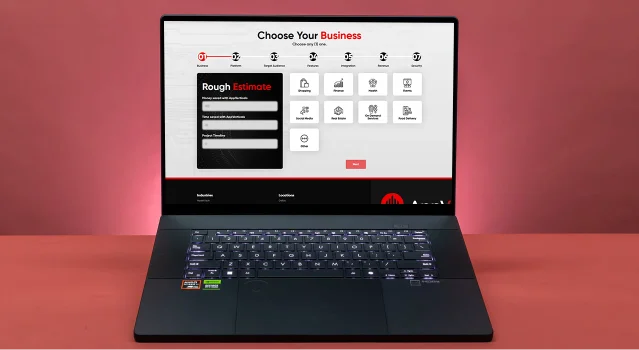
See what it might cost to bring your app idea to life. Our calculator gives you a quick, simple estimate based on what you need.


 verified expert
Senior Writer and Editor - App, AI, and Software
Muhammad Adnan is a Senior Writer and Editor at AppVerticals, specializing in apps, AI, software, and EdTech, with work featured on DZone, BuiltIn, CEO Magazine, HackerNoon, and other leading tech publications. Over the past 6...
See Full Bio13 minutes read
ERP system integration remains one of the top challenges businesses face in optimizing their operations.
According to a Gartner report, 70% of organizations experience inefficiencies due to poor ERP integration, often resulting in underutilized systems. Integrating new technologies is only part of the solution.
Businesses must also address the alignment of legacy systems, the integration of third-party applications, and ensuring smooth data flow across departments.
With the help of software integration services, companies can ensure these integrations are seamless and effective.
In this article, we will explore the top ERP integration challenges, offering expert strategies to overcome them and maximize the business value of your ERP system.
ERP system integration connects various business functions, such as finance, HR, and inventory, into a single cohesive platform. This integration ensures that data flows seamlessly across departments, improving communication and decision-making. By linking systems, it reduces the risk of errors and manual work, enabling a more streamlined and efficient operation.
According to a study, companies that have integrated their ERP systems see a 30% reduction in operational costs. When ERP systems are not integrated, businesses face fragmented data and inefficient processes that delay decision-making.
Effective integration provides accurate, real-time data, allowing companies to act quickly and confidently.
As businesses grow, a well-integrated ERP system ensures scalability, supporting expansion without the need for costly system replacements.
Take your business to the next level with our expert ERP integration services. Contact our experts to discuss your custom integration strategy.
Start Your ERP Integration Journey NowIntegrating third-party applications, such as CRM systems, inventory management tools, and eCommerce platforms, with ERP systems can be a challenging task. These difficulties intensify when APIs are not standardized or lack proper security measures.
The result?
Data duplication, fragmented workflows, and inefficiencies that hinder business agility, delay decision-making, and reduce productivity. Without seamless integration, businesses struggle to ensure that all systems work together smoothly, limiting the effectiveness of real-time data. This becomes even more critical when acquiring legacy software modernization services to ensure compatibility with new systems and tools.
Set up a framework for API usage that includes security protocols, compatibility checks, and version control. Clear standards ensure a secure, reliable connection between your ERP system and third-party applications.
Implement real-time and batch synchronization strategies. Real-time synchronization ensures data updates are reflected across all systems immediately, while batch synchronization helps manage larger data sets without disrupting performance.
Regular testing of your APIs is essential to identify potential issues before they disrupt business operations. Use automated testing tools and sandbox environments to ensure smooth and secure integration without impacting live systems.
Balancing real-time data synchronization with control over sensitive data is a major challenge many businesses face during ERP system integration. Without proper management, poor synchronization can cause delays, while excessive control can hinder operational agility.
A Forrester report found that 70% of enterprises struggle to manage this balance, where poor synchronization can cause delays, and excessive control can hinder agility.
In sectors like eCommerce or manufacturing, real-time inventory synchronization is critical, but sensitive data (e.g., customer financial information) requires stringent control to ensure compliance and data security.
Identify whether real-time synchronization or data control is more critical based on your business needs. For instance, in eCommerce, syncing inventory data in real-time may be a top priority, whereas financial institutions may need stricter control over transaction data for regulatory compliance.
Implement a layered synchronization approach to handle operational data in real-time and sensitive data in batches. A Gartner survey found that companies using a layered approach saw a 30% improvement in data flow efficiency and 15% reduction in compliance errors.
Real-time sync can be used for operational data (e.g., inventory, product updates), while batch processing, with enhanced controls like encryption, should be applied to sensitive data, such as financial transactions.
Apply strict data control measures (e.g., encryption, multi-factor authentication) for sensitive data while allowing non-sensitive data to sync in real-time. For example, PCI DSS compliance requires payment data to be processed in batches and encrypted to mitigate security risks.
When businesses integrate EDI systems with ERP platforms, discrepancies in EDI file formats often lead to processing errors. These mismatches can create delays in order fulfillment, inventory inaccuracies, and disrupt the supply chain.
62% of businesses face errors when mapping EDI files to ERP systems, resulting in delays, inaccuracies, and disruptions in the supply chain, which directly impacts their ability to fulfill orders on time and accurately manage inventory.
Test EDI file mappings before implementation to ensure smooth integration between ERP systems and third-party vendors. Proper testing can prevent mismatches, improving the accuracy of transactions. Businesses that test EDI mapping before going live experience 40% fewer integration errors post-launch.
Automate error handling to quickly address discrepancies in real-time. This reduces the need for manual intervention, speeding up the resolution process. IBM highlights that businesses implementing automated error handling report fewer manual corrections, improving efficiency by 20%.
Simulate high-volume transactions during stress tests to evaluate how the system handles data load during peak times. ERP performance found that companies that perform stress testing experience 15% fewer system outages during busy transaction periods, ensuring continuous data flow during high-demand cycles.

ERP implementations are usually complex undertakings that often run into problems and occasionally result in outright failure. There’s typically finger‑pointing between the parties involved in the implementation, like the organization, the ERP vendor and the implementation partner, that can result in costly issues. However, the main culprit in an ERP implementation failure is rarely the technology itself.
— Claus Jepsen, Chief Technology Officer at Unit4
Integrating AI with ERP systems can be a complex and costly process. Many companies face challenges in making AI integrations deliver actual business value.
Around 45% of enterprises struggle with scaling AI in their ERP systems due to high upfront costs and lack of expertise. Without a clear implementation strategy, businesses may see inefficiencies, cost overruns, and limited ROI, making it difficult to justify further investments.
Start by focusing on AI use cases that deliver clear value. For instance, predictive analytics can help with demand forecasting, and automated workflows can reduce manual labor. AI in ERP systems shows that companies focusing on predictive maintenance and demand forecasting see 20-30% improvements in operational efficiency and decision-making.
Don’t overcomplicate your AI integration. Begin with simple, cost-effective AI solutions that address your most pressing needs. As you gain more confidence in the technology and see results, you can scale it up.
It is seen that companies that started with small AI projects were able to scale them more successfully, with 80% of businesses achieving higher returns after initially focusing on low-cost AI implementations.
Ensure that AI investments align with your business goals by conducting a cost-benefit analysis before implementing large-scale AI solutions. Companies that fail to conduct this analysis often face unsustainable costs and low ROI.
AI adoption found that 55% of businesses that didn’t evaluate ROI before investing in AI experienced higher-than-expected costs and lower-than-expected value.
Integrating ERP systems with eCommerce platforms presents challenges, particularly when synchronizing inventory, order management, and customer data in real-time.
Without proper integration, businesses risk overselling, inaccurate stock levels, and poor customer experiences.
Use an integration platform to enable smooth communication between your ERP system and eCommerce platform, ensuring seamless data exchange.
Ensure real-time synchronization of stock levels between the ERP and eCommerce platforms to prevent issues like overselling or understocking.
Continuously monitor data flows and optimize the integration points to fix any performance issues and maintain smooth operations.
As businesses grow, their ERP systems must adapt to handle increased data and transactions. Without ensuring scalability during the initial ERP system integration, businesses risk performance issues, delays, and costly system upgrades as demand increases.
Break down the integration into smaller, scalable modules that can grow alongside the business. This approach ensures flexibility and reduces the need for large-scale overhauls.
Cloud-based ERP systems offer enhanced scalability and flexibility compared to on-premise solutions. These systems can easily scale as demand increases without requiring significant upfront investments in infrastructure.
Continuously monitor the system performance to identify potential scalability bottlenecks early. Performing routine audits helps address issues before they impact business operations.
ERP system integration costs can range from $5,000 to $500,000 for on-premise solutions and $20 to $500 per user/month for cloud-based systems. Implementation fees typically range from $10,000 to $200,000, depending on project scope and complexity.
| ERP Integration Service | Basic Package | Standard Package | Premium Package |
|---|---|---|---|
| Software Licenses (On-premise) | $5,000 – $50,000 | $10,000 – $100,000 | $50,000 – $500,000 |
| Software Licenses (Cloud-based) | $20 – $150/user/month | $50 – $300/user/month | $200 – $500/user/month |
| Implementation Fees | $10,000 – $50,000 | $50,000 – $100,000 | $100,000 – $200,000 |
| Data Migration | $5,000 – $15,000 | $15,000 – $40,000 | $40,000 – $70,000 |
| Third-Party Application Integration | $10,000 – $30,000 | $30,000 – $80,000 | $80,000 – $150,000 |
| Custom Development & Modifications | $10,000 – $50,000 | $50,000 – $100,000 | $100,000 – $200,000 |
| Training & User Support | $2,000 – $5,000 | $5,000 – $15,000 | $15,000 – $30,000 |
| Ongoing Support & Maintenance | $5,000/year | $10,000/year | $20,000/year |
| System Upgrades & Performance Tuning | $5,000 – $15,000 | $15,000 – $30,000 | $30,000 – $50,000 |
AppVerticals, a leading custom software development company, specializes in delivering seamless ERP system integration solutions customized to your business needs. With a focus on customization, scalability, and real-time synchronization, AppVerticals ensures that your systems communicate effectively to improve data accuracy, efficiency, and productivity.
CPCG faced challenges managing multiple tools across healthcare teams for remote support. AppVerticals integrated a unified platform, automating kiosk access, scheduling, and real-time monitoring. This integration connected disparate systems, improving operational efficiency and reducing IT overhead.
The solution streamlined workflows, enabling healthcare teams to focus on core tasks, resulting in improved team collaboration and performance.
ERP system integration comes with its challenges, but with the right approach, these obstacles can be turned into opportunities for improving operational efficiency and driving business growth.
By implementing scalable integration solutions, optimizing data synchronization, and addressing common pitfalls, businesses can unlock the full potential of their ERP systems.
Avoid costly errors and maximize efficiency. Get in touch with our ERP experts to create a tailored integration plan for your systems.
Book a Free Consultation Today
verified expert
Muhammad Adnan is a Senior Writer and Editor at AppVerticals, specializing in apps, AI, software, and EdTech, with work featured on DZone, BuiltIn, CEO Magazine, HackerNoon, and other leading tech publications. Over the past 6 years, he’s known for turning intricate ideas into practical guidance. He creates in-depth guides, tutorials, and analyses that support tech teams, business leaders, and decision-makers in tech-focused domains.
 We’re AppVerticals
AppVerticals is where innovative startups and Fortune 500s come for transformation.
View About Us Custom Software
Choosing between in-house and outsourcing software development in 2026 comes down to one thing: building the right product without slowing down growth...

22 min read
 Custom Software
SaaS and custom software solve different business needs. SaaS offers ready-to-use applications with lower upfront cost and fast deployment. Custom so...
24 min read
 Custom Software
The software powering our world is constantly transforming the way we live, work, and connect. This rapid change can be exciting but also overwhelming...
30 min read
Discover how our team can help you transform your ideas into powerful Tech experiences.
AppVerticals © 2026 | All Rights Reserved

Get In Touch.














 ChatGPT
 Perplexity
 Google AI