Lorem Ipsum is simply dummy text of the printing and typesetting industry. Lorem Ipsum has been the industry's standard dummy text ever since the 1500s, when an unknown printer took a galley
Senior Content Writer — Mobile & Software Development, AI
Zainab helps tech brands sound more human. She takes app ideas, features, and updates and turns them into content people actually want to read. Whether it’s for a launch, a campaign, or just making things...
Telemedicine apps are redefining healthcare by improving accessibility and efficiency, allowing patients to connect with providers remotely from home.
As healthcare shifts towards digital solutions, it’s crucial for businesses to understand the key features and development process of telemedicine apps.
This guide covers the essential features, the seven-step development process, and the strategic advantages of investing in telemedicine.
Key Takeaways:
Telemedicine Market Growth: The telemedicine app market is set to reach $124 billion by 2026, presenting significant business opportunities.
Essential Features for Success: Key features like secure authentication, HD video, encrypted messaging, and EHR integration ensure a seamless and secure app experience.
Regulatory Compliance: Adhering to regulations like HIPAA and GDPR is crucial for security, privacy, and trust in telemedicine apps.
Future Trends: AI diagnostics, remote patient monitoring, and IoT integration will drive the next phase of telemedicine evolution.
Building Your Telemedicine App: Follow a structured process including research, feature definition, design, and testing to create a secure, scalable app.
Strategic Investment Considerations: Evaluate your organization’s needs, regulatory requirements, and ROI to ensure alignment with business goals before investing.
What Is a Telemedicine App?
Telemedicine apps facilitate remote healthcare by enabling video consultations, secure messaging, and electronic health record management. These apps allow patients to connect with healthcare providers without needing to visit in person.
Telehealth connects patients and providers when in-person care isn’t feasible, emphasizes the American Telemedicine Association.
Types of Telemedicine Apps
Telemedicine apps are transforming the way healthcare is delivered by enabling remote access to medical services. From video consultations to continuous monitoring, these apps provide convenient, efficient, and secure solutions for both patients and healthcare providers. Below are the key types of telemedicine apps that are reshaping the healthcare landscape:
Video Consultation Apps
Video consultation apps enable real-time, face-to-face communication between patients and doctors. They offer virtual consultations and diagnoses, breaking down geographical barriers to access healthcare. This type of app is particularly useful for a wide range of healthcare needs, from general check-ups to specialized care.
Text-Based Telemedicine Apps
Text-based telemedicine apps provide secure messaging for consultations, prescriptions, and follow-up care. Patients can ask questions and receive advice from healthcare providers without the need for video calls. These apps are perfect for managing chronic conditions and providing routine medical advice.
Remote Patient Monitoring (RPM) Apps
RPM apps allow healthcare providers to monitor patients’ health remotely using wearable devices and home-based equipment. They track vital signs such as heart rate, blood pressure, and glucose levels in real-time. These apps help manage chronic conditions and reduce the need for frequent in-person visits.
EHR Management Apps
EHR management apps enable healthcare providers to securely access, update, and share patient health records. They improve care coordination by ensuring providers have up-to-date information, leading to more informed decision-making. These apps are vital for streamlining medical data sharing and maintaining regulatory compliance.
What’s happening in the Telemedicine App Market Right Now?
The telemedicine app market is experiencing explosive growth and is projected to reach $124.01 billion by 2026. With a 20% CAGR from 2026 to 2034, the market value is expected to soar to $532.08 billion by 2034.
Here’s what is happening in the telemedicine app market right now:
AI-Powered Diagnostics & Triage
AI systems are becoming essential in analyzing vast amounts of clinical data quickly and accurately, making diagnoses more efficient. For instance, AI can analyze thousands of X-rays and lab results in seconds, significantly accelerating diagnostic processes.
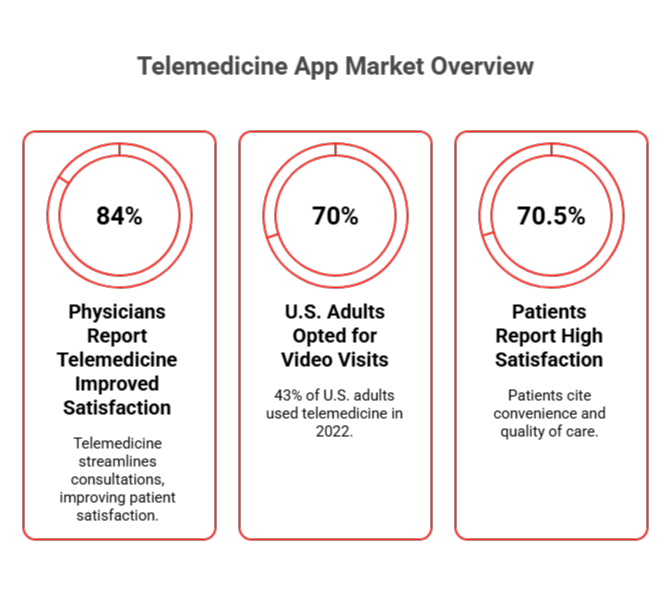
84% of physicians report that telemedicine has improved patient satisfaction by streamlining consultations.
Remote Patient Monitoring (RPM) Integration
The fusion of telemedicine with Remote Patient Monitoring (RPM) is revolutionizing healthcare. Devices like continuous glucose monitors, cardiac monitors, and wearables are driving real-time health tracking, allowing providers to monitor patient health remotely and in real-time.
Hybrid Care Models
Hybrid care, a combination of in-person and virtual care, is rapidly becoming the standard. This model offers flexibility for both patients and providers, and it’s expected to experience strong growth, driven by evolving economic policies and increased demand for more flexible healthcare solutions.
Healthcare IT Market Expansion
The global healthcare IT market is projected to grow from $94.5 billion in 2021 to $172.3 billion by 2026. This expansion is a key driver for telemedicine apps, as more healthcare providers adopt digital technologies to streamline operations and improve patient care.
Adoption Statistics
43% of U.S. adults used telemedicine in 2022, with 70% opting for video visits and 30% using audio-only consultations.
70.5% of patients report high satisfaction with telemedicine systems, citing convenience and quality of care as key benefits.
With the ongoing expansion of the healthcare IT market, the need for cutting-edge solutions like telemedicine apps has never been greater. Investing in healthcare app development will position your organization at the forefront of this digital healthcare revolution.
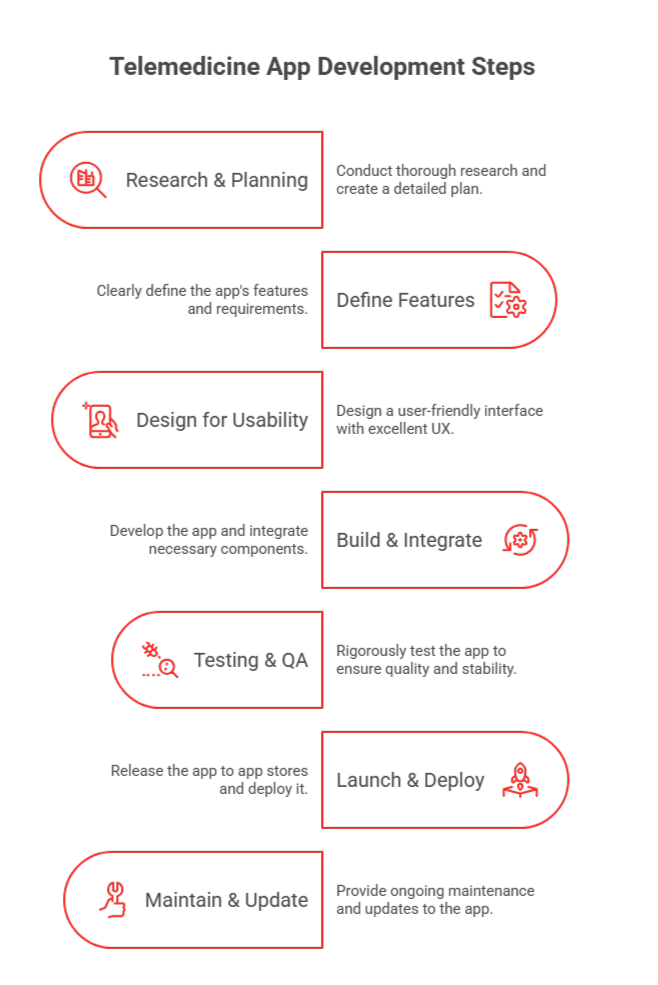
How Do You Build a Telemedicine App in 7 Simple Steps?
Building a telemedicine app requires a structured process, starting with research and planning, followed by defining features, design, development, and rigorous testing. The process culminates in a successful launch and continuous maintenance. Each step ensures a secure, user-friendly, and compliant app.
Here’s a step-by-step breakdown to guide you through the development process:
Step 1: Research & Planning
Market Analysis: Start by identifying your target demographics, performing competitor analysis, and recognizing market gaps. This will help you understand the existing landscape and spot opportunities.
Regulatory Research: Ensure you are familiar with key regulations like HIPAA, GDPR, and HITECH to guarantee compliance.
Stakeholder Identification: Define the main user personas, including patients, doctors, and administrators, to align the app’s functionality with their needs.
Feature Prioritization: Create a Minimum Viable Product (MVP) feature list to focus on essential functionalities for the initial release.
Step 2: Defining Features & Requirements
Functional Specifications: Draft detailed functional specs that outline how the app will operate across platforms.
Technical Requirements: Define the technical aspects, such as the platforms (iOS/Android), integrations, and security protocols.
User Flows & Journey Maps: Establish user flows to visualize how users will interact with the app, ensuring a seamless experience.
Performance Benchmarks: Set key performance metrics, including video quality, latency, and uptime, to ensure a smooth user experience.
Step 3: Designing for Usability (UI/UX)
User-Centric Design: Focus on intuitive navigation, especially for users across diverse age groups.
Accessibility Compliance: Ensure that the design adheres to WCAG 2.1 guidelines for inclusive design.
Visual Hierarchy: Maintain a clear structure with readable fonts, consistent color schemes, and prominent call-to-action buttons to improve usability.
Prototyping: Develop wireframes and interactive prototypes for user testing, ensuring the design aligns with user expectations.
Step 4: Building & Integrating
Backend Development: Focus on API development, database architecture, and server setup for robust backend infrastructure.
Frontend Development: Choose between native apps (iOS/Android) or cross-platform solutions (React Native, Flutter) based on your needs.
Third-Party Integrations: Integrate essential third-party services, including: Video conferencing SDKs (Twilio, Agora, WebRTC), Payment gateways (Stripe, PayPal), EHR systems (Epic, Cerner, Allscripts).
Step 5: Testing & Quality Assurance
Functional Testing: Validate each feature and test user workflows to ensure everything functions as expected.
Security Testing: Perform penetration testing and vulnerability assessments to secure user data and ensure HIPAA compliance.
Performance Testing: Conduct load testing, stress testing, and latency measurements to verify scalability and responsiveness.
Compliance Testing: Ensure the app complies with HIPAA and GDPR standards.
Usability Testing: Collect real user feedback through beta testing to refine the user experience.
Step 6: Launching & Deploying
App Store Submission: Prepare your app for submission to the iOS App Store and Google Play Store, optimizing for app store visibility.
Marketing Preparation: Develop landing pages, promotional materials, and other marketing collateral for the app launch.
Staff Training: Onboard healthcare providers and customer support teams to ensure a smooth transition and usage of the app.
Soft Launch: Conduct a beta test with a limited user group to iron out any final issues before the full launch.
Step 7: Maintaining & Updating
Regular Updates: Continuously release bug fixes, security patches, and OS compatibility updates.
Feature Enhancements: Gather user feedback and analytics to drive feature improvements and update the app accordingly.
Performance Monitoring: Keep track of uptime, error logging, and user behavior analysis to maintain optimal app performance.
Compliance Updates: Stay up-to-date with evolving healthcare regulations and ensure your app remains compliant.
Key Considerations before Investing in a Telemedicine App
Before moving forward with telemedicine app development, decision-makers should evaluate these key factors:
Assess Your Organization’s Needs: Understand your target patient demographics and the specific healthcare services you provide. Tailor the app’s features to enhance service delivery and patient engagement.
Compliance and Regulations: Ensure the app meets necessary regulations like HIPAA and GDPR. Partner with a development firm specializing in healthcare app development to navigate these complex requirements.
Technology Integration and Scalability: Evaluate the app’s ability to integrate with existing systems like EHR and scale as your business grows. Choose a platform that can evolve with your needs.
Choosing the Right Development Partner: Select a development firm with experience in healthcare apps, ensuring they can meet regulatory standards and provide long-term support.
Cost vs. ROI: Consider the upfront investment in light of long-term savings and revenue opportunities, such as reduced administrative costs and new patient services.
By focusing on these factors, you’ll ensure that your telemedicine app is strategically aligned with your organization’s goals and patient needs.
Unlock Your Telemedicine App’s Full Potential
Ready to turn your telemedicine idea into a successful app? Let’s discuss how we can create a custom solution tailored to your business goals.
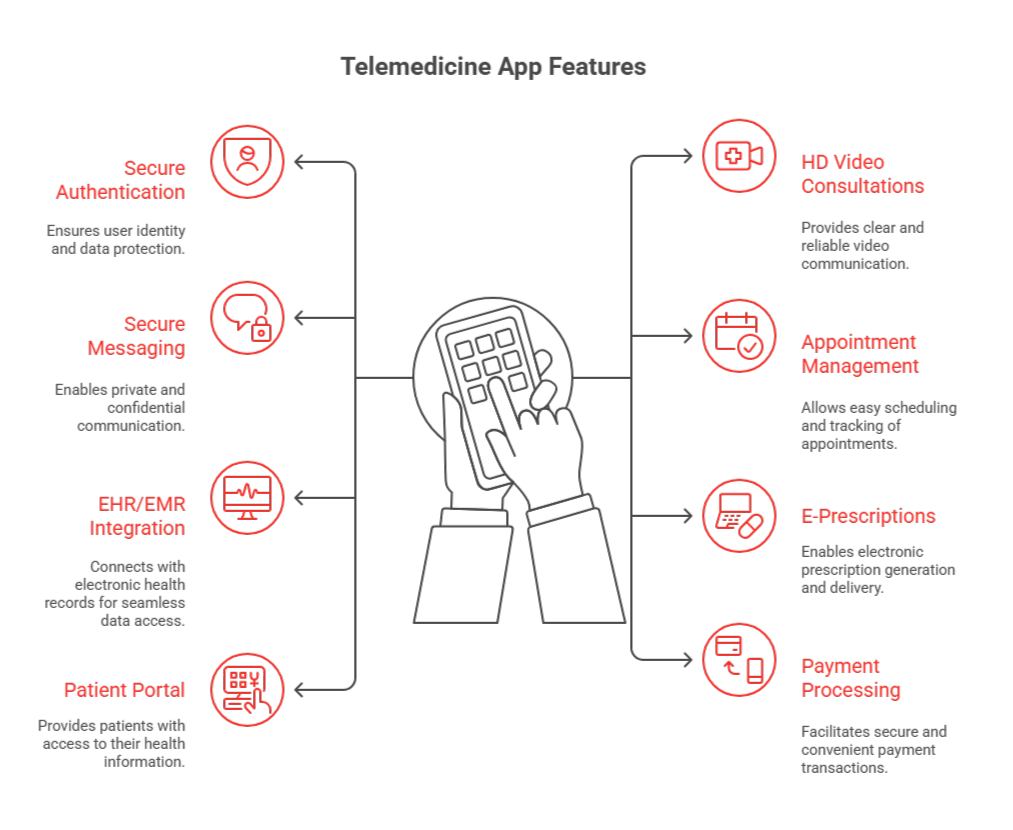
What Are the Must-Have Features in a Telemedicine App?
The key features of a telemedicine app include secure user authentication, HD video consultations, encrypted messaging, appointment scheduling, and EHR integration. These core functionalities, combined with advanced capabilities like e-prescriptions, payment processing, and future technologies such as AI and remote patient monitoring, ensure a seamless, secure, and efficient healthcare experience.
Below are the core essential features that any telemedicine app should include:
Secure User Authentication
Multi-factor authentication (MFA) ensures that only authorized users can access the app.
Biometric login (fingerprint, face ID) enhances security and simplifies the login process.
Role-based access control (RBAC) restricts access based on user roles, ensuring that only relevant healthcare professionals can view sensitive data.
HD Video Consultations
Real-time video with backup audio channels ensures that consultations are smooth, even with low internet speeds.
Low-latency, high-quality streaming is essential for effective communication.
Screen sharing capabilities allow providers to share test results, charts, and other visual materials with patients.
Secure Messaging & Chat
End-to-end encrypted messaging keeps patient-provider communication private and secure.
HIPAA-compliant text, image, and file sharing ensures compliance with healthcare regulations.
Asynchronous communication allows for follow-up messages and consultations at convenient times for both patients and providers.
Appointment Scheduling & Management
Integration with calendar systems allows for easy scheduling and time management.
Automated reminders via SMS, email, or push notifications help reduce missed appointments.
Patients can also reschedule or cancel appointments easily within the app.
EHR/EMR Integration
Seamless integration with Electronic Health Records (EHR) ensures that patient data is readily available for healthcare providers.
HL7/FHIR standards compliance ensures the app can communicate efficiently with various healthcare systems.
Unified patient record access gives providers a holistic view of the patient’s medical history.
E-Prescriptions
Digital prescription generation allows doctors to prescribe medications directly through the app.
Direct pharmacy integration enables prescriptions to be sent to pharmacies automatically for fulfillment.
Medication history tracking ensures patients can easily access their prescription records.
Patient Portal & Dashboard
Medical history access allows patients to view their past treatments, diagnoses, and test results.
Test results viewing enables patients to access lab reports and other relevant data.
Treatment plan tracking helps both patients and providers stay on top of ongoing treatment.
Payment Processing
Multiple payment gateways (credit card, insurance, digital wallets) make payments convenient and secure for patients.
Automated billing and invoicing streamline financial transactions.
Insurance claim management helps both patients and providers manage the reimbursement process seamlessly.
Future Features to Watch In 2026
As the telemedicine landscape evolves, new technologies are being integrated to further enhance the patient and provider experience. Here are some features to watch out for in 2026:
AI-Powered Features
Symptom checkers: AI-driven systems will provide preliminary assessments before consultations, helping prioritize care.
Predictive analytics: AI will enable risk stratification and early intervention recommendations, allowing healthcare providers to act faster.
Virtual health assistants: 24/7 chatbots will address common queries and guide patients through the app’s features.
Remote Patient Monitoring (RPM)
Wearable device integration (smartwatches, glucose monitors, and blood pressure cuffs) will enable constant monitoring of patient vitals.
Real-time vital sign tracking will provide up-to-the-minute data on the patient’s health.
Automated alerts for abnormal readings will allow healthcare providers to intervene quickly if a patient’s condition deteriorates.
IoT & Wearables Integration
Continuous collection of health data from connected devices will provide real-time insights into a patient’s well-being.
Integration with platforms like Apple Health and Google Fit will centralize patient health data for easier tracking.
Personalized health insights based on aggregated data from wearables will allow healthcare providers to tailor treatments more precisely.
Optimize Your Telemedicine App Strategy
Make informed decisions with a tailored strategy for your telemedicine app. Our experts will help you align development with your business goals and patient needs.
How to Stay Compliant with Healthcare Regulations
When developing a telemedicine app, ensuring HIPAA compliance is crucial for safeguarding patient data. HIPAA mandates proper storage, transmission, and access control of Protected Health Information (PHI), ensuring patient privacy and security.
Why HIPAA Matters:
HIPAA helps prevent data breaches and ensures strict guidelines for handling patient information, making it essential for telemedicine apps. Non-compliance can lead to significant fines and loss of patient trust.
Other Key Compliance Standards:
GDPR: For apps operating in the EU or processing EU citizens’ data, GDPR ensures data protection and privacy.
ISO 27001: Demonstrates that the app follows international information security standards, ensuring data is managed securely.
SOC 2: Focuses on data security, confidentiality, and privacy, reassuring users that the app meets high security standards.
FDA Approval: Required for apps involving medical devices or software, ensuring the technology is safe for medical use.
Incorporating these certifications ensures that your app remains secure, compliant, and trustworthy, while fostering patient confidence in your telemedicine platform.
How Can Telemedicine Apps Benefit Healthcare Providers?
Telemedicine apps offer a wide array of benefits, significantly improving efficiency, reducing costs, and expanding the reach of healthcare services.
These advantages apply not only to individual providers but also to large healthcare organizations like hospitals and clinics.
For Doctors & Individual Providers
Enhanced Efficiency & Productivity
Time Savings: Telemedicine eliminates the need for commutes, enabling healthcare providers to conduct back-to-back virtual consultations. According to the American Telemedicine Association, physicians report a 30-40% increase in daily patient capacity.
Flexible Scheduling: Doctors can work from anywhere and extend their practice hours, accommodating a wider range of patients.
Reduced Administrative Burden
Automated Documentation: AI-powered note-taking and automated documentation help streamline administrative tasks, saving time for patient care.
Digital Forms & E-Signatures: Telemedicine apps enable seamless intake with digital forms and e-signatures, reducing manual paperwork.
Geographic Flexibility: Doctors can serve patients across geographic boundaries, provided licensing requirements are met, enhancing access to care.
Access to Niche Populations: Telemedicine platforms enable healthcare providers to serve specialized or underserved patient populations.
Reduced No-Show Rates: Virtual appointments reduce no-show rates by 50%, as patients are more likely to keep remote appointments.
Better Work-Life Balance
Home-Based Consultations: Offering consultations from home reduces burnout by offering better control over work hours and the patient load.
Reduced Exposure to Infectious Diseases: Providers face less risk of exposure to infectious diseases compared to in-person visits, especially during flu seasons or pandemics.
For Healthcare Organizations (Hospitals & Clinics)
Operational Cost Reduction
Real Estate Savings: Virtual consultations reduce the need for physical office space, saving on real estate and facility costs.
Staffing Efficiency: Healthcare organizations can optimize provider utilization across multiple locations, maximizing staffing resources. According to the American Hospital Association, telehealth adoption results in a 20-30% reduction in operational costs.
Improved Patient Outcomes
Hospital Readmissions: Remote monitoring and follow-up consultations can reduce hospital readmissions by up to 25%, as shown in an NIH study.
Chronic Disease Management: Telemedicine allows for better management of chronic conditions, with improved medication adherence and earlier intervention.
Patient Satisfaction: 84% of physicians report higher patient satisfaction with telehealth services, according to the Doximity Report.
Revenue Expansion
New Service Lines: Virtual urgent care and specialty consultations can expand your service offerings, reaching a broader patient base.
Medicare/Medicaid Reimbursement: With temporary flexibilities in place through January 2026, healthcare providers can tap into reimbursements for telehealth services.
Direct-to-Consumer Telehealth: Offering subscription-based telehealth services can generate a steady stream of income.
Competitive Differentiation
Attracting Tech-Savvy Patients: Telemedicine platforms appeal to modern patients who seek convenience and technological advancements in their healthcare.
Enhanced Reputation: By adopting telehealth, healthcare providers position themselves as innovative and forward-thinking, gaining a competitive edge in the market.
Better Patient Retention: Offering the convenience of telemedicine increases patient retention, as patients appreciate the flexibility of virtual care.
Data-Driven Insights
Population Health Analytics: Telemedicine apps provide valuable data that can be used to track patient outcomes and identify trends in population health.
Predictive Modeling: Data from telemedicine interactions can assist in forecasting resource allocation needs and optimizing staffing levels.
Quality Improvement: By analyzing outcomes data, healthcare organizations can continuously improve their services and patient care standards.
These benefits make telemedicine an essential tool for modern healthcare delivery, enhancing patient satisfaction while providing valuable insights for continuous improvement.
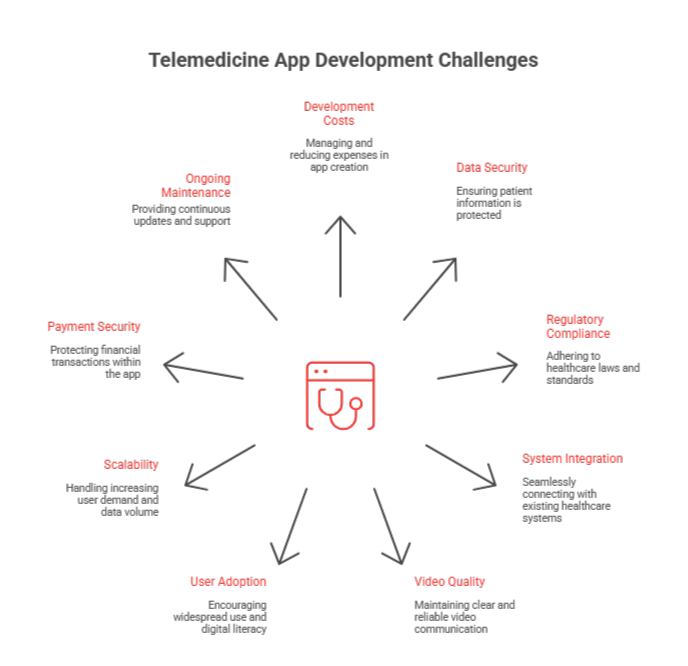
What Are the Biggest Challenges in Telemedicine App Development?
Developing a telemedicine app comes with its unique set of challenges, from cost and technical issues to compliance and user adoption. Here’s a brief overview of the key challenges you might face and how to address them:
Telemedicine App Development Costs
Building a telemedicine app can be expensive. Basic apps typically range from $40,000 to $100,000, while more feature-rich platforms with AI capabilities can cost upwards of $200,000. For many healthcare providers, especially smaller practices, this initial investment can be a significant barrier.
Solution: Start with a Minimum Viable Product (MVP) focusing on essential features to reduce costs. Consider cloud infrastructure to cut down on expenses and ensure scalability for future growth. As your user base expands, you can add more advanced features gradually.
Data Security & Privacy
Protecting sensitive patient data is critical. The healthcare sector is one of the most targeted by cybercriminals, and data breaches can lead to significant financial and legal consequences.
Solution: Implement strong encryption (AES-256 for data, TLS 1.2+ for transit) and multi-factor authentication. Regular security audits and compliance with regulations like HIPAA and GDPR are also essential.
Compliance with Regulations
Telemedicine apps must adhere to complex and changing regulations, including HIPAA, GDPR, and local healthcare standards. Navigating this maze can be challenging.
Solution: Collaborate with legal experts throughout the development process to ensure compliance. Incorporate automatic updates to keep up with regulatory changes.
System Integration
Telemedicine apps often need to integrate with existing healthcare systems like EHRs, lab systems, and pharmacies. Integration with legacy systems can be technically challenging.
Solution: Adopt industry standards like FHIR and HL7 for interoperability and ensure smooth API integrations to connect seamlessly with various healthcare platforms.
Video & Audio Quality
Poor video and audio quality can lead to frustration and abandonment, especially in critical consultations. Ensuring a seamless experience is vital.
Solution: Use WebRTC technology for low-latency, high-quality video calls. Implement adaptive streaming to maintain quality under varying network conditions and offer audio-only modes as backups.
User Adoption & Digital Literacy
Elderly or low-income users may struggle with technology, affecting their ability to use telemedicine apps effectively.
Solution: Design a user-friendly interface with easy navigation. Offer 24/7 support and video tutorials, and provide audio-only options for users who find video consultations difficult.
Scalability & Performance
As the app scales, handling increased user demand without sacrificing performance becomes a challenge.
Solution: Invest in cloud-based infrastructure for scalability and optimize app performance. Conduct load and stress tests to ensure the app can handle high traffic.
Payment Processing Security
For apps that handle billing, ensuring secure payment processing is a top priority. Vulnerabilities could lead to financial and legal risks.
Solution: Comply with PCI DSS standards, use trusted third-party payment processors, and avoid storing sensitive financial information within the app.
Ongoing Maintenance
To keep a telemedicine app running smoothly, continuous updates and technical support are crucial.
Solution: Build a support system with multiple channels and ensure regular updates, security patches, and performance improvements.
Telemedicine app development presents numerous challenges, but with the right strategies, focused on cost management, security, compliance, and user experience, these hurdles can be overcome. Proper planning and expert support can help ensure your app’s success.
Why Should You Consider Custom Telemedicine App Development?
Custom telemedicine app development offers tailored solutions that cater specifically to your organization’s needs, providing distinct advantages over generic, off-the-shelf platforms. Here’s why choosing a custom-built telemedicine app might be the best option for your healthcare business.
Tailored Solutions for Specific Needs
Custom development allows your telemedicine app to align perfectly with your organization’s unique requirements and clinical workflows.
Workflow Alignment Unlike off-the-shelf solutions that may require significant workflow changes, custom apps adapt to your existing processes. This includes seamless integration with the EHR systems you currently use and custom scheduling to match provider availability patterns.
Specialized Features Custom apps can offer specialized features based on the type of care you provide, such as:
Mental Health Platforms: Integration of mood tracking and crisis intervention protocols.
Chronic Disease Management: Specific monitoring parameters and medication adherence tracking.
Pediatric Care: Parent portals, growth tracking, and immunization schedules, tailored to pediatric care needs.
Brand Identity Custom telemedicine apps allow for personalized branding and white-labeling, offering a consistent patient experience across all touchpoints. This creates a unique user experience and can help differentiate your services from competitors, making your telemedicine platform more recognizable.
Flexibility & Scalability Advantages
A key advantage of custom telemedicine app development is its scalability and ability to grow with your business. This flexibility ensures long-term sustainability.
Future-Proof Architecture Custom apps are built on modular designs, allowing you to add new features without having to rebuild the app from scratch. This ensures that as your needs evolve, your app can evolve too. API-first architecture enables seamless third-party integrations, while microservices allow independent scaling of different app components.
Data Ownership & Control With custom development, you have full control over patient data. You can choose your own cloud providers and data centers, ensuring compliance with privacy regulations. Additionally, custom analytics and reporting capabilities allow you to tailor the app’s data insights to suit your specific needs.
Cost Efficiency in the Long Run While the initial cost of custom development may be higher (typically ranging from $100,000 to $300,000+), the long-term benefits outweigh these upfront costs. Unlike off-the-shelf solutions that come with per-user licensing fees, custom apps offer lower total ownership costs over 5-10 years and the potential to monetize through custom business models.
Custom vs. Off-the-Shelf Telemedicine App
The decision between custom and off-the-shelf telemedicine app solutions comes down to several factors:
Aspect
Custom Development
Off-the-Shelf
Initial Cost
Higher ($100K – $300K+)
Lower ($10K – $50K)
Time to Market
6-12 months
1-3 months
Customization
Unlimited
Limited templates
Scalability
Highly scalable
Platform-dependent
Integration
Seamless with existing systems
Limited integrations
Competitive Advantage
High differentiation
Commodity solution
Choosing custom telemedicine app development offers long-term benefits such as complete control over your app’s features, scalability, and data. While it may require a higher initial investment, the flexibility, cost-efficiency, and ability to create a competitive advantage make it a worthwhile investment for healthcare providers looking for a unique and sustainable telemedicine solution.
What’s Next for Telemedicine App Development: Future Trends & Opportunities
The future of telemedicine app development will focus on leveraging advanced technologies to enhance accessibility, personalization, and efficiency in healthcare. Key trends shaping the industry include:
AI-Powered Diagnostics & Automation: AI will improve clinical documentation, diagnostics, and predictive healthcare models, enabling faster, more accurate decision-making.
Accessibility Focus: Telemedicine apps will expand accessibility with low-bandwidth solutions, multi-language support, and features for users with disabilities.
Wearables & IoT Integration: Integration of wearables and IoT devices will provide real-time monitoring, improving chronic disease management and remote patient care.
Hybrid Care Models: The combination of in-person and virtual care will optimize patient care, with hospital-at-home programs providing cost-effective and convenient healthcare.
As telemedicine evolves, emerging business models like subscription-based virtual care and marketplace platforms will drive new opportunities, making healthcare more adaptable to diverse patient needs.
Future-Proof Your Telemedicine Solution
The telemedicine landscape is rapidly evolving. Let’s create a scalable and secure platform that grows with your business.
Conclusion
Telemedicine apps are not only changing the way healthcare is delivered but also improving patient outcomes and expanding access to care. With rapid advancements in AI, remote monitoring, and hybrid care models, the potential for telemedicine is limitless.
For businesses looking to tap into this booming market, partnering with a reliable development team is key. AppVerticals specializes in creating cutting-edge telemedicine apps tailored to your needs, empowering healthcare providers to offer superior patient care while staying compliant with regulatory standards. Let us help you build the future of healthcare, today.
Frequently Asked Questions
The average time it takes to develop a telemedicine app depends majorly on its complexity, such as:
Basic MVP: 3-4 months
Full-Featured App: 6-9 months
Enterprise Platform: 12-18 months
Yes, if you’re handling Protected Health Information (PHI) as a covered entity. Even when outsourcing development, you remain responsible for compliance.
Telemedicine refers to remote clinical services while telehealth is a broader term that includes non-clinical services like education and administration.
The video quality should match the following:
Minimum 720p HD, 30 FPS for clinical assessments
<300ms latency for real-time interaction
Adaptive bitrate to handle varying network conditions
Here's how you can integrate your telemedicine app with the existing EHR system:
Use HL7 or FHIR standards for interoperability
Work directly with EHR vendors for API access
Consider third-party integration platforms like Redox or Mirth Connect
Telemedicine apps can make money in the following ways:
Subscription models (monthly/annual)
Pay-per-consultation fees
Commission from providers (marketplace models)
Advertising (non-PHI related)
Premium features (AI diagnostics, extended consultations)
To ensure elderly patients can use your telemedicine app, you must offer:
Simplified interface with large buttons
Video tutorials and in-app guidance
24/7 customer support hotline
Audio-only consultation option
Family member proxy features
Here's how you can protect patient data in your telemedicine app:
Senior Content Writer — Mobile & Software Development, AI
Zainab helps tech brands sound more human. She takes app ideas, features, and updates and turns them into content people actually want to read. Whether it’s for a launch, a campaign, or just making things clearer, she’s all about simple words put together to form stories that stick.
Share This Blog
We’re AppVerticals
AppVerticals is where innovative startups and Fortune 500s come for transformation.
Denver has become a strong market for mobile app development, with businesses across healthcare, real estate, logistics, and transportation investing...
Building a successful mobile app is not only about having a great concept or idea, instead, choosing the right partner is equally important. When it c...
The logistics industry is undergoing a global digital shift. With the logistics and freight industry expected to reach $18.69 trillion by 2026, the ne...
Zainab Hai
14 min read
Book Your Free Growth Call with Our Digital Experts
Discover how our team can help you transform your ideas into powerful Tech experiences.


 About Us
 Locations
 Case Studies
 Careers
 Contact Us


 Blogs
Blogs Podcasts
 Cost Calculators